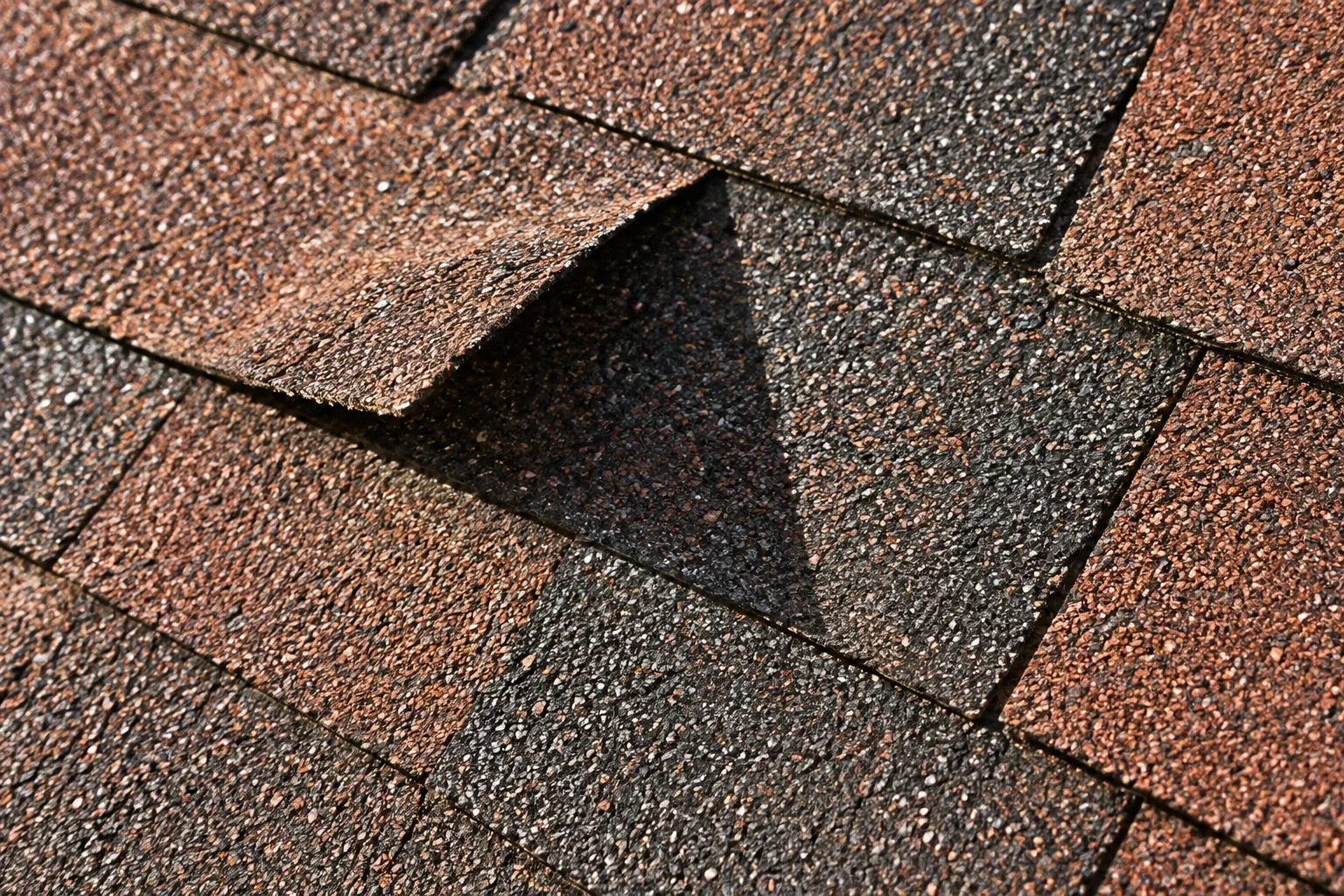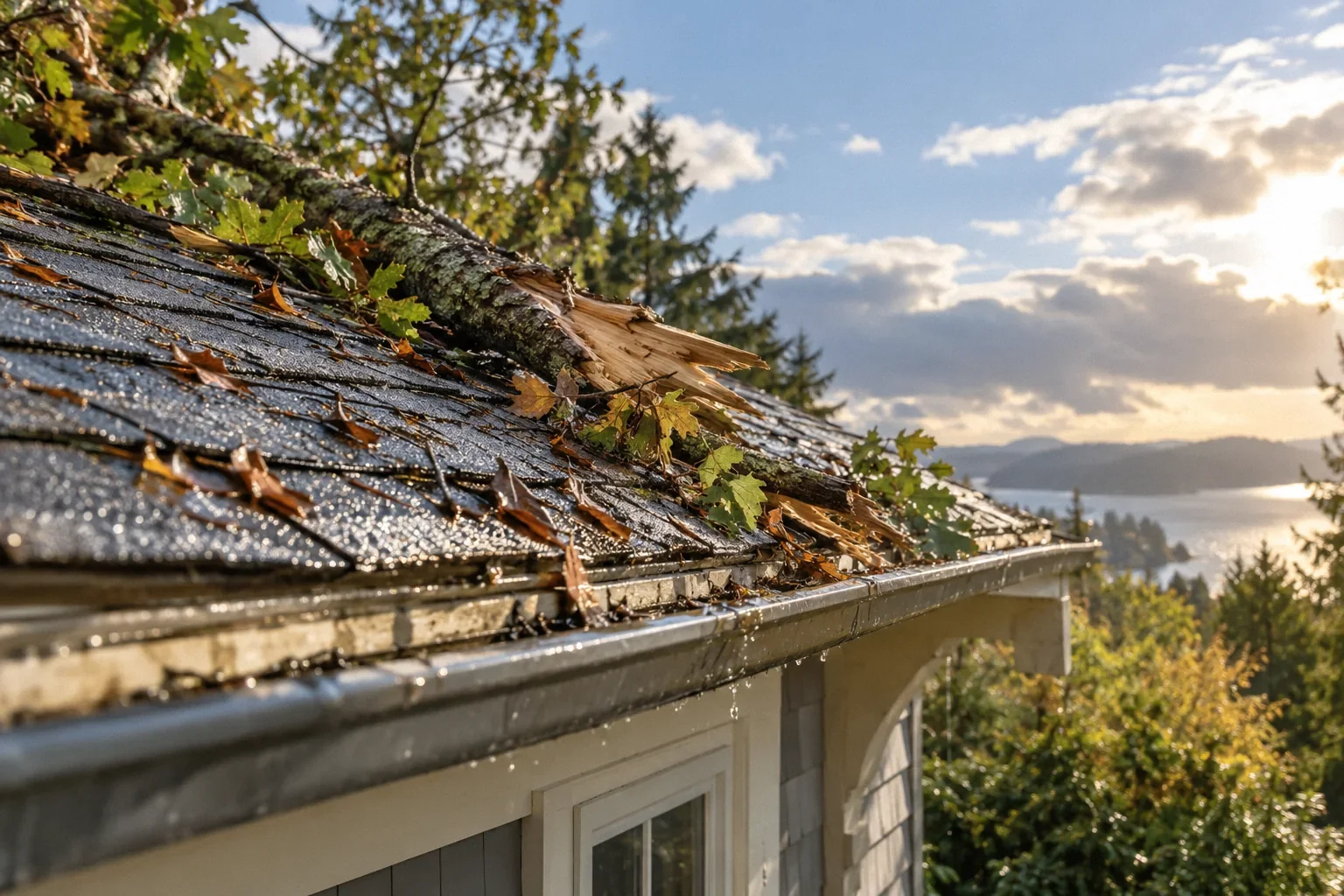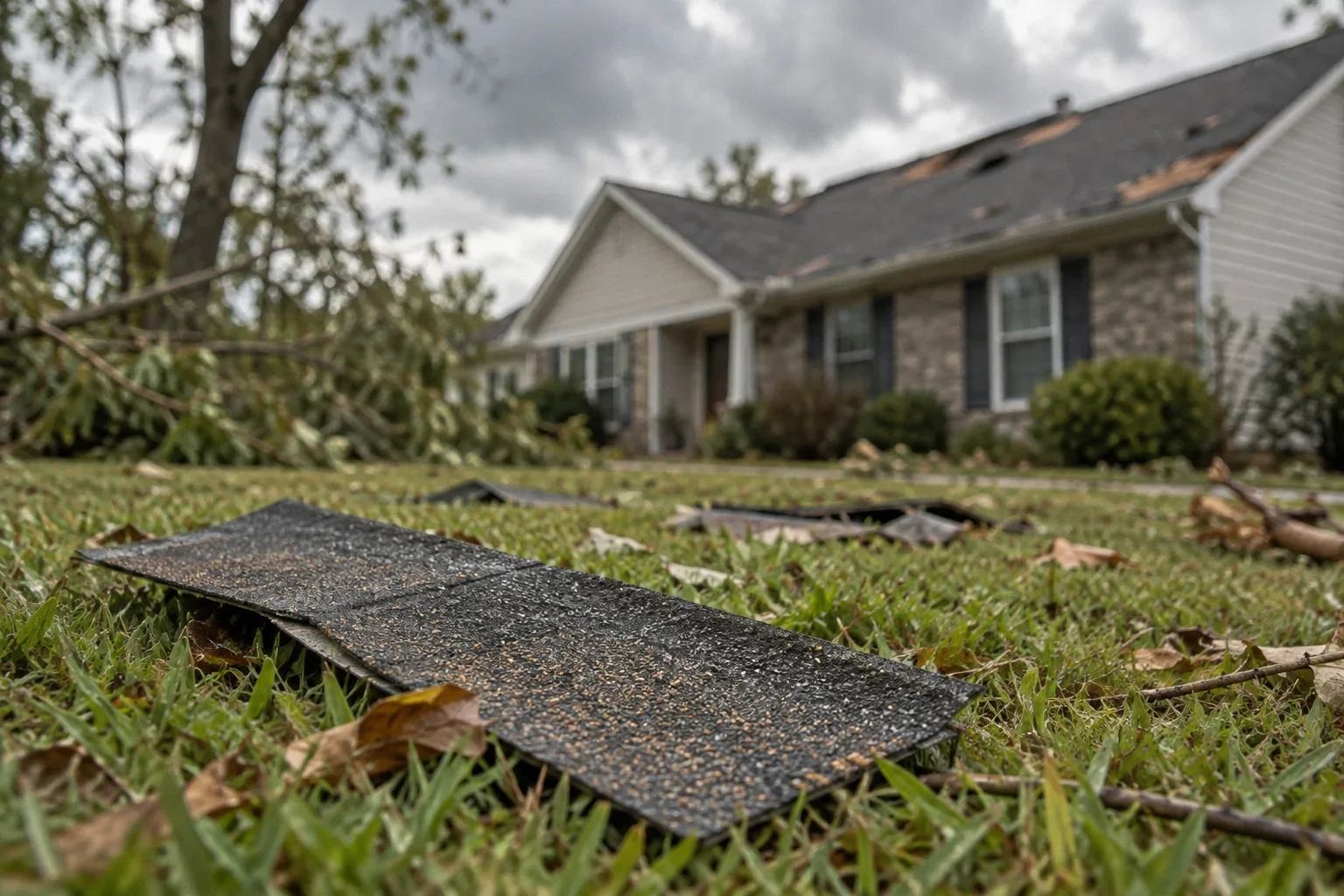
Wind-related roof concerns are not limited to shingles found on the ground. The condition of bonds, attachments, edges and flashing details also matters. After a significant event, a professional assessment should document actual changes and determine whether the selected roof system remains properly connected, rather than treating the absence of missing shingles as proof of no damage.
Understand what a wind classification describes
A roof covering works through a particular attachment and application system. Product instructions and tested classifications describe that system under defined conditions. GAF provides product-specific installation requirements, and IBHS explains important distinctions in wind-test classifications. [1][2] A marketing speed should not be read as a promise that every installed roof survives all storms at that reported speed.
Other explanations to distinguish
Visible lifting may reflect bond or attachment problems, prior deterioration or storm-related change. Edge and transition conditions can differ from the roof field. Windborne debris can introduce separate damage. A recent storm gives a useful timeline but does not establish when every defect began. Compare available earlier photographs and installation records where they exist.
Evidence to request before choosing the work
Request a condition map identifying lifted, displaced or otherwise changed areas and photographs of relevant edges and penetrations. Ask the professional to distinguish confirmed damage from conditions that require closer investigation. Record any temporary work, including which materials were used and where. If the report invokes a product rating, ask for the exact product and the conditions associated with that rating.
Document temporary securing work before it changes the visible condition, where doing so is safe and does not delay necessary protection. Ask the professional to identify the original concern and the final permanent requirement. This is especially important when an emergency crew and the eventual repair contractor are different. A clear handoff prevents temporary work from being mistaken for the intended completed assembly.
How the findings change the repair decision
Local repair can be suitable when affected areas are bounded and the assembly can be restored using supported details. Repeated deficient attachment or broad deterioration can change the scope. A proposal should address the mechanism instead of merely pressing visible material flat. Where the event exposed an installation weakness, the corrective work should explain how recurrence risk is being addressed.
A practical example and what it does not prove
A homeowner sees no missing shingles after strong winds but notices one altered roof edge from the ground. That observation warrants professional review without assuming a complete roof loss. The inspection may establish a localized edge condition or reveal a broader pattern. The point is to let the documented condition determine the scope, rather than using either no missing pieces or a storm occurred as the entire diagnosis.
Limits and when professional review matters
Do not lift shingle tabs to test their bond or climb onto a roof after a storm. Access conditions and hidden damage can make that especially hazardous. Prioritize prompt assistance when water enters occupied space or components are loose. Technical findings do not independently establish insurance coverage or assign responsibility for earlier installation work.
Document emergency work before it becomes the new baseline
A storm response crew may secure a visible concern before a detailed assessment occurs. That can be appropriate, but the work changes what the next inspector sees. Ask for a record of the original concern and the temporary intervention. The permanent contractor can then distinguish storm observations from the emergency repair rather than infer the earlier condition from memory.
Ratings also need precise identification. A contractor should not move from a reported local wind speed to a guaranteed product outcome without considering the actual installed system and the meaning of the classification. The practical question remains what changed on this roof and what work restores the affected assembly. A rating can inform the discussion without replacing that assessment.
- No shingles are missing but a connection has visibly changed: obtain review rather than treating missing pieces as the only trigger.
- Emergency work altered the affected area: provide the original photographs and intervention record to the final inspector.
- A recommendation relies on a wind-speed claim: identify the exact product classification and the observed roof condition separately.
Questions that resolve the remaining uncertainty
A post-storm report should distinguish observations made before and after temporary work. If a crew secured a loose area, later photographs may show the intervention rather than the original displacement. The record should preserve that sequence. It allows the final contractor to assess what still needs correction without mistaking the emergency configuration for the system’s intended completed condition.
Where a recommendation invokes installation requirements, request the exact product identification. A rule from a different shingle or assembly may not answer the question. The professional should compare the observed relationship with the applicable document and state any uncertainty about retained materials or earlier work. This gives the owner a technical basis for the scope rather than a generalized statement about how all roofs should be fastened.
Storm history and condition history should also remain separate. A defect first noticed after wind may have existed earlier, may have changed during the event or may need further investigation. Earlier photographs can help but are not always available. In that case, the report should state the limit instead of inventing certainty about timing. A practical corrective recommendation can still be made from the current condition.
Consider a roof with one changed edge and otherwise unexamined slopes. A localized protective intervention may be appropriate while the full assessment is arranged. That is different from declaring the entire roof either undamaged or lost. The owner should understand which conclusion is provisional and what inspection will establish the permanent work boundary. This prevents the urgency of protection from being used to rush an unrelated major decision.
For future records, keep the repaired-area map with product information and completion photographs. A later inspector should be able to identify which connections were renewed after the event. That record can also help distinguish a recurrence at the same detail from a new concern elsewhere, without relying on memory about which part of the roof was previously treated.
What to take away
- Inspect relevant connections and details, not only missing pieces.
- Read product wind classifications within their test and installation context.
- Match corrective scope to documented damage and underlying weaknesses.
Sources & further reading
Reddit links show the questions people ask; they do not establish a diagnosis or a legal requirement. Technical requirements depend on the product, building and jurisdiction. See our research approach.
- GAF shingle installation instructionsTechnical / official reference
Product-specific fastening, deck and slope; verify chosen SKU revision
- IBHS Roof 101Technical / official reference
Roof system performance and test-rating limitations
- Homeowner discussion: Hail damage?Community question · anecdotal
Anecdotal issue research, not technical authority or proof about another property.
- Homeowner discussion: Hail damage. Do I need a new roof?Community question · anecdotal
Anecdotal issue research, not technical authority or proof about another property.
Planning a Bay Area project?
Explore YKCA’s website and discuss the scope and services you need directly with them.