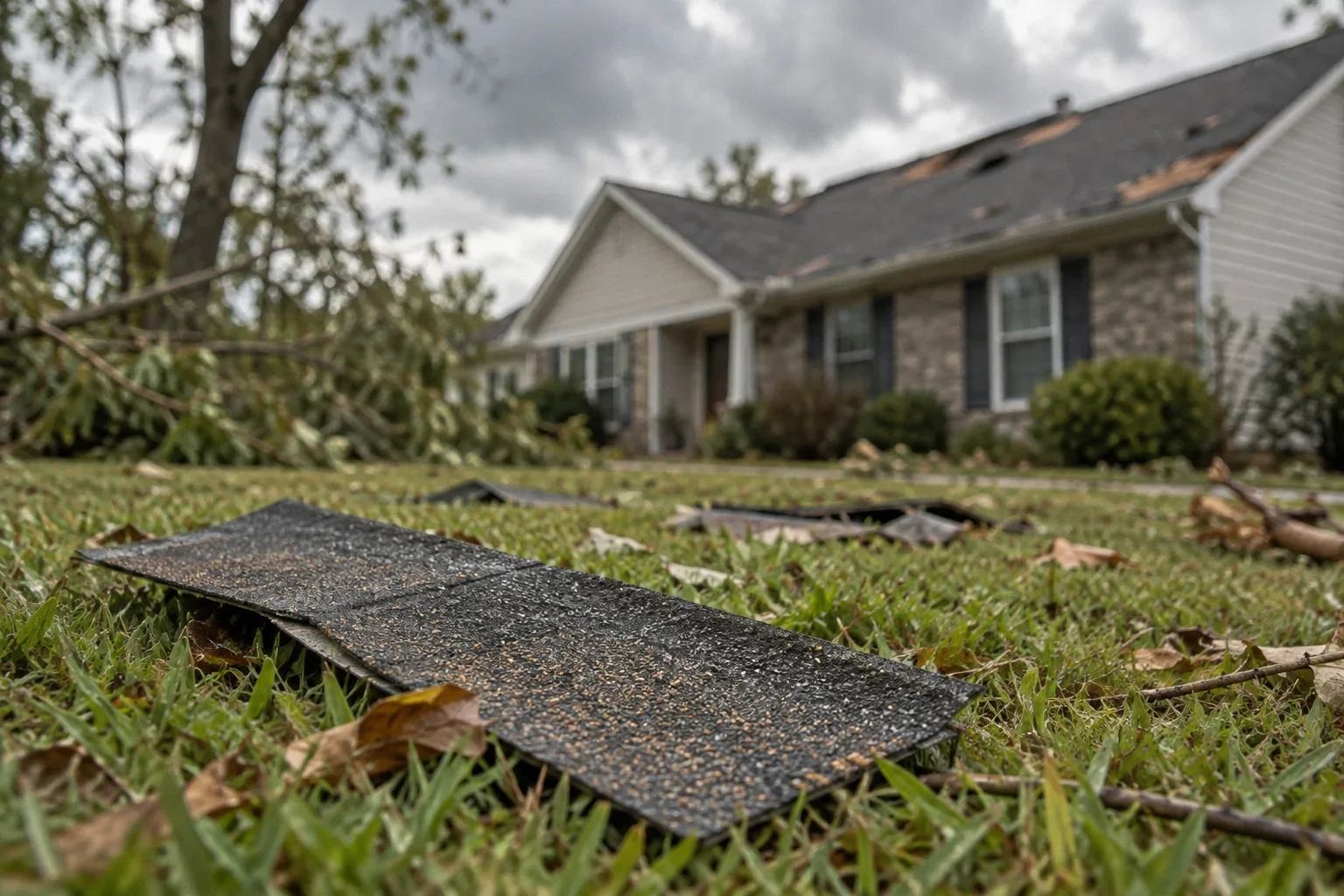
Insurance treatment depends on the cause of damage and the actual policy. A roof leak after a storm does not automatically mean the roof replacement is covered; wear, maintenance conditions, and a covered event can raise different questions.
Separate timing from cause
Rain may reveal a longstanding defect without creating it. A storm can also damage a previously functional roof. Record when water appeared, but ask a qualified professional to describe the physical evidence of the cause. Avoid choosing a cause simply because it sounds more likely to receive insurance payment.
Read the policy's relevant terms
California DOI's residential guide distinguishes commonly covered perils from exclusions such as wear, maintenance, and certain leakage.[1] Individual policies and endorsements control. Review declarations, deductibles, exclusions, and applicable limits with the insurer or agent. A general guide cannot establish coverage for a particular roof or event.
Distinguish roof work from resulting damage
The cost to correct an aging roof and the treatment of interior damage may not be identical. Ask the insurer to explain each part of the decision and the policy basis. Do not assume that payment for a ceiling repair means full roof replacement is approved, or that a disputed roof repair automatically resolves every interior-damage question.
Preserve pre-event and post-event evidence
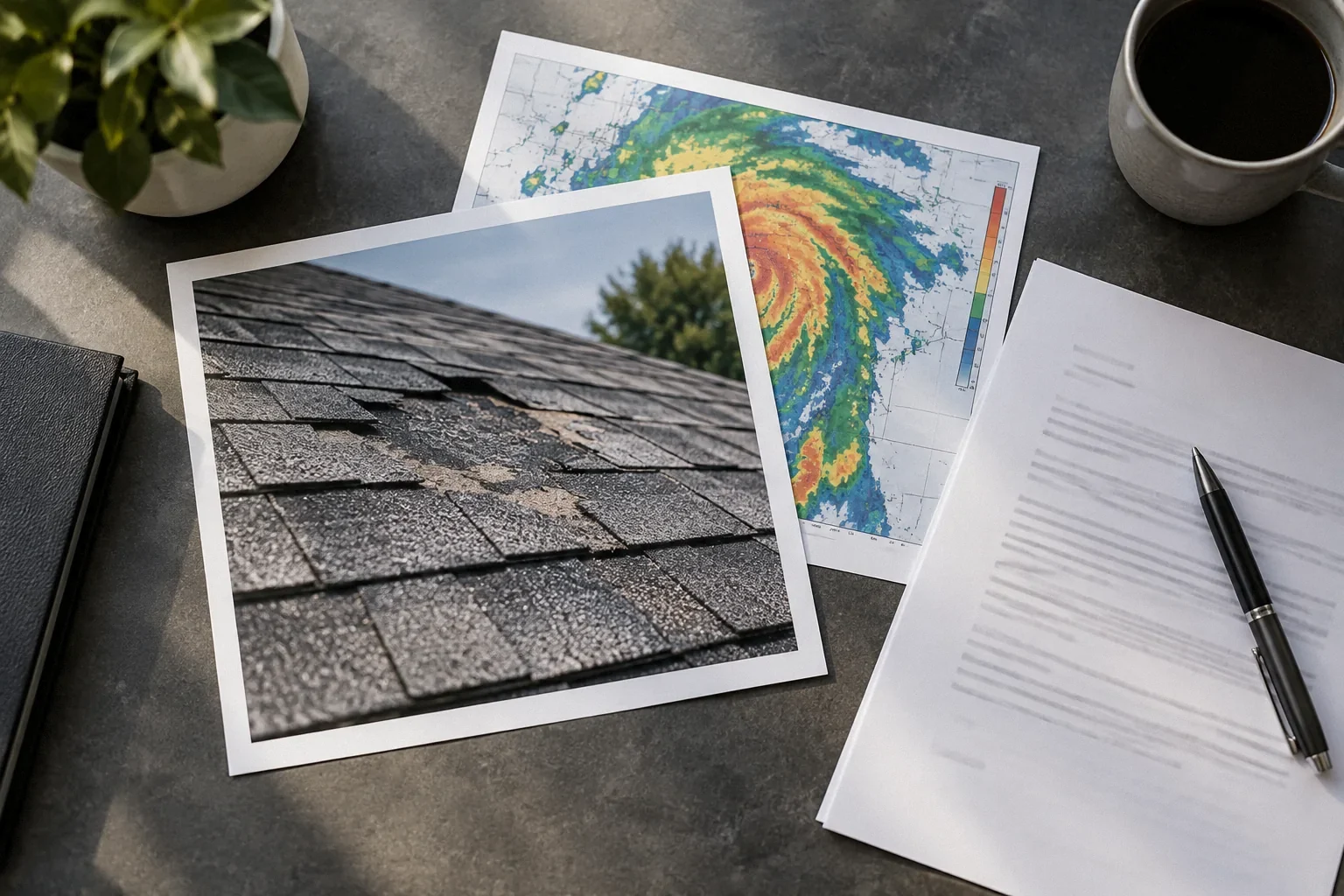
Maintenance records, earlier photographs, purchase inspections, and repair invoices can help distinguish old conditions from new damage. Obtain dated overview and detail photographs after the event from safe locations. A contractor's report should separate observation, likely cause, and uncertainty instead of simply repeating 'storm damage' across the estimate.
Mitigate without risking personal safety
DOI advises reasonable protection against further damage and warns against risking safety.[2] Arrange professional temporary measures when roof access or electrical conditions are hazardous. Keep receipts and document the condition before repairs when practical. Ask the insurer what evidence it needs, but do not leave the house exposed while waiting for a perfect claims sequence.
Request a clear written claim decision
If coverage or scope is disputed, ask for the stated facts and policy provisions supporting the decision. Compare them with the evidence and obtain clarification on any missing information. A contractor can explain construction scope but cannot guarantee the insurer's coverage determination. A sales promise is not an endorsement to your policy.
Avoid borrowing outcomes from another claim
A Reddit discussion describes a disagreement after an insurer declined a contractor's proposed roof claim.[3] The account is not an independently verified coverage analysis. Other claims can involve different policies, conditions and evidence. Use the discussion to identify questions, not to predict entitlement to a new roof or conclude that every denial is improper.
A practical example
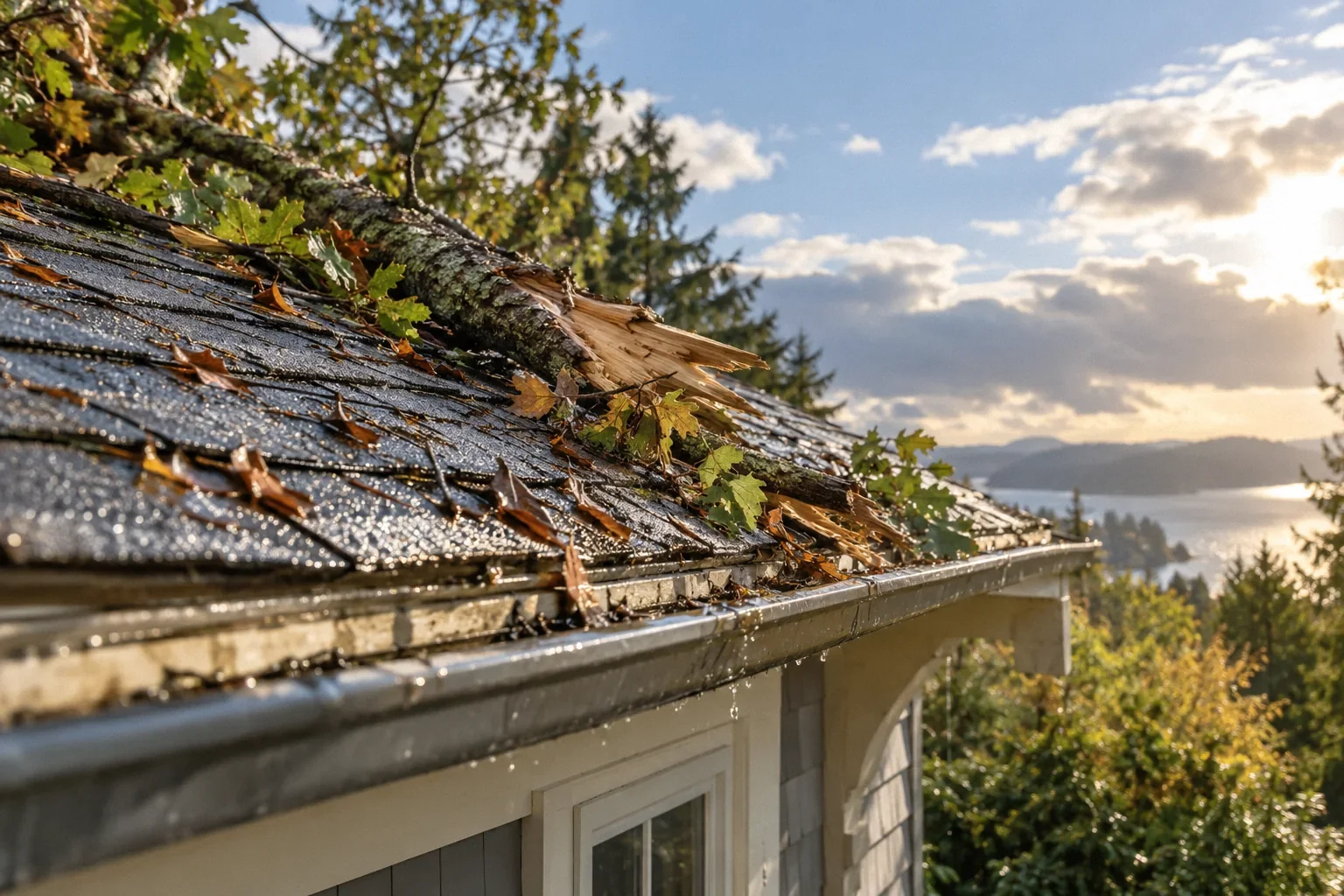
A roof develops a leak during heavy rain, but the inspection finds an aged failed seal at an existing penetration and no identified storm-created opening. That evidence leads to a different coverage discussion than a documented fallen limb puncturing the roof. In either situation, the owner should preserve the findings, protect the home, and ask the insurer to apply the actual policy rather than assume that the presence of rain decides the claim.
Keep the physical questions separate from the policy questions
Start with what changed: a displaced roof component, a newly visible stain, an existing patch that failed again or a report of wet materials. Ask the roof professional to explain the observed failure and the basis for connecting it to a particular event. Ask the insurer separately how the applicable policy provisions relate to the reported facts. A repair estimate can describe work without deciding coverage, and a coverage letter can discuss payment without serving as a complete repair specification.
This distinction matters when several conditions coexist. An older roof may suffer new damage, and a recent storm may reveal a preexisting weakness. Those possibilities require evidence rather than a single label. Ask which observations support the explanation and which remain uncertain. Avoid dating deterioration solely from a photograph or assuming that a weather report establishes the cause of damage to one particular roof. Preserve the report's limitations along with its conclusions.
Create a location-based damage inventory
Make a simple list of affected locations: the roof area identified by the inspector, the ceiling below, adjacent finishes and any other observed impact. For each, distinguish what you saw from what a professional later found. Record the date of the observation and the source of the information. This prevents the interior repair estimate and roof estimate from becoming two disconnected stories about the same event.
In the working file, keep maintenance history separate from the new event record while cross-referencing relevant items. A previous invoice for a nearby repair should not be hidden, but it also should not automatically be treated as proof that every later problem has the same cause. Ask the evaluator to address that relationship explicitly. If an initial inspection did not cover an affected location, identify the omission and request direction on how it should be documented before additional work changes the condition.
Separate an approved amount from the complete project budget
Even where some damage is accepted, ask for a clear explanation of the estimate, quantities and any items not included. Compare that document with the contractor's proposed work line by line. Identify whether a difference concerns the physical scope, the chosen material, an elective upgrade or a policy-related adjustment. Do not assume every gap is an estimating error, and do not assume every item on a contractor's proposal is automatically payable.
A useful planning sheet has three columns: work needed for the proposed repair, insurer's current treatment, and the question still requiring an answer. Keep elective improvements visibly separate. If the scope changes after opening the roof, obtain the new findings and communicate them through the claim process before treating a verbal comment as authorization. The goal is to understand your actual commitments while the claim is evaluated, not to promise that insurance will fund a particular roof or reimbursement amount.
What to take away
- Document the physical cause, not only the storm date.
- Ask separately about roof correction and resulting interior damage.
- Use the actual policy and written decision to evaluate coverage.
Sources & further reading
Reddit links show the questions people ask; they do not establish a diagnosis or a legal requirement. Technical requirements depend on the product, building and jurisdiction. See our research approach.
- California DOI: Residential Insurance GuideTechnical / official reference
Covered perils versus maintenance/wear exclusions; individual policy controls.
- California DOI: Residential Property Claims GuideTechnical / official reference
2025 revision; mitigation, claim records, valuation and claim dispute channels.
- Insurance said no, contractor is not happy.Community question · anecdotal
Anecdotal issue discovery; not verified legal, technical, insurance, or incident authority.
Planning a Bay Area project?
Explore YKCA’s website and discuss the scope and services you need directly with them.