Treat a 'free roof' pitch as a proposal requiring independent verification. Ask for specific damage evidence, check the contractor, read anything you are asked to sign, and contact your insurer directly. A contractor cannot guarantee coverage or erase your contractual obligations with a sales promise.
Ask what damage was actually observed
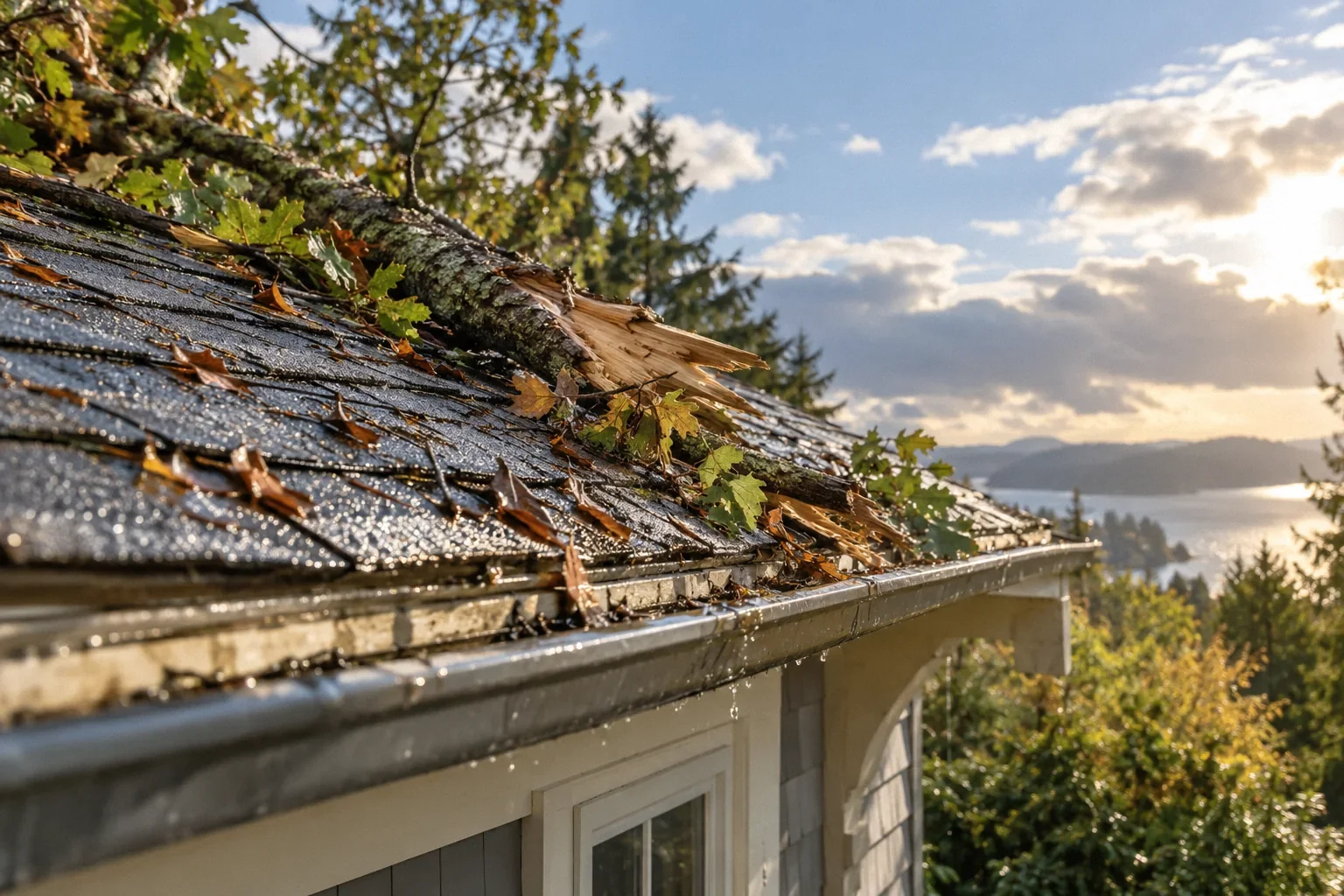
Request roof-location photographs and an explanation of the claimed condition. A nearby storm or a neighbor's approved claim does not establish damage to your roof. If the evidence is unclear, obtain an independent assessment. Do not allow a salesperson's urgency to replace a condition-based discussion.
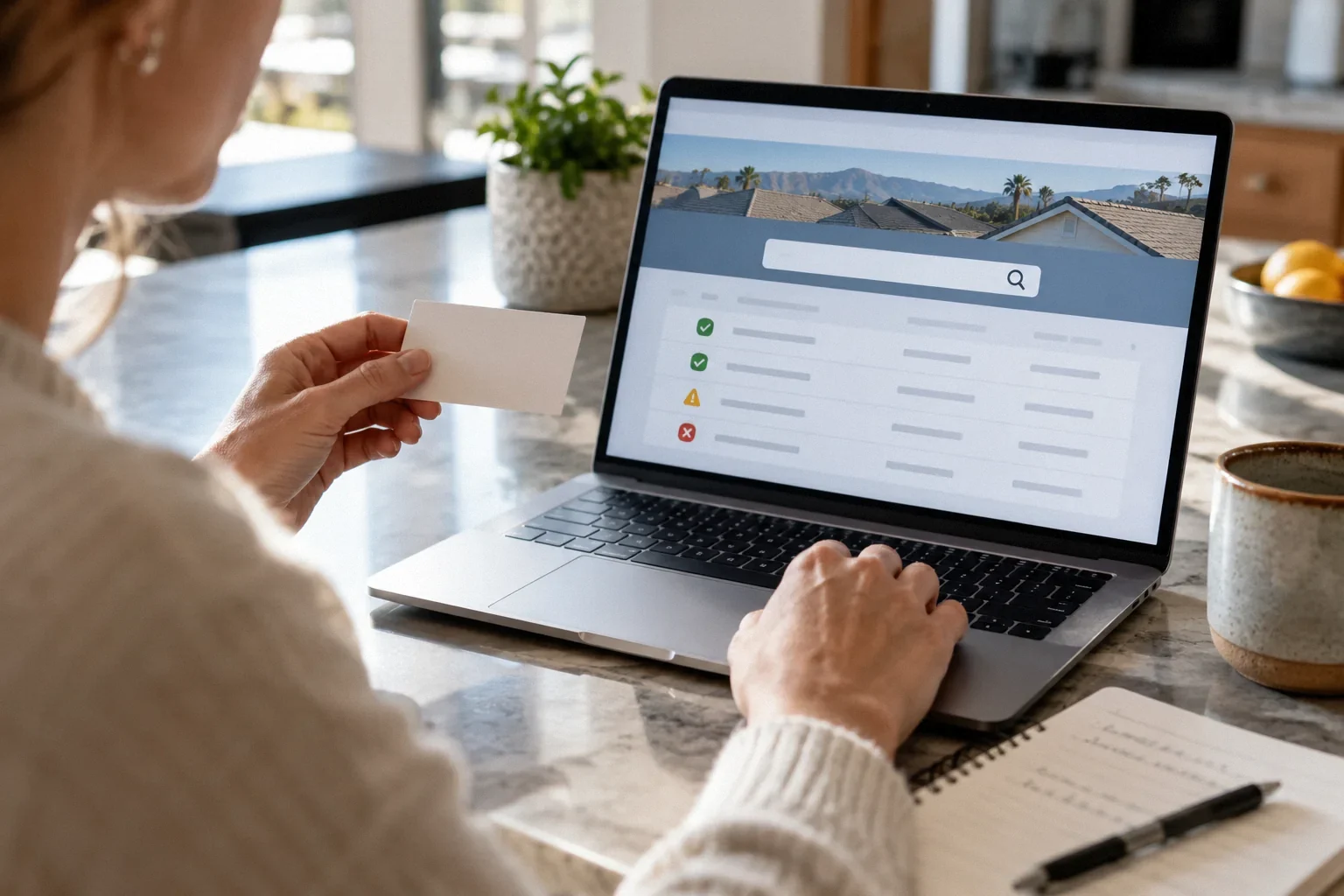
Verify credentials independently
Check the contracting entity, license status, relevant classification, and insurance through reliable channels.[2] Read local references in context and confirm who will supervise and honor the agreement. A large number of online reviews does not establish the truth of a coverage promise, just as door-to-door contact alone does not prove fraud.
Read the document before permitting an inspection
Determine whether the paper authorizes only an inspection or creates a construction agreement, representation arrangement, fee, cancellation obligation, or other commitment. Ask for a copy and explanation of unclear terms. Do not assume a document is harmless because it is presented on a phone or described as standard paperwork.
Speak with the insurer through a verified channel
Use contact information from your policy or the insurer's official website. Explain the actual observations and ask about the process and applicable deductible. California DOI provides claim guidance, but the policy and facts govern the result.[1] The contractor may assist with a factual estimate; assistance is not authority to guarantee coverage.
Reject invented or altered evidence
Do not agree to misstate dates, causes, scope, or damage. If you suspect evidence has been manipulated, preserve what you have and seek appropriate guidance. A legitimate claim should be supported by truthful observations and records. This article concerns recognizing and documenting questionable conduct, not methods for creating a claim.
Compare the construction deal independently
Even if insurance pays something, assess materials, repair boundaries, supervision, warranties, payment terms, and permit responsibility. A coverage decision does not choose the best contractor for you or establish that the proposed scope is complete. Ask who owes any difference between the contract price and insurance payment.
Respond without overgeneralizing
The Reddit discussions behind this topic include both satisfied customers and allegations of misleading sales practices.[3] Their useful lesson is to verify the specific transaction. Avoid assuming every unsolicited roofer is dishonest or that a polished company can make a roof financially 'free' regardless of deductibles, exclusions, or additional work.
A practical example
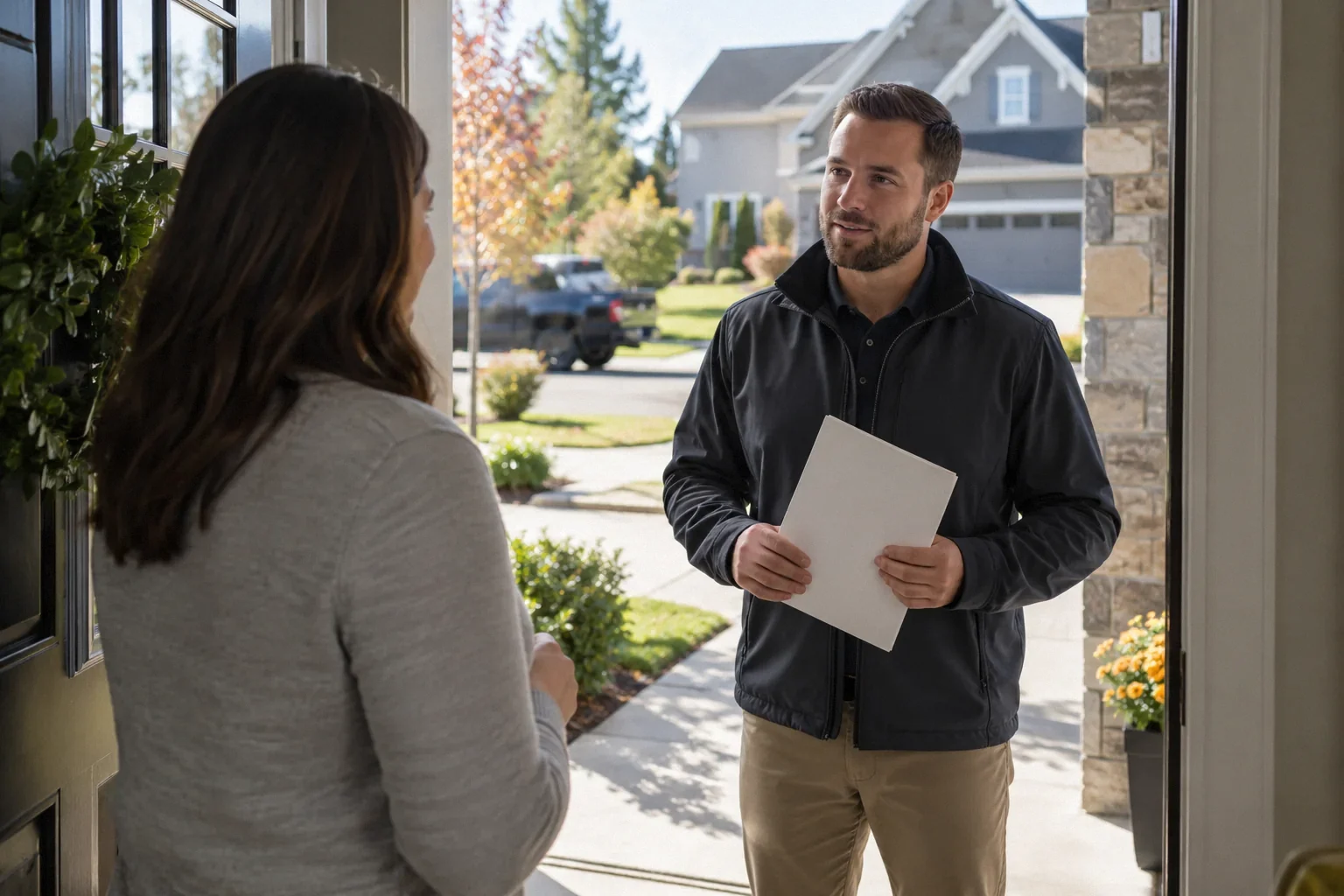
A salesperson says the entire neighborhood is 'prequalified' and asks the owner to sign before showing photographs. The owner can request the specific roof findings, take the document for review, independently check the company, and contact the insurer. If actual damage is documented, a legitimate claim can still proceed. The verification process does not require accepting the salesperson's contractor or committing to an undefined price.
Translate the sales promise into written obligations
Ask the salesperson to describe exactly what “free” means. Does it assume approval of a claim that has not been evaluated? Does it exclude a deductible, an upgrade, hidden damage or an administrative charge? Who owes the contractor if the insurer does not pay the expected amount? These questions should be answered in the proposed agreement, not only in a reassuring conversation. A conditional sales pitch is not the same thing as a written coverage decision.
Make a simple comparison between the spoken promise and the document you are asked to sign. Mark any section addressing cancellation, payment, authority to communicate, scope changes or responsibility for a shortfall. If you do not understand the effect, obtain independent advice before signing. A company may offer legitimate assistance with repair information, but that does not remove your need to understand which commitments remain yours. Do not sign blank spaces or authorize a description you know is inaccurate.
Demand evidence that can stand without the pitch
Request location-labeled photographs and a written explanation of the alleged roof damage. Ask whether the roof was actually inspected and what access was used. A photograph of a damaged shingle with no location does not establish that it came from your property. A statement that many neighbors received replacements does not establish the condition of your roof. The recommendation should still make sense if the words “insurance” and “free” are removed from the conversation.
Be particularly cautious if someone wants you to state an event date or cause that you do not know. Describe your observations accurately and distinguish them from the contractor's opinion. Do not allow a desire for coverage to change the history you report. If you suspect damage has been staged or misrepresented, preserve the available evidence and seek appropriate professional or regulatory guidance. Avoid a confrontation on the roof or any attempt to recreate damage to prove a point.
Use a pause-and-verify sequence for pressure sales
First, save the proposal and contact details. Second, verify the contracting entity and relevant qualifications through official channels. Third, ask the insurer about the actual claim status and what information is still needed. Fourth, compare the repair scope with another appropriately qualified assessment if the recommendation is disputed. This sequence is useful because each step answers a separate question: identity, condition, coverage process and the work being purchased.
An illustrative warning sign is a salesperson who promises a replacement before reviewing the policy or seeing the roof, then discourages you from reading the agreement. That pattern justifies slowing down, even though it does not by itself prove a specific offense. A legitimate proposal should survive clear questions about scope, payment and responsibility. If you already signed and now have concerns, gather the agreement and messages for timely advice rather than assuming you can ignore the document or stop communicating without consequences.
What to take away
- Verify the roof damage, contractor, and document separately.
- Contact the insurer directly and keep every statement truthful.
- Compare the construction contract even when insurance may contribute.
Sources & further reading
Reddit links show the questions people ask; they do not establish a diagnosis or a legal requirement. Technical requirements depend on the product, building and jurisdiction. See our research approach.
- California DOI: Residential Property Claims GuideTechnical / official reference
2025 revision; mitigation, claim records, valuation and claim dispute channels.
- CSLB: Finding the Right ContractorTechnical / official reference
State consumer guidance: compare same scope; verify license and insurance; active C-39 WC requirement.
- Are those storm damage roofing companies a scam?Community question · anecdotal
Anecdotal issue discovery; not verified legal, technical, insurance, or incident authority.
Planning a Bay Area project?
Explore YKCA’s website and discuss the scope and services you need directly with them.