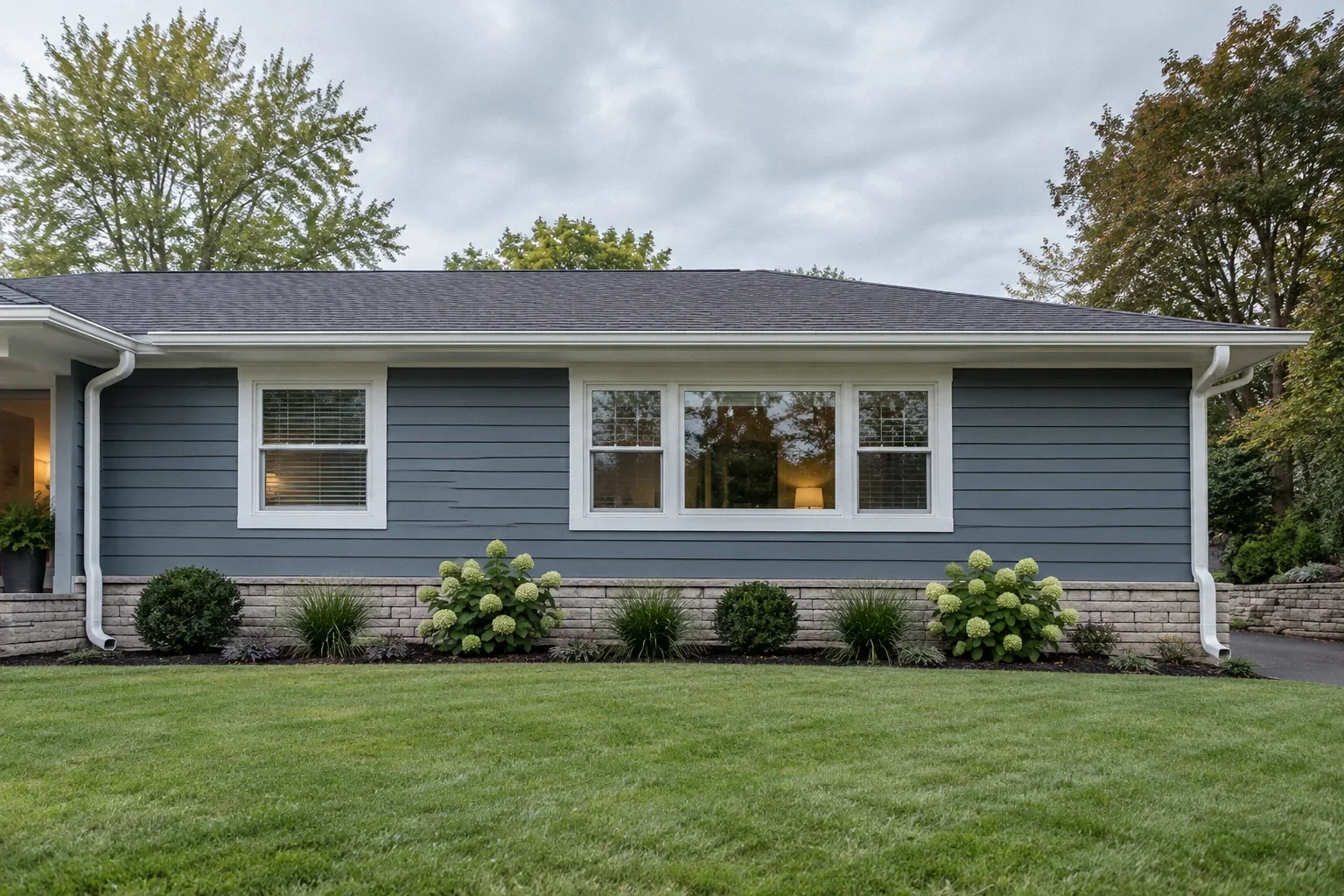
Cleaning removes one possible restriction. If overflow remains, compare where water enters, where it escapes, whether the gutter changes shape under load, and what happens at the outlet. A larger gutter is one possible remedy, not the starting diagnosis.
Begin with the pattern, not the purchase
A waterfall at one corner tells a different story from water spilling along an entire eave. Record the affected length, whether overflow begins immediately or after sustained rain, and whether the downspout outlet is discharging at the same time. Observe from a sheltered ground-level location. A brief video that includes both the roof edge and nearby downspout can be more informative than a close photograph of wet paving. Do not step into moving water or climb to improve the angle. The initial goal is a useful description: where the system first stops containing water, not which product will supposedly fix it.
The cited discussion raises the specific choice between another outlet and realigning a low corner. This Reddit account is anecdotal, not technical authority. [2]
Clean does not mean unobstructed
Ask what the cleaning actually covered. Removing visible leaves from the open trough is different from clearing the outlet fitting, elbows, downspout and buried connection. A service receipt that says only gutter cleaning leaves that distinction unresolved. Request photographs of accessible outlet openings and a description of downstream checks. If the downspout enters the ground, its destination matters: the vertical section might be clear while the underground carrier is restricted. Conversely, a strong visible discharge does not prove unlimited capacity. It only shows that some water is passing under the conditions observed.
Look for a low point that develops under load
A gutter can appear straight when empty and dip when carrying water. Compare dry-weather alignment with safe storm footage. Repeated overflow at a mid-run dip raises questions about hanger spacing, fastening substrate and deformation. Do not assume tightening one bracket is enough; an attachment may be pulling out of deteriorated wood. Have the inspector explain whether the problem is alignment, support or the material receiving the fasteners. PNNL treats gutters and downspouts as a connected water-management system. [1] That system view prevents a local patch from hiding a support problem.
Separate excess inflow from slow outflow
Roof valleys and upper-level downspouts can deliver a concentrated stream to a small part of the gutter. Water may jump the front edge before it has a chance to spread, or the channel may fill because its outlets cannot evacuate the incoming flow. These require different explanations. Ask the contractor to identify the contributing roof area and trace how it reaches the overflow location. A splash-control accessory can change the entry path, but it cannot create unlimited discharge capacity. Likewise, enlarging the trough does not automatically correct a blocked or poorly placed outlet.
Compare repairs against the diagnosed constraint
A useful proposal ties each intervention to evidence: realignment for a measured low spot, attachment repair for movement, an added outlet for a long overloaded run, or downstream work for a restricted buried route. Ask what observation would make the contractor choose a different remedy. That question reveals whether the proposal is a diagnosis or a standard sales package. If several causes coexist, request a staged sequence with an explicit reassessment point. Cleaning and observation may precede alterations; structural attachment defects may need attention before a meaningful flow assessment.
Define the limit of a demonstration
A controlled water check can show direction of flow and visible leakage at the applied rate. It does not reproduce every rainfall intensity or the way wind drives roof runoff. Ask how the contractor will document the test and its limits. After repair, compare a later natural rain event with the original record, including duration and approximate intensity if known. A dry pavement photograph is not proof of storm performance. Persistent overflow that wets walls, undermines paving or accompanies interior moisture warrants a broader building-envelope or drainage assessment rather than repeated gutter-only visits.
Use a symptom matrix to focus the visit
Before a contractor arrives, group observations into three practical categories. A localized immediate spill suggests examining how water arrives and enters. A gradual rise along a run suggests examining evacuation and retained water. A changing dip suggests examining support. These are investigation leads, not diagnoses, and the categories can overlap. Their value is to tell the contractor what evidence the visit should seek.
Ask the contractor to describe the strongest competing explanation. If an outlet is blamed, what observation makes a low spot less likely? If capacity is blamed, what establishes that the route is clear? A useful answer may identify another check rather than settle the question immediately. That is preferable to an unsupported certainty. The estimate should preserve any remaining uncertainty so the owner understands whether the next payment buys investigation, a confirmed repair or a capacity redesign.
If a contractor proposes replacing the run before observing the failure, ask what evidence already supports that scope. Existing deformation, extensive deterioration or a documented layout problem may justify replacement without waiting for another storm. In the absence of such evidence, a targeted inspection can be a useful first purchase. The distinction is between a decision supported by condition and a decision based only on the word overflow. Also ask whether the replacement changes the outlet arrangement or merely substitutes new material in the same configuration. A new gutter can reproduce an old capacity or routing problem if those conditions remain unchanged. Keep any recommendation for later downstream work explicit, because the owner should understand whether the quoted project is intended to solve the whole complaint or only one confirmed defect.
| Decision area | Question or evidence |
|---|---|
| Immediate spill at one roof feature | Inspect entry geometry and concentrated inflow |
| Water rises progressively along a run | Check outlets and downstream receiving conditions |
| A section changes shape during rain | Assess attachments, substrate and deformation |
Example: an oversized gutter that still spills
Imagine a long rear gutter that has been cleaned twice but spills only above a patio door. The outlet at the far end flows steadily. One bidder recommends an even larger profile; another notices that an upper roof discharges at the doorway and requests storm footage. If the footage shows water jumping the lip on arrival, entry geometry becomes a stronger lead than generalized capacity. If the trough instead fills gradually and a middle section drops, support and drainage deserve attention. Neither observation alone identifies every defect. The important difference is that the next inspection can target a specific uncertainty instead of replacing the whole system on a guess.
What to keep in the repair record
Save the original footage, the inspector’s route sketch and the exact work completed. Record any areas that could not be observed, including concealed outlets. A useful completion note distinguishes a cleared restriction from a capacity change and a support repair. That makes a later recurrence easier to interpret and prevents a new contractor from starting from the same vague complaint.
- Photograph the first overflow location from a repeatable safe viewpoint.
- Request the outlet destination and any untested concealed sections.
- Ask what conditions the completion test did and did not simulate.
What to take away
- Record overflow location and outlet behavior together.
- Identify which portions were actually cleaned.
- Choose the repair that addresses the demonstrated restriction.
Sources & further reading
Reddit links show the questions people ask; they do not establish a diagnosis or a legal requirement. Technical requirements depend on the product, building and jurisdiction. See our research approach.
- DOE/PNNL: Gutters and DownspoutsTechnical / official reference
Roof-water system components, material tradeoffs, separation from footing drain; program-specific distances are not universal local code.
- Reddit discussion: Gutter overflowCommunity question · anecdotal
Anecdotal homeowner discussion used to identify the question; not technical authority or evidence of this property’s condition.
Planning a Bay Area project?
Explore YKCA’s website and discuss the scope and services you need directly with them.