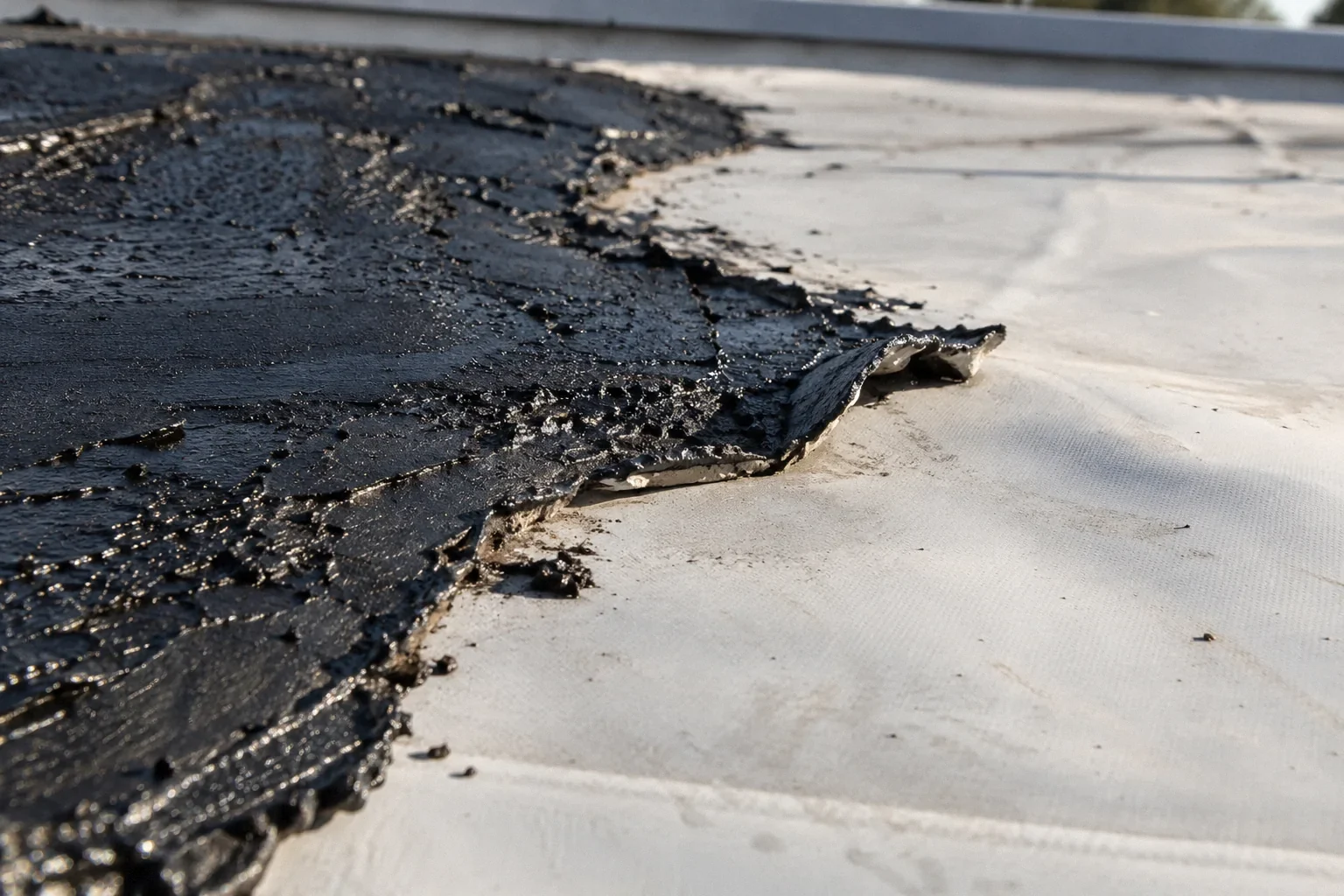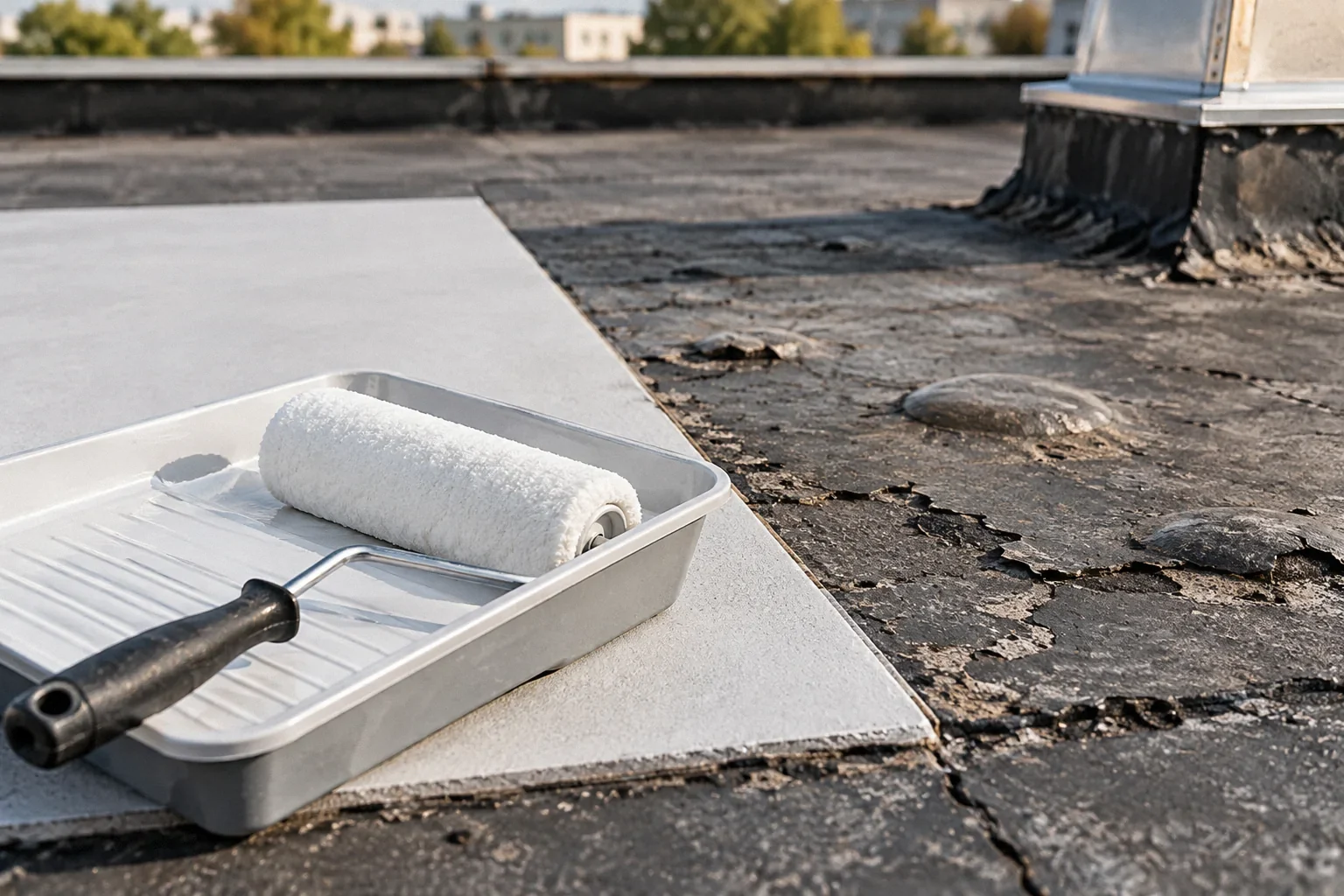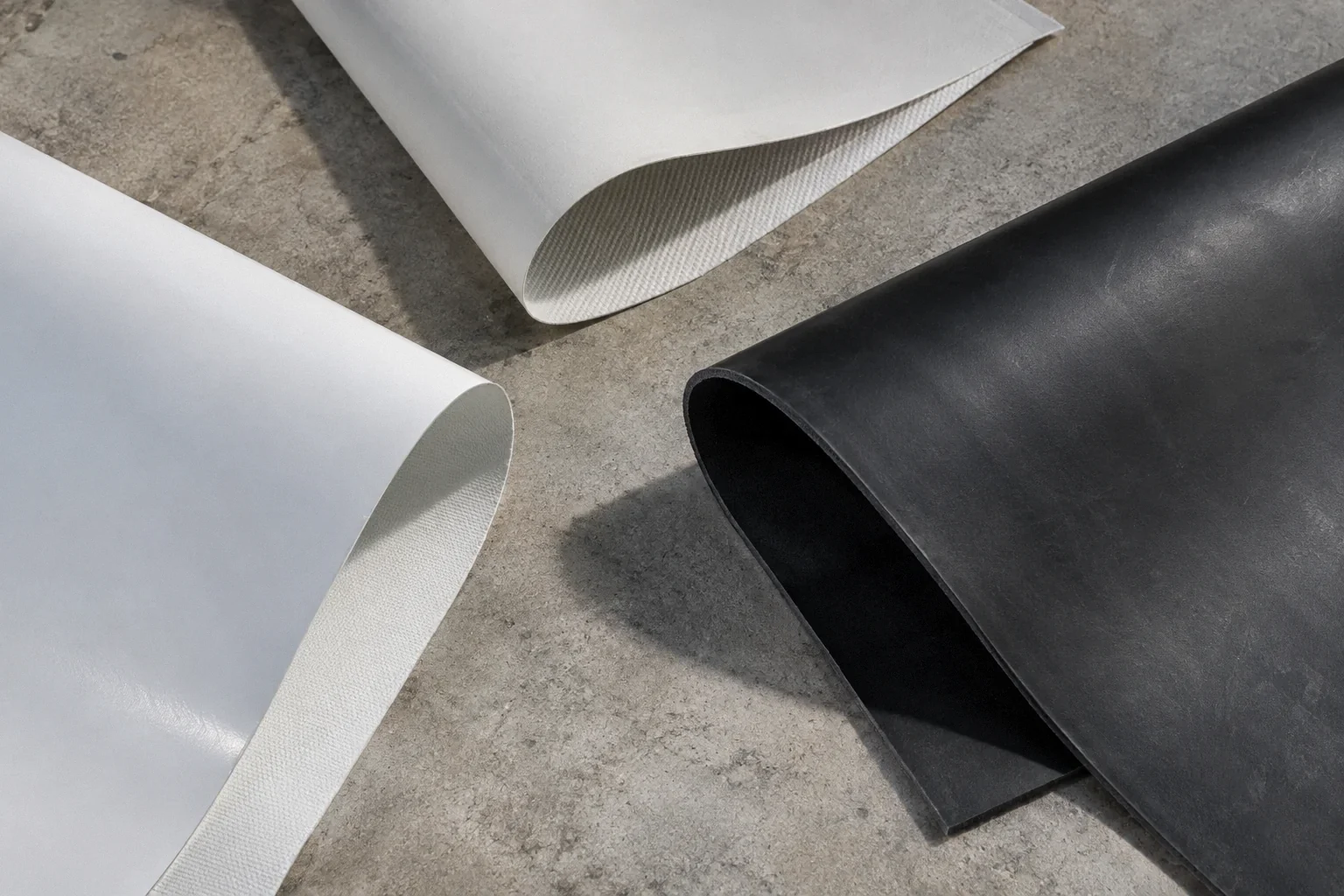
Choosing TPO, PVC or EPDM is an assembly decision, not a contest with one universal winner. Begin with drainage, substrate condition, building use, penetrations and the installer's documented system proposal. Compare each offered product's approved details and maintenance requirements before judging the membrane name alone.
Look beyond the membrane acronym
The exposed membrane is only one component above the occupied space. A complete proposal can include deck preparation, insulation, attachment, perimeter conditions, seams, curbs and drainage. PNNL's guidance emphasizes continuity where penetrations interrupt the water-control layer, and Carlisle's maintenance guidance highlights the role of outlets and surrounding details. [1][2] Those functions matter regardless of the acronym printed on the membrane.
Other explanations to distinguish
Two proposals using the same membrane family can differ more in assembly quality than two proposals using different families. One may include moisture investigation and drainage correction while another simply covers the existing surface. Building use can introduce traffic, equipment service and contaminants that need product-specific review. Avoid broad online claims that one family always tolerates ponding, always fails early or never needs maintenance.
Evidence to request before choosing the work
Ask for the manufacturer, named system, membrane product, attachment method and insulation scope. Request details for actual penetrations and perimeter conditions, not merely a brochure photograph. The contractor should identify what existing materials remain and how their condition was assessed. Obtain the maintenance and repair compatibility information for the offered system so future service work does not rely on guessing its identity.
Ask each bidder to describe how routine equipment service will occur on the completed roof. A proposal designed around a clear open field may miss the practical demands of a roof with frequent service traffic and crowded curbs. The answer need not favor one membrane family. It should show that the proposed system and its protective details correspond to the way this building will actually be used.
How the findings change the repair decision
Create a comparison sheet with the same roof conditions in each column. Normalize drainage, wet-material removal, edge work, penetrations and access protection before comparing the product choice. Where a contractor recommends one family, ask which property-specific constraint drives that recommendation. An answer tied to the building is more useful than a universal lifespan claim or an unsupported statement that competing materials are obsolete.
A practical example and what it does not prove
Imagine two estimates for a small equipment-filled roof. One emphasizes a premium membrane but leaves existing insulation and drainage uninvestigated. The other includes condition verification and carefully detailed curbs. The owner cannot compare value from the membrane name alone. The first proposal needs its concealed-condition assumptions clarified before the material preference becomes a meaningful decision.
Limits and when professional review matters
The cited references establish drainage and detail principles, not a ranking of TPO, PVC and EPDM chemistry. Product compatibility, exposure limits and repair methods must be verified in the actual manufacturer's documentation. A roof consultant can help where proposals describe fundamentally different assemblies. Do not allow a generalized internet comparison to override a documented constraint on the specific building.
Compare the service environment, not a universal ranking
A quiet roof with few penetrations presents a different planning problem from a roof crowded with equipment that needs frequent service. Ask each bidder how the actual use affects their assembly proposal. The response should identify relevant product documents and protective details. It should not rely on a sweeping statement that one membrane family is always the most durable.
Product substitution also needs review at the detail level. If an estimate changes from one system to another, ask whether attachments, transitions and maintenance instructions change with it. The substitution may be reasonable, but the earlier detail schedule should not automatically carry forward. A coherent revised package is easier to maintain than a collection of components selected under different assumptions.
- Two bids name the same membrane but different retained layers: compare concealed-condition assumptions before comparing material price.
- A roof has recurring equipment service: ask how the selected assembly addresses that actual access pattern.
- A product substitution occurs after bidding: obtain the revised system details and compatibility information before treating it as equivalent.
Questions that resolve the remaining uncertainty
A material comparison is strongest when each bidder answers the same exposure questions. Are there equipment-service routes, existing repairs of uncertain identity, or interfaces with retained products? The answer may influence system selection or the preparation scope. Ask for those effects to be written beside the proposed assembly, rather than relying on a general statement that a particular membrane is popular in the area.
What TPO, PVC and EPDM actually are
TPO means thermoplastic polyolefin; PVC means polyvinyl chloride. Both are thermoplastic roofing membranes commonly joined at seams by heat welding. EPDM means ethylene propylene diene monomer, also described as a terpolymer; it is a vulcanized synthetic rubber. Carlisle describes its EPDM splices as adhesive-tape connections. These different joining technologies are one reason repair accessories and procedures cannot be selected simply by the color of a roof sheet. [6]
Carlisle identifies chemical and grease resistance as a reason to consider PVC for certain exposures, and describes EPDM, TPO and PVC as distinct chemistries. That is a selection lead, not proof that every product tolerates every contaminant. Obtain the actual exposure limits for the offered membrane. A restaurant exhaust area and an ordinary residential roof need not place the same demands on a system. [6]
Seam technology is also different from attachment to the building. A heat-welded seam joins membrane sheets; it does not mean the entire roof is welded to the deck. Compare the specified attachment, insulation and perimeter details separately. Likewise, a taped EPDM seam does not make the installation a homeowner adhesive project. The material choice should be accompanied by its supported system and professional quality-control requirements. Do not rank the three families by one seam characteristic while leaving the rest of the assembly unspecified.
What to take away
- Compare complete assemblies before comparing membrane families.
- Normalize drainage, insulation and detail scope across estimates.
- Verify exposure and repair compatibility for the exact offered product.
Sources & further reading
Reddit links show the questions people ask; they do not establish a diagnosis or a legal requirement. Technical requirements depend on the product, building and jurisdiction. See our research approach.
- PNNL penetration flashingTechnical / official reference
Water-control continuity and penetration detailing; avoid treating illustrated assembly as universal code
- Carlisle drainage maintenanceTechnical / official reference
Drainage blockages, ponding loads and edge support
- Homeowner discussion: Flat roof pondingCommunity question · anecdotal
Anecdotal issue research, not technical authority or proof about another property.
- Homeowner discussion: TPO Roof Leak due to Pooling Water?Community question · anecdotal
Anecdotal issue research, not technical authority or proof about another property.
- Homeowner discussion: Can this roof be repaired or need completely replaced?Community question · anecdotal
Anecdotal issue research, not technical authority or proof about another property.
- Carlisle: Selecting a Single-Ply MembraneTechnical / official reference
Manufacturer explanation of EPDM, TPO and PVC chemistry and seam technology; no universal performance ranking adopted.
Planning a Bay Area project?
Explore YKCA’s website and discuss the scope and services you need directly with them.