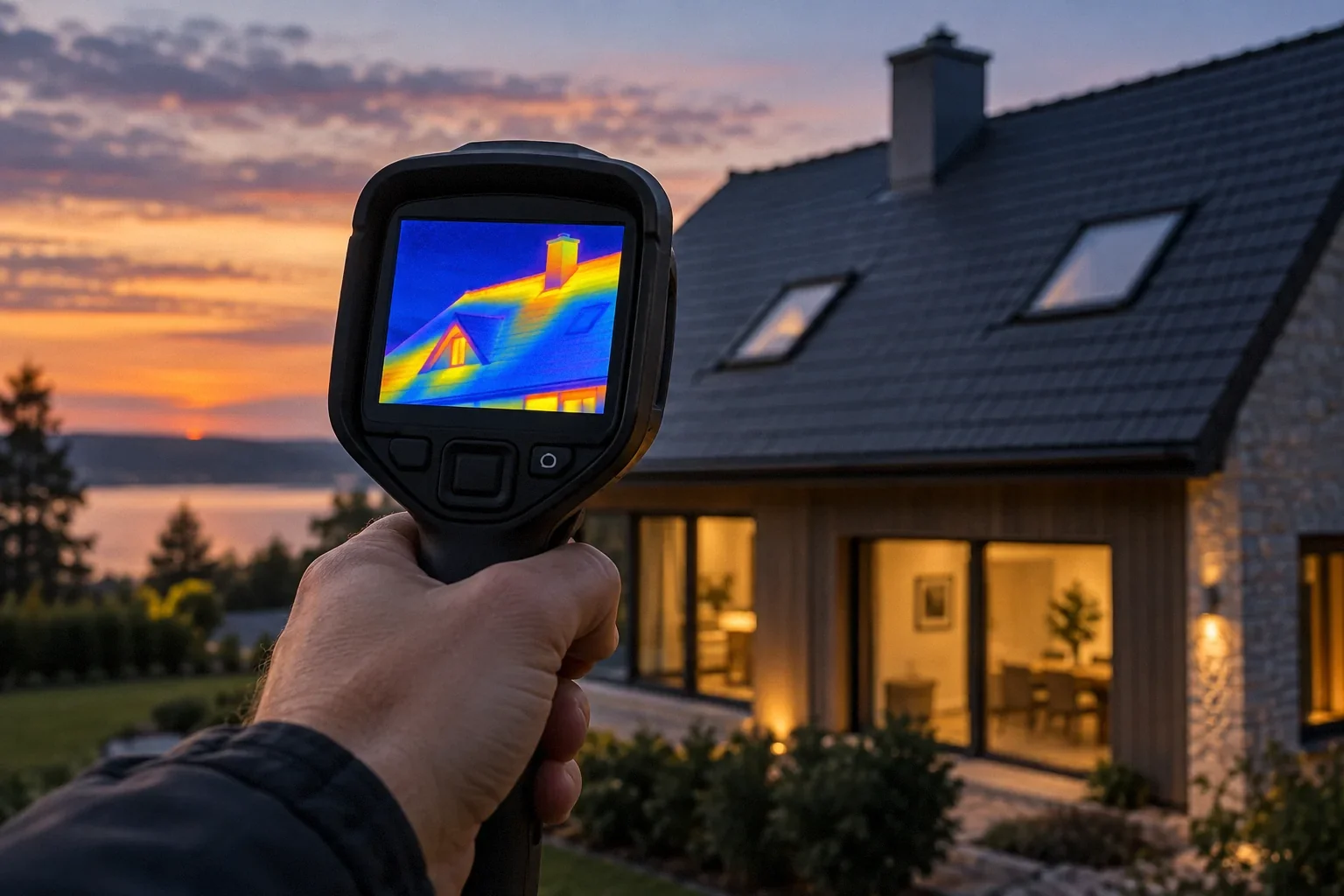
Infrared cameras show temperature patterns, not a direct picture of water inside a roof. A thermal roof survey can help identify areas that deserve investigation when the assembly and conditions are suitable. It should be paired with an explanation of limitations and corroboration where the findings will determine repair or replacement scope.
Temperature patterns need interpretation
FLIR describes airborne thermal inspection as a tool for identifying roof areas associated with moisture-related temperature differences. [1] That application does not mean every anomaly is wet or every wet area will be visible. The report must connect the observed pattern to the roof assembly, survey conditions and other evidence. A colorful image without that context is an illustration, not a complete diagnosis.
Other explanations to distinguish
Surface materials, shading, equipment, repairs and construction differences can influence temperature patterns. Moisture may be one explanation among several. Conditions during and before the survey affect what can be interpreted. A leak entry point and the extent of affected material are also different questions: a thermal pattern does not automatically locate the original breach.
Evidence to request before choosing the work
Ask why the roof is suitable for the proposed survey, what conditions are required and which areas may be obscured or uninterpretable. The deliverable should pair thermal images with ordinary photographs and a location map. It should distinguish suspect areas from confirmed wet areas and explain how confirmation will be obtained when needed. Request the basis for repair boundaries, not merely a total colored area.
Before accepting a moisture map, ask whether every colored zone carries the same confidence. The report may distinguish confirmed areas, suspect anomalies and uninterpretable portions. That is useful information rather than a weakness to hide. A repair estimate should preserve those distinctions so quantities based on confirmation are not silently combined with quantities based only on an unresolved image pattern.
How the findings change the repair decision
Use the survey to guide targeted investigation where that can reduce unnecessary opening. If the results will justify a coating, rehabilitation or replacement, define how uncertain areas will be resolved first. A negative survey should not override an active leak without explaining the method's limitations. Conversely, a suspect pattern should not automatically become a removal quantity without corroboration.
A practical example and what it does not prove
A building owner with repeated membrane leaks is offered a thermal survey before coating. The valuable question is what happens after the images are collected. A useful scope includes mapping, interpretation and an agreed way to check suspect locations. A weak scope delivers dramatic pictures and immediately equates every colored patch with material requiring replacement.
Limits and when professional review matters
Drone access and a camera do not eliminate the need for qualified interpretation or compliant flight operations. Homeowners should not make roof openings or walk suspect areas to validate images. Professional verification should protect and restore any investigated locations. The survey report should remain explicit about areas it could not assess rather than presenting a complete-roof certainty unsupported by the method.
Keep confidence levels visible on the moisture map
A survey may include confirmed wet areas, suspect anomalies and regions that cannot be interpreted confidently. Those distinctions should remain visible when the map becomes an estimate. Combining them into one removal quantity hides uncertainty that may materially affect scope. Ask how each category will be resolved and whether the investigation can be staged before committing to wider work.
A negative survey also needs context. If active leakage is documented but the survey shows no useful anomaly, the result may limit the method rather than disprove the leak. Ask what other evidence will guide the investigation. A tool is valuable when its limitations are understood; it becomes misleading when its output overrides contradictory observations without explanation.
- An anomaly is mapped but unconfirmed: identify the corroboration required before it determines removal quantities.
- Some roof areas are obscured or uninterpretable: preserve those gaps instead of labeling the whole roof assessed.
- An active leak produces no useful thermal finding: continue the investigation using other evidence rather than declare the roof dry.
Questions that resolve the remaining uncertainty
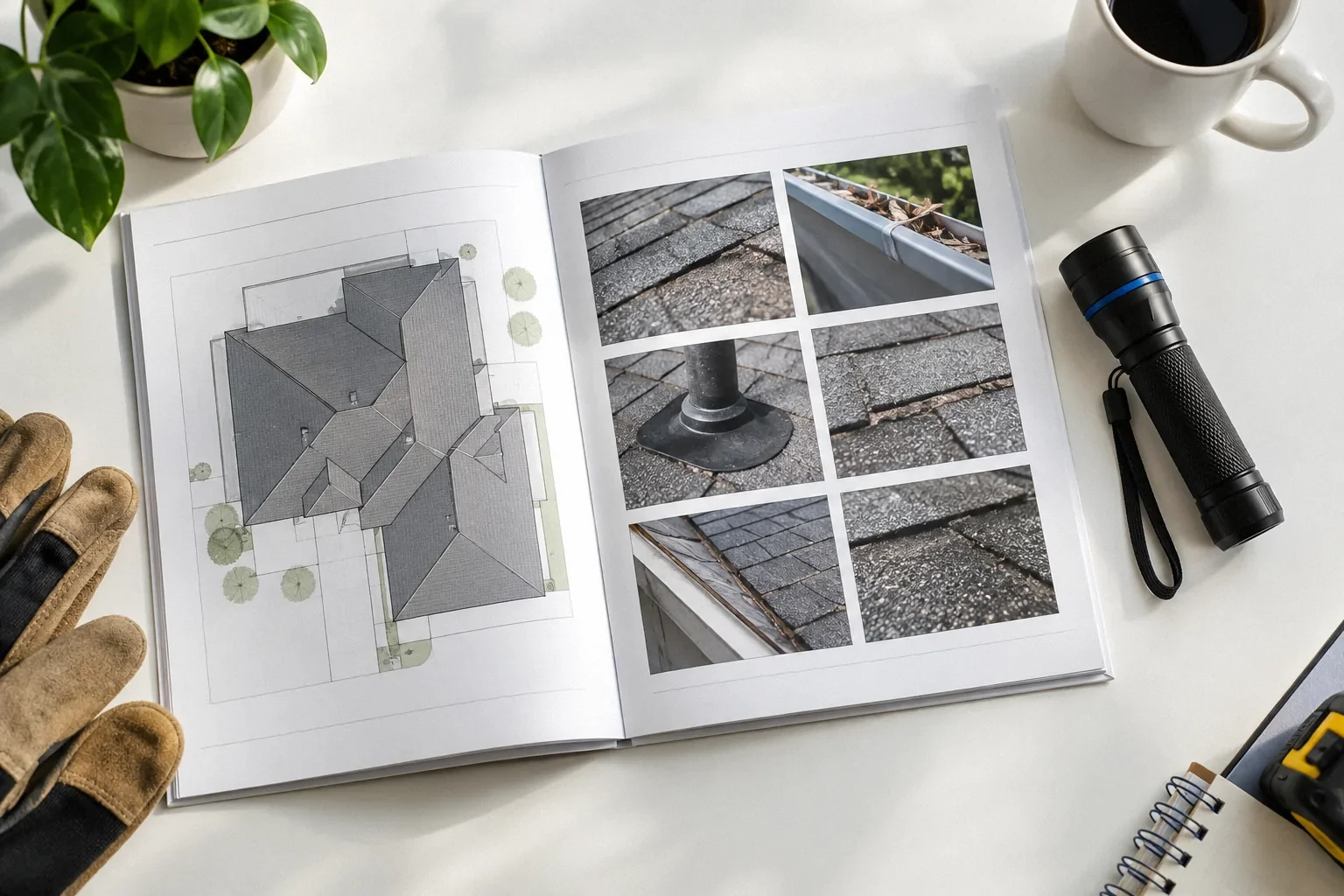
Ask for ordinary photographs aligned with thermal images. The visible context can help identify equipment, surface changes or previous repairs that require interpretation. An image without a location reference is difficult to use for targeted follow-up, even if its thermal pattern is striking. The report should allow another professional to find the same area and understand why it was selected for further investigation.
Survey conditions belong in the record because the method depends on interpreting temperature behavior. The operator should explain whether conditions were suitable and whether any area could not be assessed as planned. Do not accept a generic claim that an expensive camera sees through the roof. The measurement is indirect, and its value comes from appropriate use and careful interpretation rather than the visual appearance of the output.
If targeted opening or another confirmation method is proposed, clarify who will perform it and restore the roof afterward. The diagnostic step should not leave an unrecorded vulnerability. Its result should also be connected back to the survey map: confirmed, not confirmed or still uncertain. That feedback is what turns an anomaly map into useful evidence for a repair decision.
A coating proposal deserves particular care when it relies on the survey. Ask whether the selected system requires a condition that the survey alone cannot establish. If so, the remaining verification belongs before acceptance of the substrate. A contractor should not treat a negative image as a universal certificate that every concealed component is suitable to remain.
For a recurring leak, the survey may help estimate affected areas while still leaving the entry detail unresolved. Keep those two questions separate. Finding suspect moisture does not explain how it entered, and correcting one visible detail does not establish the extent of affected material. A complete investigation may need to connect both results before selecting the final scope.
What to take away
- Thermal anomalies are leads that require interpretation.
- Ask about assembly suitability, conditions and corroboration.
- Do not equate thermal area with repair quantity or leak-entry location automatically.
Sources & further reading
Reddit links show the questions people ask; they do not establish a diagnosis or a legal requirement. Technical requirements depend on the product, building and jurisdiction. See our research approach.
- FLIR airborne roof inspectionsTechnical / official reference
Thermal inspection application; manufacturer marketing, anomalies require corroboration
- Homeowner discussion: TPO Roof Leak due to Pooling Water?Community question · anecdotal
Anecdotal issue research, not technical authority or proof about another property.
Planning a Bay Area project?
Explore YKCA’s website and discuss the scope and services you need directly with them.