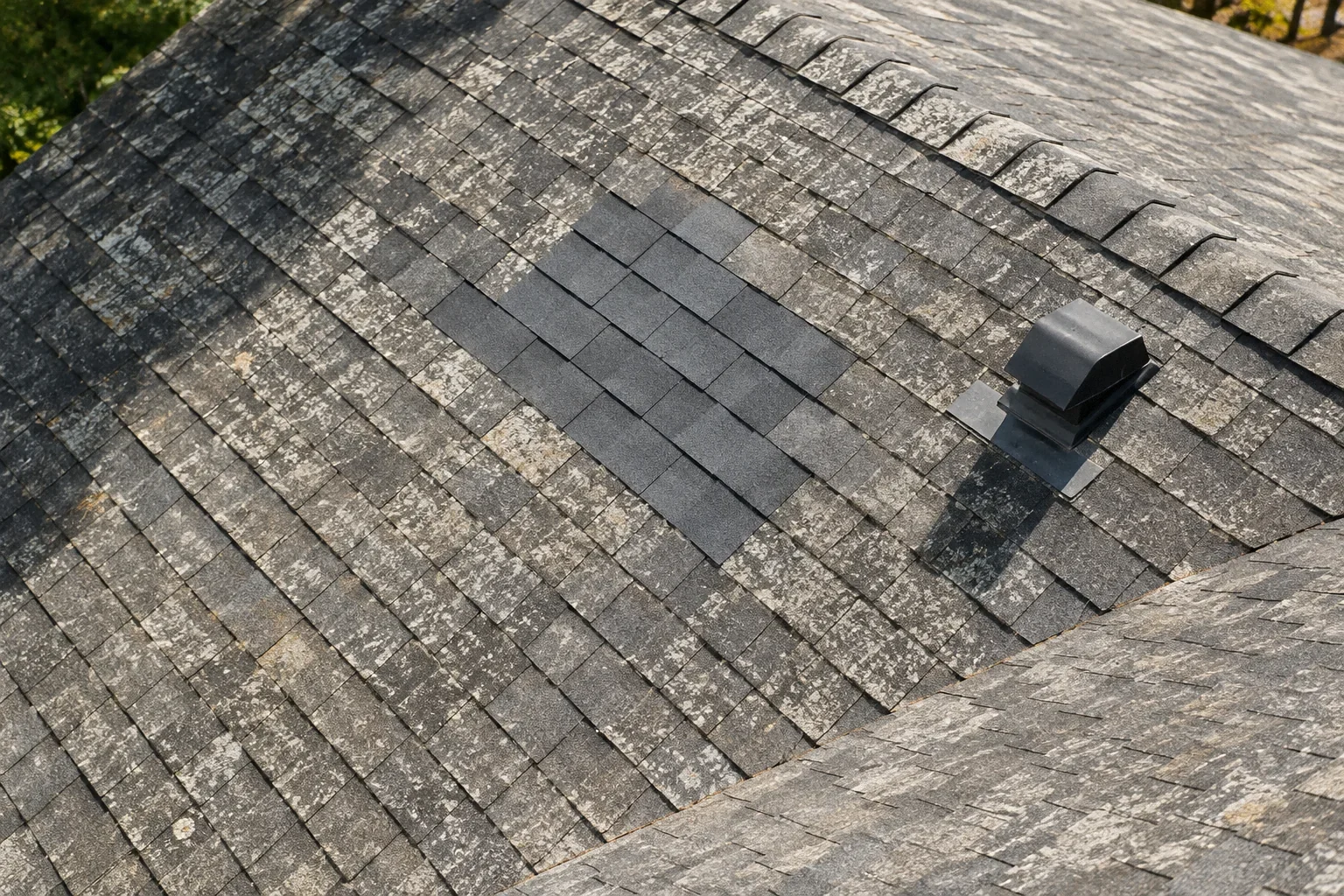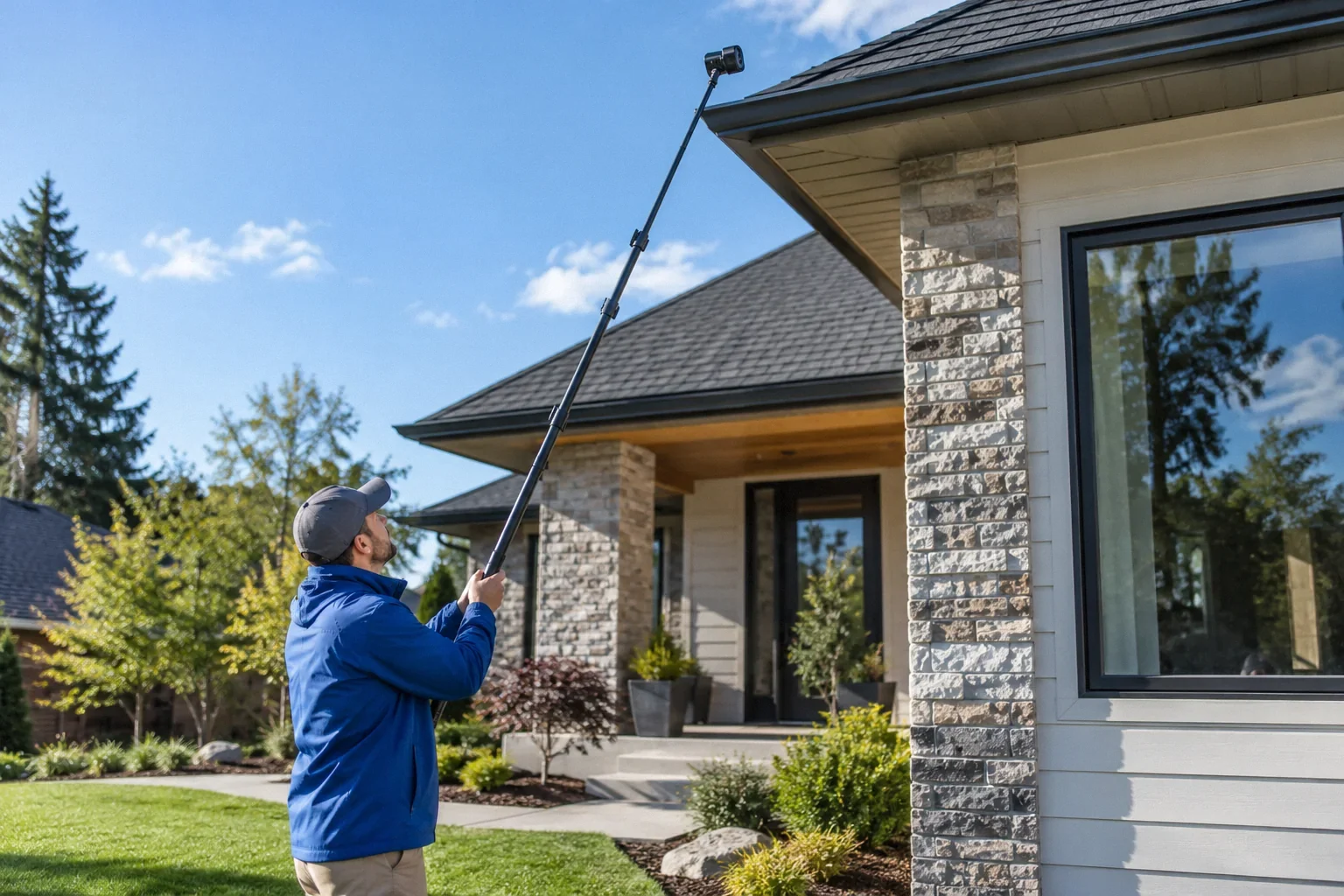
A useful roof inspection report connects observations to decisions. It identifies the roof assembly, maps defects, documents limitations and explains why a particular repair scope follows from the evidence. A folder of close-up photographs or a simple good/bad label is not enough for a major roofing decision.
Make observations traceable to recommendations
Roof problems often occur at interfaces between materials and components. PNNL identifies penetrations and water-control continuity as important inspection subjects, while IBHS explains system performance beyond a single covering label. [1][2] A report should therefore cover the relevant assembly, not only the most visible shingle or membrane surface. The level of detail should match the question the owner needs answered.
Other explanations to distinguish
Different inspections serve different purposes: locating a leak, assessing a proposed reroof, evaluating a storm concern or documenting completed work. A report can be adequate for one purpose and insufficient for another. Do not expect a limited visual visit to prove the condition of every concealed layer. Equally, a limitation statement should not excuse a conclusion broader than the evidence supports.
Evidence to request before choosing the work
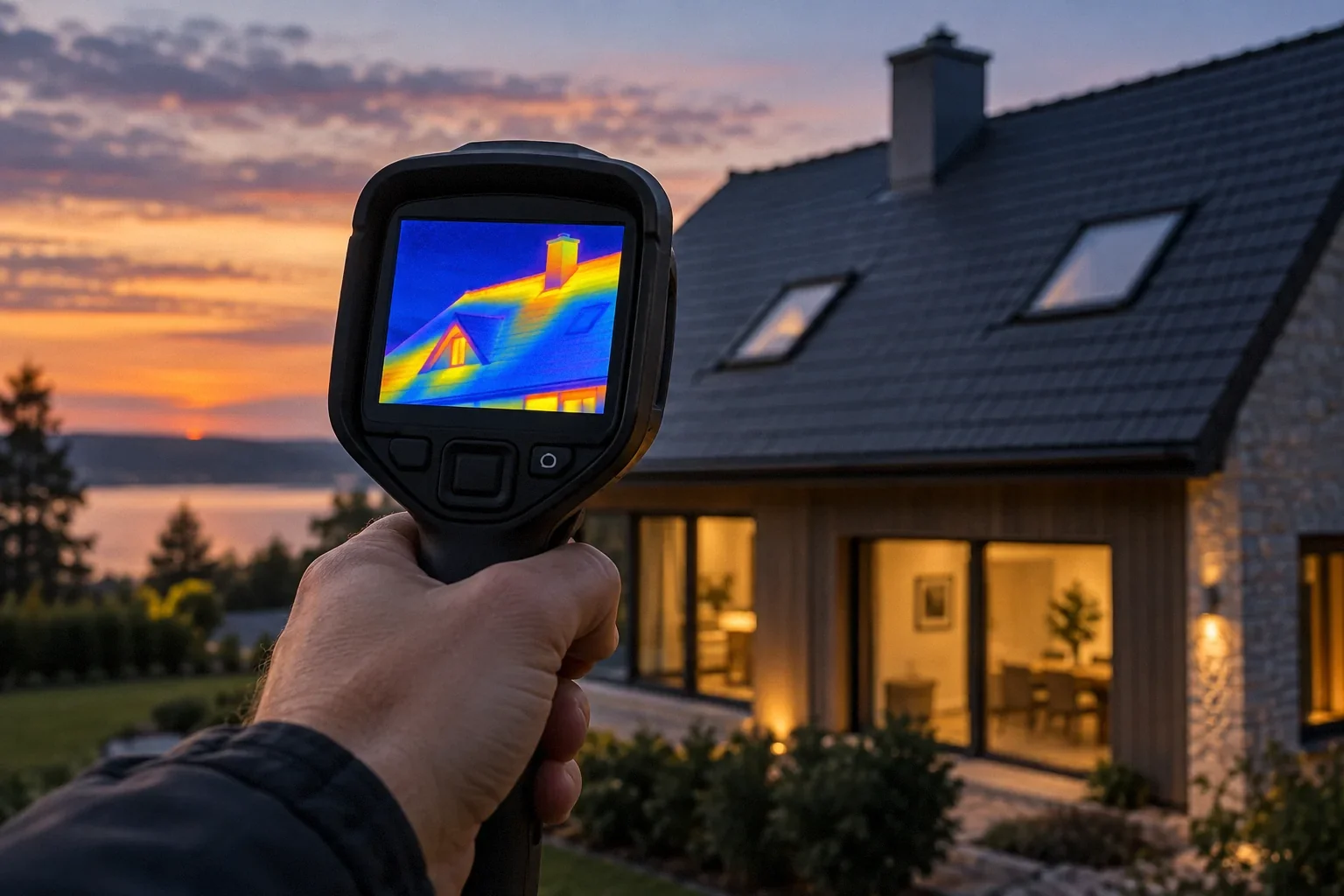
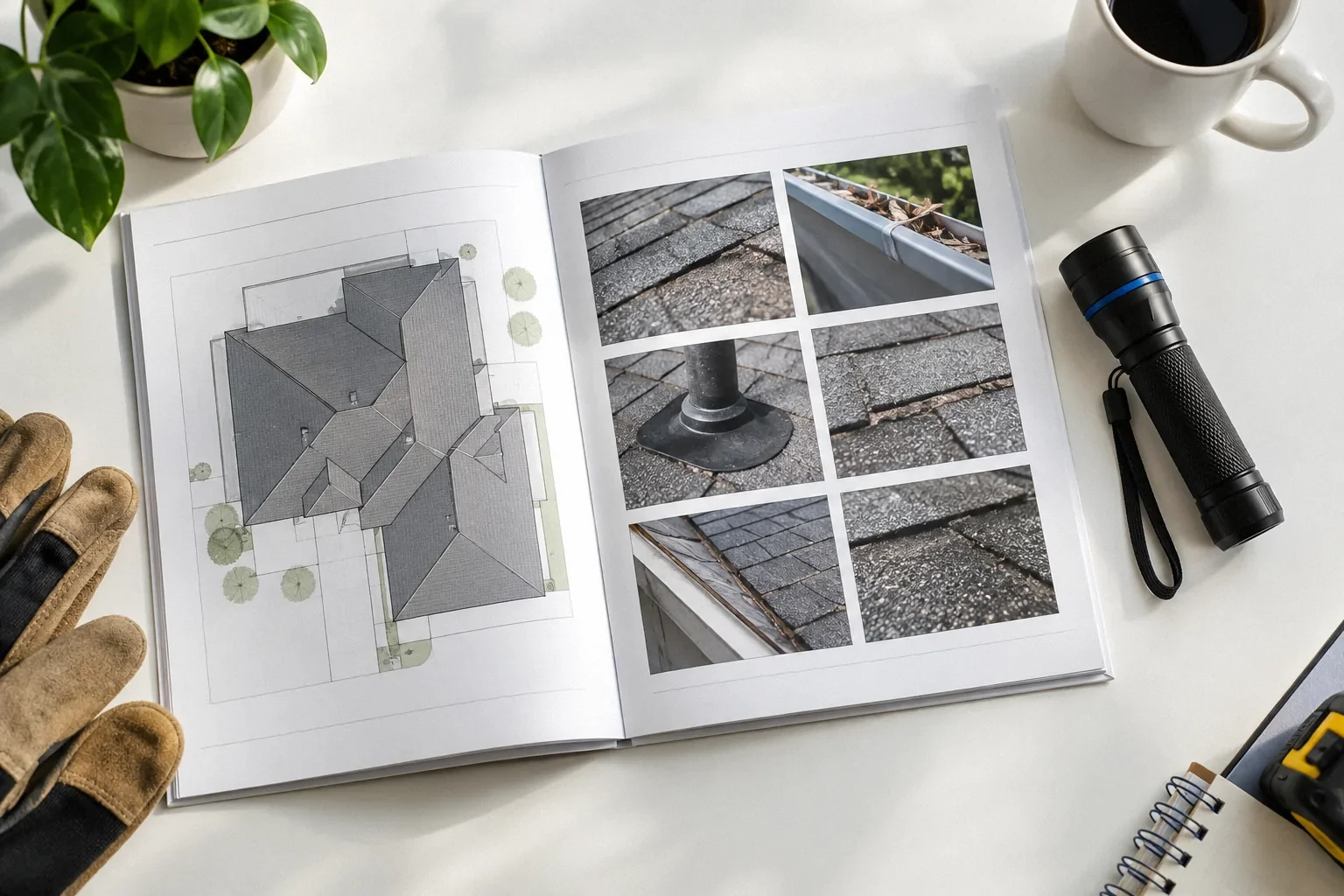
Request a plan or indexed photographs showing where each finding occurs. Separate observations, interpretations and recommendations. Product identity, inspected areas, inaccessible areas and relevant symptom history should be recorded. If diagnostic technology was used, the report should explain what it measures and how its findings were interpreted. Thermal images, for example, need context and possible corroboration. [3]
Ask for recommendations to be labeled by purpose: stop active entry, investigate an uncertainty, restore an affected component or perform routine maintenance. These categories help the owner schedule work without treating every note as an emergency. The labels should follow the inspector’s evidence and judgment. A report that uses the same urgency for every item makes meaningful prioritization difficult.
How the findings change the repair decision
Prioritize findings by consequence and uncertainty. Immediate protective needs, bounded repairs and items needing further investigation should be distinguishable. Each recommendation should identify its intended outcome and the parts of the assembly affected. A report that recommends replacement should explain why smaller repair is unsuitable; a repair recommendation should state what remains outside its verified boundary.
A practical example and what it does not prove
Two roofers describe the same stain differently. One supplies six unlabeled close-ups and a replacement price. The other maps the interior location, shows an identified flashing defect and states the limits of access. The second report is easier to assess even if its ultimate recommendation changes after opening. Its value lies in traceable reasoning rather than the quantity of photographs.
Limits and when professional review matters
An inspection is not a guarantee against every future leak. Weather conditions, access and concealed components limit what can be established. The report should identify the next step that could reduce a material uncertainty. Before commissioning it, tell the inspector which decision you are making; that helps avoid receiving a general condition survey when the actual need is a focused leak investigation.
Label recommendations by the decision they support
A report should distinguish active protection, corrective repair, further investigation and ordinary maintenance. If every item is assigned the same urgency, the owner cannot prioritize meaningfully. Ask the inspector to explain the consequence of delay and the uncertainty associated with each recommendation. The explanation should reflect the actual finding rather than a generic alarm attached to every photograph.
The report should also identify its endpoint. A visual condition review may reasonably leave concealed questions unresolved, but it should say which question matters enough to investigate next. A leak investigation should connect its conclusion to the symptom it was commissioned to explain. Clear scope limits make the document more useful, provided its final recommendation stays within those limits.
- A photograph shows a condition without a location: add the reference needed to connect it to a repair item.
- A recommendation exceeds the inspected area: ask for the evidence or further investigation supporting that extension.
- The report mixes maintenance and urgent protection: request prioritization tied to consequence and uncertainty.
Questions that resolve the remaining uncertainty
The first page of a useful report can state the commissioning question and the conclusion in plain language. The supporting pages then show the evidence and limitations. This is easier to use than a photo collection whose recommendation appears only in an estimate attached later. The owner should be able to understand what the inspection establishes before being asked to choose a construction option.
Ask the inspector to distinguish recommended investigation from recommended repair. An uncertain condition may justify further access without yet justifying replacement. If those steps are merged, the owner can lose the opportunity to make an informed decision after the new evidence is available. A staged scope should identify the question answered at each stage and the possible consequences for the next step.
A report also benefits from representative context photographs. Close-ups document details, while wider views locate them and show relationships to roof planes, walls and equipment. Neither replaces the other. The document should not rely on the owner remembering where each image was taken during a brief site conversation. Location labels make the record usable by a later contractor or independent reviewer.
When repair work follows, ask for a completion note that refers back to the original finding numbers. This creates a direct connection between the investigation and the work performed. If the diagnosis changes during opening, record the new evidence and revised scope under the same location reference. That is clearer than issuing an unrelated after-report that leaves the original concerns apparently unresolved.
Finally, retain unresolved limitations rather than deleting them from the final file. A completed repair may resolve the commissioned leak while leaving an inaccessible area outside the assessment. Stating that boundary is not an admission that the repair failed. It tells the owner and future professionals what has and has not been established, which is the central purpose of a useful inspection record.
What to take away
- Require mapped evidence and a distinction between observation and interpretation.
- Match the inspection scope to the decision it must support.
- Keep uncertainty and further investigation separate from confirmed repair items.
Sources & further reading
Reddit links show the questions people ask; they do not establish a diagnosis or a legal requirement. Technical requirements depend on the product, building and jurisdiction. See our research approach.
- PNNL penetration flashingTechnical / official reference
Water-control continuity and penetration detailing; avoid treating illustrated assembly as universal code
- IBHS Roof 101Technical / official reference
Roof system performance and test-rating limitations
- FLIR airborne roof inspectionsTechnical / official reference
Thermal inspection application; manufacturer marketing, anomalies require corroboration
- Homeowner discussion: Two leaks on 1y/o roofCommunity question · anecdotal
Anecdotal issue research, not technical authority or proof about another property.
- Homeowner discussion: TPO Roof Leak due to Pooling Water?Community question · anecdotal
Anecdotal issue research, not technical authority or proof about another property.
- Homeowner discussion: Hail damage. Do I need a new roof?Community question · anecdotal
Anecdotal issue research, not technical authority or proof about another property.
Planning a Bay Area project?
Explore YKCA’s website and discuss the scope and services you need directly with them.