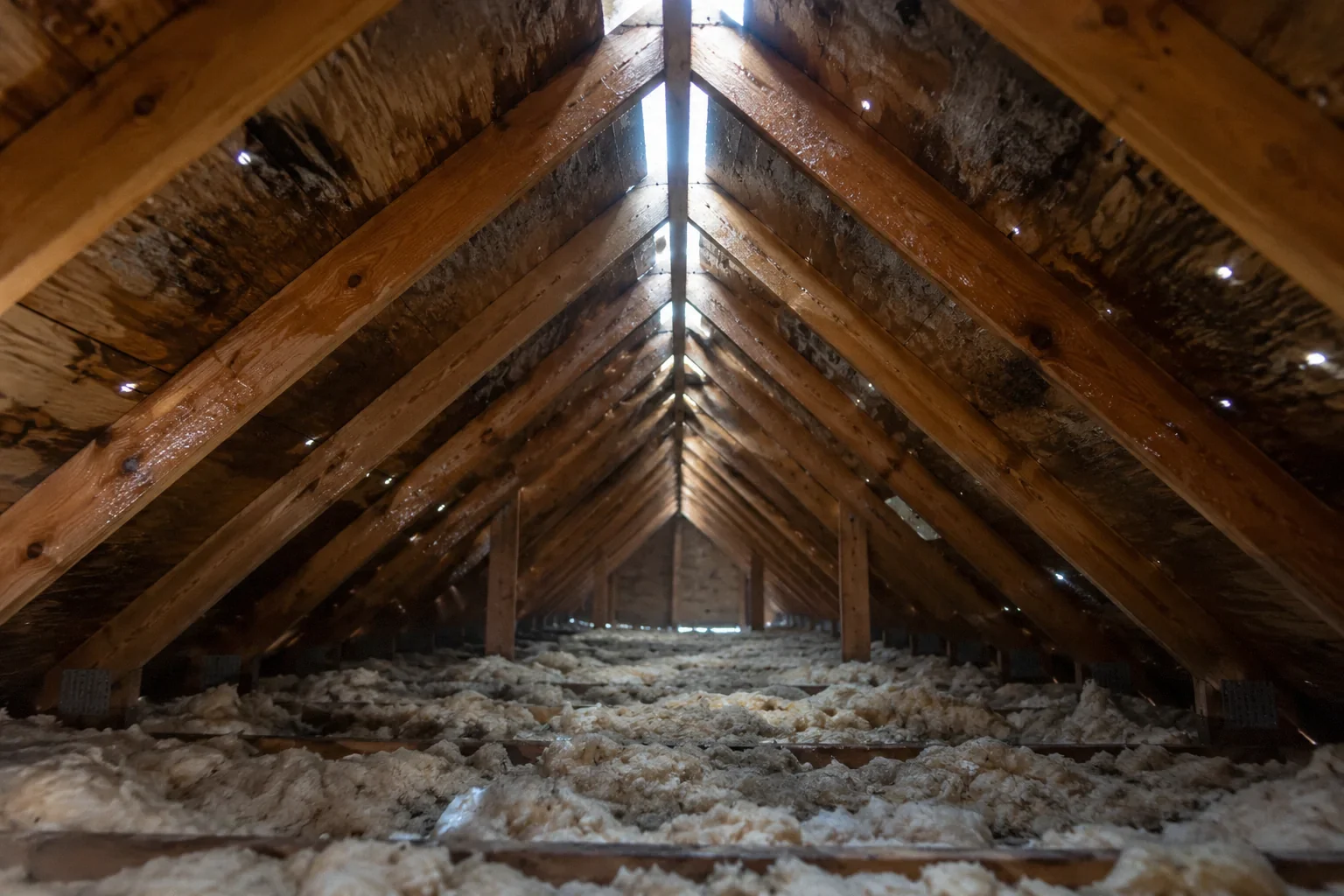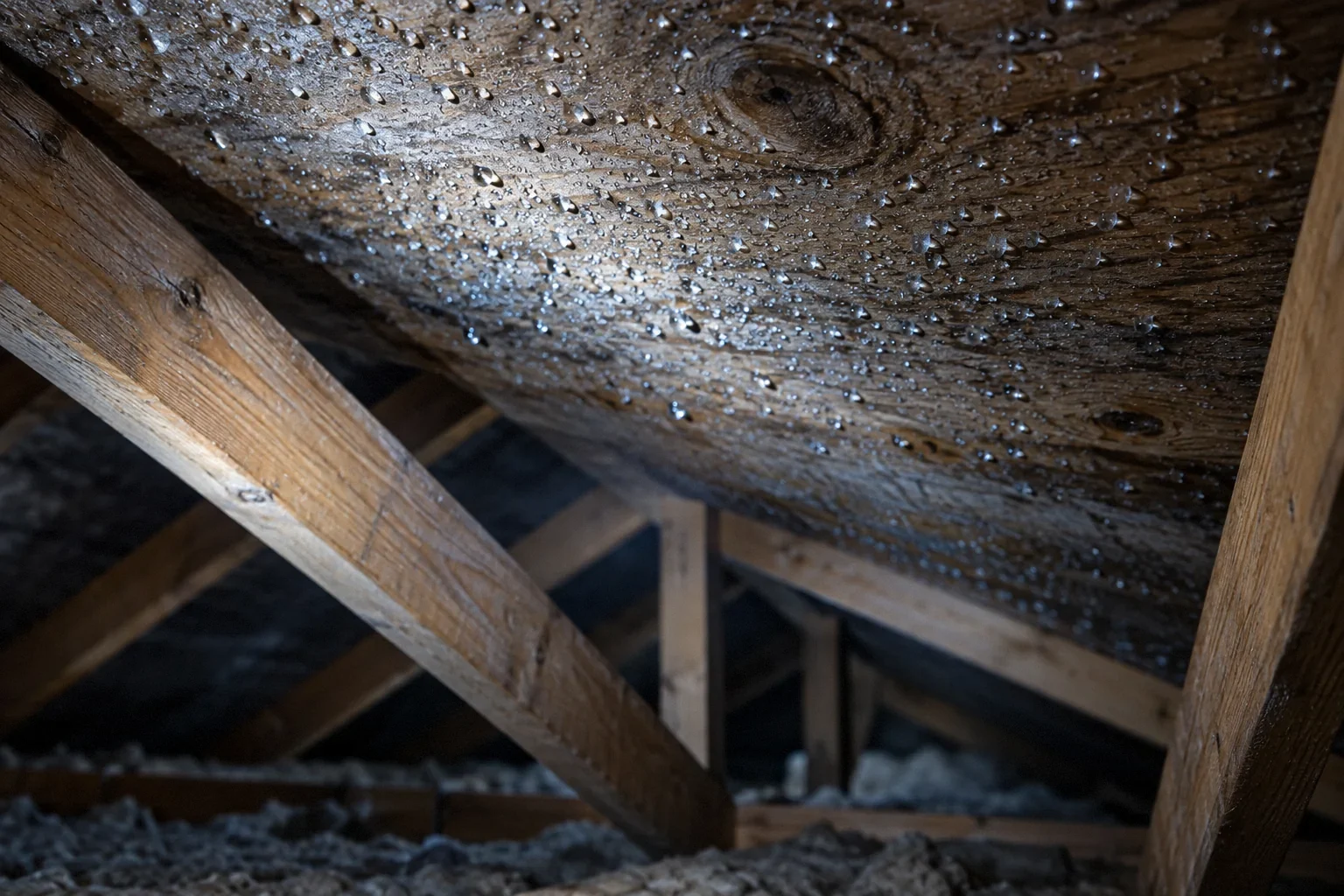
Rain entry and condensation need different repairs. A roof leak starts with outside water crossing the roof enclosure. Condensation forms when moisture in air encounters a sufficiently cold surface. Widespread dampness on the underside of roof sheathing suggests a moisture-control investigation, while a repeatable wet trail associated with rain suggests an exterior entry investigation. Neither pattern proves the answer, and the same attic can have both problems.
Distinguish the source, route and cold surface
Think in three parts: the source of moisture, its route through the building, and the surface where it becomes visible. Rain may enter at a penetration and follow framing before dripping. Indoor moisture can move through gaps in the ceiling and collect on cold roof components. A stain identifies the end of one journey; it does not identify the beginning. Roof flashing manages liquid water, while ceiling air sealing helps control moisture transported by escaping indoor air. These functions overlap in a durable building but are not interchangeable. [1][2]
Other explanations to distinguish
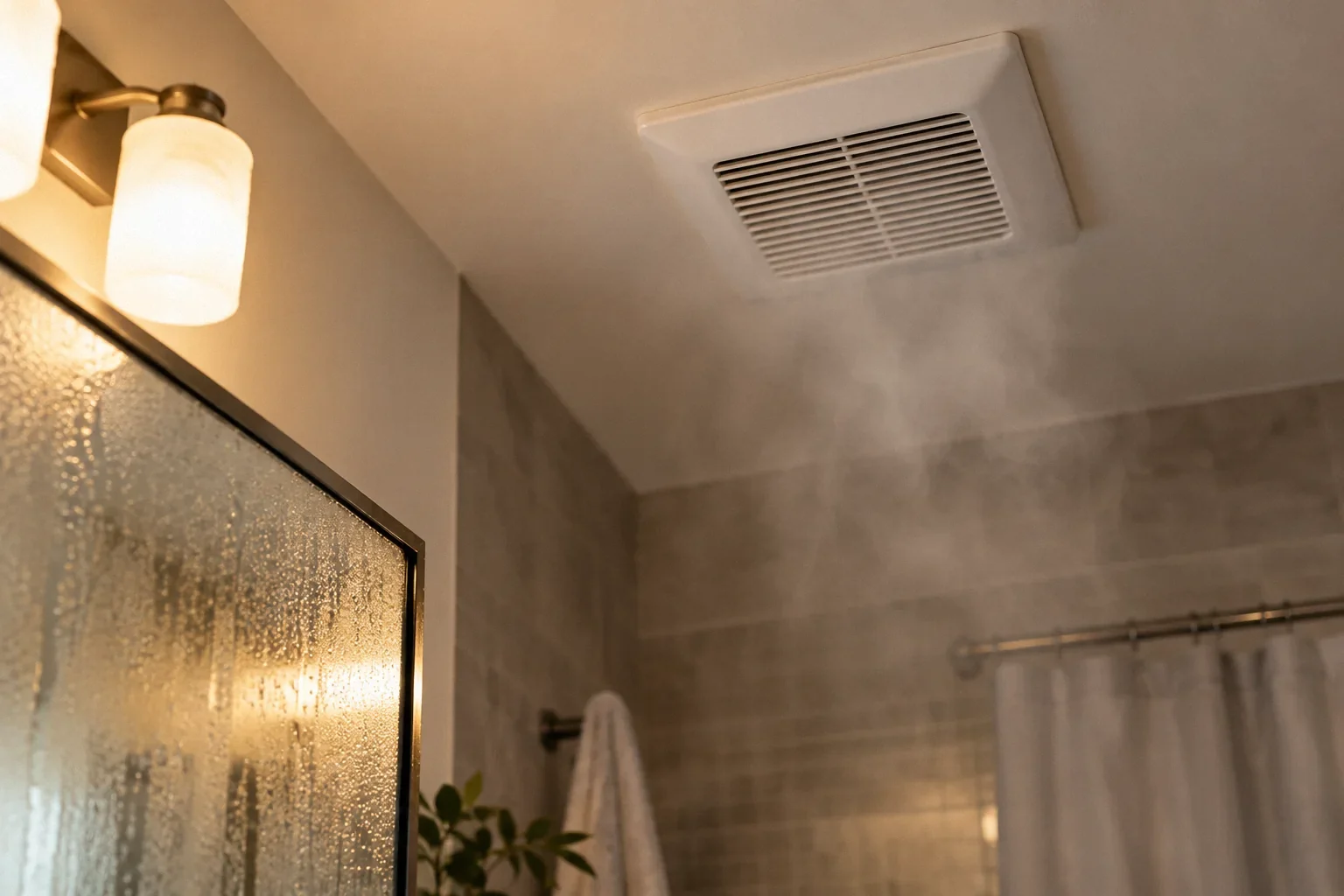
Timing is useful but easy to misread. A cold morning after a dry night can support a condensation hypothesis. Rain accompanied by falling temperatures can produce both conditions. A bathroom duct, plumbing leak, or HVAC condensate problem can also wet an attic without a failed roof covering. Ask whether dampness is concentrated beneath one roof detail or repeated across cold surfaces. Historic staining can remain after either cause has been repaired, so color alone does not establish an active defect.
Evidence to request before choosing the work
Prepare a dated record of weather, indoor activities, affected rooms and whether the mark changes size. Existing photographs taken from a safe accessible location are useful; entering a hazardous attic is not required. Request a roof-detail inspection and an assessment of the ceiling air boundary, ventilation layout and exhaust terminations. The investigator should state which surfaces were actually wet, which were only stained, and what could not be inspected. A moisture measurement without its material and location is hard to interpret.
Ask the investigator to explain the spatial pattern, not just the wettest point. If similar moisture appears across several roof planes, that observation calls for a different explanation from one isolated trail beneath a penetration. If the pattern changes after an indoor moisture source is corrected, preserve that comparison. It can help separate a remaining roof defect from the broader moisture condition without treating either initial hypothesis as settled.
How the findings change the repair decision
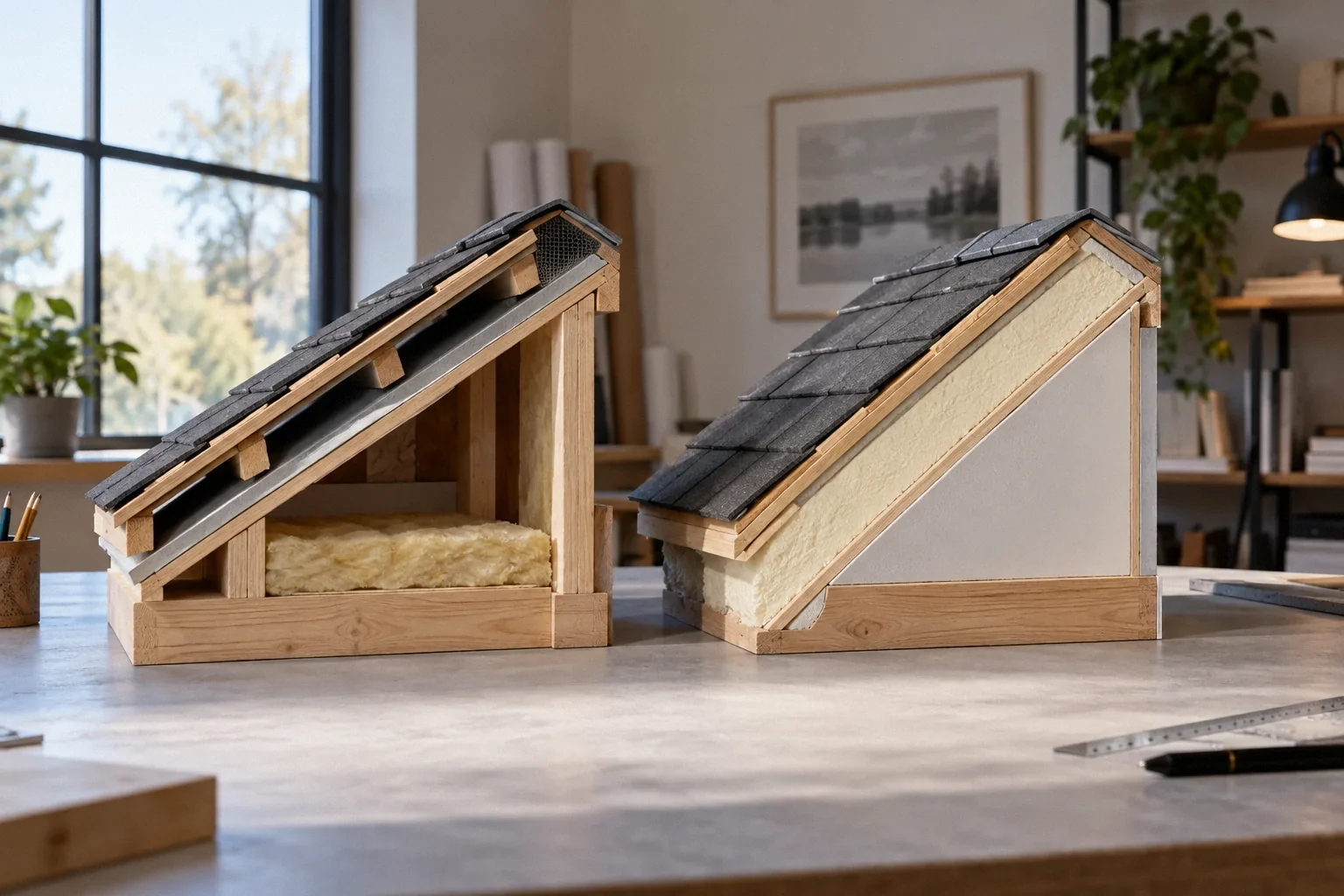
A flashing defect calls for a repair that restores the exterior drainage layers. An indoor moisture problem calls for identifying moisture generation, air leakage and the intended attic design. Adding vents alone is not a universal answer, especially where the roof is intended to be unvented. If both mechanisms remain plausible, commission a coordinated investigation rather than authorizing two unrelated remedies. Ask what observation would confirm or disprove each proposed cause before the work begins.
A practical example and what it does not prove
Consider a bedroom stain that appears during a cold week. The owner assumes that the previous rain caused it. Inspection finds many damp nail points but also one distinct wet trail below a plumbing penetration. The reasonable scope separates the local flashing repair from the broader attic moisture investigation. Calling the entire condition a roof leak would leave the indoor moisture mechanism untreated; calling it all condensation would miss a real penetration defect.
Limits and when professional review matters
Do not use a clean-looking roof or a full-length ridge vent as proof that either system works. Roof layers may be concealed, and a vent may lack a usable intake path. A bulging ceiling, wet electrical equipment or visible structural deterioration changes the priority to keeping people away and obtaining prompt professional assistance. The investigation can be careful without postponing protection against continuing water damage.
Interpreting mixed moisture patterns
A localized wet trail and widespread damp surfaces do not have to share a cause. Treat them as separate observations until evidence connects them. For example, correcting a pipe flashing can stop one drip while cold-weather wetness continues elsewhere. That is not proof that the flashing repair failed. It is a reason to revisit the second mechanism that the initial inspection identified.
A room-to-attic moisture investigation should examine the boundary rather than focus only on roof openings. The owner can ask whether the professional has established where humid air could enter and what makes the affected surface vulnerable. If that explanation is missing, a ventilation recommendation may be premature. If rain entry is independently documented, however, moisture-source work indoors should not postpone that roof correction.
- A stain grows during rain but broad dampness appears on dry cold mornings: preserve two symptom histories instead of forcing one diagnosis.
- The ceiling is dry after flashing repair but attic surfaces remain damp: evaluate the remaining moisture pattern before repeating the exterior repair.
- An inspector identifies only old staining: ask what evidence establishes current wetness before approving invasive work.
What a mixed diagnosis changes
Suppose the inspection identifies one rain-entry detail and a separate pattern consistent with condensation. The repair plan should have two acceptance questions. Did the exterior correction restore the identified water path? Did the attic work address the source and route of indoor moisture? A successful answer to one does not establish the other. Keeping these questions separate also avoids confusing a persistent historical mark with renewed water entry.
A useful comparison considers where the moisture appears. A trace aligned with a particular penetration supports a focused exterior investigation. Similar wetness across surfaces away from that penetration broadens the inquiry. Neither observation should be overstated: moisture can travel, and different surfaces can respond differently. The investigator should explain why the pattern supports the proposed mechanism rather than label every wet surface with the same cause.
If the owner must choose an initial investigation, begin with the uncertainty that most affects scope. Proving a localized rain defect may allow prompt bounded work while the attic review continues. Establishing that broad moisture is unrelated to rain may prevent unnecessary roof-field replacement. This is a coordinated diagnostic strategy, not a choice to ignore one problem until the other becomes worse. Preserve the original pattern so the effect of each intervention remains understandable.
What to take away
- Separate outside rain entry from moisture carried by indoor air.
- Record active wetness and weather together; old stains are not a diagnosis.
- Require separate corrective scopes when rain leakage and condensation coexist.
Sources & further reading
Reddit links show the questions people ask; they do not establish a diagnosis or a legal requirement. Technical requirements depend on the product, building and jurisdiction. See our research approach.
- PNNL penetration flashingTechnical / official reference
Water-control continuity and penetration detailing; avoid treating illustrated assembly as universal code
- DOE attic air sealingTechnical / official reference
Air leakage and moisture; investigate source before adding vents
- DOE durable atticsTechnical / official reference
Insulation, eave baffles and vented-attic durability
- Homeowner discussion: Condensation in roofCommunity question · anecdotal
Anecdotal issue research, not technical authority or proof about another property.
- Homeowner discussion: Attic Moisture- is this just a ventilation issue?Community question · anecdotal
Anecdotal issue research, not technical authority or proof about another property.
Planning a Bay Area project?
Explore YKCA’s website and discuss the scope and services you need directly with them.