Choose a drainage approach by the water source. A swale directs surface flow, a surface inlet collects water arriving above ground, and a French-drain assembly collects water from surrounding soil. Each still needs a suitable route and destination.
Identify where the water is before selecting the system
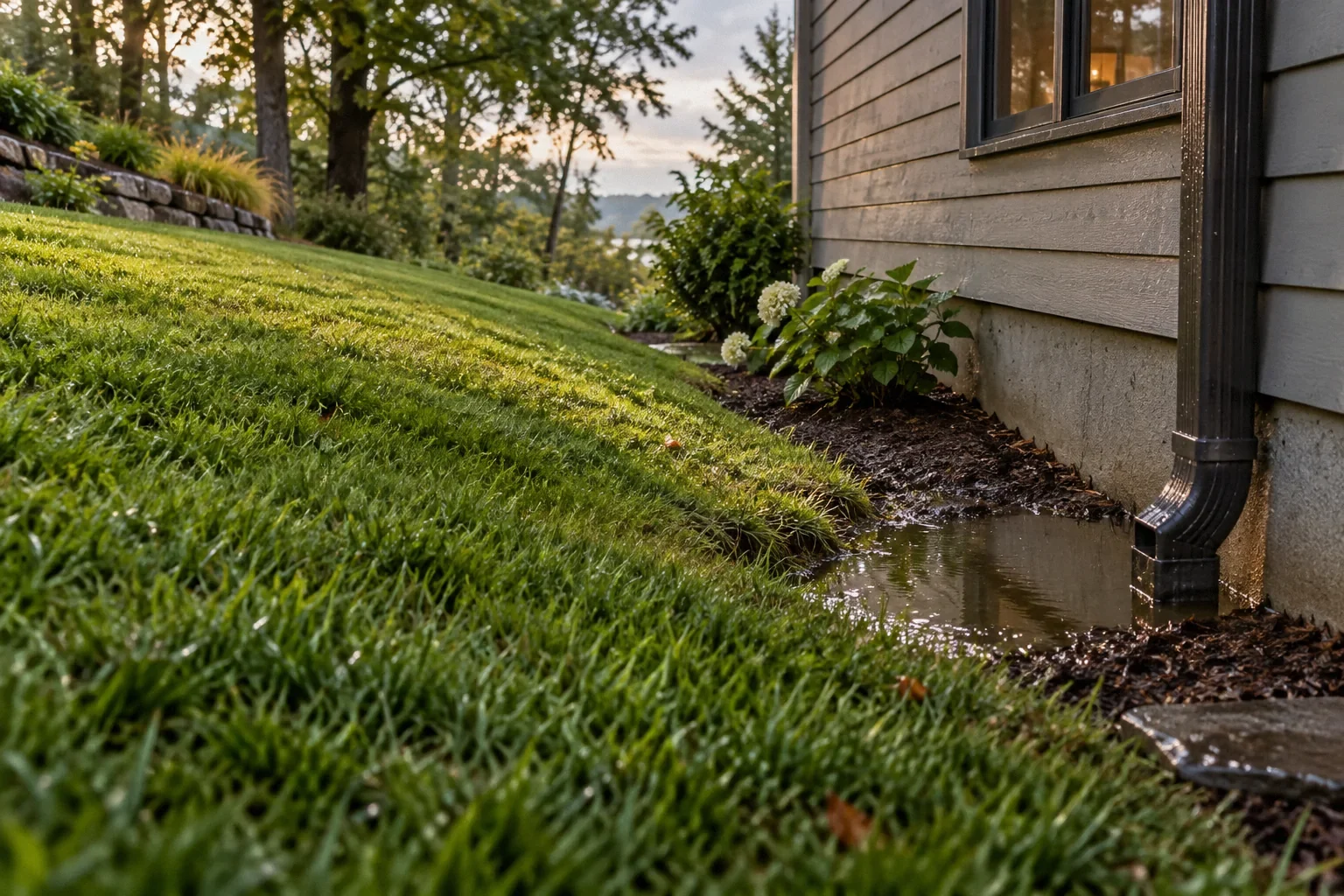
Is water visibly crossing a patio, pooling on the lawn or appearing as persistent saturation without an obvious surface stream? Record timing and location. Different sources can coexist, so one property may need more than one measure. Avoid deciding on a French drain simply because the yard is wet. NDS’s drainage guide distinguishes surface and subsurface components. [1] That distinction provides a useful starting question: how will the water causing this complaint enter the proposed system? A proposal should answer it plainly.
The driveway-runoff account concerns visible surface flow, making collection mechanism a central design question. This Reddit account is anecdotal, not technical authority. [3]
A swale needs a continuous surface route
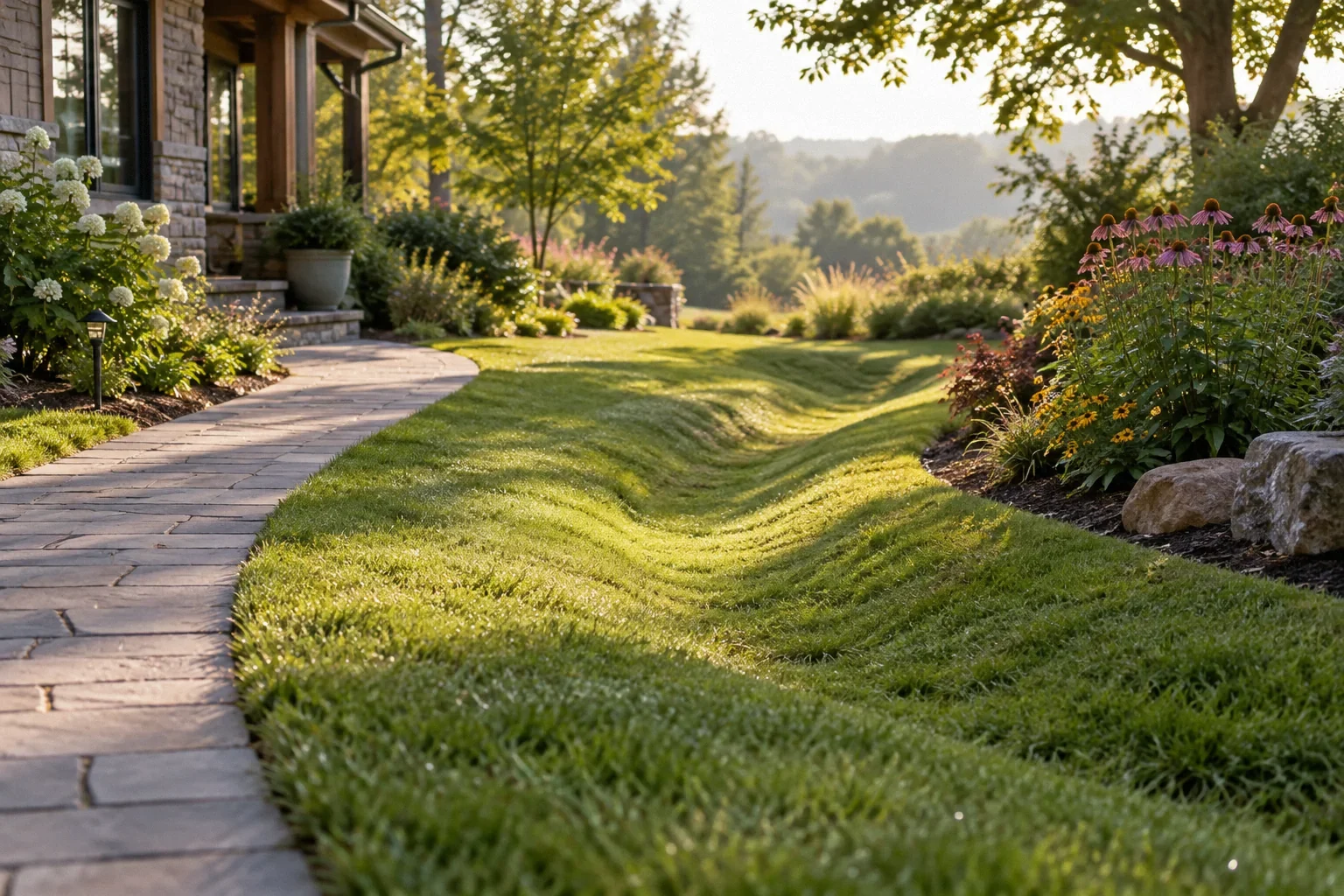
A swale is a shaped surface path, and its usefulness depends on where it begins, where it ends and how it fits the surrounding landscape. Ask for the intended flow direction and receiving area. It should not merely shift ponding to another low point or direct runoff against a structure. Existing paving, trees and boundaries can limit the layout. The designer should explain how the swale will remain identifiable and functional after planting, mowing or routine landscape maintenance alters the surface appearance.
A surface inlet needs water to reach it
A grate or catch basin can collect surface runoff only where the surrounding layout directs water into the opening. Its connection then needs a functioning carrier and destination. A basin placed conveniently beside a path may miss the actual low point. Ask the proposal to show both approach grades and the downstream route. A larger grate is not automatically the answer if water bypasses it because of the surface shape, and a better inlet does not resolve an obstructed or unsuitable outlet.
A French drain addresses a different collection zone
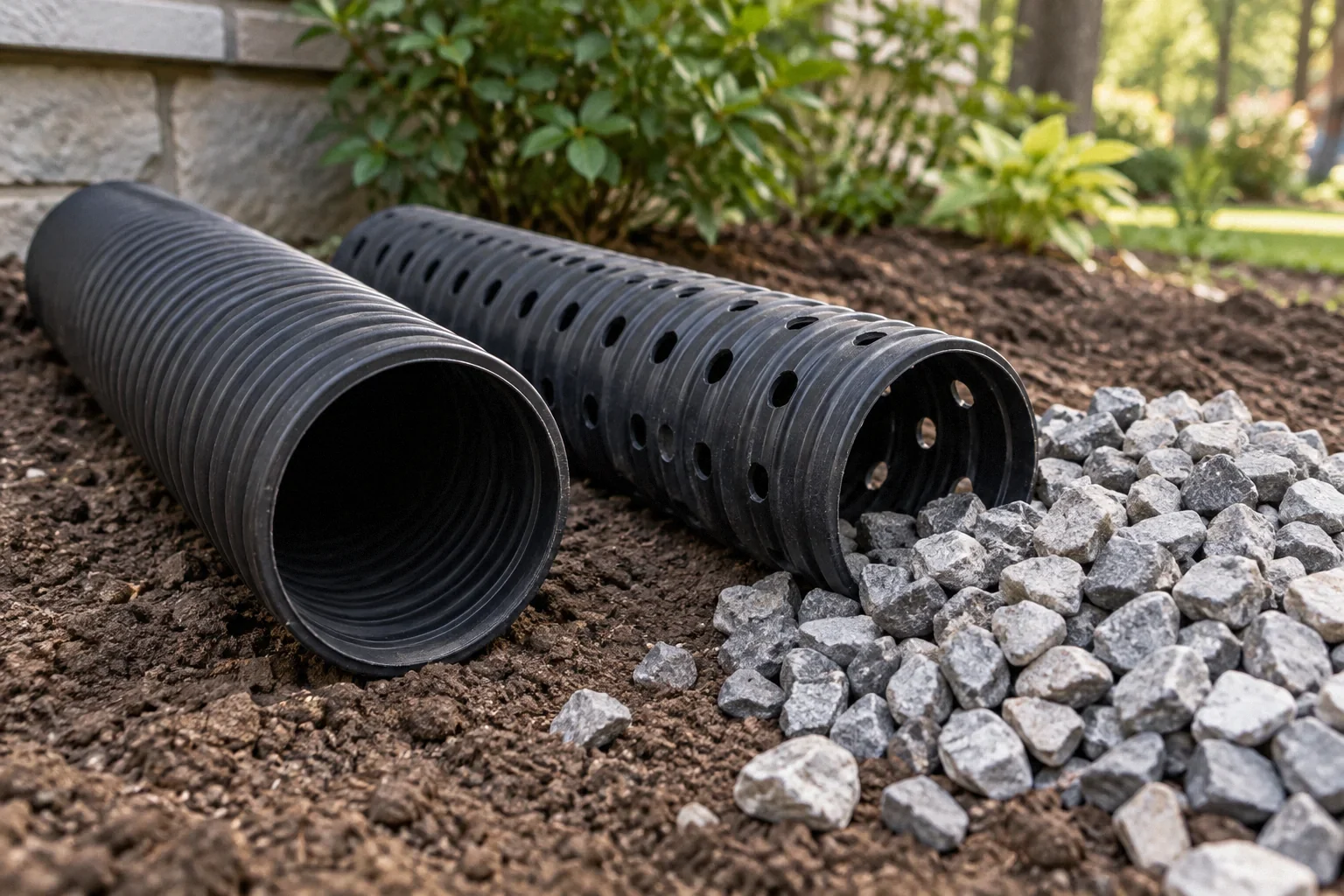
A subsurface collection assembly is not simply a hidden trench to receive any unwanted water. Ask the designer to explain the soil-water condition it is intended to intercept and how the assembly fits the site. Do not request excavation depth or aggregate based on a generic online recipe. Utilities, roots, foundations and soil conditions require review. If the complaint is a fast surface stream, ask how that stream will enter the proposed subsurface system rather than assuming the buried pipe will somehow capture it automatically.
Compare combinations without doubling uncertainty
A site may benefit from surface routing plus a collection system, but adding components does not make a design self-explanatory. Ask what job each part performs and how the parts connect. EPA describes several runoff-management approaches. [2] Use that range to consider alternatives rather than treating one product as mandatory. A complete comparison should include maintenance access, receiving conditions, landscape restoration and local requirements. If the destination is unresolved, a more elaborate collection network still leaves the central question unanswered.
Evaluate results against the original water source
After work, repeat observations at the locations that prompted the project. A dry lawn during a dry week does not establish success. Record whether the original surface stream, ponding or saturation has changed under relevant conditions. If the symptom persists, ask whether the collection mechanism matched the source or whether another source was missed. Keep the possibility of irrigation or plumbing-related water separate from rainfall. A design should be reassessed using evidence rather than defended because a familiar drain type was installed correctly.
Compare maintenance before choosing the hidden option
A visible swale may be easy to observe but needs its shape preserved. A surface inlet concentrates service at a grate and basin but depends on the connected route. A subsurface assembly may be less visible while making some performance questions harder to inspect. These are tradeoffs, not a universal ranking. Ask who will maintain the selected system and whether its accessible points fit the property’s everyday use.
A hidden installation is not automatically more durable or more appropriate. Conversely, a visible surface path is not automatically sufficient where the water source is below ground. The design should justify the collection method first, then compare appearance and maintenance preferences within feasible options.
When several measures are combined, request a simple explanation of their boundaries. For example, which feature handles patio runoff and which addresses a separately observed soil-water condition? This prevents future additions from sending new sources into whichever pipe happens to be closest. The as-built record should preserve those intended functions as clearly as the route itself.
If a proposal uses infiltration as part of the solution, ask what site evidence supports it and how excess water is managed. If it uses conveyance, ask where the water is discharged and what permissions apply. These are different assumptions even when both proposals include buried pipe. The owner should not compare them as interchangeable products. Also ask how the selected approach responds to the actual timing of the complaint. A brief surface rush and persistent saturation may require separate evaluation, and a combined design should explain which component serves each. This keeps the project from accumulating drains without a clear purpose. The final record should preserve the intended sources so later additions are reviewed against the design rather than connected to the nearest available opening.
| Decision area | Question or evidence |
|---|---|
| Swale | Preserve the surface path and destination |
| Surface inlet | Maintain opening, basin and carrier access |
| Subsurface collection | Understand inspection limits and intended collection zone |
| Combined system | Label each component’s distinct job |
Example: patio runoff mislabeled as groundwater
Imagine a yard that floods when water crosses a patio and reaches a low strip beside the house. A bidder recommends a buried French drain without explaining how the fast surface flow will enter it. Another proposal evaluates the patio approach grades and a surface collection route. The second explanation may better match the observed source, but its outlet still needs review. The owner should compare complete mechanisms rather than vote for one drain name. If persistent soil saturation also exists, it can be evaluated as a separate condition rather than assumed from the surface flooding alone.
Require a source-to-destination sketch
A simple drawing should identify the water source, collection feature, carrier and final receiving area. Mark maintenance points and any unverified existing connections. This makes alternatives understandable and helps prevent a later contractor from connecting an unrelated water source to a system designed for something else.
- What water source is each component intended to collect?
- How does that water reach the inlet or collection zone?
- Where does the complete route discharge?
What to take away
- Choose the collection mechanism from the observed water source.
- Show how water enters and leaves every proposed component.
- Compare maintenance and destination, not just installation price.
Sources & further reading
Reddit links show the questions people ask; they do not establish a diagnosis or a legal requirement. Technical requirements depend on the product, building and jurisdiction. See our research approach.
- NDS manufacturer: Principles of Exterior DrainageTechnical / official reference
Surface/subsurface collection, discharge planning, sizing and maintenance.
- US EPA: Types of Green InfrastructureTechnical / official reference
Distinguish storage, infiltration, conveyance and runoff-reduction practices.
- Reddit discussion: Neighbors driveway water runoff floods my front yardCommunity question · anecdotal
Anecdotal homeowner discussion used to identify the question; not technical authority or evidence of this property’s condition.
Planning a Bay Area project?
Explore YKCA’s website and discuss the scope and services you need directly with them.