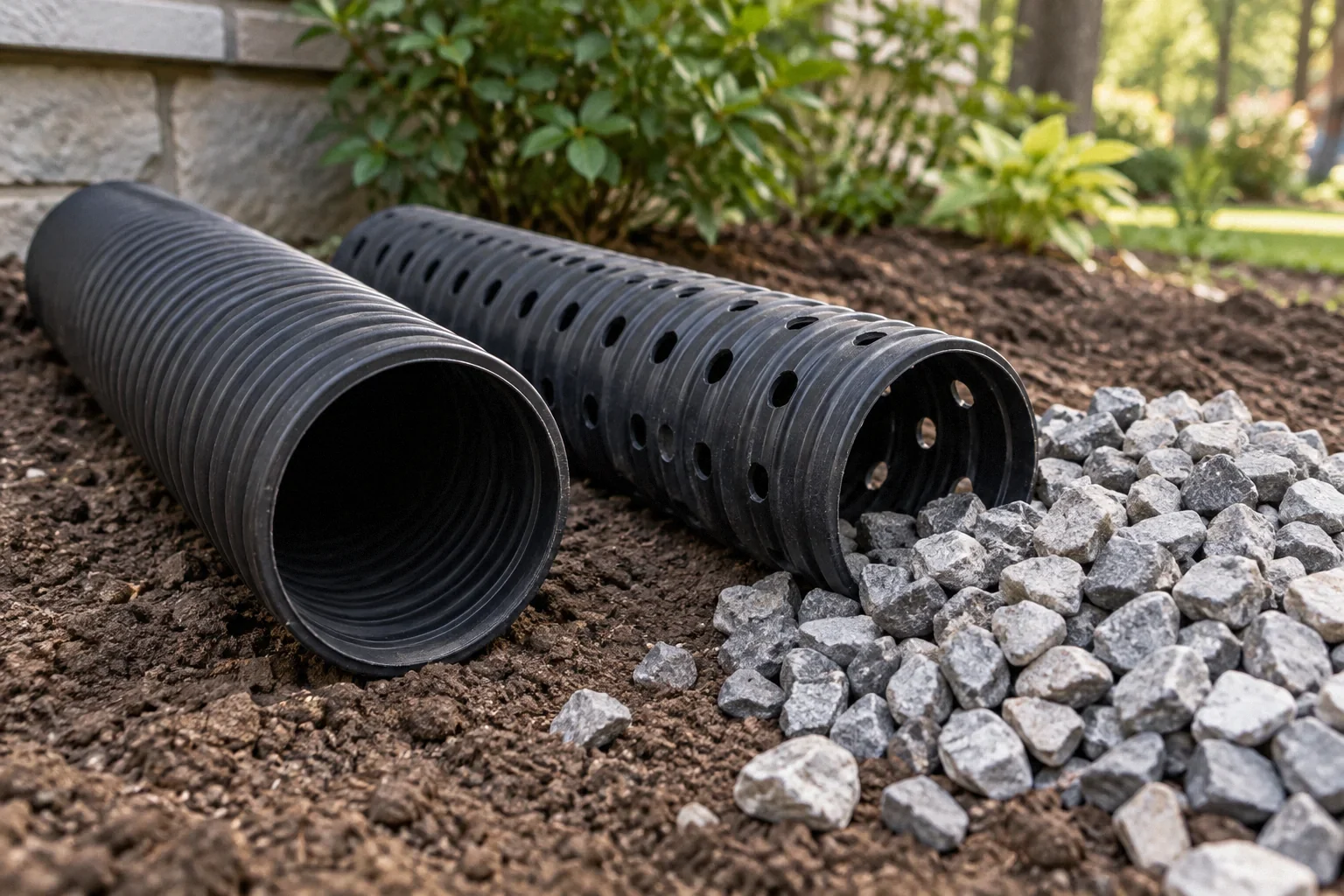
Drainage manages where water travels; waterproofing resists water entry through an assembly. They can be complementary. Diagnose the source and path before choosing a drain, coating or interior treatment, and do not assume one product can solve every moisture problem.
Describe the moisture before choosing a trade
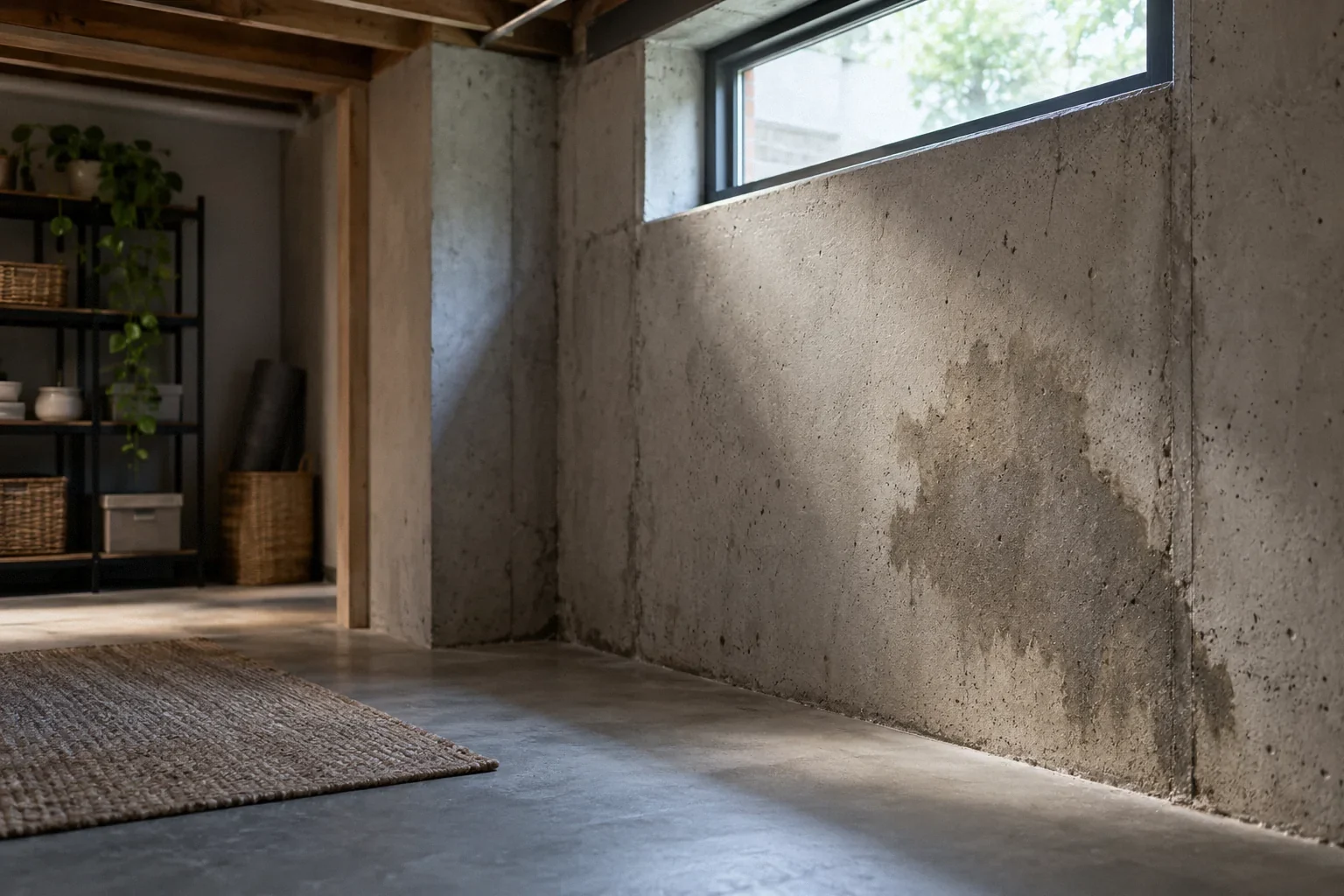
Record where moisture appears, its timing relative to rain and whether plumbing or indoor humidity could be involved. Photographs and dates help separate intermittent water entry from persistent dampness. Avoid labeling every wet basement as a failed French drain. The initial assessment should identify plausible sources and explain what evidence would distinguish them. If there is active electrical danger, unsafe access or significant water entry, obtain appropriate urgent assistance. This article addresses decision-making after the area can be assessed safely, not emergency entry into a flooded space.
The reported flooding near the house illustrates a moisture-management question without proving a waterproofing defect. This Reddit account is anecdotal, not technical authority. [3]
Understand the different jobs
Surface grading and roof-water routing reduce water reaching vulnerable areas. Drainage assemblies collect or convey water. Damp-proofing and waterproofing products address different forms of resistance at building surfaces and joints. PNNL distinguishes damp-proof coating from a complete water-management strategy. [1] The practical question is which job the proposed work performs and which jobs remain outside its scope. A proposal called waterproofing may include an interior collection system, a wall treatment or exterior work; the label alone does not tell you what will actually change.
Check simpler external sources before major excavation
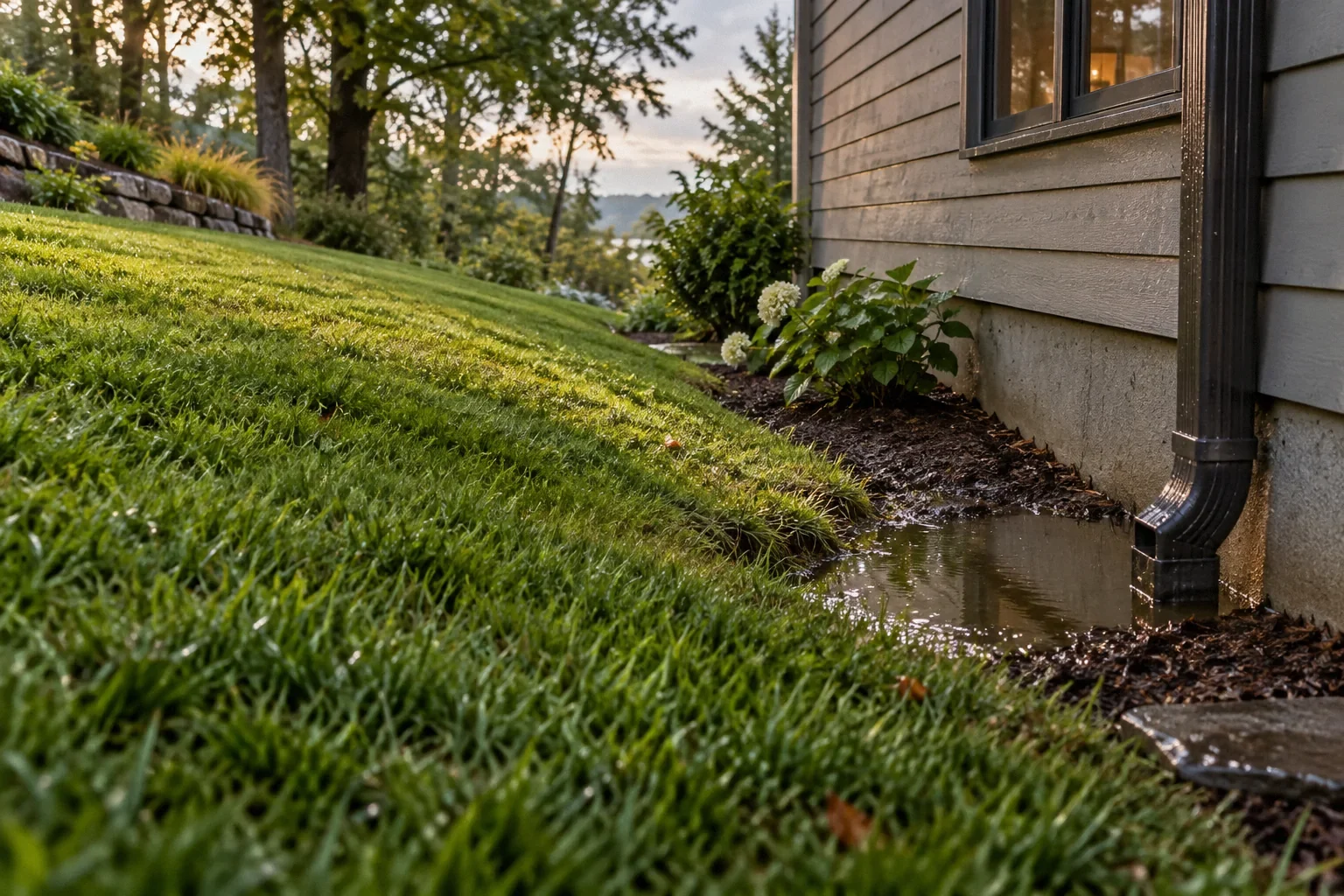
A downspout discharging beside the foundation or paving directing runoff toward a wall may contribute to the problem. PNNL’s footing-drain guidance recommends reviewing roof runoff, grading and other sources before major drain work. [2] That sequence does not guarantee a simple cure. It prevents expensive excavation from being treated as the first answer without checking visible contributors. Ask the inspector to document what was assessed and what remains unknown, including concealed wall conditions and possible non-rain sources.
Ask how the proposed system handles water
If an interior collection system is proposed, where does it collect water and where does that water go? If exterior work is proposed, how are wall details, drainage and final grade coordinated? If a coating is proposed, what substrate and exposure does the manufacturer permit? These questions reveal the mechanism without requiring the homeowner to specify the design. Ask what happens if the receiving route is unavailable or the system requires powered equipment. The proposal should explain maintenance and limitations rather than describing the house as permanently dry without qualification.
Compare scopes by the problem they address
Two bids can differ because they solve different parts of the moisture path. One might reduce surface runoff while another collects water after it reaches the interior. Neither description alone establishes suitability. Request a diagnosis, included areas, excluded conditions, maintenance obligations and a clear account of any concealed uncertainties. If the recommended work affects foundations, retaining structures or significant excavation, obtain the appropriate qualified design and assessment. Avoid making the decision solely by warranty length or the contractor’s preferred product family.
Define success beyond a dry-looking wall
A wall can look dry during a dry period regardless of repair effectiveness. Ask what will be documented during work and how follow-up observations should be made. Keep the original moisture map and relevant weather notes. If the symptom changes location, report that change rather than assuming the problem is new and unrelated. Finishes should not conceal unresolved moisture merely to make the project appear complete. The closeout record should distinguish installed components, observed test results and performance that still requires natural-rain observation.
Translate a warranty into practical responsibilities
Ask what the warranty actually covers: a specific repaired location, installed equipment, product performance or a defined service response. Ask which maintenance duties and exclusions apply. A long term alone does not explain whether the proposed work addresses the water source identified at your house. Keep the warranty with the diagnosis and scope rather than using it as a substitute for them.
Also clarify what the contractor expects the owner to do if moisture reappears. Should the owner record the location and weather, arrange inspection before covering finishes, or check an accessible component? The process should be practical and should not require unsafe access. If powered or mechanical equipment is involved, its maintenance and failure response belong in the operating information.
A coordinated plan may leave some monitoring after construction, especially where natural rain provides evidence unavailable during a dry period. That is acceptable when stated clearly. It is not acceptable to describe unobserved performance as confirmed. The final record should make clear what was installed, what was tested and which conditions still need observation.
Ask whether the assessment includes the possibility of more than one moisture source. A rain-related symptom may coexist with a plumbing leak or indoor moisture issue. Correcting roof runoff can be worthwhile without explaining every damp area. The report should distinguish the evidence for each source and the proposed sequence of work. If a contractor’s service covers only one part of the problem, request a clear handoff rather than an implied whole-house diagnosis. This is particularly important before replacing finishes, because a newly covered wall can conceal the evidence needed for another assessment. The owner should understand which conditions must be resolved or evaluated before restoration proceeds. A coordinated sequence reduces the chance that a cosmetic completion is mistaken for confirmation that the moisture problem has been fully understood.
| Decision area | Question or evidence |
|---|---|
| Drainage measure | Where does collected water go? |
| Wall treatment | What exposure and substrate is it intended for? |
| Interior collection | What equipment and maintenance are required? |
| Warranty | Which outcome, duties and exclusions are defined? |
Example: a coating quote and a drainage quote
Suppose a homeowner receives one proposal to coat a basement wall and another to reroute roof runoff. The wall becomes wet during rain, and a nearby downspout empties onto ground sloping toward it. That visible contributor deserves assessment, but it does not prove the wall needs no other work. The comparison should ask what each contractor believes is happening, what evidence supports it and what the proposal leaves unresolved. A coordinated plan may include more than one measure. The decision should not be a contest between labels when the scopes address different parts of the water path.
What a coordinated assessment should leave behind
Request a diagram or annotated photographs showing the suspected source, path and proposed interventions. Include maintenance responsibilities and the basis for any warranty. Keep concealed-work photographs and product instructions so future repairs do not begin with an unknown assembly.
- What evidence links the moisture to the proposed source?
- Which water-management job does each item perform?
- What remains untested until a later rain event?
What to take away
- Identify the water source and entry path before selecting a product.
- Compare the actual mechanisms hidden behind bid labels.
- Keep drainage, wall resistance and interior moisture assessment coordinated.
Sources & further reading
Reddit links show the questions people ask; they do not establish a diagnosis or a legal requirement. Technical requirements depend on the product, building and jurisdiction. See our research approach.
- DOE/PNNL: Damp-Proof Exterior Surface of Below-Grade WallsTechnical / official reference
Damp-proof coating is not a complete waterproofing or drainage system.
- DOE/PNNL: Footing Drain PipeTechnical / official reference
Check roof runoff, grading and plumbing before considering footing excavation.
- Reddit discussion: My French drain is clogged with clay dirt. What do I do?Community question · anecdotal
Anecdotal homeowner discussion used to identify the question; not technical authority or evidence of this property’s condition.
Planning a Bay Area project?
Explore YKCA’s website and discuss the scope and services you need directly with them.