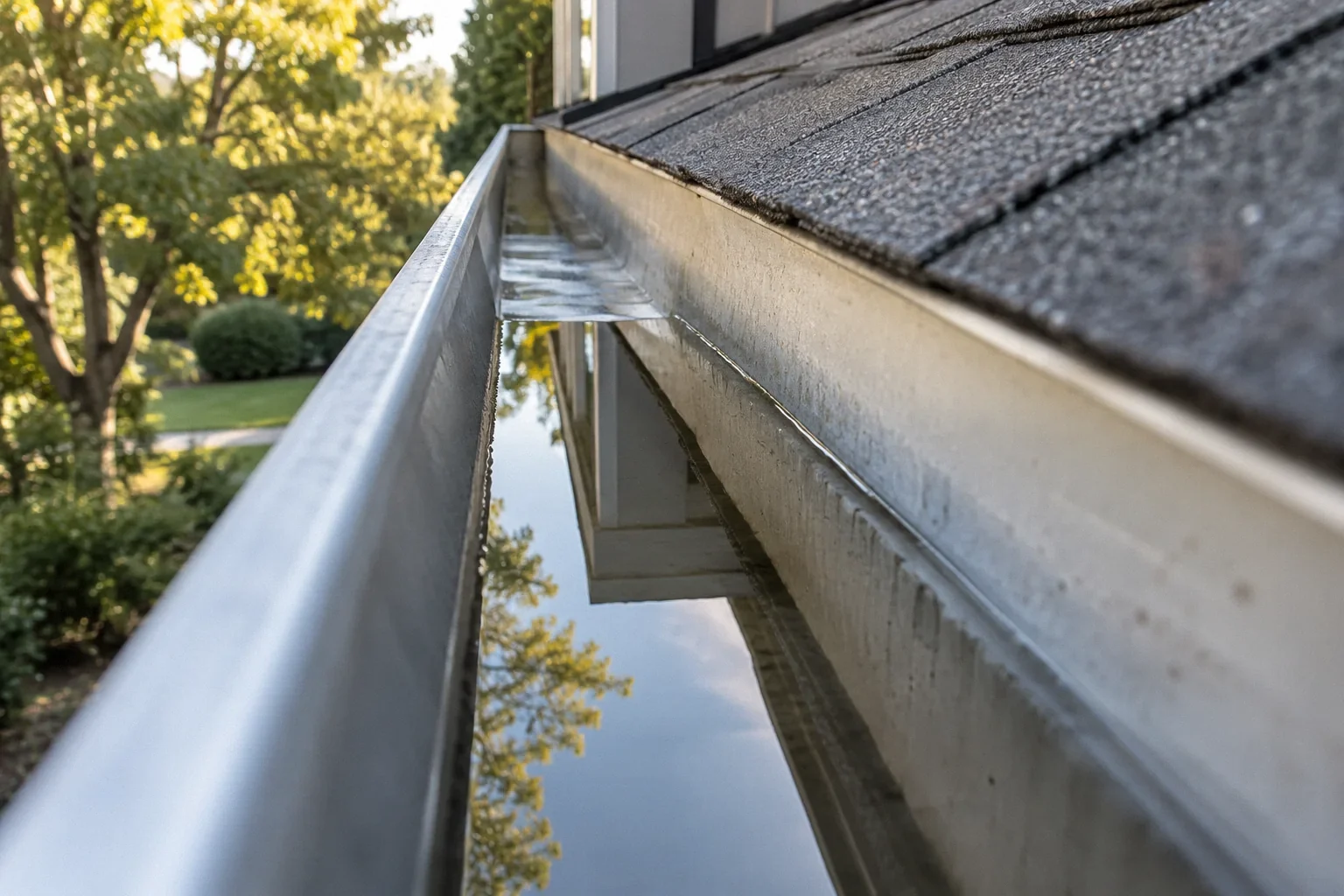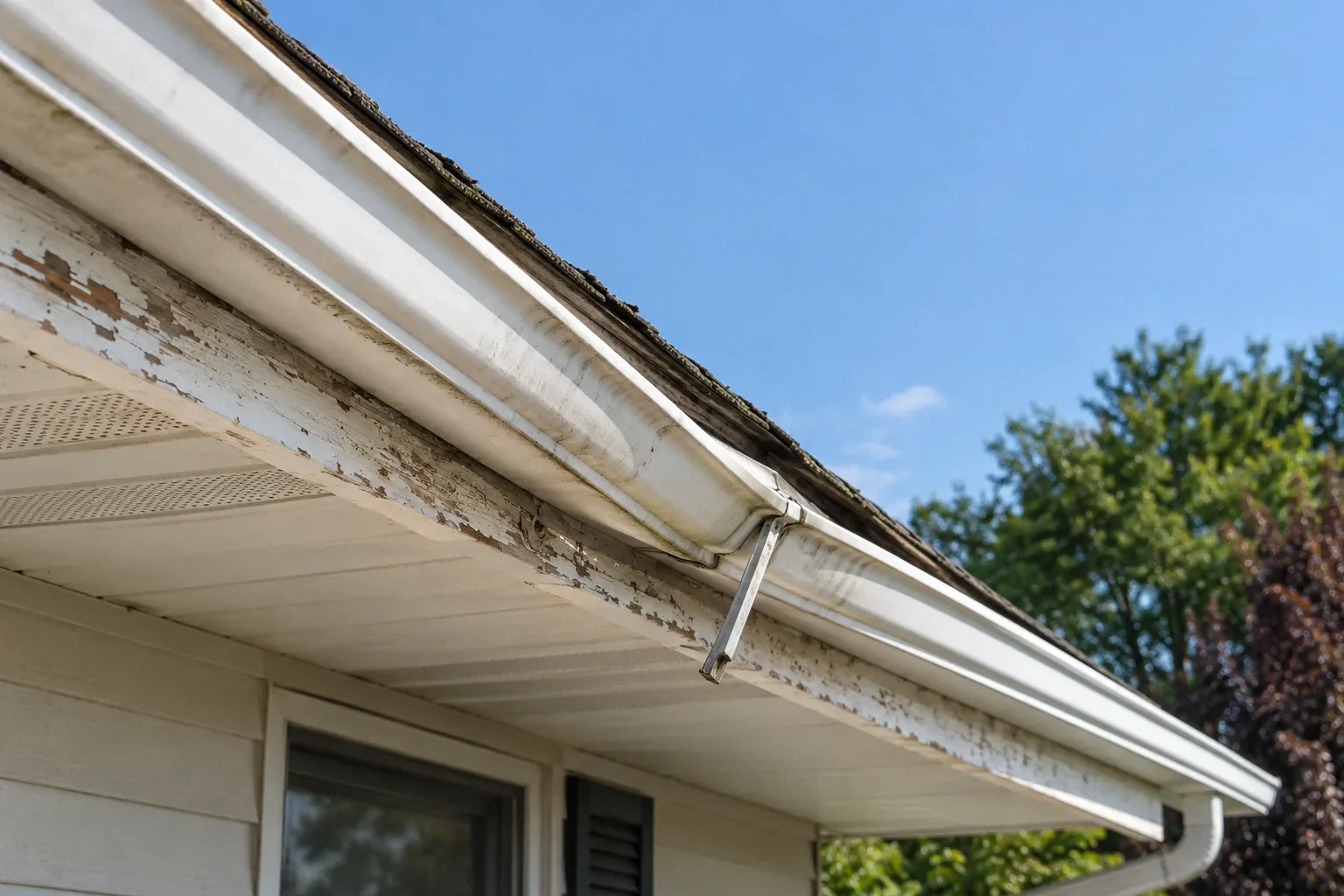
A sagging gutter needs an assessment of the gutter, hangers, fasteners and the wood or other substrate holding them. Realignment without sound support can produce a short-lived result. Visible separation, movement or falling components calls for prompt professional attention.
Distinguish appearance from movement
An uneven roofline can make a gutter look crooked even when it follows a deliberate drainage path. Conversely, a straight-looking gutter can move when it fills. Record the location of the apparent sag and whether it changes during rain. Observe from the ground and avoid standing below a visibly detached section. Ask the inspector to compare the gutter’s alignment with independent reference measurements instead of judging it only against fascia trim. This separates an aesthetic mismatch from a low point, deformation or attachment problem that changes water behavior.
The reported mid-run overflow makes support under load a relevant inspection question. This Reddit account is anecdotal, not technical authority. [2]
The fastening substrate is part of the repair
A new fastener is useful only if the material receiving it can provide the intended support. Staining, softness or previous patches at the fascia may warrant a closer assessment by an appropriate trade. Do not let a hanger replacement quote silently exclude the condition of the wood behind it. Ask whether the fastening location was evaluated and how concealed deterioration will be handled if found. The answer may be a defined allowance or a separate repair scope, but it should not be a surprise discovered after the gutter has been reinstalled.
Water load can expose a hidden low point
A trough that retains water can make existing support weaknesses more apparent. The relationship may run in both directions: poor drainage leaves water in place, while movement creates a new low spot. It is therefore important to review support and slope together. PNNL identifies positive gutter drainage as part of roof-water management. [1] Avoid assigning a cause from one empty-gutter photograph. Ask for observations of retained water and for an explanation of whether the run needs support correction, realignment, replacement of deformed sections or a combination.
Separate local damage from a run-wide problem
One bent section beneath a damaged branch may support a localized replacement. Repeated loose attachments across a long elevation suggest a broader review. Ask the contractor to state how far the inspection extended beyond the obvious dip. A repair that reuses adjacent weak supports may simply move the visible failure. Conversely, one defective hanger does not automatically justify replacing all gutters. The decision should connect the extent of observed damage with the proposed extent of work, including why apparently sound sections can reasonably remain.
Coordinate with roof-edge and fascia work
If fascia replacement is required, the project includes more than rehanging metal. Clarify who removes and reinstalls the gutter, who assesses the roof-edge relationship, and who repairs coatings or finishes. Ask whether the existing gutter can be reused without distortion and what happens if it cannot. This is especially important when another project, such as roof replacement, is already planned. Coordinating the sequence may avoid paying twice for access and removal, but it should not postpone attention to a section that is visibly separating or creating active water damage.
Evaluate the completed support repair
A completion photograph should show more than a neat front face. Request the inspected attachment areas and any replaced substrate before they are concealed. Ask how positive drainage was checked after realignment. A limited water demonstration can document direction and local retention without establishing performance in every storm. If the gutter still appears to change shape in rain, keep a safe video and ask for reassessment. Do not repeatedly tighten or add fasteners from a ladder as a substitute for understanding whether the underlying attachment condition has been corrected.
Compare a hanger repair with a substrate repair
A hanger-only scope should identify why the retained substrate is considered suitable. A substrate repair should identify the material being replaced, the affected extent and the responsibility for reinstallation and finishes. A replacement gutter scope should explain why the existing channel cannot reasonably be reused. These distinctions let you compare alternatives without assuming that the most extensive work is automatically necessary.
Ask how adjacent components will be protected during removal. If a contractor expects to discover the condition only after opening the area, request photographs and a decision point before additional work is covered. The record should distinguish observed deterioration from a precautionary allowance. That is particularly helpful when damage extends behind finished trim, where an initial visual inspection may be incomplete. The owner can then understand a revised scope as a response to new evidence rather than an unexplained price increase.
Afterward, keep both the support and drainage records. A neatly fastened gutter can still retain water, and an apparently emptying gutter can still have an attachment problem. Each outcome deserves its own check.
Consider access costs when deciding the timing, but do not let convenience replace a condition assessment. If a planned roof project will require removing the same gutter, coordinated work may reduce repeated handling. If the gutter is visibly separating now, waiting solely to combine projects may be inappropriate; ask a qualified contractor what interim response is needed. The answer should be based on the observed attachment condition, not a general promise that gutters are light. Also clarify who inspects the substrate once the gutter is removed. A crew hired only to detach and reinstall may otherwise assume someone else has approved the wood behind it. That handoff deserves a named responsibility and photographs, particularly when the finished gutter will conceal the repaired area again.
| Decision area | Question or evidence |
|---|---|
| Hanger-only work | Evidence that retained substrate can support the system |
| Fascia or substrate work | Defined extent and coordinated reinstallation |
| Channel replacement | Reason reuse would leave deformation or damage |
Example: the bracket replacement that needs a second trade
Suppose one corner has dropped below the rest of the gutter and the nearby fascia shows old water staining. A bid for two replacement hangers may be sufficient if the substrate is sound and the rest of the run remains stable. If inspection instead finds deteriorated wood behind the attachments, the same bid does not describe the necessary repair. The revised scope should name the affected wood, gutter removal and reinstallation, and the roof-edge check. This is not automatically a reason to replace the entire gutter system. It is a reason to make the local repair complete enough to support the parts being reused.
Questions to resolve before scheduling
Ask the contractor to mark the affected length on a photograph and identify any areas not accessible during the initial visit. Request a clear process for additional concealed damage and a record of the final alignment. These details make bids comparable and reduce disputes about whether the contractor was hired only to improve appearance or to restore support and drainage.
- Which attachments and substrate areas were inspected?
- Which components will be reused, and under what condition?
- Who handles fascia and roof-edge work if it is needed?
What to take away
- Inspect the material supporting the fasteners.
- Review retained water and movement together.
- Document hidden substrate repairs before reinstallation.
Sources & further reading
Reddit links show the questions people ask; they do not establish a diagnosis or a legal requirement. Technical requirements depend on the product, building and jurisdiction. See our research approach.
- DOE/PNNL: Gutters and DownspoutsTechnical / official reference
Roof-water system components, material tradeoffs, separation from footing drain; program-specific distances are not universal local code.
- Reddit discussion: Gutter overflowCommunity question · anecdotal
Anecdotal homeowner discussion used to identify the question; not technical authority or evidence of this property’s condition.
Planning a Bay Area project?
Explore YKCA’s website and discuss the scope and services you need directly with them.