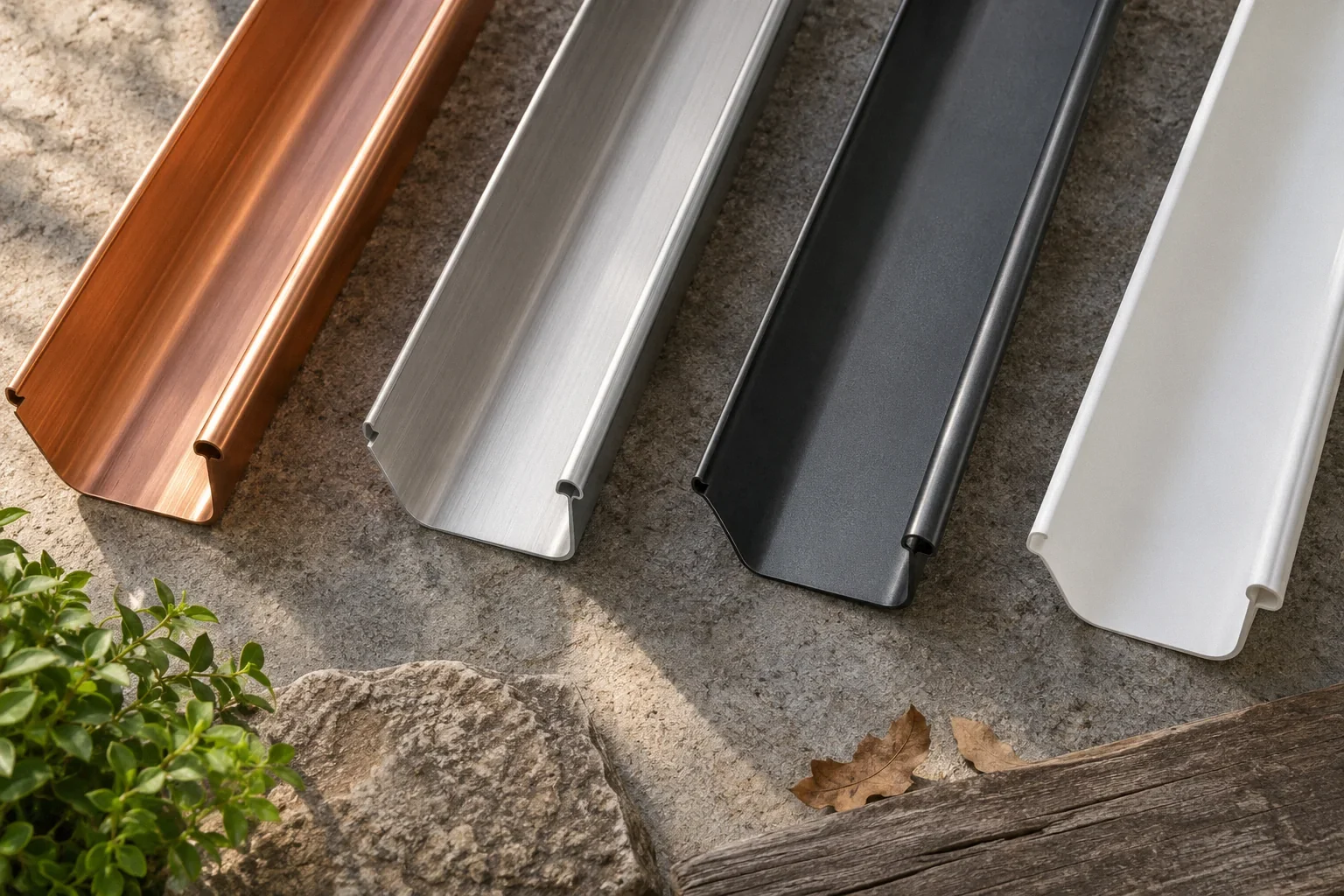
Choose gutter material together with the profile, supports, joint details and maintenance arrangement. Appearance and purchase price matter, but so do exposure, repair availability and compatibility with adjoining metals and roof-edge components. No material has one universal service life.
Separate material from installation quality
A durable metal can still perform poorly when the run is inadequately supported or the outlet is restricted. A less expensive material can be suitable when correctly selected and installed for its conditions. Ask bidders to identify the product, thickness or specification where relevant, support system and joint method. A quote that names only aluminum or copper leaves important differences unresolved. Evaluate the completed assembly and available maintenance support rather than treating the material name as a guarantee of performance.
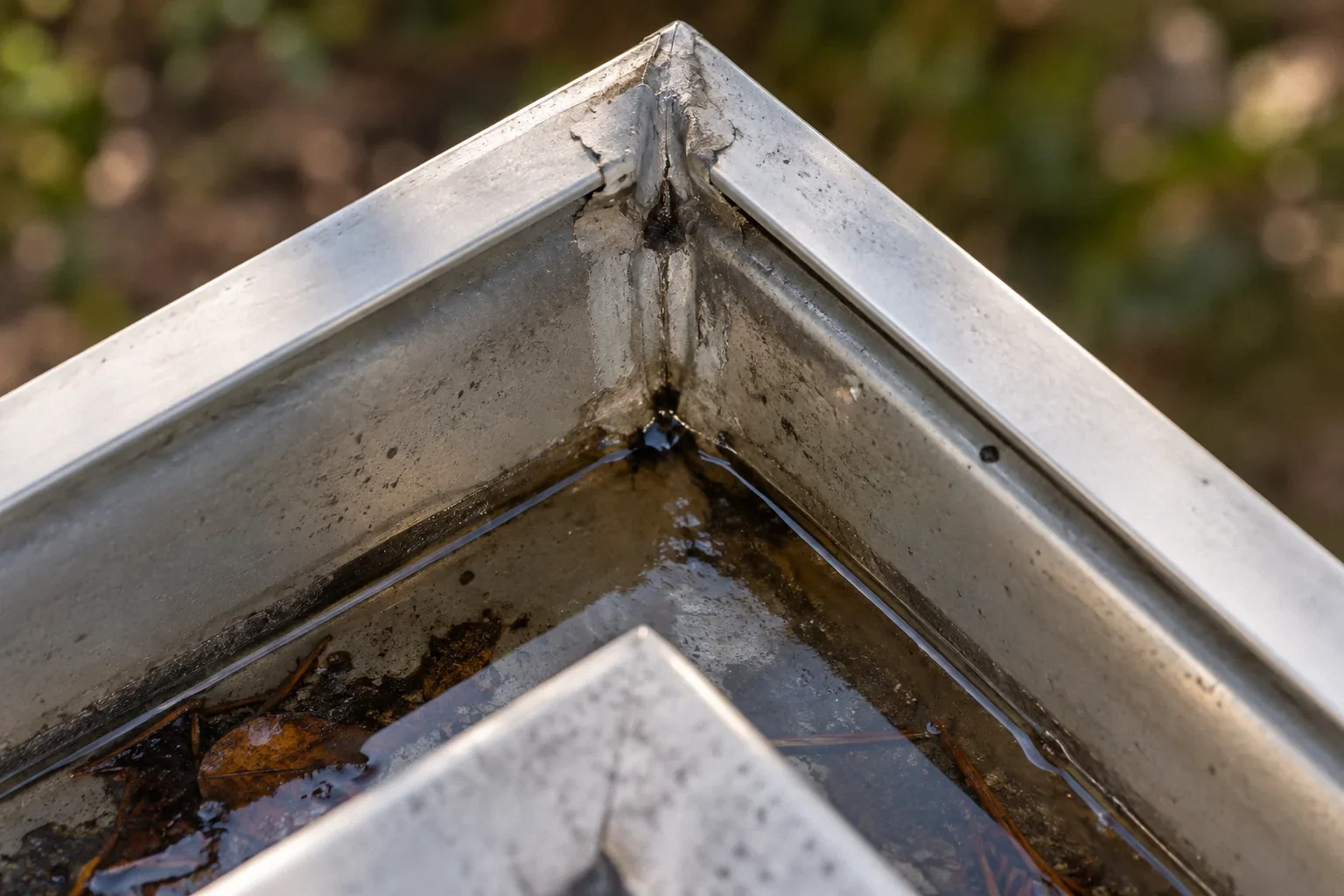
The condo discussion links a localized seam problem with the practical limits of a replacement budget. This Reddit account is anecdotal, not technical authority. [2]
Consider impact and movement exposure
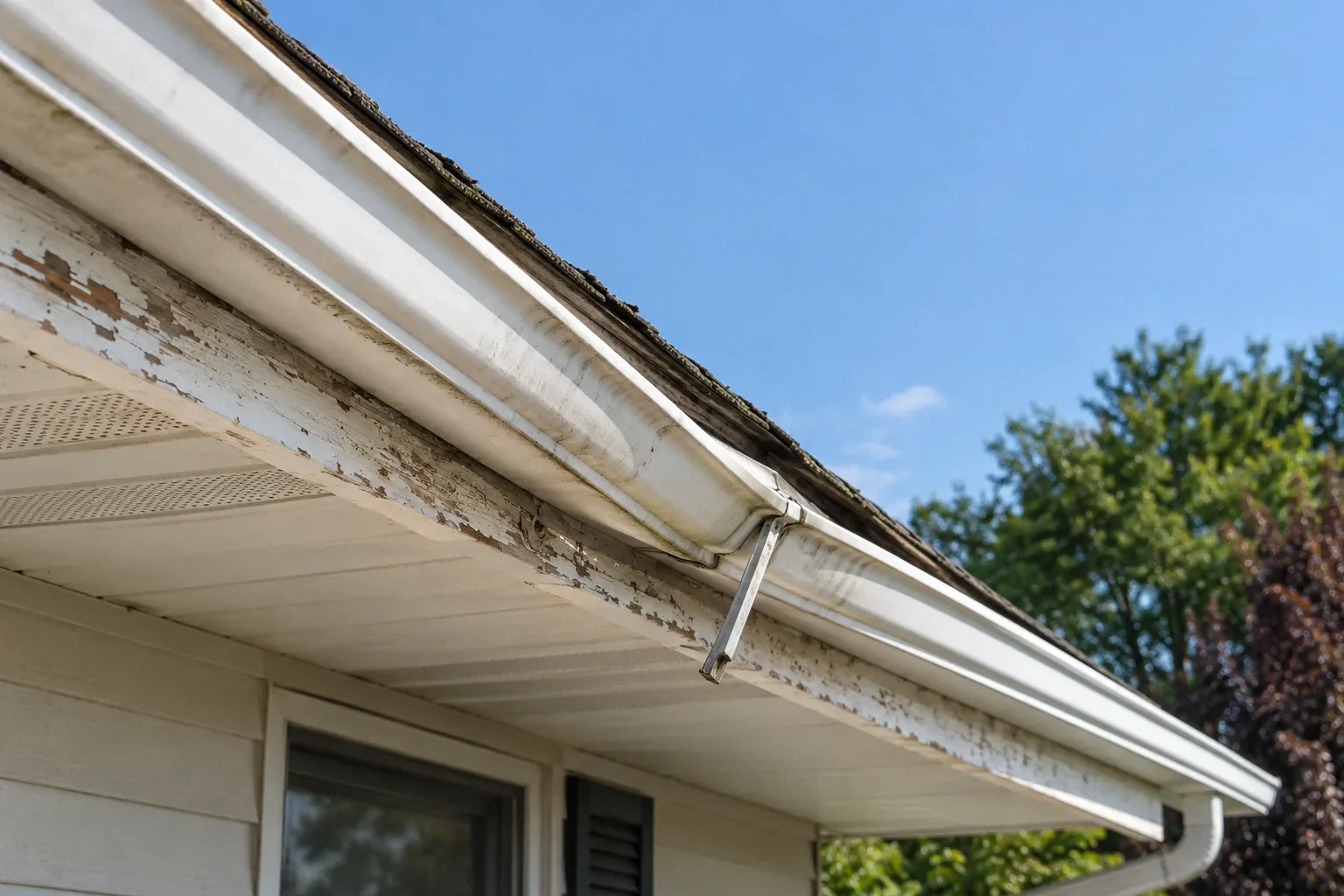
Tree branches, access equipment and nearby activities can damage gutters. PNNL discusses differing impact characteristics among common gutter materials. [1] For your property, identify actual exposure rather than relying on a general durability ranking. Ask how the selected system accommodates ordinary movement and how damaged sections can be repaired. A highly visible elevation may justify a different appearance choice, but it should not be the only elevation considered. The difficult-to-access rear run may deserve equal attention because future repairs there will be more involved.
Connections deserve a compatibility check
A gutter rarely exists in isolation. It meets roof-edge metal, fasteners, hangers, sealants and downspout fittings. Ask the installer to confirm that those components are appropriate for the chosen material and exposure. Do not select repair products from unrelated online examples without checking the actual assembly. If a proposal mixes new material with retained old components, request the connection detail and the reason reuse is acceptable. This question is particularly useful when only one elevation is being replaced and transitions will remain visible and exposed.
Seamless does not mean joint-free
A formed continuous run can reduce intermediate joints, but corners, outlets and end details still require attention. Ask where the proposed system will have connections and how they will be serviced. The absence of a seam along a straight section does not remove the need for alignment, support or cleaning. Compare warranties carefully: a material finish warranty and a workmanship obligation address different issues. Keep the actual terms and maintenance conditions rather than relying on the sales description of a maintenance-free system.
Think through future access and repair
Ask whether local contractors can obtain matching components and work on the proposed system. A distinctive finish or proprietary profile may be appropriate, but future repair logistics should be understood before selection. Consider how gutters will be removed if fascia or roofing work becomes necessary. If roof replacement is already planned, coordinate the sequence to avoid unnecessary handling. The preferred material is the one that fits the building, budget and service arrangement, not necessarily the one with the most impressive advertised lifespan.
Use condition to decide partial versus full replacement
A localized leak does not by itself justify replacing every run. Have the contractor distinguish isolated damage from widespread deterioration, repeated joint failure or a design problem. Ask which existing sections can remain and what evidence supports that judgment. A mixed-age system requires clear records so later maintenance crews know what was changed. Avoid publishing or relying on fixed lifespan claims without a product and exposure basis; actual condition, workmanship and maintenance history are more useful for deciding what to do now.
Make the comparison specific to the property
For each proposed material, ask the bidder to describe one likely maintenance task at your house and how it would be carried out. A corner repair, damaged section or removal for fascia work makes the comparison concrete. The answer should include available components, access and compatibility rather than a generalized claim that the material lasts longest.
Appearance choices can be legitimate reasons to prefer a material. Keep them separate from technical necessity so the budget decision stays clear. For example, matching an architectural finish may justify replacing a visible run even when a localized repair is possible. That is a preference, not a failure of the repair option. Conversely, a cheaper material may not be economical if the proposed assembly leaves known connection problems unresolved.
Ask for the manufacturer’s current finish and care documentation for the actual product. Do not assume a finish warranty covers denting, installation defects or water damage elsewhere. A readable scope with separate product and workmanship terms gives more useful protection than an unsupported estimate of how many decades the gutter should last.
For a partial replacement, inspect how the new section will meet retained corners and downspouts. Matching appearance does not establish a compatible connection, and a technically suitable transition may still look different from the owner’s expectation. Ask for both issues to be discussed before ordering. If color matching matters, review an actual product sample under appropriate light rather than relying solely on a screen image. That is an appearance decision, separate from drainage performance. Likewise, a premium finish should not distract from an unresolved support or outlet problem. A good proposal can state that the owner prefers a particular finish while still documenting the necessary technical work independently. This keeps optional upgrades and required repairs clear without criticizing a legitimate aesthetic preference.
| Decision area | Question or evidence |
|---|---|
| Material choice | Exposure, appearance and repair availability |
| Assembly choice | Profile, supports and connection details |
| Warranty choice | Product coverage versus workmanship obligations |
| Scope choice | Required repair versus optional whole-house change |
Example: replacing one exposed elevation
Imagine a tree-damaged front gutter on a house whose remaining runs are functioning. The owner prefers a new material for appearance. A practical comparison includes the front run, corner transitions, downspout connection and whether the finish will be available for later repairs. It also asks whether the damaged roof-edge or fascia needs work before installation. Replacing the entire house may be an aesthetic choice, but the inspection should not present it as technically necessary without evidence. A clear proposal separates the required local repair from the optional change in appearance and material.
What to request in a material comparison
Have each bidder specify the same scope so price differences are interpretable. Record the profile, material specification, supports, joint treatment and finish. Include the work required at retained components and the service process for future leaks. A short, explicit specification is more valuable than a long list of unsupported durability claims.
- What components touch or connect to the new gutter?
- Which warranty covers workmanship and which covers the product?
- Can a damaged section be repaired without replacing the whole run?
What to take away
- Compare complete assemblies rather than material names.
- Review connections between new and retained components.
- Keep warranty and future repair arrangements explicit.
Sources & further reading
Reddit links show the questions people ask; they do not establish a diagnosis or a legal requirement. Technical requirements depend on the product, building and jurisdiction. See our research approach.
- DOE/PNNL: Gutters and DownspoutsTechnical / official reference
Roof-water system components, material tradeoffs, separation from footing drain; program-specific distances are not universal local code.
- Reddit discussion: Small Metal Gutter Leak - Any DIY Options to Fix?Community question · anecdotal
Anecdotal homeowner discussion used to identify the question; not technical authority or evidence of this property’s condition.
Planning a Bay Area project?
Explore YKCA’s website and discuss the scope and services you need directly with them.