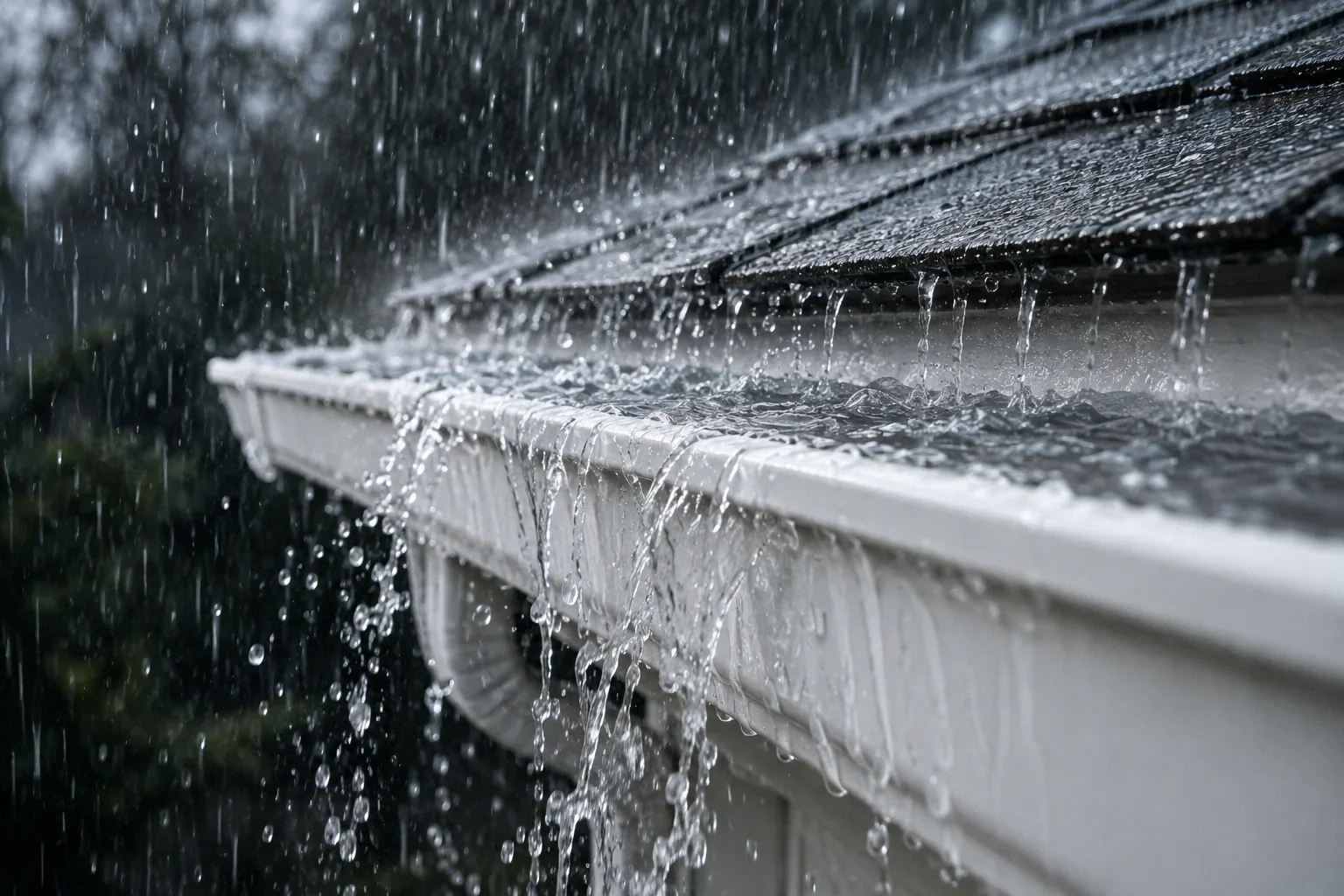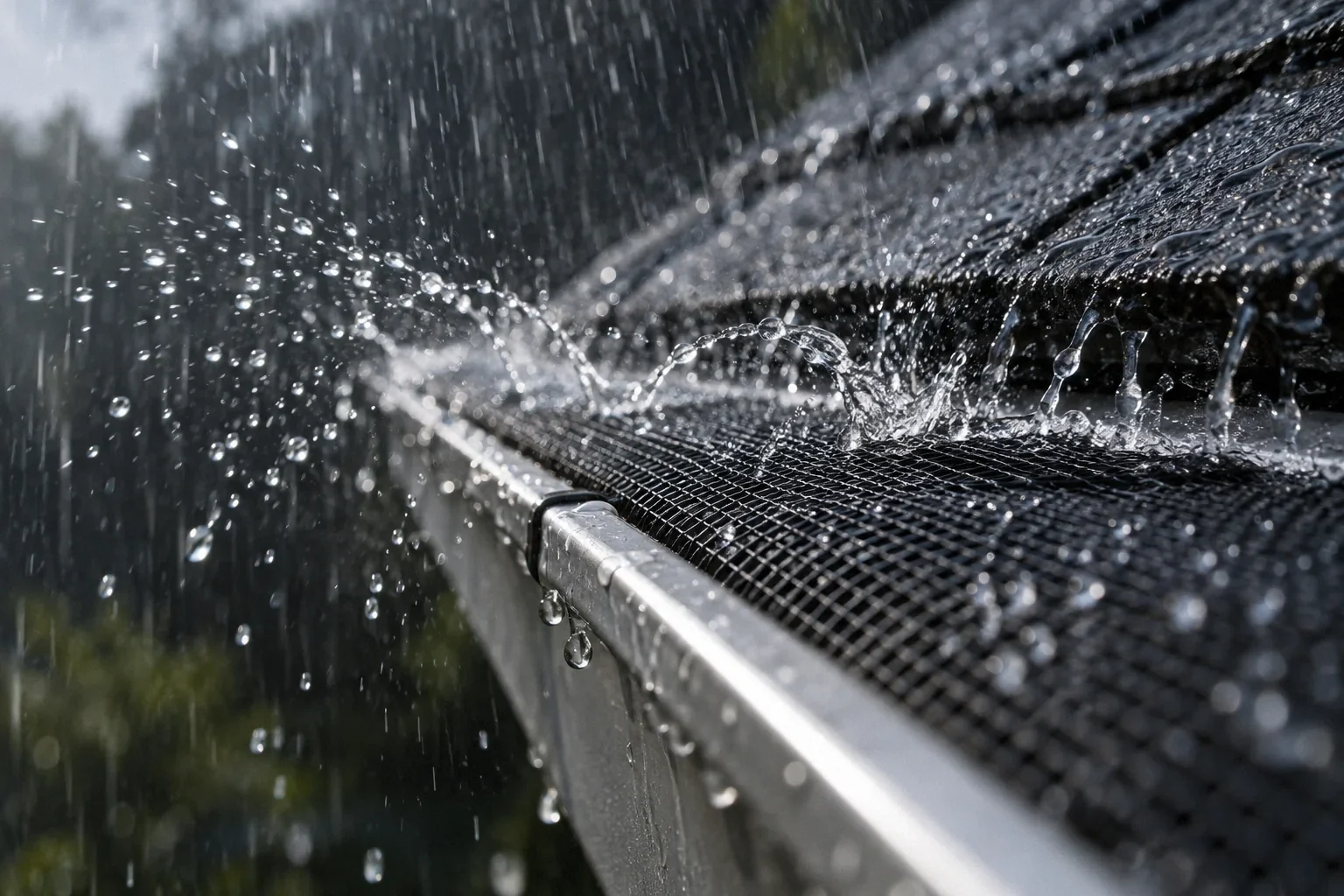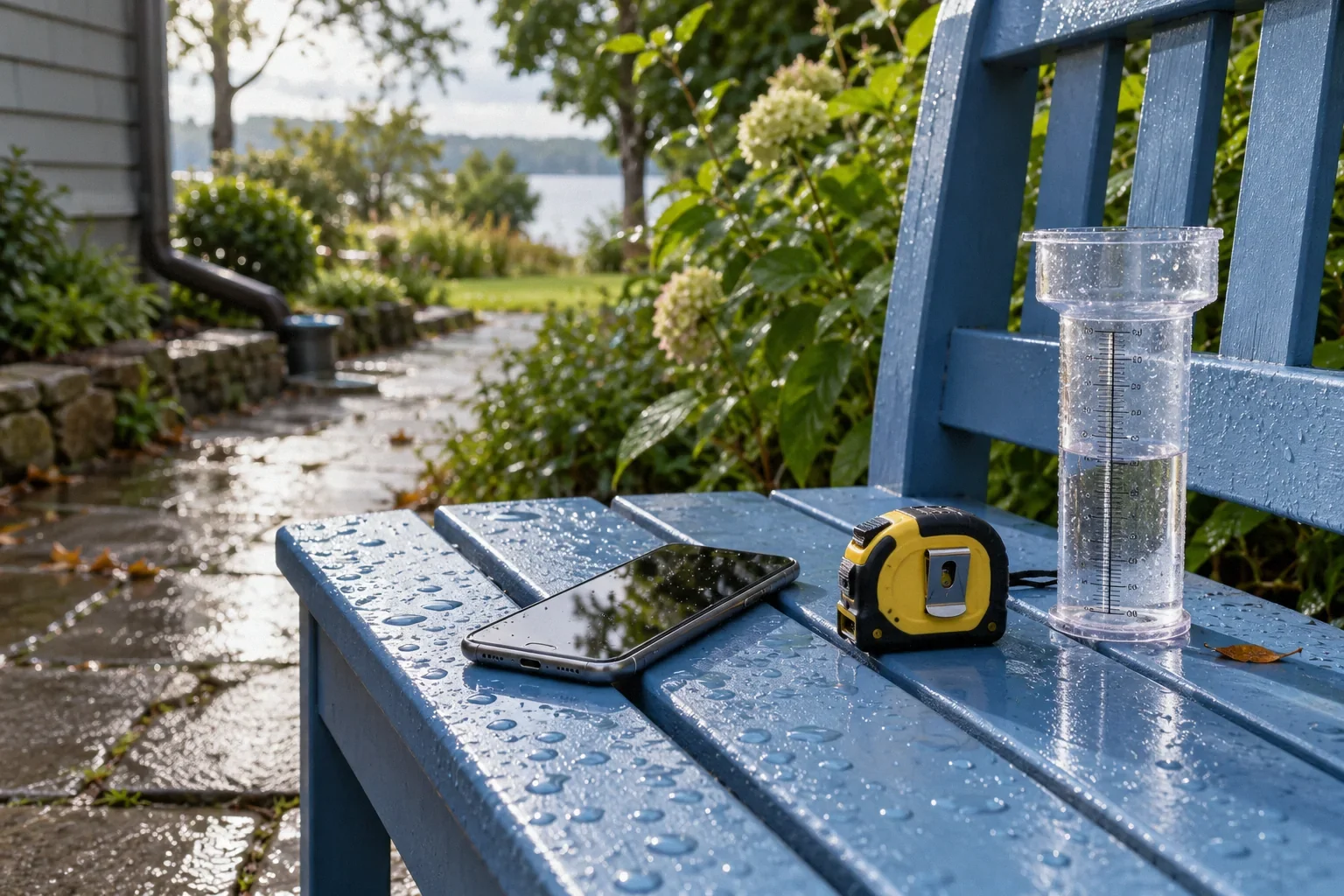
Before the rainy season, check accessible inlets, visible downspout connections, known outlets and receiving areas from the ground. Record defects and arrange qualified service for inaccessible or damaged components. Repeat the observation during the first safe rain event to see the actual water path.
Start with a simple route map
List each downspout, surface inlet and known outlet. Mark buried routes as confirmed or unknown. The map can be a photograph with labels rather than a formal plan. It helps prevent the common habit of checking only the most visible front gutter while forgetting a rear inlet or concealed connection. Review last season’s complaints and service records before the walk. If the same location required repeated attention, flag it for diagnosis rather than assuming another routine cleaning will answer the underlying question.
The guard-overflow discussion illustrates why an installed accessory does not eliminate seasonal observation. This Reddit account is anecdotal, not technical authority. [3]
Observe visible gutter and downspout condition
From the ground, look for detached sections, obvious deformation, displaced connections and staining that deserves inspection. Do not climb to confirm a suspicion. Record the location for a qualified service provider and avoid standing beneath loose components. A visible gutter face cannot establish interior cleanliness, so distinguish observation from verification. If cleaning is booked, specify whether it includes outlet fittings, downspouts and any accessible downstream checks. The invoice should describe what was actually serviced rather than imply that every concealed part is known to be clear.
Check accessible surface inlets
Remove only ordinary loose surface debris where it is safe and appropriate to do so; do not enter basins or open secured infrastructure. Note sediment, damaged grates and surrounding surfaces that may direct water away from the inlet. A clear grate is not proof of a clear pipe. If a basin repeatedly fills with material, record the likely upstream source for professional review. The purpose of this walk is to identify maintenance and investigation needs, not to perform unfamiliar work in a drainage structure.
Find the known outlets before rain
Check that landscaping has not obscured the identified discharge areas and that their routes remain recognizable. NDS recommends maintenance of emitter-related drainage components. [1] Follow the installed product instructions for any component service. If the outlet is unknown, record that as a separate task rather than treating the system as checked. Look beyond the visible cap or pipe end to the receiving surface. A new planter, mulch berm or paving edge can alter the route even when the outlet itself appears unchanged.
Review storage and landscape features
If you use rain barrels, check the documented overflow route and accessible screens, lids and connections according to the product instructions. Flows To Bay provides rain-barrel guidance for local users. [2] For a rain garden or swale, identify the inlet and intended overflow path and compare them with the installation record. Do not add chemicals or change elevations as part of a routine check. If the feature’s purpose or maintenance process is unclear, ask the designer or qualified provider to explain it before the season begins.
Use the first rain as an observation, not a test of bravery
From safe sheltered locations, note where water actually travels. Compare overflowing or ponding areas with the dry-weather map. Do not go out during hazardous conditions, stand in moving water or approach electrical hazards. A short dated video can help a contractor distinguish roof overflow, surface bypass and outlet backup. If water enters the building or damages structures, escalate promptly. Otherwise, use the observation to prioritize targeted service rather than ordering a generic package based only on the calendar.
Prioritize findings instead of making one long chore list
Group the seasonal walk into urgent defects, planned service and unresolved information. Loose components or active building water entry need prompt appropriate attention. Routine accessible debris and scheduled cleaning belong in maintenance. Unknown outlets or repeated unexplained backups belong in investigation. Keeping these categories separate helps prevent the easy chores from creating a false sense that the consequential questions are resolved.
Ask service providers to report their actual scope. A gutter cleaner may not inspect buried carriers, and a landscape crew may not assess roof-edge details. That division is reasonable when explicit. It becomes a problem when the owner assumes one annual visit covered the entire route. Keep the handoffs on the map so the next task goes to the right person.
After the first safe rain observation, update only the locations that changed or showed a symptom. A short, consistent record is easier to maintain than starting a new exhaustive checklist after every shower. The aim is early recognition of meaningful changes and a clear history when professional diagnosis is needed.
A seasonal check is most effective when it reflects the property’s actual history. If small seeds repeatedly block one outlet, keep that location prominent. If an unknown buried route has never been verified, do not mark it complete because the visible connection looks tidy. If a prior repair changed the discharge destination, inspect the new receiving area as well as the original trouble spot. These adjustments make the checklist useful rather than ceremonial. Ask each service provider for a short statement of unresolved observations, not only completed chores. That information can reveal a handoff to another trade before the next storm. Keep the list proportionate: a few clearly located issues with dates and photographs are easier to act on than a long collection of generic maintenance warnings.
Give each recurring trouble spot a consistent name on the checklist. Rear patio inlet is more useful across several years of service records than a sequence of unlabeled photographs that different crews may interpret differently.
| Decision area | Question or evidence |
|---|---|
| Prompt attention | Loose components, active intrusion or hazardous conditions |
| Routine service | Defined accessible maintenance and scheduled cleaning |
| Investigation | Unknown route or recurring unexplained symptom |
| Follow-up | Compare changed locations during safe rain observation |
Example: a clean front gutter and a forgotten rear outlet
Imagine an owner who schedules annual gutter cleaning and assumes the drainage system is ready. A rear buried carrier empties through an outlet later hidden by a new planting bed. The gutter cleaning may be valuable, but it does not establish the condition of that receiving point. A ground-level route walk could flag the changed landscape before rain. The resulting service request can then address the outlet and route specifically, while retaining the separate record of what the gutter cleaner completed.
Keep the checklist short enough to use
Store the route map with a small set of repeatable photographs and service contacts. Record dates and unresolved items. A concise record used each season is more useful than an elaborate checklist that nobody completes. Update it after landscape or roof-drainage changes.
- Which outlets remain unidentified or inaccessible?
- Which defects require qualified access or diagnosis?
- What changed since the last rainy season?
What to take away
- Map all accessible collection and discharge points.
- Separate visual checks from verified cleaning.
- Observe the first safe rain event for actual flow behavior.
Sources & further reading
Reddit links show the questions people ask; they do not establish a diagnosis or a legal requirement. Technical requirements depend on the product, building and jurisdiction. See our research approach.
- NDS manufacturer: What Is a Pop-Up Emitter?Technical / official reference
Outlet operation and sediment/leaf maintenance.
- San Mateo Countywide Water Pollution Prevention Program: Rain Barrels & Rebate ProgramTechnical / official reference
Capture, maintenance and regional water-quality context; avoid quoting incentive amounts.
- Reddit discussion: Water overflowing over gutter guardsCommunity question · anecdotal
Anecdotal homeowner discussion used to identify the question; not technical authority or evidence of this property’s condition.
Planning a Bay Area project?
Explore YKCA’s website and discuss the scope and services you need directly with them.