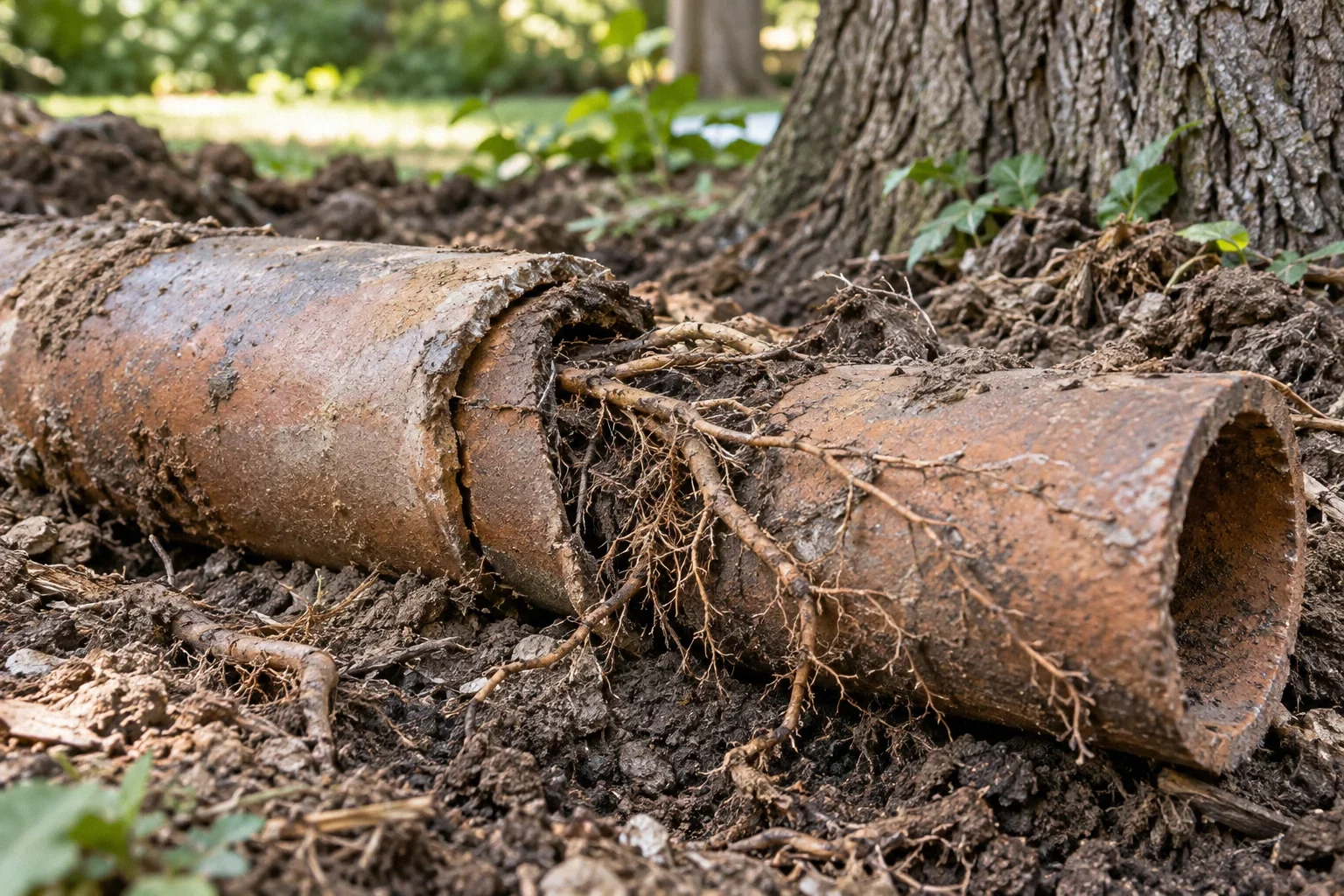
Root removal may restore some flow, but it does not by itself repair a damaged joint or collapsed pipe. Ask where roots entered, what condition the pipe is in and whether the route conflicts with important tree roots. Drainage repair and tree assessment may need separate professionals.
Establish the location and extent of intrusion
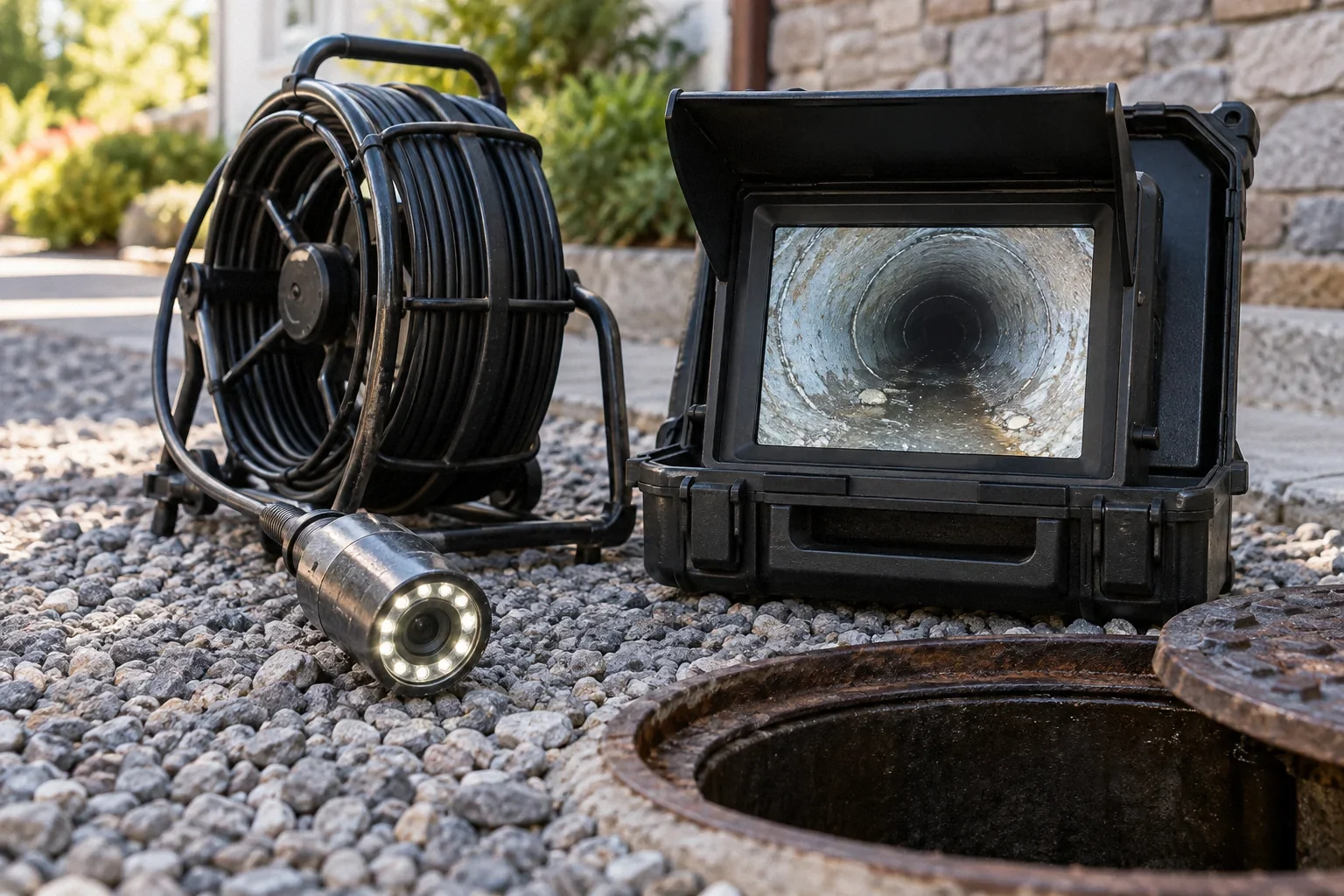
Request camera footage or photographs identifying the root-affected segment where access permits. The report should distinguish visible roots from an assumption based on nearby trees. Ask whether the operator reached beyond the obstruction and whether the pipe was visible after clearing. A short inspected segment cannot establish the condition of the entire route. Mark approximate locations on a site sketch, with the locating method and uncertainty stated. That record allows targeted evaluation instead of expanding excavation because the previous owner’s route is unknown.
The redwood-adjacent camera account shows why roots, route identity and inaccessible pipe need separate findings. This Reddit account is anecdotal, not technical authority. [3]
Do not confuse clearing with repair
Removing an obstruction can be a service outcome even when the underlying pipe remains damaged. Ask whether the proposal is intended to restore temporary passage, evaluate the pipe after cleaning or provide a durable repair. These are different scopes and should be priced and documented accordingly. If the same location repeatedly blocks, the service history becomes evidence worth reviewing. The next decision may concern a connection or route rather than a more frequent cleaning schedule. Avoid accepting an unconditional performance promise before the pipe condition has been observed.
Pipe type changes the interpretation
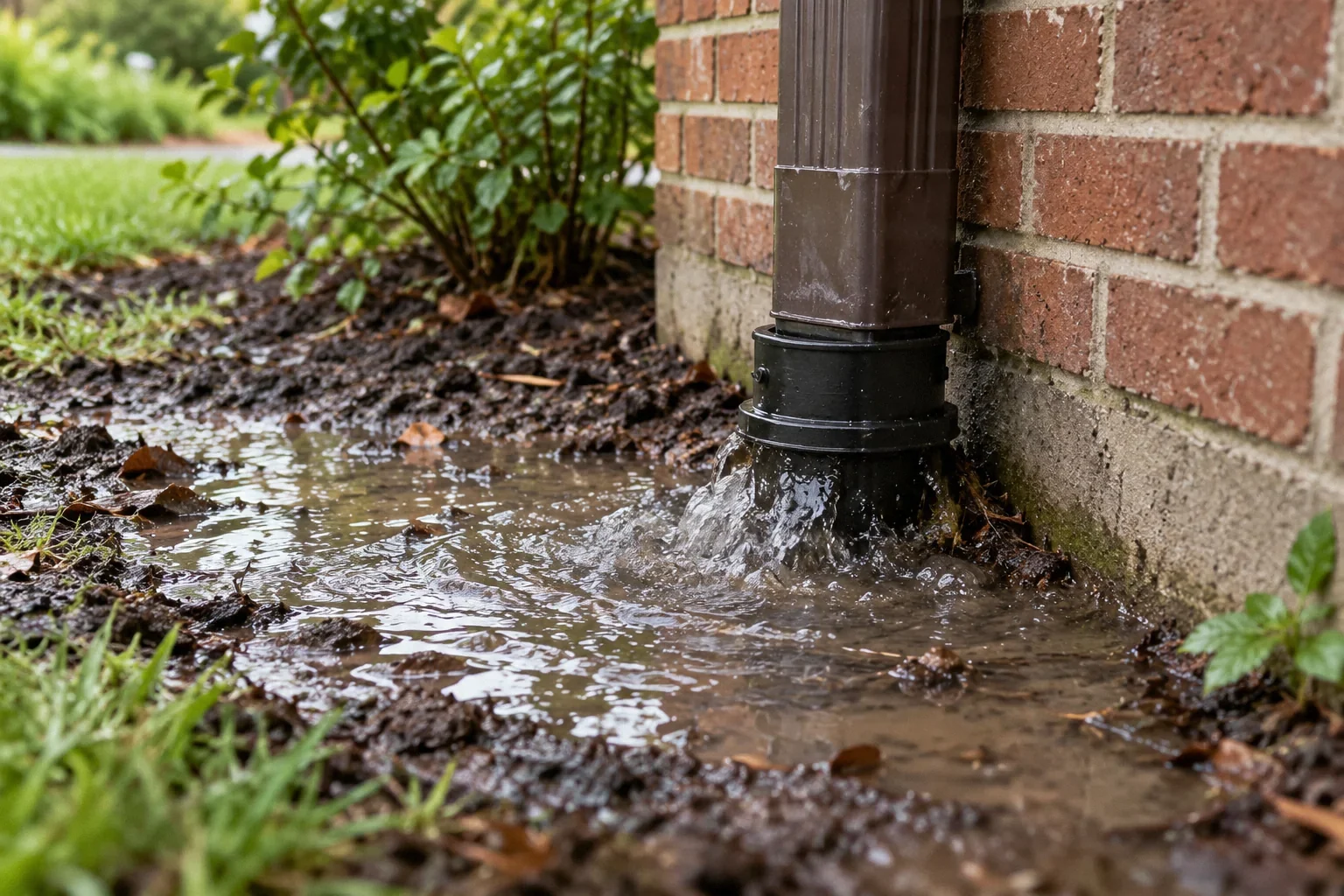
A perforated collection system and a solid carrier do not have identical purposes or surrounding conditions. Identify which one is affected before choosing a remedy. NDS describes different exterior drainage components. [1] For an existing installation, ask how roots, pipe condition and the collection zone interact. Clearing a pipe may not restore a surrounding soil-collection assembly that no longer works as intended. Conversely, a localized defect in a solid carrier may justify a focused repair rather than replacing every drain in the yard.
Tree roots create a separate decision
A drain route near a mature tree can require coordination with a qualified arborist. Do not treat large roots encountered during repair as disposable obstacles. The drainage contractor’s ability to install pipe does not establish the effect of root disturbance on the tree. Ask whether the proposed route can avoid significant roots and who will assess conflicts before excavation begins. Utility location and excavation planning also remain necessary. This guide does not provide root-cutting instructions or a safe distance rule, because the tree, site and proposed disturbance need individual evaluation.
Compare localized repair with rerouting
A repair option should show the affected length, retained pipe, connection details and maintenance access. A reroute should show the new destination and constraints, not merely avoid the visible tree. Ask what evidence supports keeping the remaining line. If a camera could not pass farther, its condition may still be unknown. A staged approach can make sense: establish identity and condition, then compare repair options. PNNL’s footing-drain guidance also emphasizes reviewing other water-management conditions before major foundation drainage work. [2]
Define follow-up without pretending recurrence is impossible
After work, retain before-and-after footage if available and photographs of repaired connections before cover. Ask what signs would prompt another inspection and which maintenance points remain accessible. A clean camera image is useful evidence of the visible pipe condition on that day, not a lifetime guarantee. If roots recur, the earlier record should help distinguish a new location from an unresolved original defect. Persistent building moisture may require a broader assessment even if the yard line now passes water.
Ask what the retained pipe evidence supports
A localized repair is easier to justify when the adjacent retained pipe has been inspected sufficiently for the proposed decision. If visibility or access prevents that, the proposal should identify the uncertainty rather than label the remaining route good. The owner may choose a staged approach, but should understand what the first stage can reveal.
For a reroute, ask how the new path avoids the original conflict and whether it introduces another one. Moving away from one tree can bring the route closer to a foundation, utility or another tree. A complete plan considers those constraints and the final destination together. An arborist’s involvement should address the actual proposed disturbance, not merely provide a general opinion that the tree looks healthy.
Keep the service history useful by recording locations consistently. Roots removed at one point should not later be confused with roots found elsewhere in the network. A labeled map and footage can support a more targeted response if the problem returns, while avoiding unsupported claims that recurrence was inevitable or impossible.
Do not assume every nearby tree is the source of roots seen in a pipe. Identifying roots and assessing the effect of proposed disturbance can require specialized judgment. The drain record should report the observed intrusion without making unsupported claims about which tree caused it. If tree removal is suggested as part of a drainage proposal, seek appropriate arborist assessment and consider whether pipe repair or a different route addresses the actual problem. Removal is a materially different decision from clearing a drain and should not be bundled into the scope without explanation. The same principle applies to replacing a large network because one section contains roots. The proposed extent should follow the inspected condition and route constraints, with unseen areas kept distinct from confirmed damage.
| Decision area | Question or evidence |
|---|---|
| Clearing | What obstruction was removed, and where? |
| Localized repair | What supports retaining adjacent pipe? |
| Rerouting | Which original and new constraints are addressed? |
| Tree review | What proposed disturbance was assessed? |
Example: roots followed by a collapsed segment
Suppose an accessible portion of drain contains roots and the camera then reaches a deformed section it cannot pass. A quote to clean the entire line cannot yet establish whether the unseen portion is serviceable. The owner should request location information, the evidence of deformation and a staged investigation or repair plan. If the affected area lies beside a mature tree, route options should be reviewed before roots are disturbed. The decision may ultimately be localized repair, replacement or rerouting, but the evidence should explain the chosen extent rather than letting equipment reach determine the whole project.
A repair record useful to both trades
Keep the drain map and tree-conflict notes together. Identify who approved the route and what sections were preserved. Record maintenance access and any post-repair inspection limitations. This helps future contractors avoid reopening a sensitive area simply because the installation history has been lost.
- Where did roots visibly enter or obstruct the pipe?
- What pipe condition remained after clearing?
- Who assessed the tree and excavation conflicts?
What to take away
- Treat root clearing and pipe repair as separate scopes.
- Document the inspected length and unseen portions.
- Use arborist input before disturbing important tree roots.
Sources & further reading
Reddit links show the questions people ask; they do not establish a diagnosis or a legal requirement. Technical requirements depend on the product, building and jurisdiction. See our research approach.
- NDS manufacturer: Principles of Exterior DrainageTechnical / official reference
Surface/subsurface collection, discharge planning, sizing and maintenance.
- DOE/PNNL: Footing Drain PipeTechnical / official reference
Check roof runoff, grading and plumbing before considering footing excavation.
- Reddit discussion: French drain issue/questionCommunity question · anecdotal
Anecdotal homeowner discussion used to identify the question; not technical authority or evidence of this property’s condition.
Planning a Bay Area project?
Explore YKCA’s website and discuss the scope and services you need directly with them.