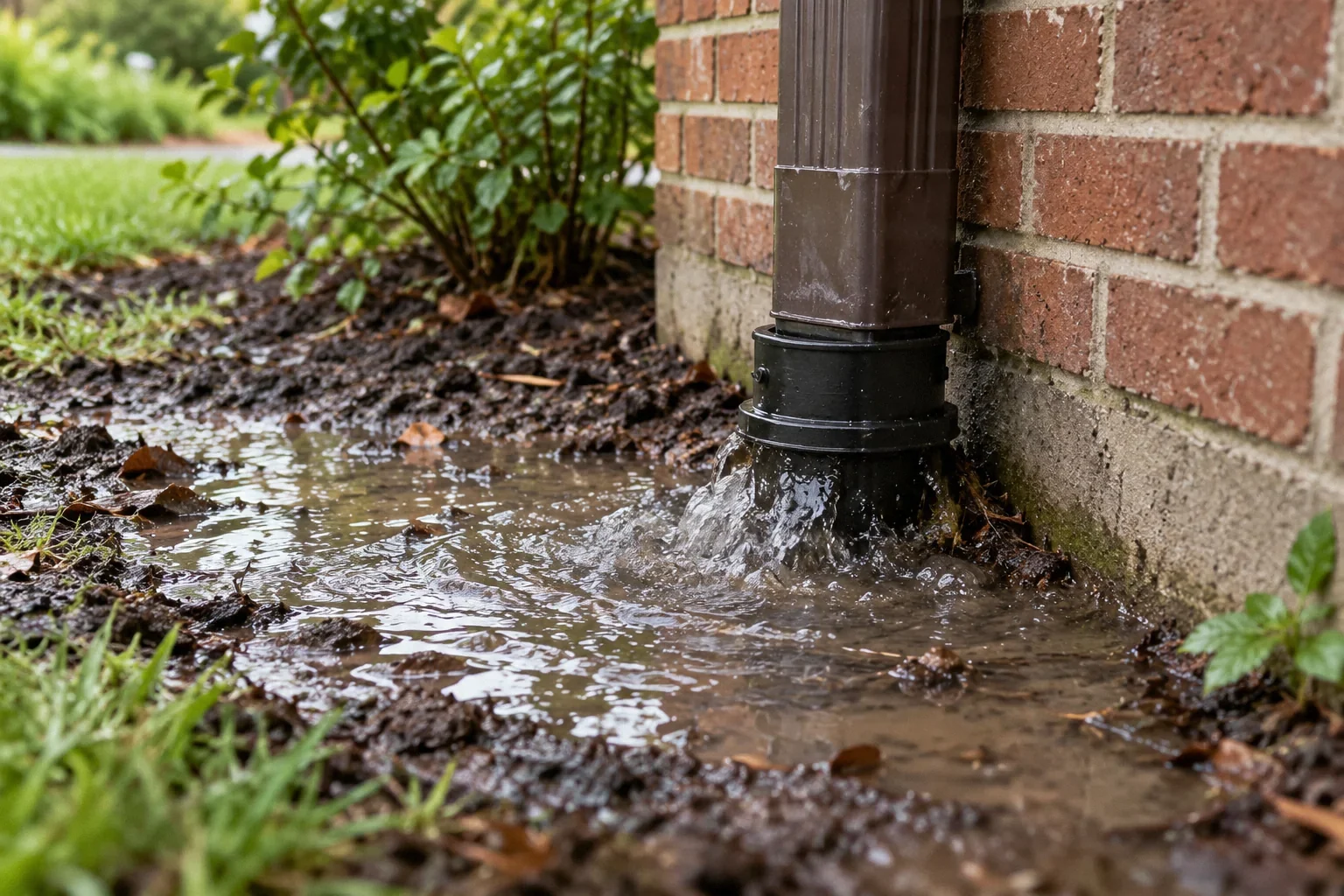
When a buried downspout drain backs up, inspect the accessible inlet, route and outlet before choosing a clearing method. The problem may be debris, sediment, damaged pipe, inadequate fall or a flooded receiving area. Clearing is useful only when it addresses the actual restriction.
Describe the backup without assigning a cause
Record where water appears and whether it happens immediately or after sustained rain. Note whether other connected inlets also back up. A single overflowing connection and several simultaneously surcharging basins suggest different investigation priorities. Observe only from safe ground and do not remove secured covers or enter structures. Keep the first report factual: roof water rises at this connection after this duration, while this visible outlet does or does not discharge. That account gives a service provider a better starting point than the unsupported statement that the whole French drain is clogged.
The reported sediment backup provides a starting symptom, while leaving pipe identity and obstruction extent unresolved. This Reddit account is anecdotal, not technical authority. [3]
Establish what line you are servicing
Identify whether the buried pipe is a solid roof-water carrier, part of a surface drainage network or something else. Review plans and earlier invoices before assuming its destination. An unknown connection can lead a clearing operation toward an unintended system. Ask the contractor to map accessible inlets and cleanouts and describe what remains concealed. NDS’s drainage guidance provides a component framework. [1] The existing installation still needs its own identification; a standard drawing does not establish the condition or route of the pipe at your property.
Check the receiving end early
An outlet hidden by vegetation, sediment or later landscaping may restrict discharge. A receiving area can also be flooded during the same storm, changing how the line empties. Ask whether the outlet was found and observed, not merely whether the inlet accepted water during a dry-weather test. A pop-up emitter is one possible termination, but it is not the only one. If an emitter is present, identify its model and condition. Manufacturer information can explain its intended operation without proving that the surrounding grades are suitable. [2]
Separate obstruction from damaged alignment
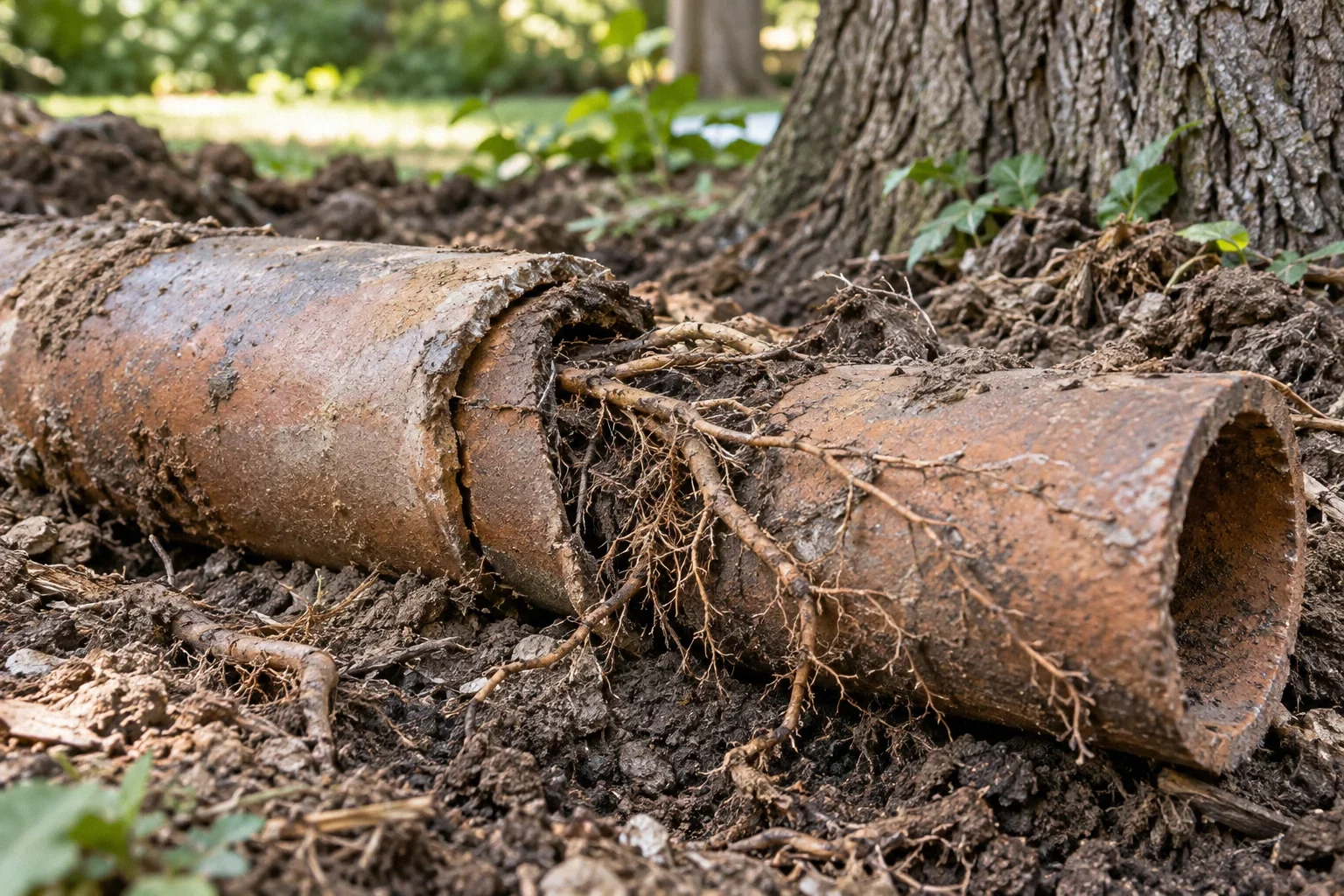
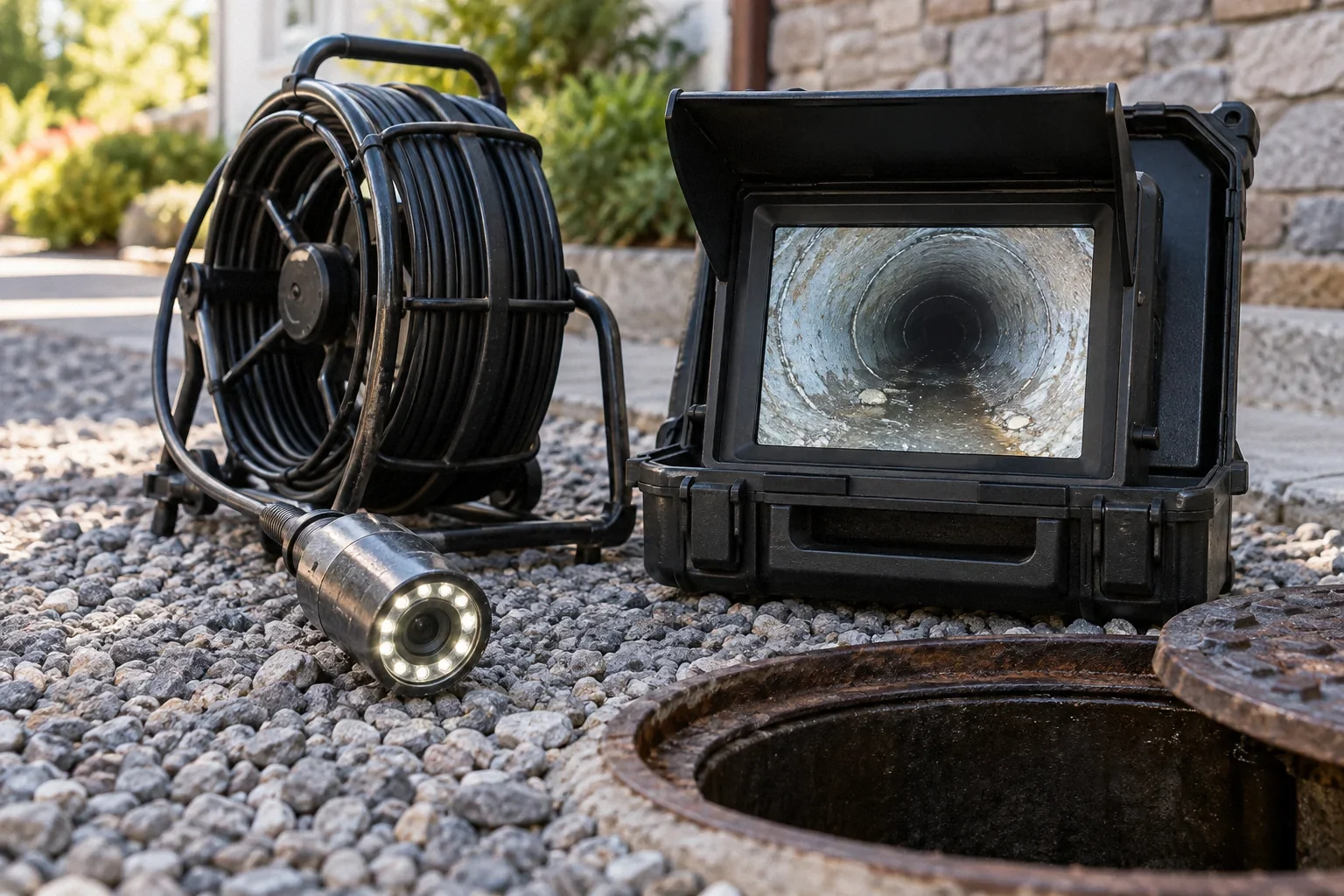
A service machine encountering resistance does not by itself distinguish a removable blockage from a bend, damaged joint or collapse. Camera evidence and location information may help, with limitations where water or debris obscures the view. Ask the operator to report observations rather than overstate a diagnosis. If the pipe clears but backs up again soon, consider whether the service removed symptoms while leaving a recurring entry point or damaged segment. Repetition is a reason to reassess, not automatically to repeat the same clearing method at greater intensity.
Define the clearing scope before work
The service agreement should identify the line, access points, method selected by the qualified provider and what will be documented afterward. Ask what happens if the pipe condition is uncertain or equipment cannot pass. Include debris handling and protection of surrounding finishes. Do not use chemical drain products or improvised pressure equipment in an unidentified landscape system. The appropriate method depends on the pipe and observed condition; a homeowner’s task is to obtain a clear service plan rather than prescribe a pressure or tool setting.
Verify the route, not just the inlet
A useful completion record describes what was removed, which sections were reached and whether discharge was observed at the destination. A flowing hose at the inlet can be an incomplete demonstration if nobody knows where the water exits. Record the test duration and qualitative conditions without presenting it as a full design-capacity test. If backup persists during rain, compare the event with the tested conditions and inspect the receiving area. Water entering the building or undermining surfaces calls for broader assessment rather than continued routine clearing.
Use recurrence and timing to select the next investigation
A line that backs up immediately after modest inflow deserves a different inquiry from one that works initially and fails only after the receiving yard floods. Similarly, a route that cleared for a short period and then failed again may need condition investigation rather than another identical service. These are clues, not definitive diagnoses. Give the provider the timing and prior service record so the next step can test a specific explanation.
Ask the contractor to identify the first unverified link in the route. It may be a concealed elbow, an uninspected segment or an unknown destination. Resolving that link can be more useful than repeating checks on already visible components. If the provider recommends excavation, request the evidence that locates and characterizes the suspected defect.
When a limited service is the reasonable next step, document it as limited. Restored flow at the inlet is valuable but should not erase uncertainty about unseen piping. This keeps the owner’s expectations aligned with what the visit actually established.
Ask whether the service provider will distinguish water passing through the line from water escaping through a defect. A disappearing test flow at the inlet is not necessarily proof of successful conveyance when the outlet has not been observed. The appropriate verification depends on access and condition, but the limitation should be acknowledged. If an inspector recommends a temporary bypass, the proposed destination still needs review; a bypass is not exempt from ordinary water-route concerns simply because it is temporary. Keep any interim arrangement separate from the permanent repair scope and record who will revisit it. This is especially important before a rainy period, when an improvised measure can easily remain in place long after the immediate service visit without anyone confirming that it performs as intended.
| Decision area | Question or evidence |
|---|---|
| Immediate backup | Investigate local restriction and route continuity |
| Late-storm backup | Review receiving conditions and sustained inflow |
| Rapid recurrence after clearing | Investigate persistent entry or pipe defect |
| Unknown outlet | Prioritize destination and route identification |
Example: clear pipe, flooded outlet
Imagine a downspout connection that backs up only late in a long storm. A dry-weather camera pass finds no obvious obstruction in the inspected segment. The yard outlet sits in a low area that fills during prolonged rain. That evidence changes the question from what is stuck in the pipe to how the receiving condition affects discharge. It does not prove the pipe is adequately sized or perfectly graded, but it prevents another cleaning visit from being treated as the obvious cure. The next review should consider elevations, receiving conditions and the complete route.
What the service report should preserve
Keep the route sketch, footage where available, removed-material description and the provider’s stated limitations. Record any proposed follow-up repair separately from completed clearing. If the destination was not found, that remains an unresolved issue even when the immediate backup temporarily stops.
- Which segment was actually inspected or cleared?
- Was water seen leaving the identified outlet?
- What evidence would justify repair instead of another cleaning?
What to take away
- Confirm the line’s identity and destination.
- Distinguish removable obstruction from structural or outlet problems.
- Document observed discharge and inaccessible sections after service.
Sources & further reading
Reddit links show the questions people ask; they do not establish a diagnosis or a legal requirement. Technical requirements depend on the product, building and jurisdiction. See our research approach.
- NDS manufacturer: Principles of Exterior DrainageTechnical / official reference
Surface/subsurface collection, discharge planning, sizing and maintenance.
- NDS manufacturer: What Is a Pop-Up Emitter?Technical / official reference
Outlet operation and sediment/leaf maintenance.
- Reddit discussion: My French drain is clogged with clay dirt. What do I do?Community question · anecdotal
Anecdotal homeowner discussion used to identify the question; not technical authority or evidence of this property’s condition.
Planning a Bay Area project?
Explore YKCA’s website and discuss the scope and services you need directly with them.