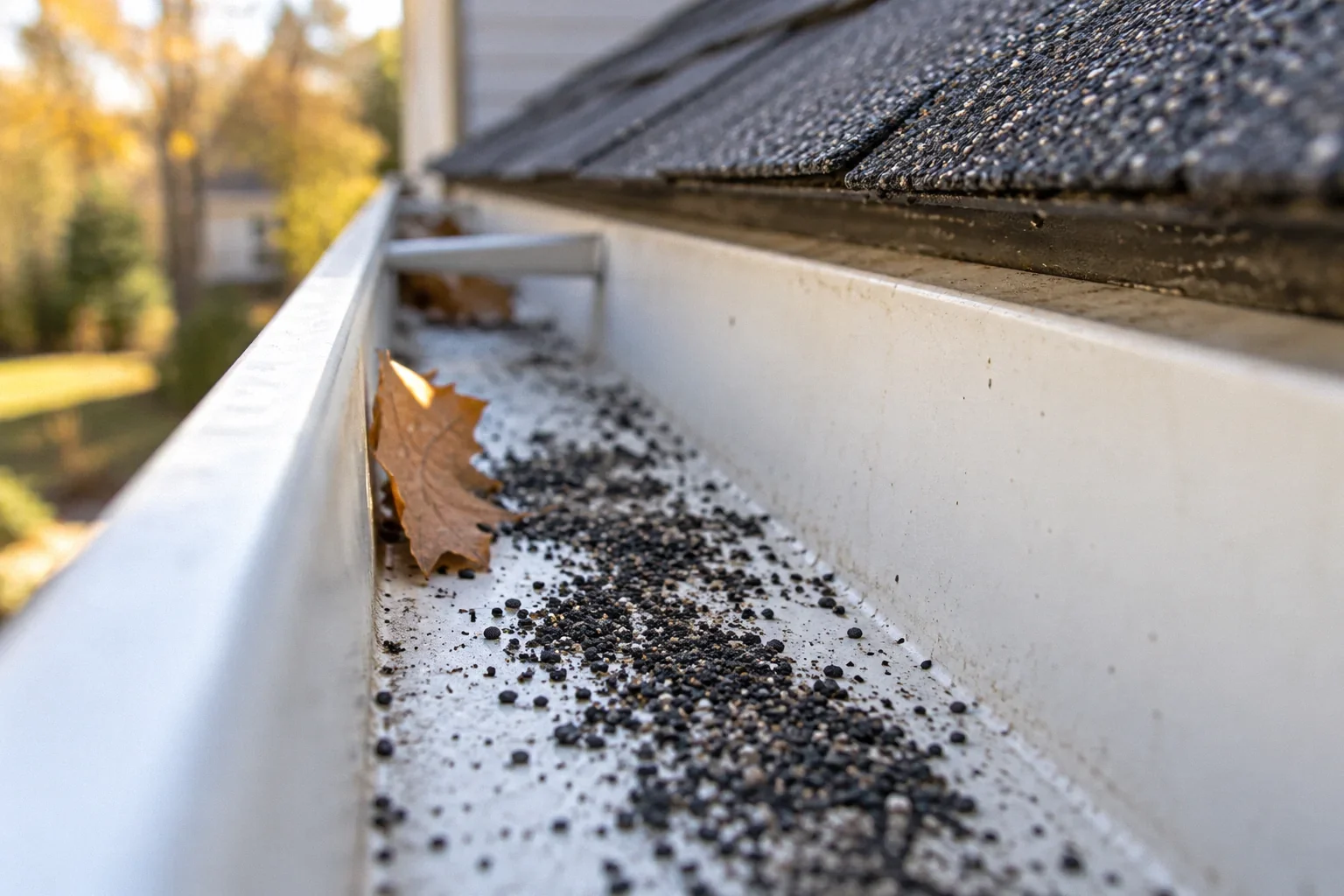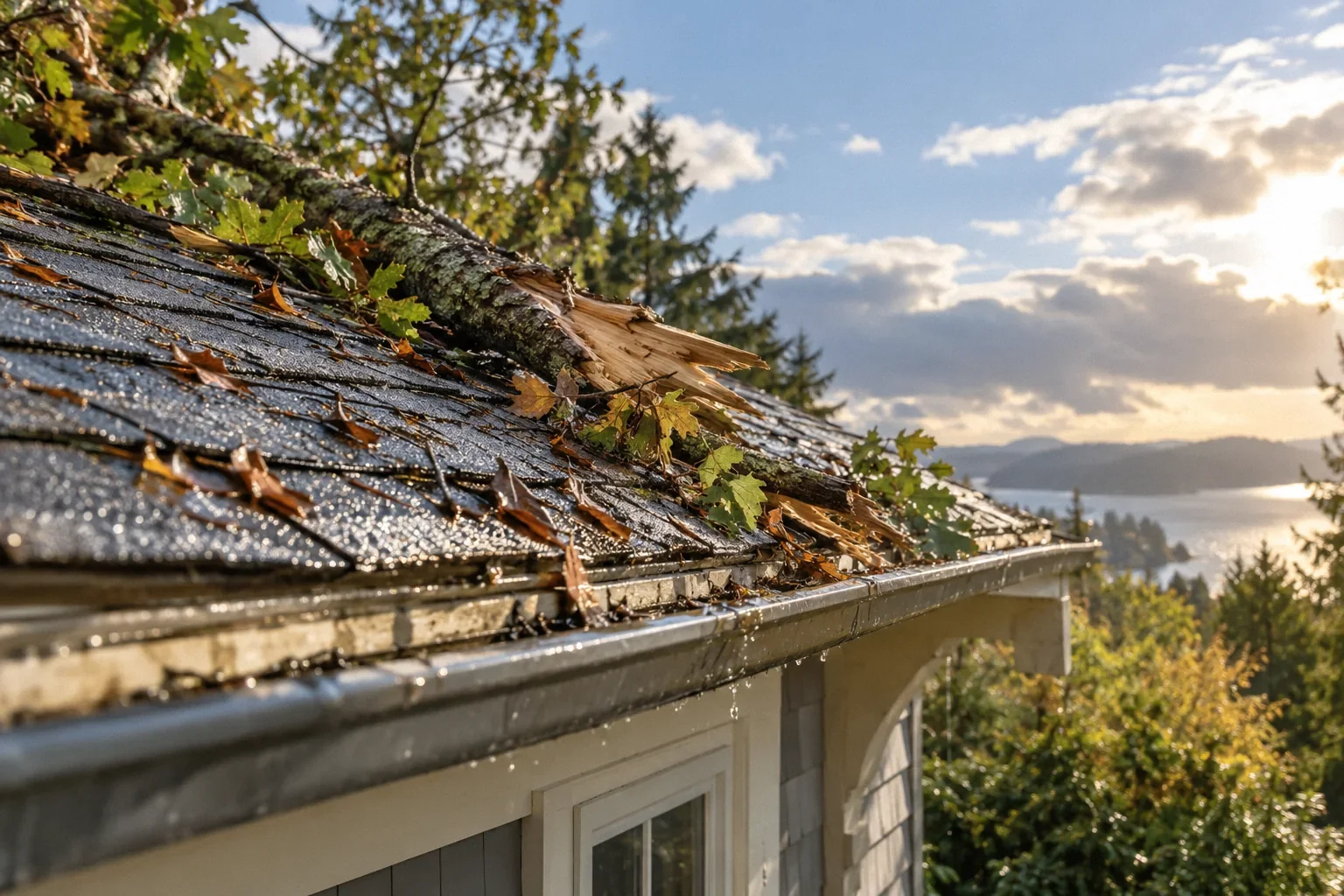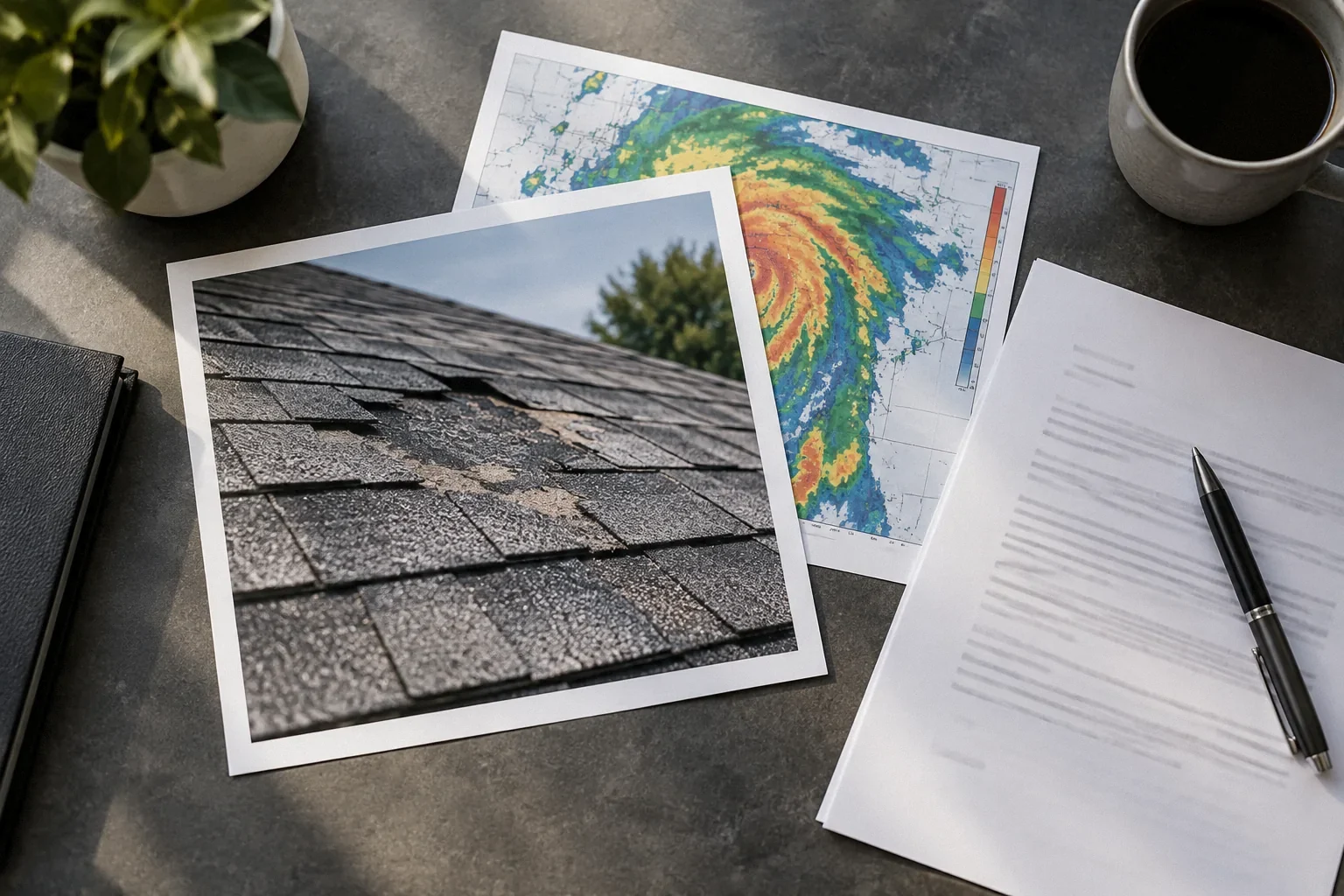
Hail damage cannot be established from loose granules or a few circled photographs alone. Assess the type and distribution of roof changes, the condition of the shingle body and other relevant observations. Ordinary wear, mechanical damage and storm effects can look similar in limited images, so a major replacement decision needs a documented inspection.
Look for a documented damage pattern
IBHS describes several possible hail effects on asphalt shingles, including deformation, granule displacement and breaches. [2] The existence of several damage modes is a reason to examine the whole condition, not search for one universal mark. Product performance also varies, and a rating is not a guarantee that every roof will emerge undamaged from every storm. [1]
Other explanations to distinguish
Age-related surface change, service traffic, abrasion and other mechanical events can complicate interpretation. A mark on a metal accessory may support a storm investigation without proving that every neighboring shingle is functionally damaged. Conversely, the absence of an immediate indoor leak does not establish that the covering is unaffected. Avoid either extreme when interpreting a limited photograph.
Evidence to request before choosing the work
Request a dated roof map and photographs that show context as well as close details. Ask the inspector to state the observed damage mode, its distribution and the competing explanation considered. Relevant weather history can support the timeline, but it does not replace inspection of this roof. Separate technical observations from conclusions about insurance coverage, which require the actual policy and claim process.
Ask that circles or chalk marks in photographs be explained in the written report. A mark added by an inspector identifies an area of interest; it is not itself evidence of hail. The description should state what physical condition is visible inside the mark and why it matters. Keeping the annotation separate from the observation helps an independent reviewer evaluate the same image.
How the findings change the repair decision
Repair or replacement depends on the documented condition and repairability, not simply the occurrence of hail nearby. An independent assessment can help when opinions conflict or a solicitation relies on ambiguous marks. Ask whether the proposed scope addresses localized damage or a roof-wide pattern and why. Neither a salesperson's confidence nor an online majority establishes the extent of physical damage.
A practical example and what it does not prove
One sampled owner was told a roof needed replacement while commenters described the marked areas as wear or blistering. Another thread reached the opposite informal conclusion. [3][4] These disagreements show the limits of crowdsourced diagnosis. A useful educational response teaches what evidence is missing rather than choosing the loudest side from the same incomplete pictures.
Limits and when professional review matters
Do not press, scrape or strike roofing to test suspected damage. That can alter the evidence and cause harm. Photographs cannot always reveal concealed material fractures or distinguish their cause. This article offers no prediction of claim approval and no conclusion about a particular roof. Qualified inspection should clearly separate confirmed observations, probable causes and unresolved limitations.
Separate the annotation from the physical finding
A chalk circle tells the reviewer where someone looked. It does not establish what caused the condition inside it. Ask for a written description of the actual mark and the reasoning connecting it to hail. That makes the photograph useful to another reviewer and prevents annotations from acquiring more authority than the underlying evidence.
Likewise, neighborhood roof replacement is context rather than a diagnosis of this property. Adjacent buildings can differ in products, condition and exposure. The useful comparison is the observed condition on the subject roof and the relevant event history. An independent review should examine those facts without being asked merely to confirm that nearby claims or projects reached a particular outcome.
- A marked photo lacks a description of the physical damage: request the observation before accepting the cause label.
- Nearby roofs were replaced but this roof has not been assessed: do not substitute neighborhood outcomes for inspection.
- Reports disagree on the same marks: compare their damage descriptions and limitations before choosing a corrective scope.
Questions that resolve the remaining uncertainty
Do not ask a reviewer to determine causation from photographs stripped of their original context. Provide dates, locations and the reason each image was taken. State whether annotations or temporary repairs were added later. The reviewer may still need an on-site assessment, but a consistent record makes the limitations clearer and reduces the chance of interpreting an altered surface as the original condition.
There is also a distinction between identifying a storm-related mark and deciding the appropriate scope of repair. A finding may require assessment of the affected material, surrounding repairability and the extent of the pattern. It should not automatically become a roof-wide quantity. Ask the inspector to show how the physical observations support the recommended boundary, particularly where other parts of the roof appear serviceable.
Product ratings can inform material selection for future work without proving what happened to this roof during one event. Keep those uses separate. A discussion of impact resistance is not a substitute for observing the existing assembly, and a damaged existing product does not by itself establish how every proposed replacement will perform. The specific selection should use current product information and the relevant application requirements.
If two professionals agree on the observed mark but disagree on its cause, preserve that distinction. It may be possible to address a damaged component while acknowledging that causation remains uncertain. That is more accurate than forcing a confident cause label that the evidence cannot support. Coverage or responsibility questions may require additional records and expertise beyond the physical inspection described here.
Finally, avoid equating the absence of a visible indoor leak with a conclusion about every shingle. The inspection question concerns the covering condition and its repairability. Indoor observations are useful context, but they are not a complete roof survey. The report should explain what was actually assessed rather than using one reassuring observation to close the entire investigation.
What to take away
- Use damage mode and distribution rather than a single visual shortcut.
- Keep physical condition separate from coverage conclusions.
- Seek documented inspection when remote opinions conflict.
Sources & further reading
Reddit links show the questions people ask; they do not establish a diagnosis or a legal requirement. Technical requirements depend on the product, building and jurisdiction. See our research approach.
- IBHS Roof 101Technical / official reference
Roof system performance and test-rating limitations
- IBHS hail mechanismsTechnical / official reference
Dents, breaches, granule displacement; cosmetic and functional distinctions
- Homeowner discussion: Hail damage?Community question · anecdotal
Anecdotal issue research, not technical authority or proof about another property.
- Homeowner discussion: Hail damage. Do I need a new roof?Community question · anecdotal
Anecdotal issue research, not technical authority or proof about another property.
Planning a Bay Area project?
Explore YKCA’s website and discuss the scope and services you need directly with them.