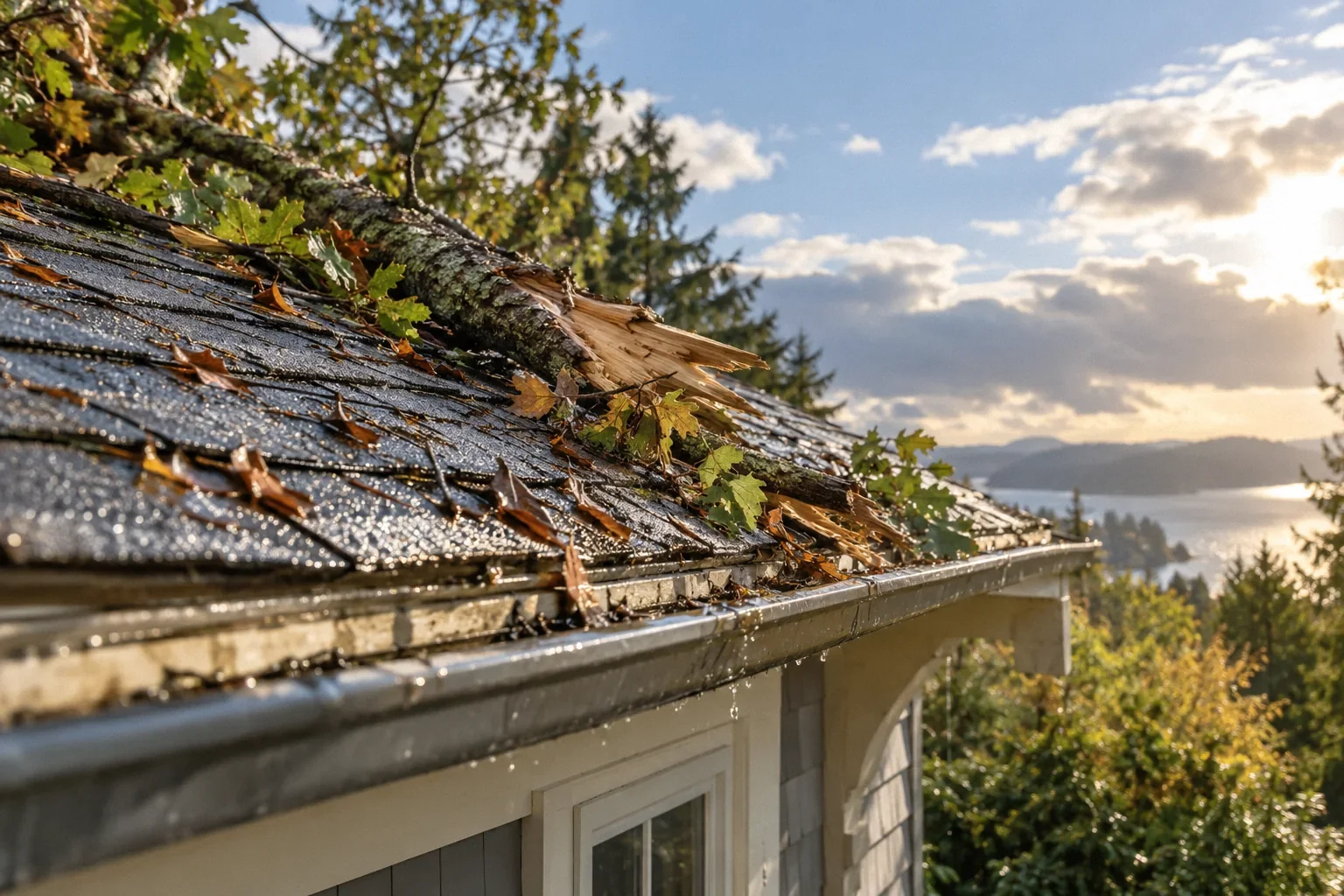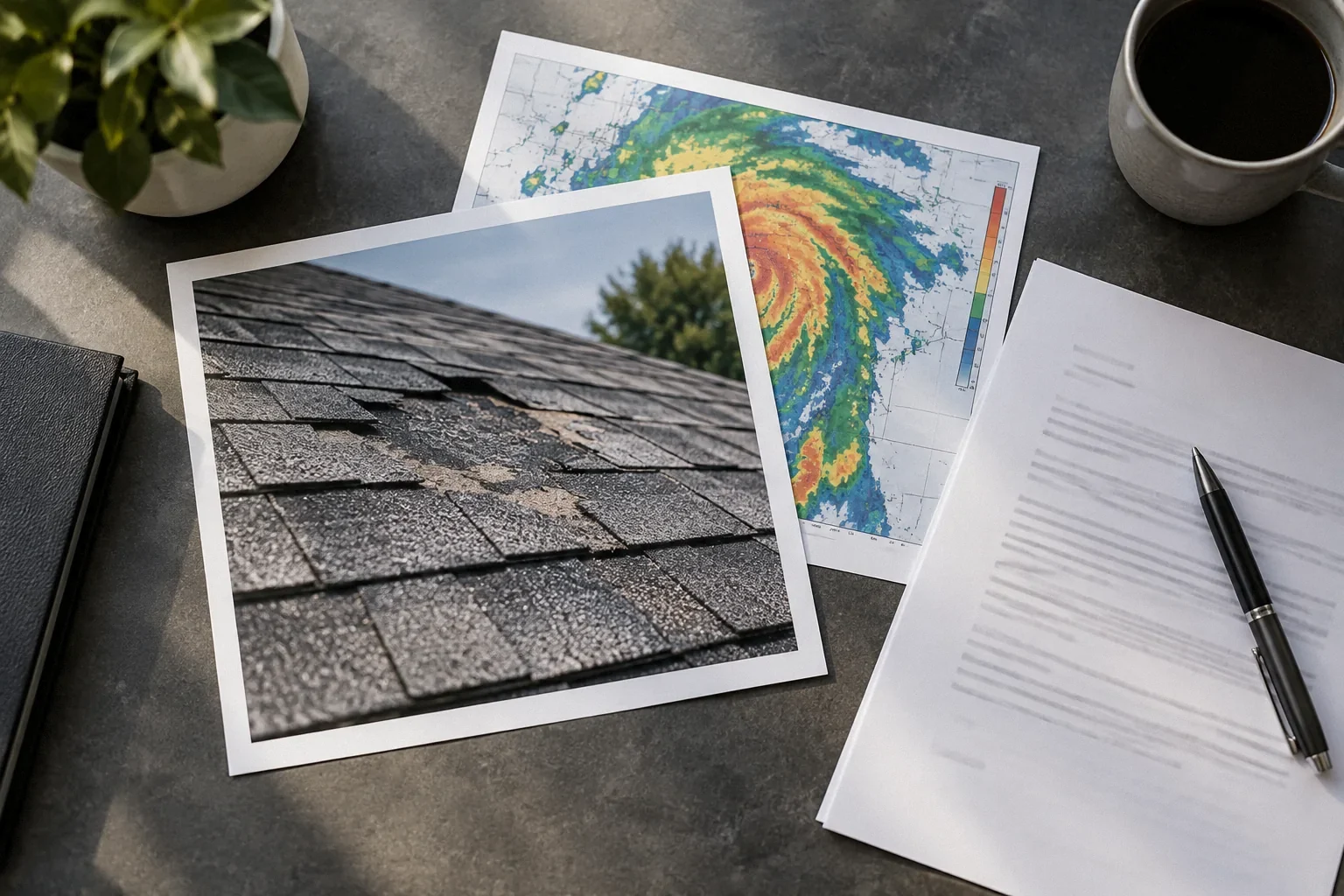
Request the written coverage or scope basis, organize the evidence around the disputed point, and submit a focused request for review through the insurer's process. Better evidence may clarify a decision, but no contractor, complaint, or article can guarantee reversal.
Identify exactly what was denied
A dispute may concern whether an event is covered, whether damage is new, how much repair is necessary, or how the payment was calculated. These are different questions. Ask the insurer to state the issue clearly and identify the policy provisions and factual findings it relies on. Do not respond with an unrelated replacement estimate alone.
Create a dated evidence timeline
Organize pre-event photographs, maintenance and repair records, purchase inspection images, weather observations, and post-event findings. State what each item supports and what it cannot establish. A recent invoice may prove a repair occurred without showing the condition of every roof slope. Avoid overstating the evidence to make the claim sound stronger.
Obtain a report that addresses the actual disagreement
If the dispute concerns causation, ask the qualified professional to explain observed damage and the reasoning linking it to the reported event. If it concerns repair scope, ask why proposed operations are necessary. A report focused on the insurer's question is more useful than a generic statement that a complete new roof would be preferable.
Reconcile quantities and valuation
Compare roof areas, materials, necessary access, repair operations, depreciation, deductible, and any policy-specific treatment with the claim documents. Ask for explanations of mismatched quantities or omitted work. Do not assume the contractor's total and the insurer's estimate should match simply because both refer to the roof.
Submit a concise review request
Include the claim identifier, disputed decision, relevant new evidence, and the precise clarification or reconsideration requested. Keep a copy of the submission and response. California DOI's property claims guide describes escalation options when a settlement dispute persists.[1] Follow the actual insurer process and applicable timing rather than a forum template.
Use appropriate escalation channels
Ask the claims manager for clarification where needed and consider DOI assistance or qualified legal advice for unresolved issues.[1] Their roles differ, and an inquiry does not automatically require payment. If deadlines or formal dispute provisions may apply, obtain advice promptly rather than assuming repeated informal emails preserve every option.
Keep mitigation and honesty central
Continue reasonable protection of the property and retain repair records. Never alter photographs, exaggerate damage, or invent an event date. The Reddit discussions behind this topic include unsupported claims about what insurers must pay.[2] Treat them as examples of confusion, not governing rules for your policy.
A practical example
An insurer says the damage appears preexisting. The owner locates dated purchase-inspection photographs showing the same area before the reported event and obtains a report distinguishing old deterioration from a newly damaged section. The review request should explain that distinction directly. It should not claim that paying premiums alone proves the disputed condition is covered or that one new defect necessarily requires replacement of every roof area.
Identify the type of disagreement before commissioning another report
A disagreement about whether damage occurred differs from a disagreement about which roof area needs repair. Both differ from a dispute about price or the meaning of a policy provision. Read the written explanation and classify the unresolved point before spending money on additional evidence. A more expensive contractor estimate may not answer a causation concern; another close-up may not address a missing measurement; a technical report cannot by itself resolve every coverage interpretation.
Write the insurer's stated position in one column and your specific question in another. Attach only evidence that bears on that question, with a short explanation of why it matters. For example, if an estimate omits a roof section, identify it on the roof plan and ask whether it was inspected or intentionally excluded. If the cause is disputed, ask the qualified evaluator to address the competing explanations directly. This approach makes the request easier to evaluate than an unstructured folder of every image you own.
Check whether apparently conflicting reports examined the same thing
Compare inspection dates, access, weather, roof areas and methods. One report may concern the covering while another addresses a wall transition. A contractor's finding after opening a detail may contain information that was unavailable during the earlier visit. Describe that difference accurately rather than presenting every changed conclusion as proof that the first inspection was dishonest. New information can justify a focused request for reconsideration without making an unsupported allegation.
Preserve each original version and label additions clearly. If a report contains an error in location or date, ask its author for a correction instead of editing it yourself. Do not remove limitations from a quotation or crop an image so tightly that the location becomes misleading. A claim file is stronger when a reviewer can trace a conclusion back to an identifiable observation and see the degree of uncertainty attached to it.
Make the escalation request specific and trackable
Your covering note can be short: identify the claim, the decision being questioned, the factual point, the attached support and the clarification or review requested. Ask who will respond and how to provide additional information. Keep a record of submissions and replies, including which attachments were actually sent. If a conversation happens by phone, make a contemporaneous note and seek written confirmation of any consequential direction.
When seeking help from a regulator or qualified adviser, provide the same organized chronology rather than starting the story over with a different set of facts. Ask what the chosen review process can and cannot address. Do not assume that sending a complaint changes contractual deadlines, stops other procedures or guarantees payment. Where an amount, deadline or interpretation has significant consequences, obtain advice directed to your policy and claim. This article's filing method is organizational guidance, not a prediction about the result of a dispute.
What to take away
- Determine whether the dispute is coverage, cause, scope, or valuation.
- Submit evidence that answers that particular question.
- Use verified escalation channels without assuming a guaranteed outcome.
Sources & further reading
Reddit links show the questions people ask; they do not establish a diagnosis or a legal requirement. Technical requirements depend on the product, building and jurisdiction. See our research approach.
- California DOI: Residential Property Claims GuideTechnical / official reference
2025 revision; mitigation, claim records, valuation and claim dispute channels.
- Insurance said no, contractor is not happy.Community question · anecdotal
Anecdotal issue discovery; not verified legal, technical, insurance, or incident authority.
Planning a Bay Area project?
Explore YKCA’s website and discuss the scope and services you need directly with them.