A ridge vent does not by itself prove that an attic has a working moisture-control system. A damp attic needs assessment of indoor moisture sources, ceiling air leakage, intake paths and the intended roof design. Adding more exhaust openings without understanding those relationships can leave the actual problem unresolved.
Evaluate the entire moisture-control arrangement
Moist indoor air can reach the attic through discontinuities between conditioned rooms and the roof space. DOE identifies attic air sealing as a way to reduce moisture problems. [1] Ventilation and insulation have related but distinct roles in a vented attic. DOE's durable-attic guidance discusses those components together. [2] An existing vent is one visible element, not evidence that the full arrangement performs as intended.
Other explanations to distinguish
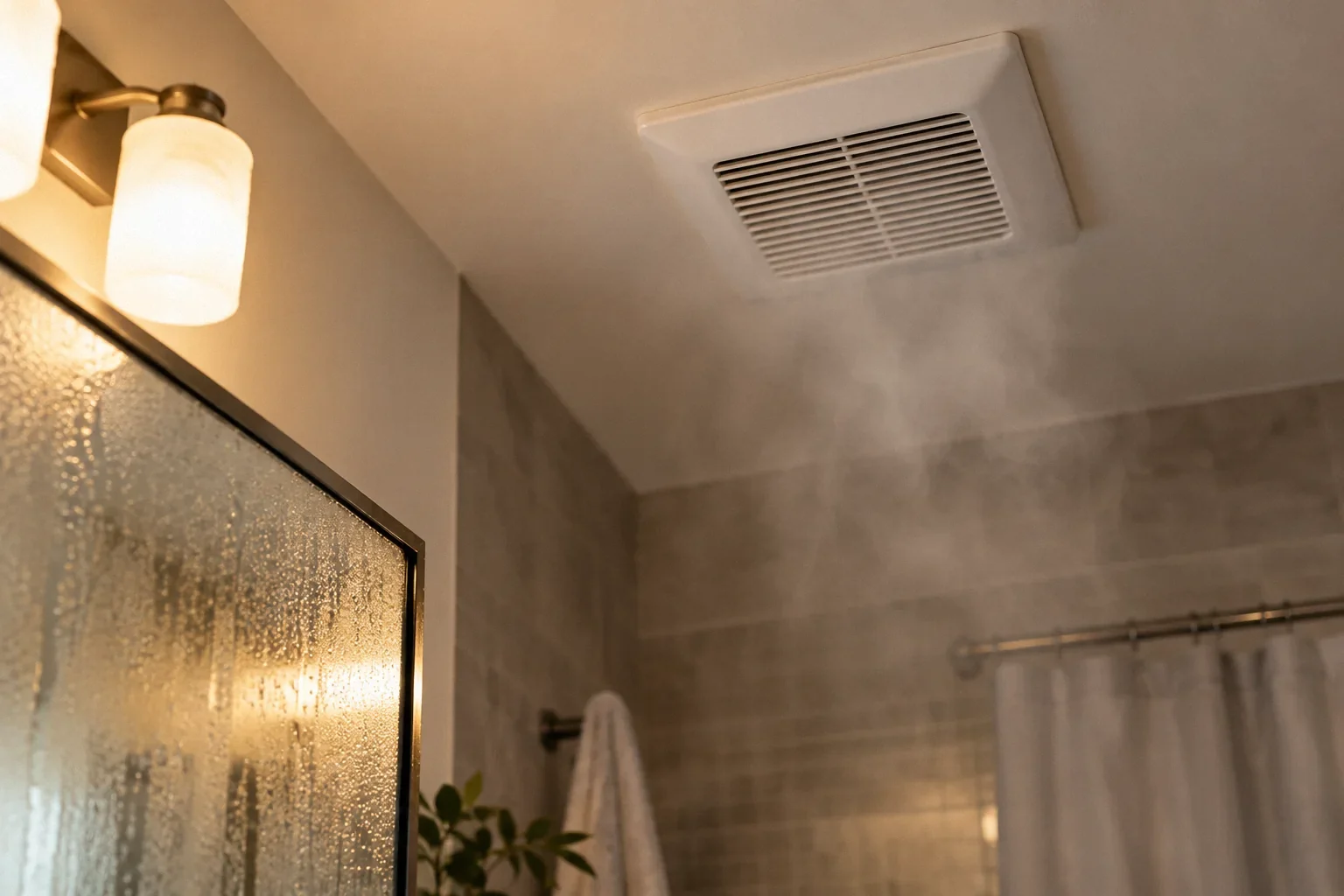
Blocked eave paths, disconnected exhaust ducts, elevated indoor moisture and ceiling penetrations can all be relevant. A localized rain leak may coexist with broader condensation. If the roof is intended to be unvented, the investigation changes fundamentally. Do not assume every attic should be modified to resemble a conventional vented attic simply because a moisture stain is present.
Evidence to request before choosing the work
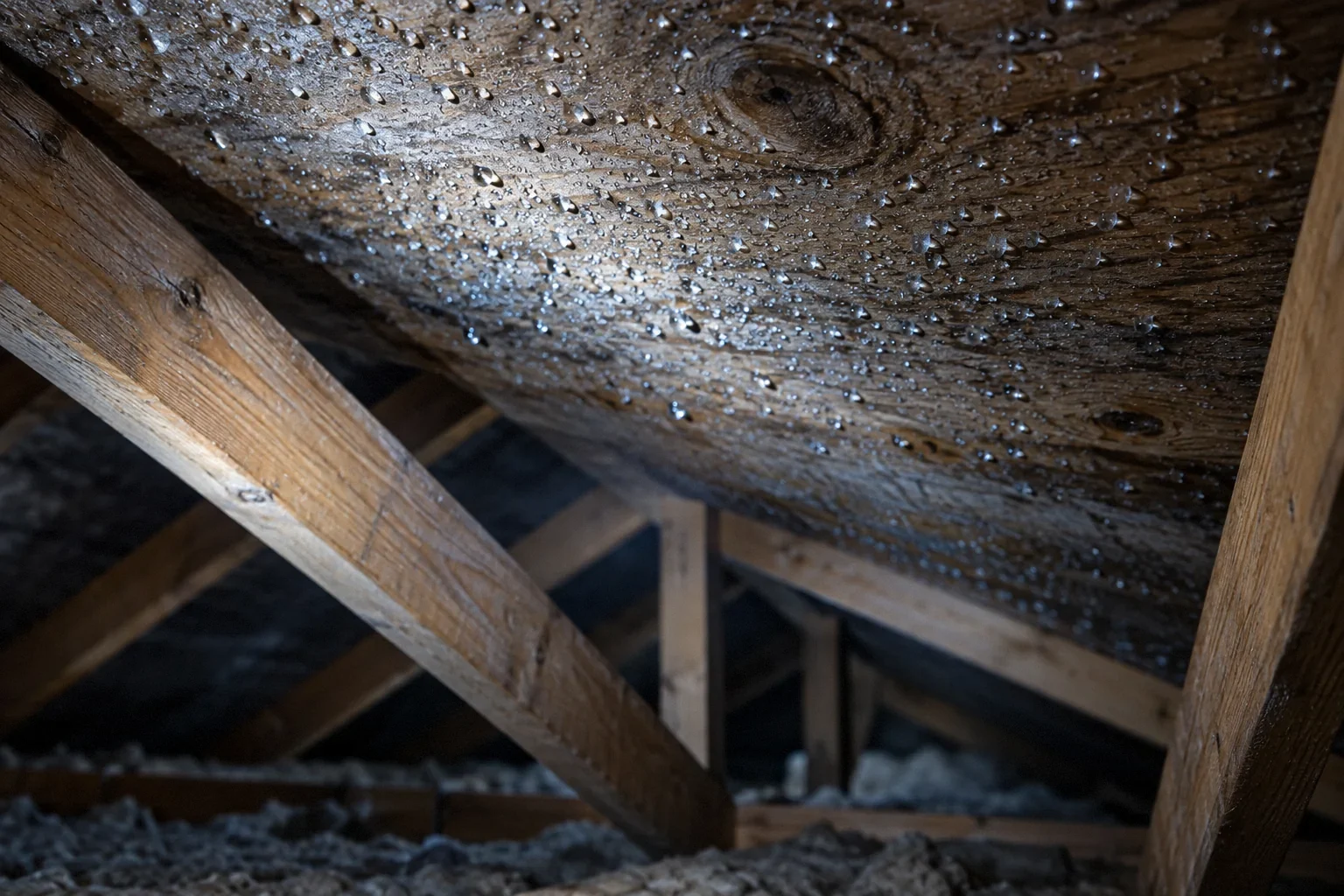
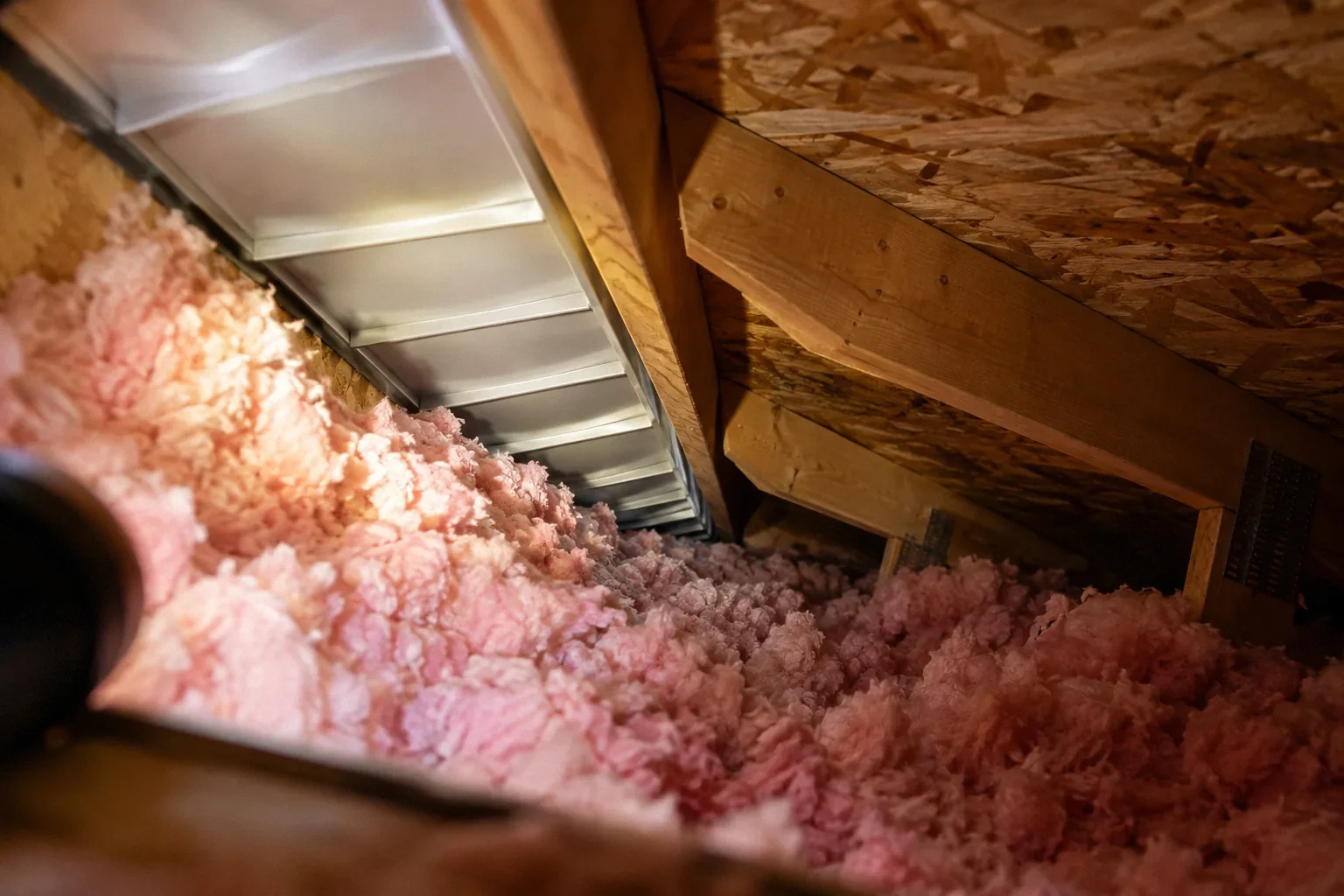
Ask for a diagram showing the intended ventilation and thermal boundaries, actual intake and exhaust openings, and the location of insulation. Document where surfaces are actively wet and whether the pattern follows cold weather, rain or indoor activity. The inspection should include exhaust terminations and significant ceiling air-leakage paths. A report that says needs ventilation without identifying the existing arrangement is incomplete.
Ask whether the ventilation recommendation includes both a description of the existing path and the proposed change. Listing a new vent product is not equivalent to explaining the path. The report should also say which moisture source or air-leakage question remains unresolved. This prevents a visible exterior upgrade from being accepted as proof that the entire attic condition has been corrected.
How the findings change the repair decision
Correct identified moisture sources and defective connections as part of the plan. Where intake paths are blocked, address the obstruction within the designed assembly. Where air leakage is substantial, additional vents should not substitute for appropriate air-boundary work. Have the professional explain how each proposed change relates to the observed moisture pattern and how the completed work will be checked.
A practical example and what it does not prove
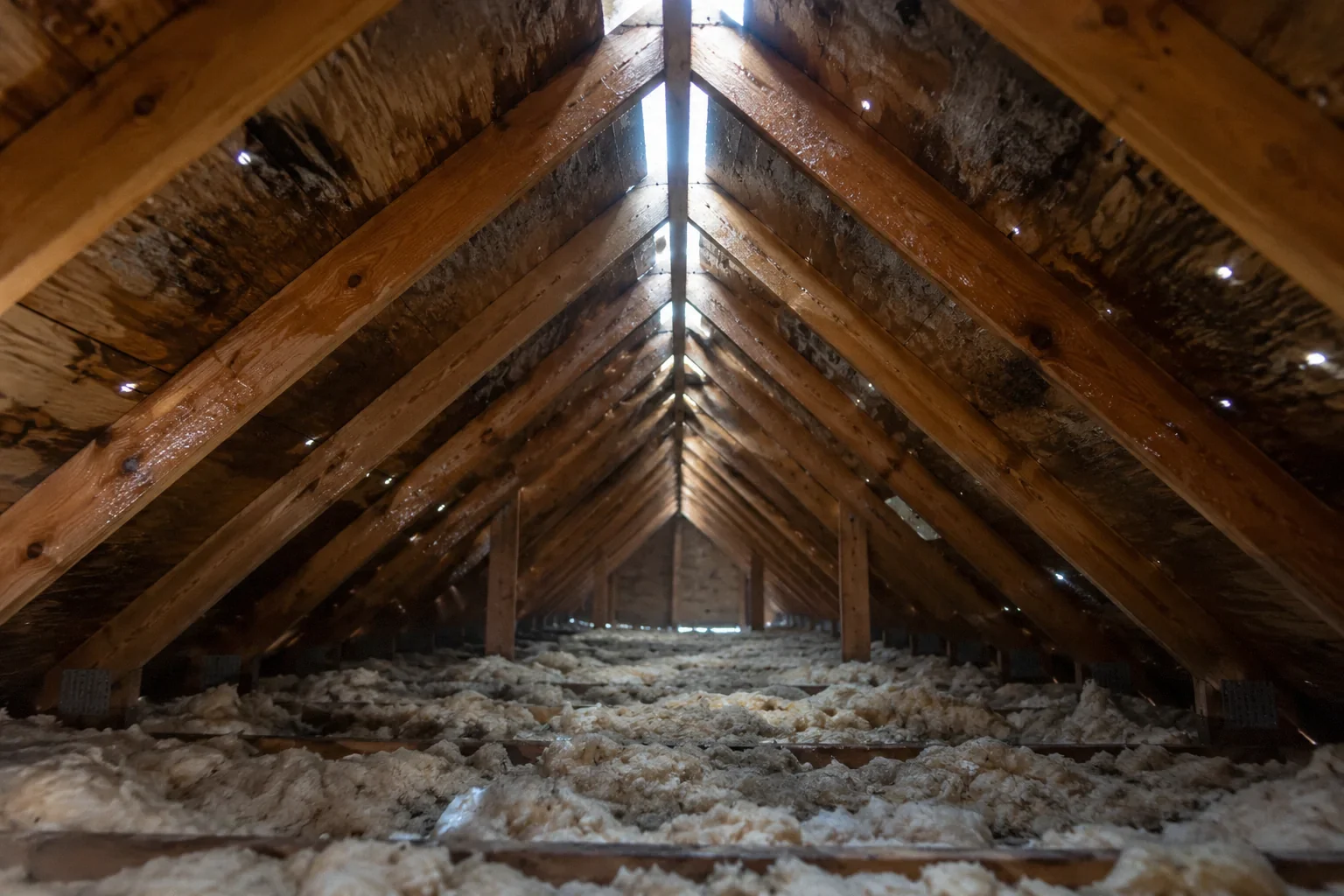
A sampled owner described moisture throughout a cold attic despite a full-length ridge vent and recently added insulation. [4] The owner suspected blocked soffits. That is a plausible investigation lead, but it does not eliminate indoor moisture sources or ceiling leakage. A useful scope evaluates those possibilities together rather than merely lengthening the existing ridge opening.
Limits and when professional review matters
Attic access may involve unstable footing, exposed wiring and contaminated materials. Homeowner observations should be limited to safe locations. Avoid adding fans, cutting openings or blocking vents based on a single online recommendation. Where the design is uncertain, obtain building-envelope expertise before making changes that alter the moisture and thermal boundaries.
Ask whether the proposed change completes a usable path
A new vent product is not the same thing as a documented ventilation arrangement. Ask the professional to describe the existing intake and exhaust relationships and which change is intended. If other moisture sources remain unresolved, keep them on the report. This prevents a visible exterior improvement from becoming an unsupported declaration that the attic is now corrected.
The distribution of moisture can help define follow-up. If localized wetness stops but broad cold-weather dampness continues, revisit the remaining mechanism. If the attic was inspected only during a dry mild period, the absence of wetness has a limited meaning. The professional should explain how the original conditions affect interpretation rather than issuing a categorical all-clear from a single visit.
- A ridge vent exists but its intake path is unverified: document the complete arrangement before adding exhaust.
- Exhaust ducts or ceiling gaps remain suspect: include those questions rather than treating ventilation as the only variable.
- The moisture pattern changes after work: preserve the comparison and reassess any remaining localized or widespread condition.
Questions that resolve the remaining uncertainty
Ask whether the investigator has identified the intended moisture boundary as well as the visible vents. If the design is uncertain, adding another exterior opening may be premature. The inspection should establish which space is intended to be conditioned and how the existing insulation and air boundary relate to it. That question is especially important after several renovations have changed different parts of the attic.
A useful follow-up record describes the specific variable changed by each repair. Correcting an exhaust route, clearing an intake path and addressing ceiling leakage are not interchangeable actions. Keeping them separate makes later observations more informative. If moisture persists, the professional can revisit the remaining mechanism instead of repeating the entire original scope without explanation.
A vent count cannot explain a moisture mechanism
The important relationship is the actual path through the intended assembly, not simply the number of visible openings. An existing ridge vent may coexist with an unverified intake route. Additional exhaust may leave a disconnected bathroom duct or ceiling leakage unchanged. The investigation should name the moisture source and route being addressed by each proposed modification.
A report can organize the findings into source, transport and surface response. What introduces moisture? How might it reach the attic? Where is it becoming visible? This structure keeps the professional from treating the coldest-looking or wettest location as the source automatically. It also allows a localized rain defect to remain on the list when broader condensation is being evaluated.
After work, compare the same pattern under relevant conditions. If one localized drip stops while widespread dampness remains, the result may support a mixed diagnosis rather than a failed repair. If no comparable conditions have occurred, state that limit. The completed record should identify which variables changed so the next review can focus on what remains. Without that distinction, an owner can move from one ventilation product to another while the original moisture pathway is never resolved.
What to take away
- A ridge vent is only one part of the attic system.
- Investigate moisture sources and ceiling leakage alongside intake and exhaust.
- Confirm the intended vented or unvented design before modifying openings.
Sources & further reading
Reddit links show the questions people ask; they do not establish a diagnosis or a legal requirement. Technical requirements depend on the product, building and jurisdiction. See our research approach.
- DOE attic air sealingTechnical / official reference
Air leakage and moisture; investigate source before adding vents
- DOE durable atticsTechnical / official reference
Insulation, eave baffles and vented-attic durability
- Homeowner discussion: Condensation in roofCommunity question · anecdotal
Anecdotal issue research, not technical authority or proof about another property.
- Homeowner discussion: Attic Moisture- is this just a ventilation issue?Community question · anecdotal
Anecdotal issue research, not technical authority or proof about another property.
Planning a Bay Area project?
Explore YKCA’s website and discuss the scope and services you need directly with them.