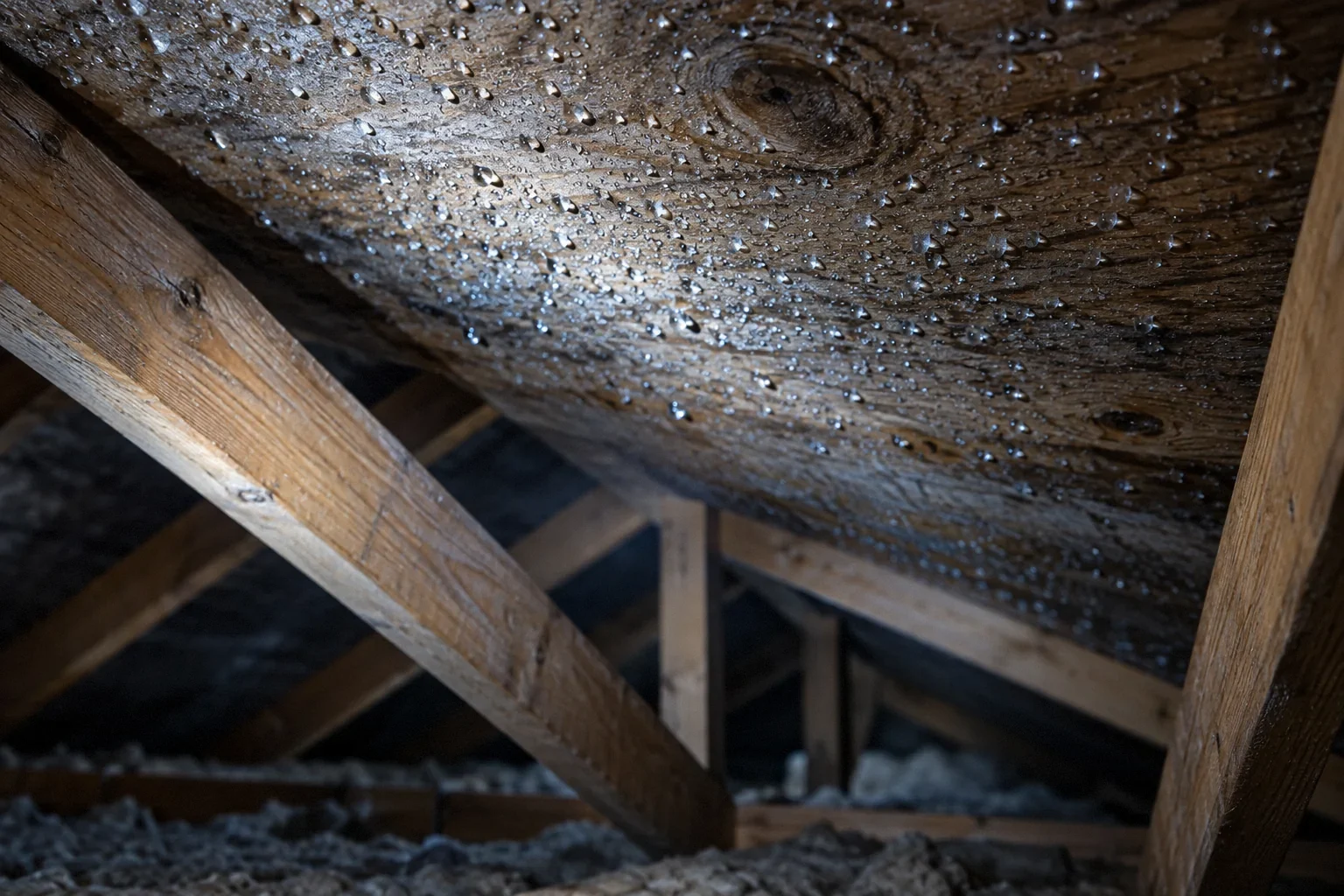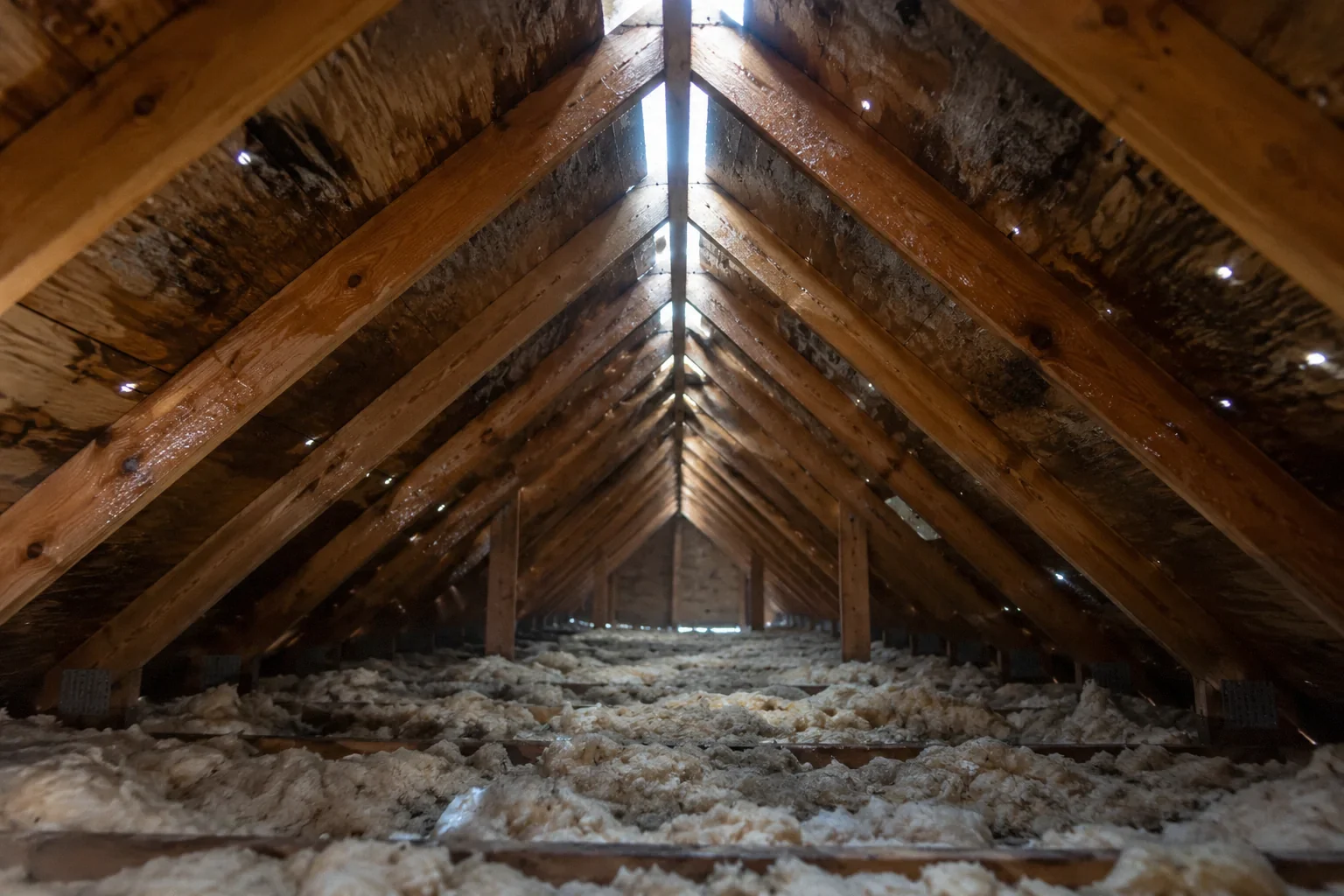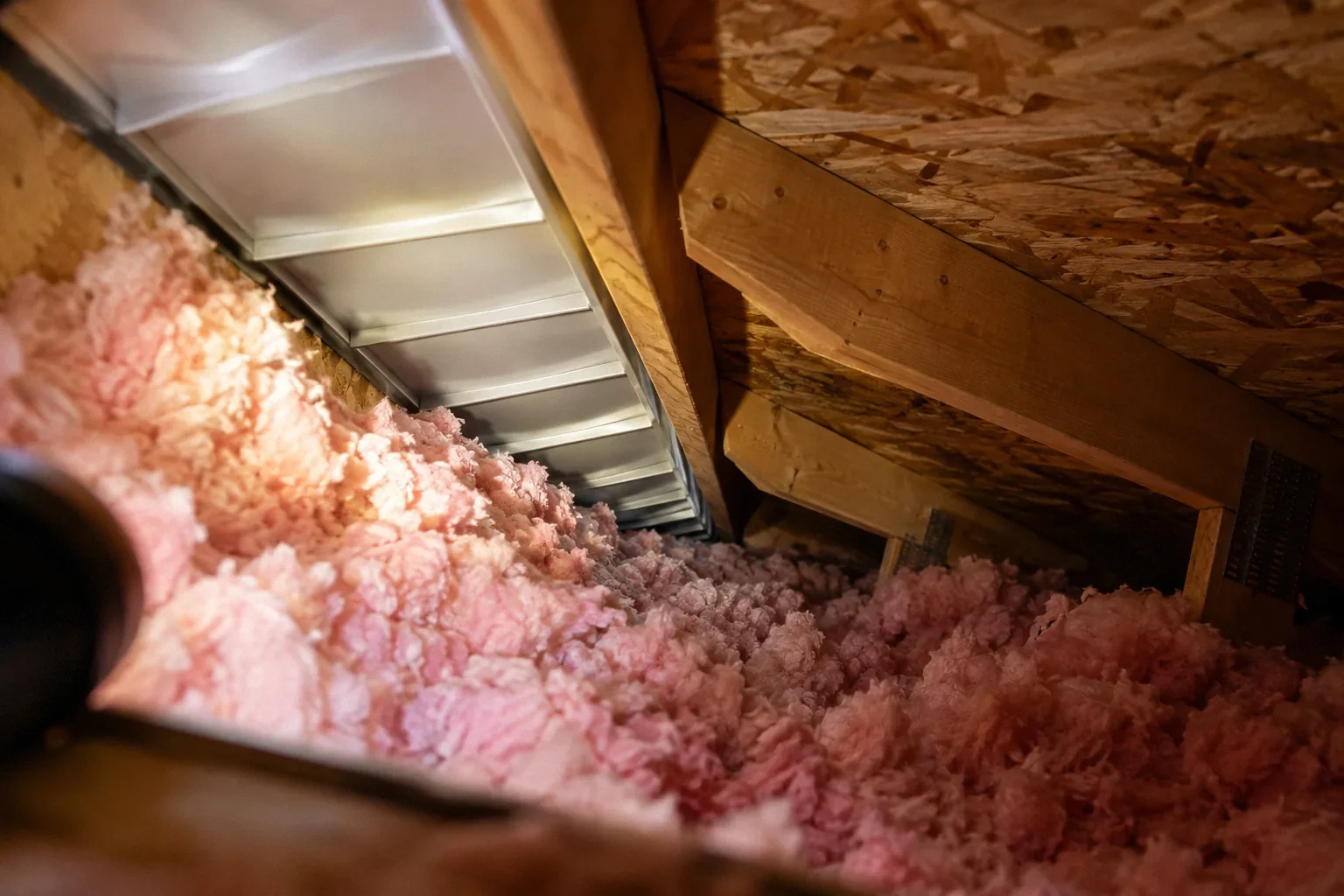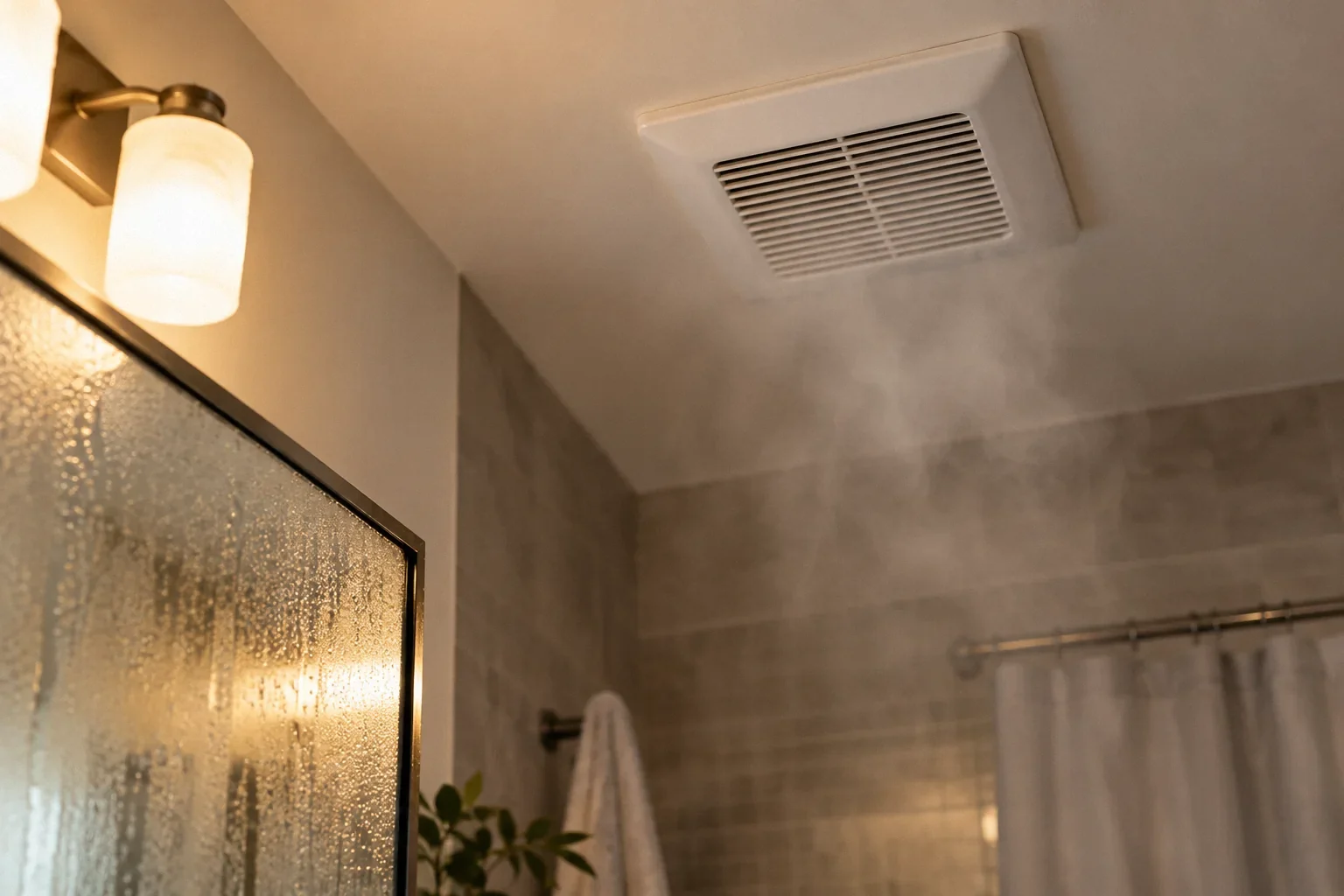
A bathroom fan can move moisture away from the room while still leaving a problem if its duct or termination does not function as intended. In a damp attic, establish where the exhaust actually goes and whether the duct is intact. Do not conclude that an extra roof vent is the appropriate remedy before investigating the exhaust route.
Trace the exhaust rather than assuming its route
Bathrooms generate moisture that must be managed within the building's ventilation design. An attic investigation should distinguish that source from moisture transported through ceiling leakage and from exterior rain entry. DOE's air-sealing guidance addresses the room-to-attic boundary, and its durable-attic guidance places moisture control within the broader attic assembly. [1][2] A fan grille in the bathroom proves neither a complete duct route nor a functioning exterior termination.
Other explanations to distinguish
A disconnected duct, leakage at joints, a poorly understood termination or condensation associated with the exhaust route can complicate the picture. A stain near the bathroom may also be a roof penetration defect or plumbing issue. The inspection should trace the system rather than infer its route from where the grille is located. Multiple mechanisms may coexist.
Evidence to request before choosing the work
Ask the professional to identify the fan, trace the accessible duct and document its termination and condition. Record whether moisture symptoms correlate with bathing, cold weather or rainfall. The investigation should describe inaccessible sections and avoid treating absence of a visible defect as proof of a continuous route. If the roof termination is involved, roofing and ventilation details need coordinated review.
If the fan was replaced previously, ask whether the old duct and termination were retained. A new fan does not establish that those components were reviewed. Likewise, an operating fan sound does not document the route of discharged air. A complete assessment should identify which portions of the system were actually checked and what evidence supports the conclusion about the termination.
How the findings change the repair decision
Correct the identified duct or termination condition within the applicable product and building requirements. If ceiling air leakage or a roof defect is also present, include it as a separate item. Adding general attic ventilation may not correct a disconnected exhaust path. The completed scope should explain how the bathroom exhaust reaches its intended destination and how disturbed roof or ceiling layers are restored.
A practical example and what it does not prove
A sampled thread describes bathroom exhaust near soffits alongside attic condensation. [3] The useful follow-up is to establish the exact termination and surrounding airflow arrangement. It is not enough to declare every soffit-related configuration identical. An on-site professional can compare the actual route with the applicable requirements and determine whether recirculation, disconnection or another condition is contributing.
Limits and when professional review matters
Do not disconnect ducts, cut a new roof outlet or work near electrical connections to investigate. Different fan and termination products have specific requirements. This article does not supply a universal duct size, length or clearance. Request those details from the professional for the selected equipment, and preserve the completed route record for future insulation or roof work.
A new fan does not verify the retained duct
Fan replacement may leave the duct and exterior termination unchanged. Ask which components were actually inspected when the equipment was changed. A functioning motor or audible airflow at the bathroom grille does not document the rest of the route. The investigation should establish that route rather than assume a recent appliance replacement resolved every exhaust-related concern.
Where the route crosses the roof, keep the mechanical and roofing questions separate but coordinated. A duct problem and a flashing problem can require different corrective work at the same location. Ask each professional to state the connection they are responsible for and how completion is verified. The owner should not have to infer which half of the interface remains unaddressed.
- A fan was replaced but the duct history is unknown: assess the retained route and termination.
- Moisture occurs near the roof outlet: distinguish exhaust-system observations from roof-flashing observations.
- A section of the route is inaccessible: document the limitation and decide whether further access is needed before declaring it complete.
Questions that resolve the remaining uncertainty
Where a duct cannot be traced completely, ask what evidence would justify further access. The answer should relate to the symptom and the consequence of remaining uncertainty, not simply to the inconvenience of inspection. A limited report can be useful if it says exactly what was observed. It becomes misleading when an unseen termination is described as confirmed merely because the fan appears to operate.
The fan, duct and roof termination are separate inspection items
A new fan does not verify a retained duct, and a visible exterior outlet does not establish the condition of the route between them. Ask which segments were actually traced. The report should distinguish observed continuity from assumptions where access was limited. That prevents an equipment replacement from being mistaken for confirmation of the entire exhaust system.
At the roof crossing, the mechanical path and the exterior flashing connection have different functions. One moves exhaust to its intended destination; the other maintains the roof's water-control layer. A problem with either can produce concern near the same location. Coordinate the review so each professional identifies the interface assessed and the correction, if any, still required from the other trade.
The symptom timeline can then be interpreted against both systems. Moisture associated with bathroom use deserves a different comparison from a mark that grows only during rain, while cold weather can complicate either observation. Do not force the timeline into a single conclusion without tracing the route. A clear record of the fan, accessible duct and termination gives the next investigator something more reliable than the assumption that moisture near a bathroom must come from its fan.
What to take away
- Trace the exhaust route from the fan to its actual termination.
- Separate duct-related moisture from roof leakage and ceiling air leakage.
- Require coordinated restoration wherever the duct crosses building layers.
Sources & further reading
Reddit links show the questions people ask; they do not establish a diagnosis or a legal requirement. Technical requirements depend on the product, building and jurisdiction. See our research approach.
- DOE attic air sealingTechnical / official reference
Air leakage and moisture; investigate source before adding vents
- DOE durable atticsTechnical / official reference
Insulation, eave baffles and vented-attic durability
- Homeowner discussion: Condensation in roofCommunity question · anecdotal
Anecdotal issue research, not technical authority or proof about another property.
- Homeowner discussion: Attic Moisture- is this just a ventilation issue?Community question · anecdotal
Anecdotal issue research, not technical authority or proof about another property.
Planning a Bay Area project?
Explore YKCA’s website and discuss the scope and services you need directly with them.