Request a separate roof assessment when age is uncertain, leaks or repairs are documented, access was limited, reports conflict, or a costly roof interface remains unresolved. Define the specialist's deliverables and obtain the assessment within the transaction's investigation period.
Identify the decision the report must support
A buyer may need to know whether a particular leak has been repaired, whether a roof area needs near-term work, or whether replacement claims are supported. State that question at the start. 'Check the roof' is too vague when the result may influence a major purchase or negotiation.
ASHI's published standard is one example of how a general inspection's scope is defined. It calls for reporting the roof observation method. Use the standard actually named in your agreement to identify which question a separate specialist visit should add to the original inspection. [2]
Use specific triggers for specialist review
Unknown installation history, recurring stains, multiple roof systems, altered skylights, solar penetrations, or a general inspector's referral can justify closer review. None automatically means replacement is required. The question is whether the remaining uncertainty is consequential enough to investigate before committing to the purchase.
Agree on access and permissions
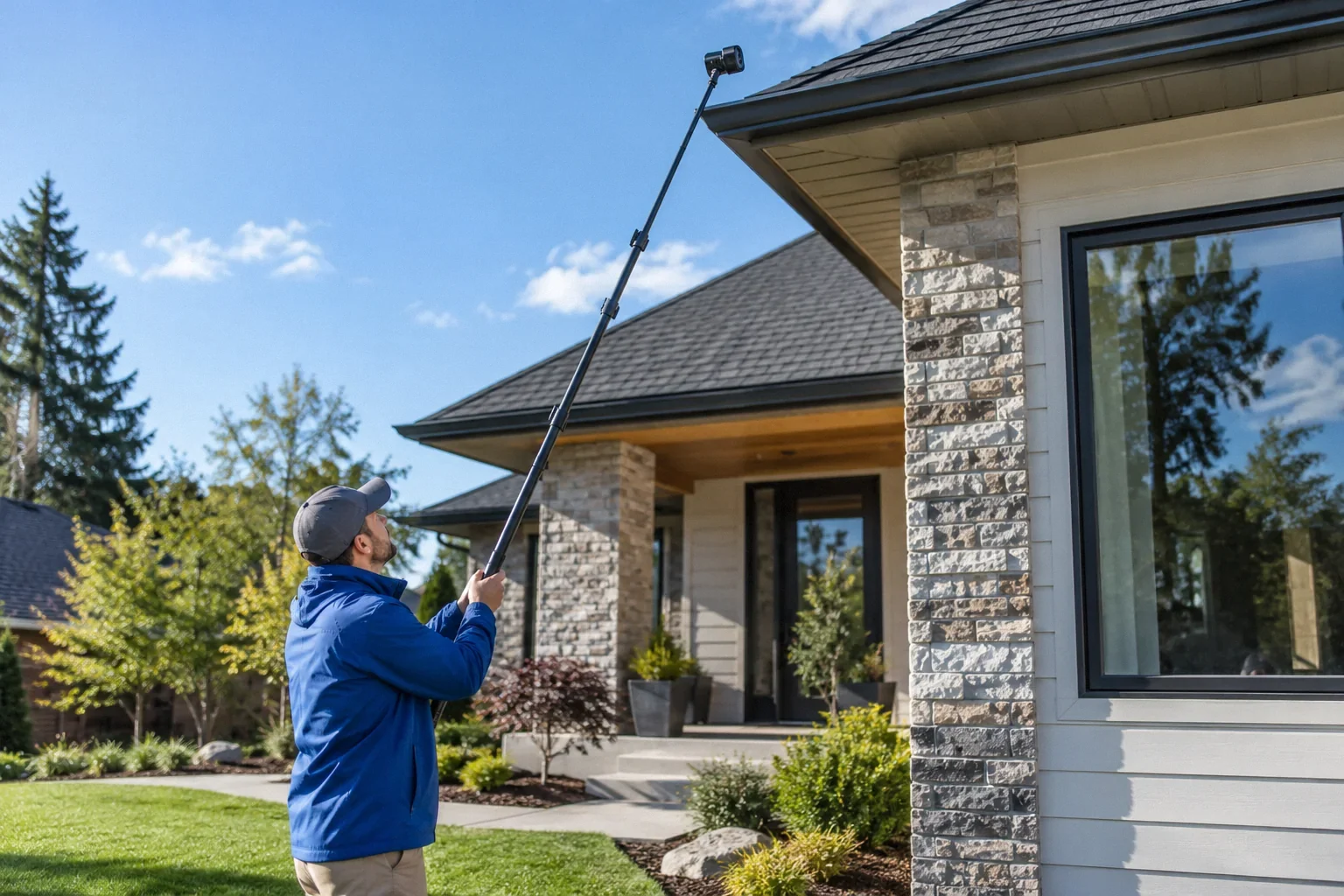
Clarify access to the attic, roof, and relevant interior rooms, and obtain necessary owner permission. State whether the evaluation is noninvasive and what cannot be inspected safely. Do not ask a contractor to perform destructive testing without authorization. If access is denied, record the limitation rather than silently treating the area as satisfactory.
Request an evidence-based report
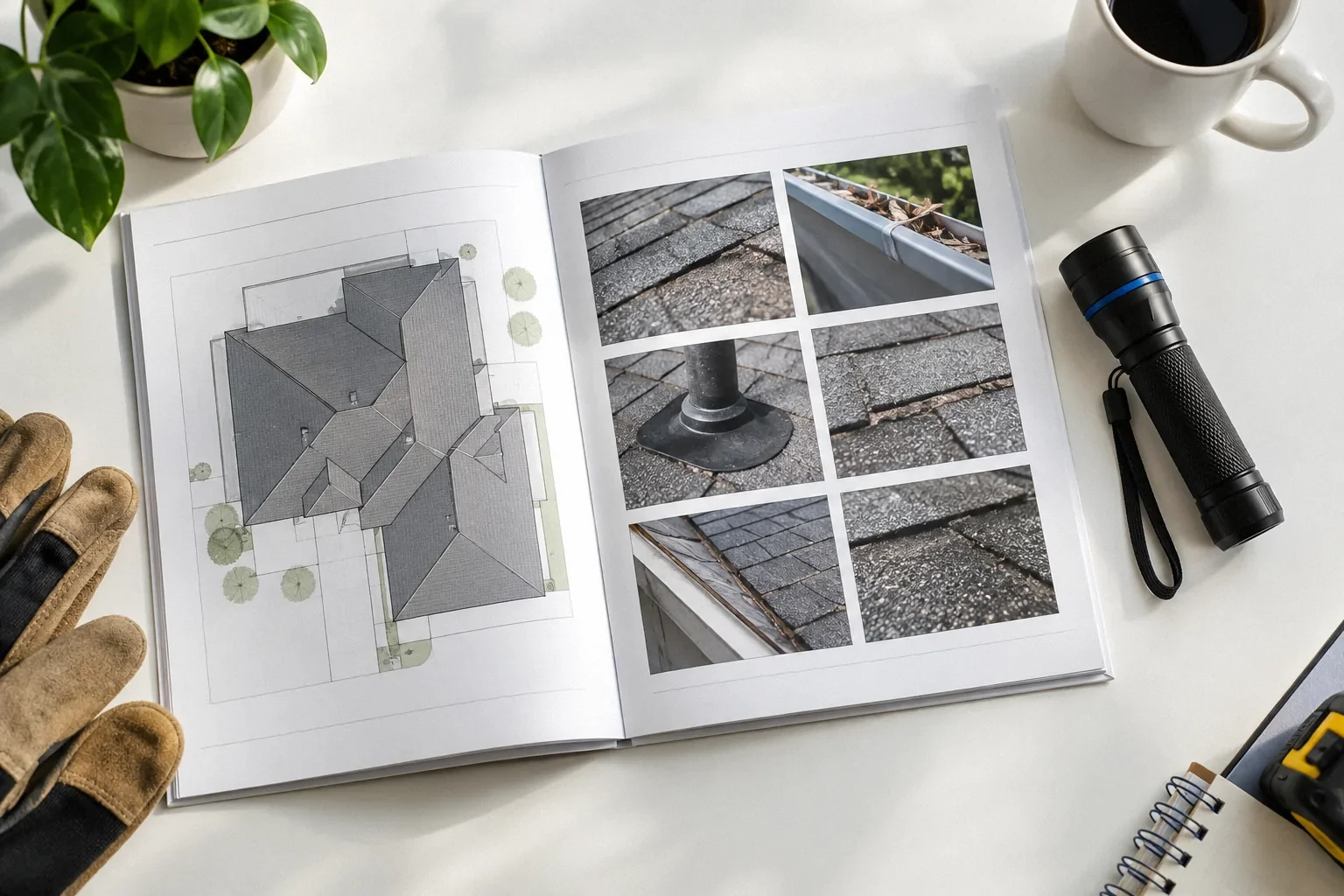
Useful deliverables include roof-area identification, photographs, observed conditions, likely causes where supported, repair priorities, limitations, and recommended further investigation. Separate the assessment from a sales estimate. If replacement is recommended, ask why a localized repair would be inadequate and what evidence supports that conclusion.
Compare conflicting recommendations by reasoning
One roofer may propose repairs and another complete replacement. Ask both to identify the same defects, explain the repair boundaries, and describe residual risk. Do not average their prices or assume the largest scope is safest. The report should make the disagreement testable, for example through closer examination of a specific deck or flashing condition.
Coordinate with transaction and insurance requirements
Provide the findings to the relevant real estate and insurance professionals as appropriate. A roof that is technically repairable may still raise a lender or insurer question that requires separate confirmation. Do not assume a contractor's assurance settles underwriting or a transaction condition. Obtain the actual requirement from the party imposing it.
Avoid a guarantee that no inspection can give
Even a specialist may not see every concealed defect or predict every future leak. Ask for clear limitations and a practical next step for unresolved areas. The Reddit dispute behind this article contrasts a general report with a later large replacement recommendation.[1] It supports asking for evidence, not assuming either report is automatically correct.
A practical example
A buyer receives a general report noting inaccessible flashing around an addition and a seller statement that the roof is recent. A separate assessment should focus on that junction, the addition's roof history, and safe interior access, not merely count shingle wear. If the specialist cannot inspect the key detail, the report should say so and identify options for further review. The buyer can then negotiate or accept a clearly described uncertainty.
Decide what could change the purchase decision
Before booking, write down the unresolved decision in one sentence. Examples include whether repeated patches address one localized detail, whether an addition has a different roof assembly, or whether a claimed recent replacement covered the entire property. This produces a more useful scope than “please tell us if the roof is good.” A specialist can then explain which parts of that question can be answered visually and which would require records, opening work or another professional.
Separate curiosity from material uncertainty. A buyer may dislike a roof's color but already understand its condition. Another buyer may accept its appearance while having no explanation for several repairs above the same room. The second situation calls for a different kind of investigation. Consider both the consequence of being wrong and the ability to resolve the uncertainty. Paying for a visit that cannot access the disputed area may still be useful, but the limitation should be understood before the appointment.
Request a deliverable you can compare with bids
Ask for a written report that identifies roof sections, observed conditions, access method, limitations and recommended next steps. If repair is suggested, the report should explain the affected area and the basis for recommending that scope. You do not need a promised remaining lifespan to make progress. A clear account of what is serviceable, what appears defective and what remains uncertain is often more useful than a single reassuring number.
A contractor who also offers repair work can supply useful findings, but keep the observation separate from the sales proposal. Ask which recommendation follows from a confirmed defect and which represents an elective improvement. For a consequential disputed diagnosis, consider an appropriately qualified independent opinion. Give each evaluator the same question and records so you are comparing responses to the same problem. Two reports with different access or objectives may disagree without either addressing the complete decision you need to make.
Plan for inconclusive findings before the deadline
Imagine an inspector sees several tile repairs but cannot assess the concealed underlayment. One possible outcome is a limited finding, not a recommendation for automatic replacement. The next discussion should concern whether further investigation is feasible, what permission it requires and how that uncertainty affects the buyer's decision. Asking for a guarantee because the closing date is near does not create evidence that was unavailable during the visit.
Arrange the appointment early enough for a written report, clarification and any realistic follow-up. Ask who needs to be present and how the seller will provide authorized access. If an important question remains unanswered, state it precisely to the agent or other transaction adviser. Possible choices may include obtaining further information, negotiating a defined response or knowingly accepting the uncertainty. Which choices are available depends on the transaction; the inspection itself does not amend the parties' agreement or decide the financial outcome.
What to take away
- Define the purchase decision and unresolved roof question.
- Require location-based findings and explicit access limitations.
- Compare conflicting scopes by evidence and residual risk.
Sources & further reading
Reddit links show the questions people ask; they do not establish a diagnosis or a legal requirement. Technical requirements depend on the product, building and jurisdiction. See our research approach.
- agent's recommended inspector missed a 30k roof problemCommunity question · anecdotal
Anecdotal issue discovery; not verified legal, technical, insurance, or incident authority.
- ASHI: Standard of PracticeTechnical / official reference
Professional association standard, not a substitute for the inspection agreement or applicable law. Check the standard actually used by your inspector.
Planning a Bay Area project?
Explore YKCA’s website and discuss the scope and services you need directly with them.