Approve concealed-deck repairs from location-specific evidence and a written change order that states quantity, unit, repair scope, price, and schedule effect. A deteriorated deck may be a legitimate discovery; an unexplained lump sum is still an incomplete proposal.
Ask for photographs that can be located
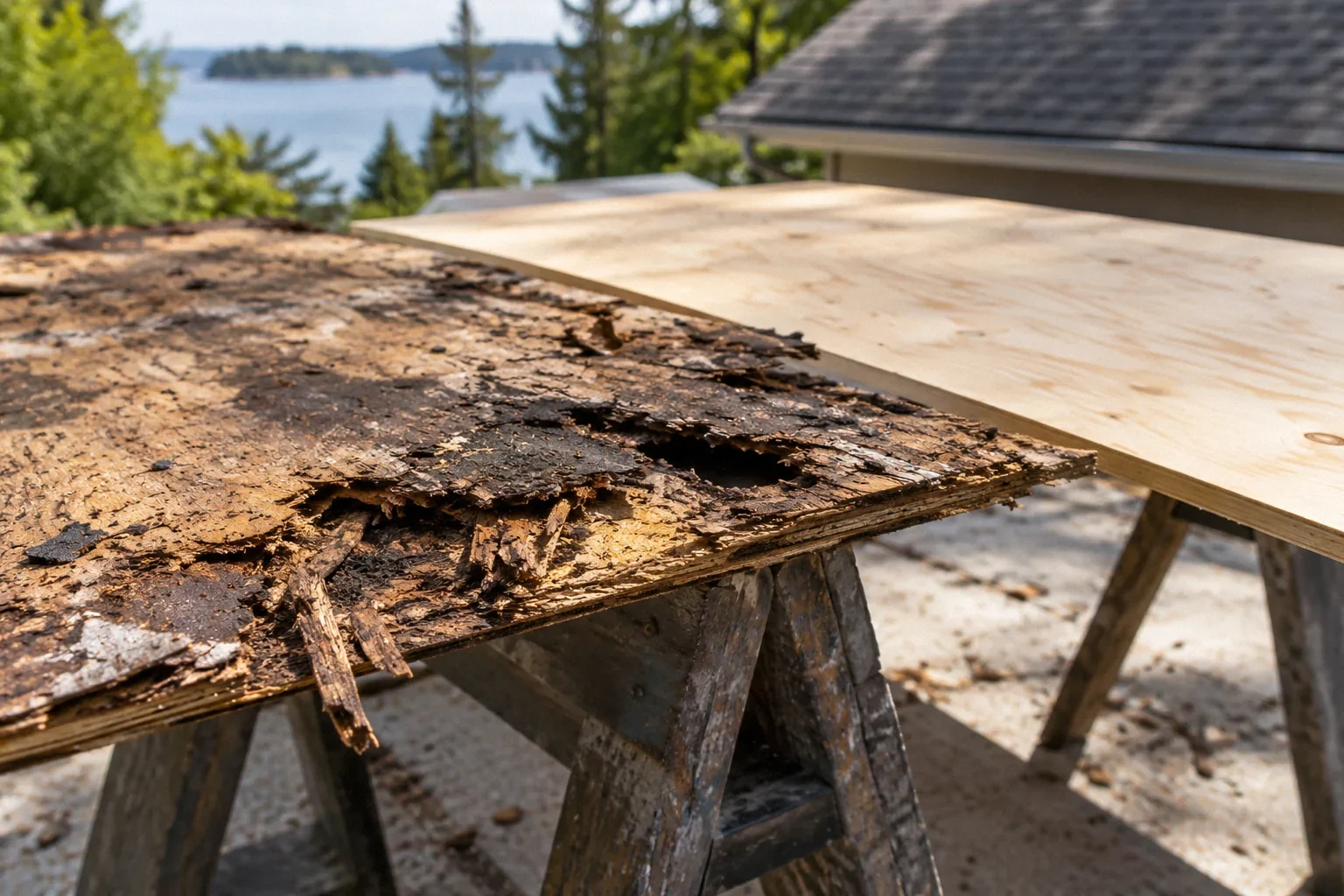
A close-up of damaged wood is difficult to evaluate without context. Request an overall view, a marked roof location, and a detail image showing the condition. Have the contractor explain whether the concern is decay, broken material, inadequate support, or a requirement of the selected assembly. Photographs support a discussion; they do not replace a qualified structural assessment where one is needed.
Read quantities in the correct units
One Reddit dispute became confused because the owner read linear feet as individual pieces.[4] Confirm whether pricing is by sheet, square foot, linear foot, or defined repair item. Dimensions and thickness matter. State how partial sheets, offcuts, overlaps, and waste are treated so a receipt for purchased material is not automatically mistaken for a measure of installed work.
Define what the price includes
A board price alone does not account for safe access, removal, cutting, support, attachment, disposal, and restoration around the repair. Conversely, those tasks should not be charged twice if already included. Ask for the pricing method agreed in the original contract and an explanation of any departure. A useful breakdown clarifies scope without pretending homeowners can audit every minute of labor.
Get the change in writing before concealment
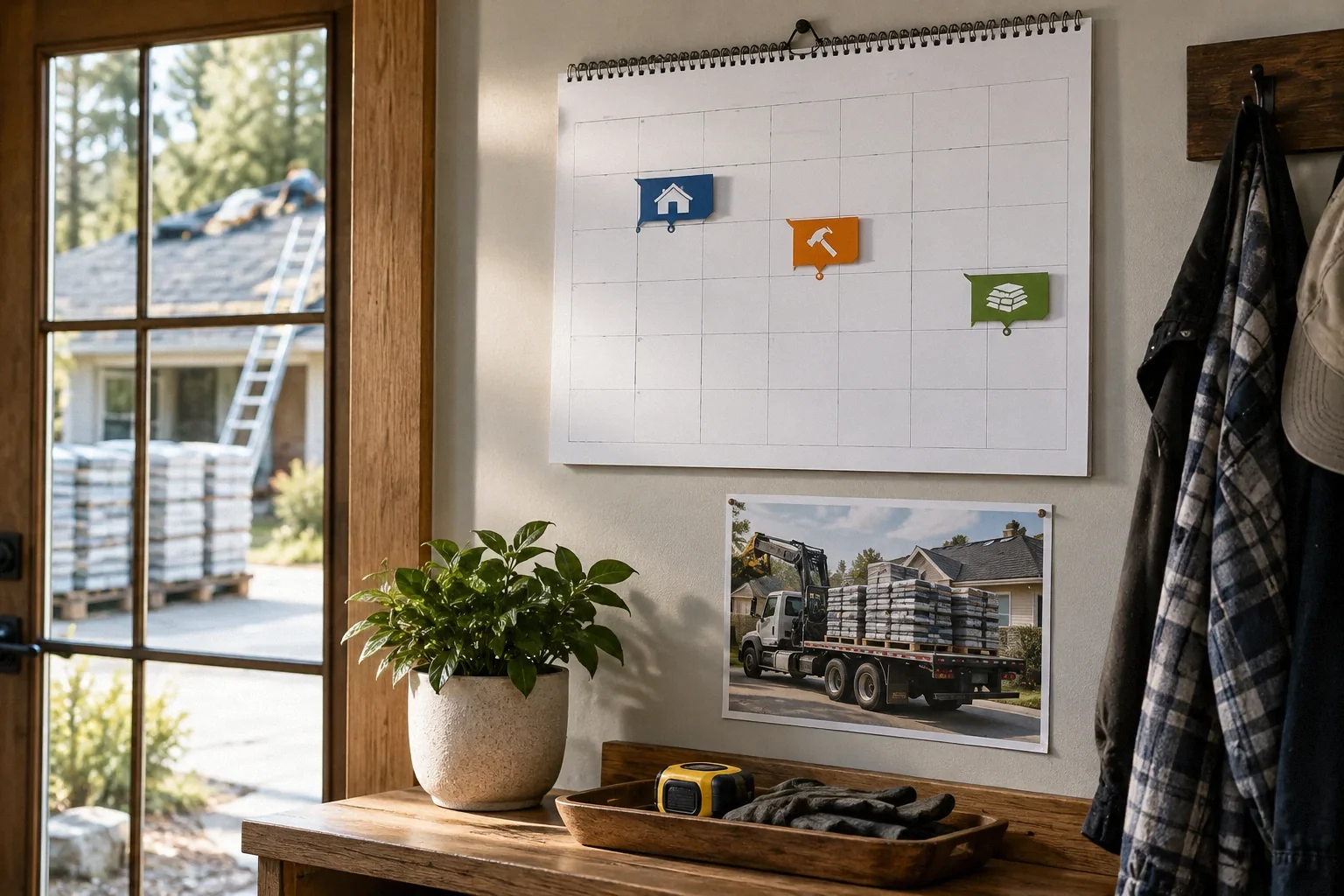
CSLB's homeowner checklist emphasizes written changes.[1] The change order should identify the original contract, precise additional work, added or credited price, and timing. Resolve who may approve it and how approval will be recorded. An open roof creates urgency, but urgency should lead to a preplanned decision process rather than an undocumented blank check.
Separate temporary protection from permanent repair
If you need time to review a major proposal, ask how the exposed area can be protected and what delay costs or limitations apply. Do not instruct a crew to leave unsafe or weather-exposed conditions. If framing damage exceeds an ordinary deck replacement, the next step may include a designer or building official rather than simply approving more sheets.
Reconcile the completed repair
Request final location photographs and the measured installed quantities where the pricing depends on them. Compare the invoice with the approved change and keep it in the roof file. A building inspection, when required, serves a different purpose from your commercial quantity review. Neither the material receipt nor a passed inspection independently resolves every billing question.
Review a change order without pretending to be the roofer
Ask the contractor to distinguish failed material from material that is merely old or visually weathered. The proposed repair should identify the functional concern: lost strength, inability to hold fasteners, unsuitable substrate, damaged support, or another documented condition. A homeowner need not diagnose decay from a photograph. The useful question is what observation supports replacement and whether the recommended boundary reaches sound material. Where the answer involves structural capacity or extensive framing, a qualified design assessment may be needed.
Before approving a quantity-based price, ask how the contractor will measure completed work. A sketch showing the affected roof zones and dimensions can prevent confusion later. For sheet goods, record thickness and the basis of the sheet count; for boards or fascia, identify dimensions and linear footage. Clarify whether the price includes waste or only installed quantity. The method should be agreed before work is concealed, not reconstructed from a truckload receipt after the invoice is disputed.
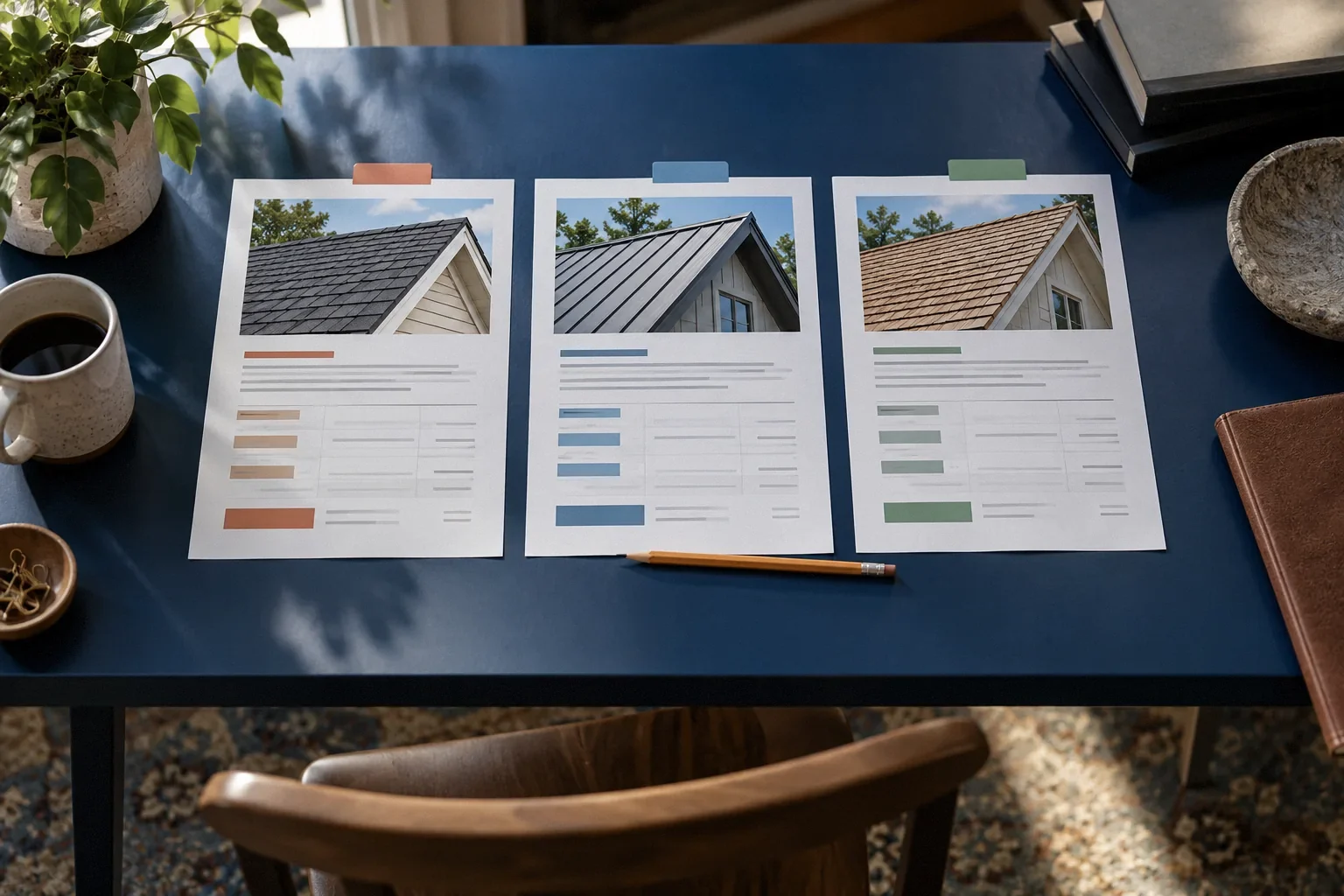
Consider two legitimate pricing approaches: a defined lump sum for a clearly described repair, or an agreed unit rate applied to verified quantities. A lump sum can provide cost certainty but still needs scope boundaries. Unit pricing can accommodate uncertain extent but needs a measurement rule and approval limit. Neither is automatically fairer. The important issue is whether the homeowner understands what will be built, how additional discoveries will be handled, and what evidence will support the final amount.
If repeated changes occur across a multi-building project, review the pattern before the next roof is opened. Ask whether a representative investigation, revised allowance, or more explicit unit schedule would reduce uncertainty. Do not assume the first building's hidden condition is identical to every other one. A useful program tracks each roof separately while learning from earlier findings. This lets an association improve budgeting and approvals without treating every discovery as a surprise or granting a standing blank check for unspecified carpentry.
- Require the repair boundary and functional reason for replacement, not merely a close-up of discolored wood.
- Agree how installed quantities, waste, partial sheets, and related labor are measured before the work disappears.
- For repeated roofs, update assumptions from documented findings while preserving a separate condition and approval record for each building.
A practical example
An East Bay association reported recurring additions after roofs were opened.[3] For a comparable future project, the board could require a roof-by-roof condition map, agreed unit definitions, and a designated approval contact before mobilization. When nine sheets are proposed, the review should address which areas require them and why, what related carpentry is included, and whether the price follows the contract. Repeated discoveries deserve better planning, not an automatic accusation that all extra work is fabricated.
When the proposed repair is larger than expected
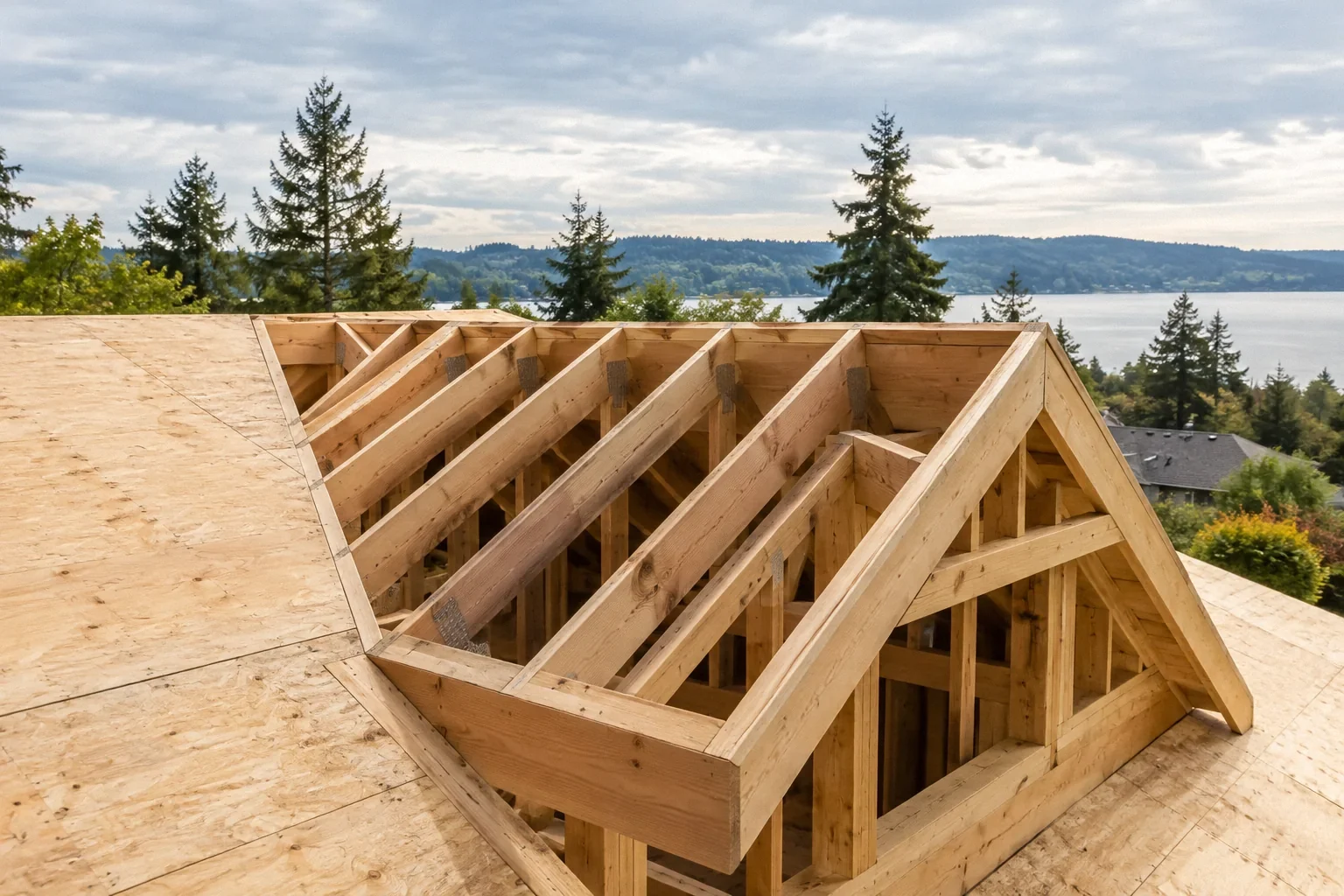
Ask whether the discovery remains ordinary deck repair or has become a structural problem requiring another professional's assessment. Extensive framing deterioration, unusual deflection, or inadequate support should not be reduced to a count of replacement sheets without explanation. The contractor should identify the boundary of its assessment and whether the permit authority or a designer needs to review the expanded work. Temporary protection may be necessary while that determination is made.
Do not approve or reject a major change solely because its total resembles a number seen online. Roof access, extent, material dimensions, demolition, support, and restoration can differ substantially. Evaluate whether the scope is necessary, the evidence is coherent, the pricing follows the agreement, and the approval process is clear. If an independent opinion is warranted, obtain it quickly enough to coordinate safe protection of the open roof. Document the decision and its basis so the final invoice can be reconciled to an actual authorized repair rather than a pressured conversation during demolition.
What to take away
- Require location, condition, quantity, unit, and price in the approval record.
- Distinguish purchased material from installed repair quantities.
- Agree on temporary protection when a major decision cannot be immediate.
Sources & further reading
Reddit links show the questions people ask; they do not establish a diagnosis or a legal requirement. Technical requirements depend on the product, building and jurisdiction. See our research approach.
- CSLB: Homeowner ChecklistsTechnical / official reference
Permits, written change orders, deposit cap and work-based payments.
- CSLB: What Is a Contract?Technical / official reference
Written labor and manufacturer warranties and agreement terms.
- Reasonable Roof Change Order?Community question · anecdotal
Anecdotal discussion used to identify reader questions. Not verified incident evidence or legal, insurance, or technical authority.
- Is it common to mis-attribute wood to the wrong roof job? Am I wrong to ask for audit?Community question · anecdotal
Anecdotal discussion used to identify reader questions. Not verified incident evidence or legal, insurance, or technical authority.
Planning a Bay Area project?
Explore YKCA’s website and discuss the scope and services you need directly with them.