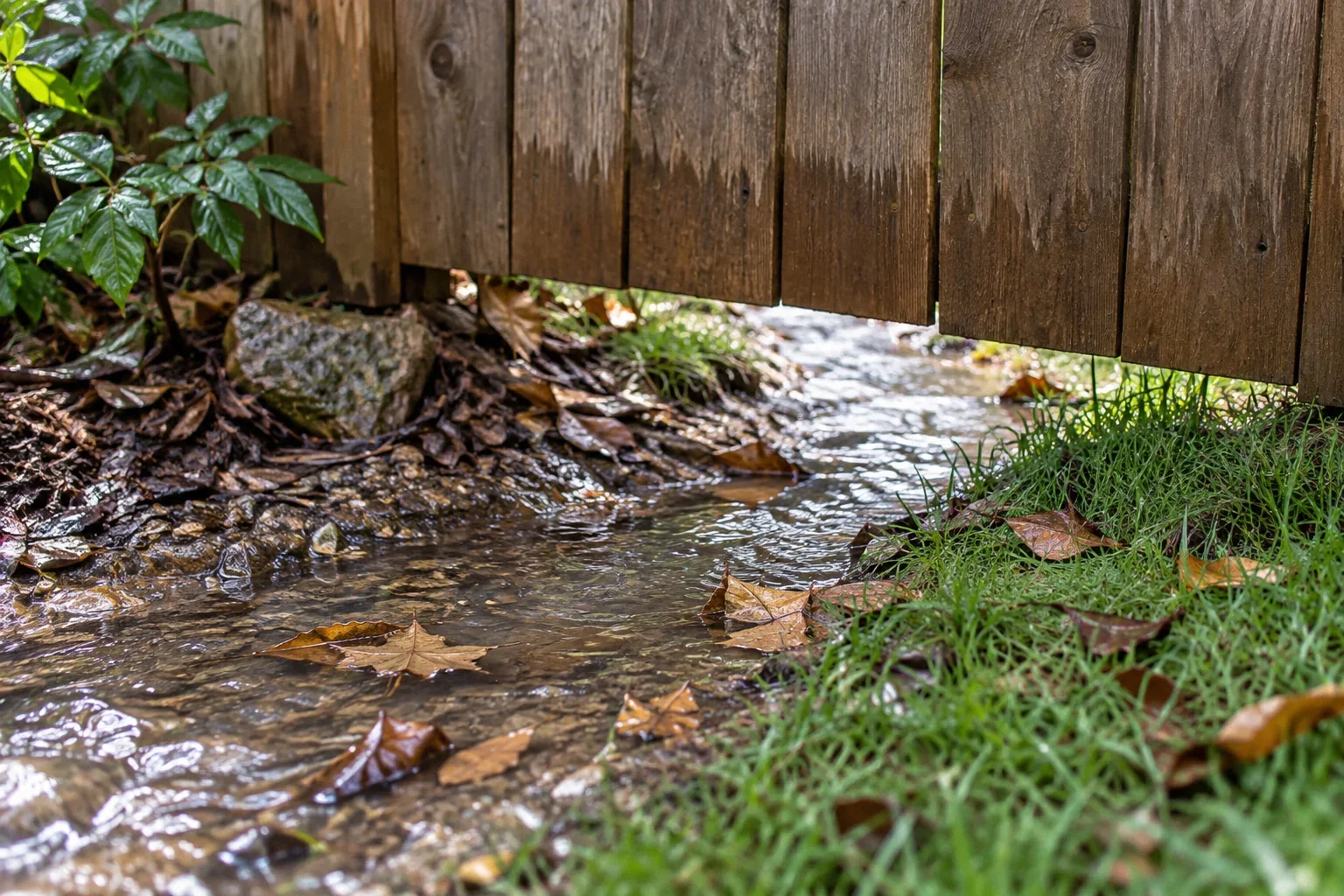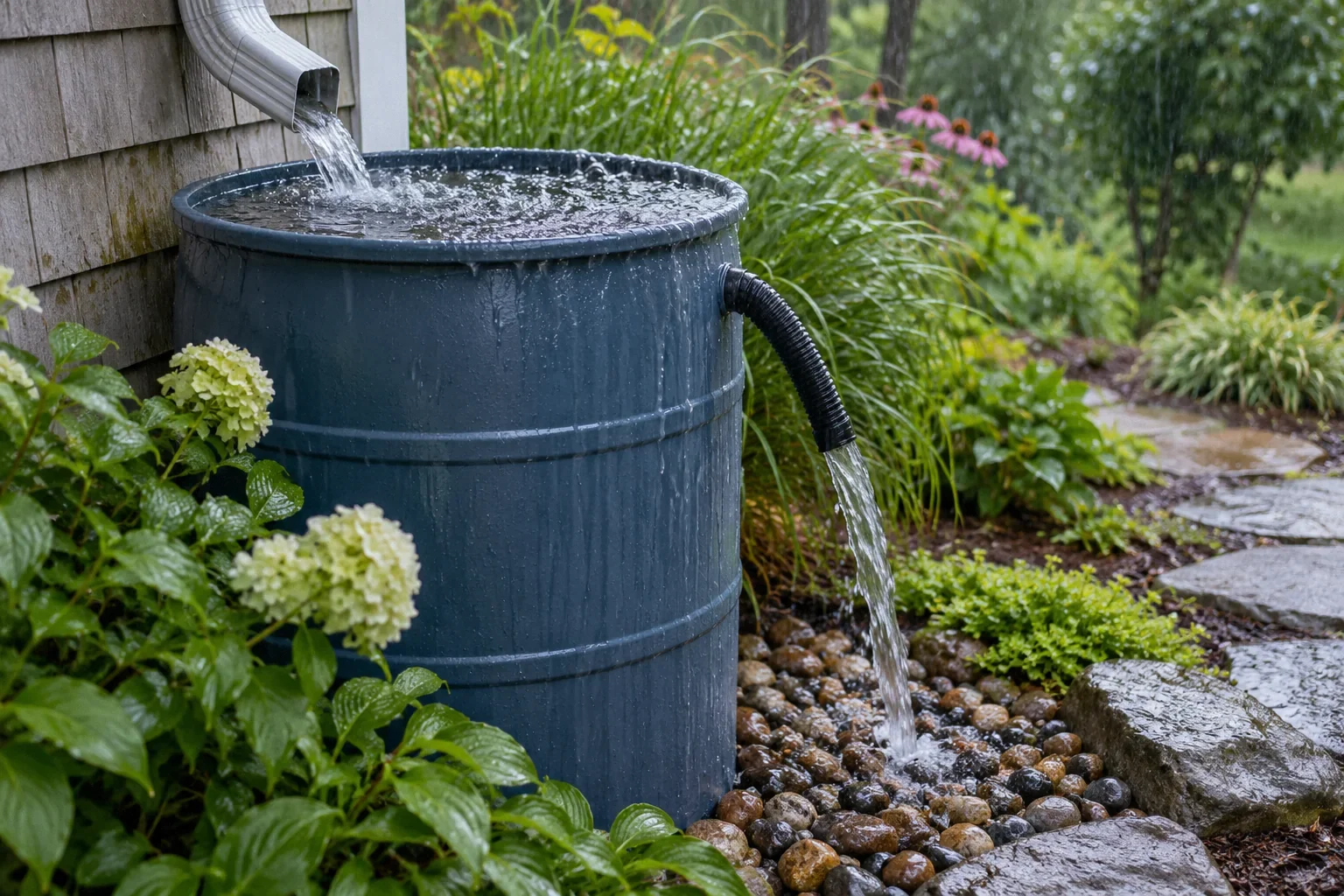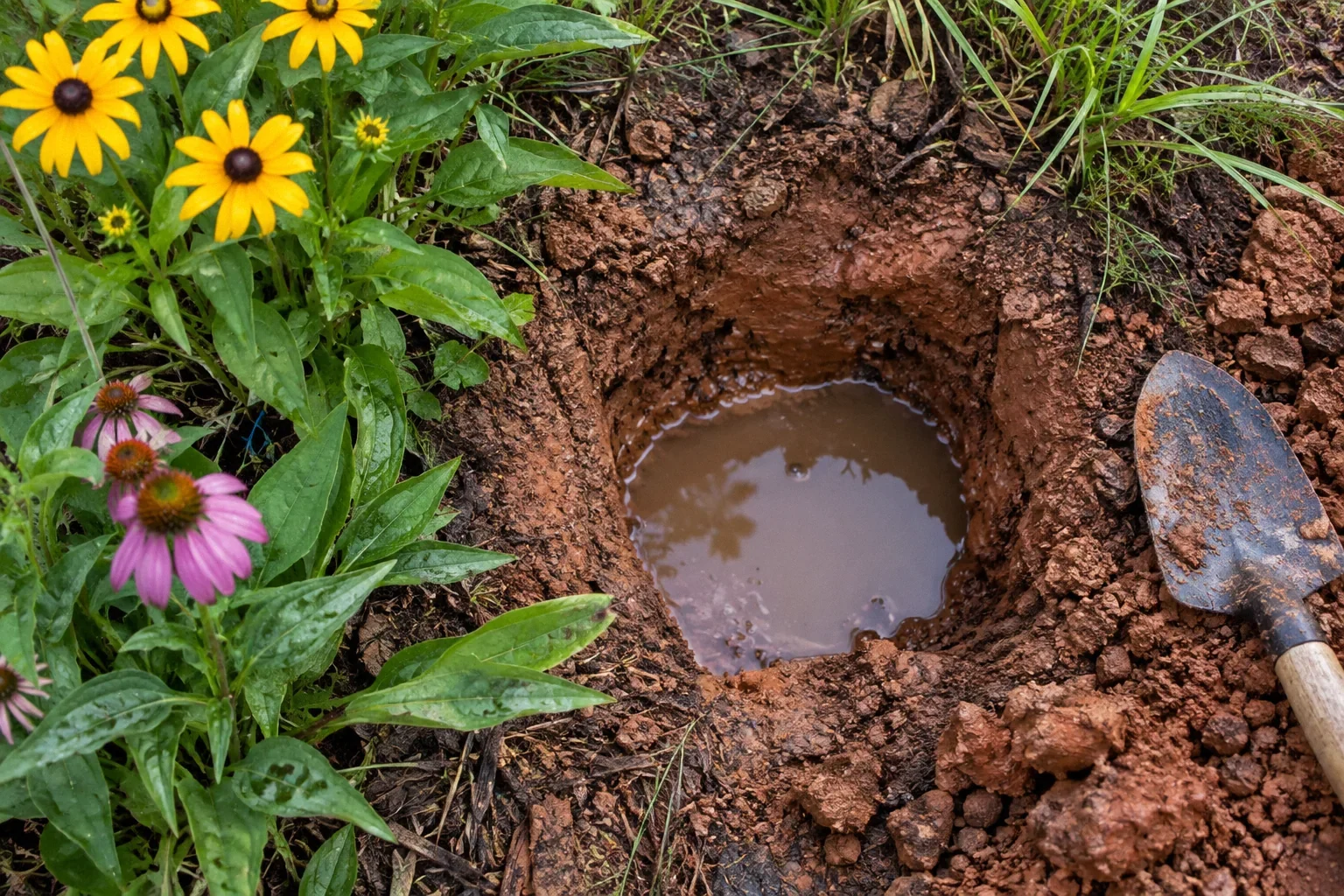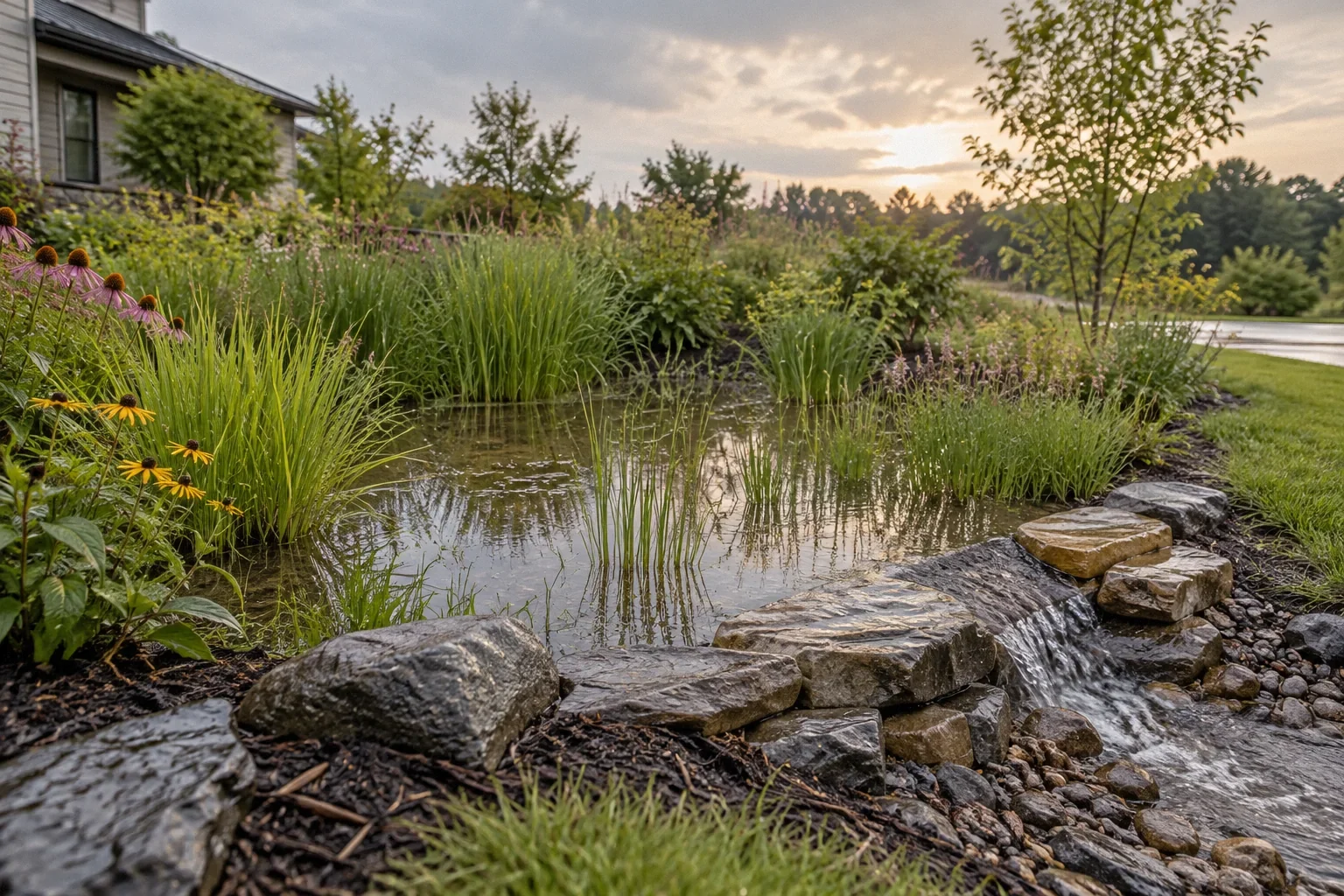
A rain garden needs an intentional route for water exceeding its storage or infiltration ability. Planned temporary ponding is different from water escaping toward buildings, paths or neighboring properties. Define the overflow destination and inspect it along with the garden.
Define normal ponding for the actual design
Ask the designer to explain the intended water behavior and the conditions used in planning. A shallow basin is meant to receive water, so seeing water there is not automatically failure. The question is whether the observed location, duration and overflow match the design. Keep those expectations in writing rather than relying on an informal statement that it should drain quickly. The local rain-garden factsheet includes overflow planning. [1] Apply its guidance to the specific project through appropriate site review rather than copying isolated dimensions without context.
The slow-draining garden account motivates examining what happens after the available storage is used. This Reddit account is anecdotal, not technical authority. [3]
Map the exceedance route
Follow the path excess water would take when the garden is full. Identify nearby foundations, doors, walkways, retaining features and boundaries. A low edge can become the actual spill point even if the plan shows another location. Ask how the intended overflow is established and maintained. The route should reach an appropriate receiving area and respect applicable local requirements. If the proposal ends with overflow to yard, request a clearer account of which part of the yard and what happens after that area becomes wet.
Consider a wet starting condition
The garden may receive another storm before it has returned to its usual condition. Discuss how the design accounts for limited available storage and wet receiving soil. A dry-weather demonstration does not reproduce that situation. EPA distinguishes several green-infrastructure approaches, including storage and infiltration. [2] Combining them can be useful, but each component still has limits. Do not assume a barrel upstream eliminates the need for garden overflow or that a garden downstream eliminates the need for barrel overflow planning.
Keep inlets and edges observable
Sediment, mulch movement and later landscaping can change how water enters or escapes. Ask for a maintenance plan that includes the inlet, the intended spill point and the receiving route. Avoid decorative changes that unknowingly raise an edge or divert flow toward a structure. The maintenance objective is not merely keeping plants tidy; it is preserving the designed water path. If the owner cannot identify the overflow point on the ground, the closeout documentation should be improved before the installation is considered easy to maintain.
Investigate erosion as a flow-path clue
Scoured soil, displaced mulch or sediment fans can help identify where water concentrates. Document these observations after storms from safe locations. Do not automatically respond by adding more rock without understanding the route and design. The appropriate remedy may involve the inlet, spill point, receiving area or contributing catchment. Ask the designer which mechanism the proposed change addresses. A cosmetic repair that restores appearance while leaving the same concentration may need to be repeated after the next similar event.
Review new connections as added load
A later downspout connection, patio or uphill drainage change can alter the water reaching the garden. Keep the original contributing-area plan and ask for reassessment before adding sources. If overflow behavior changes unexpectedly, compare the current layout with the original design and maintenance history. Persistent water against buildings or off-property effects requires professional and local-authority review as appropriate. The goal is a functioning complete route, not defending the original garden concept when the site evidence points to a needed change.
Distinguish overflow design from emergency improvisation
An intentional spill route is part of the planned system. An improvised trench cut during a storm is not equivalent and can create new hazards or off-property effects. If the garden is threatening a building, obtain appropriate professional help and avoid entering moving water. Once conditions are safe, preserve evidence of the actual escape path before restoring the surface.
Ask the designer to explain the consequence of a blocked inlet or altered spill point. This does not require designing for every imaginable failure; it makes ordinary maintenance priorities clear. If one small edge controls whether water goes toward or away from a doorway, that detail deserves conspicuous documentation and review.
A later repair should preserve the garden’s intended function while addressing the demonstrated limitation. Simply raising all edges can increase stored water but also change where the next overflow occurs. Likewise, adding a pipe without an identified destination only moves the uncertainty. The proposal should show the complete revised route and its relationship to the original design assumptions.
If overflow is intended to reach another landscaped feature, review the second feature’s role as well. Two depressions connected in sequence do not create unlimited capacity, and the final receiving route still matters. Ask the designer to show the complete chain and identify the last destination under the stated conditions. The owner should also know which points need inspection after sediment or mulch moves. A maintenance contractor who understands only the first garden may inadvertently alter the connection to the second. Keep a simple diagram available with the landscape instructions. This is especially helpful when several people care for the property over time. The diagram should distinguish intentional water paths from decorative features so routine tidying does not erase an inlet, raise a spill point or block the final route.
| Decision area | Question or evidence |
|---|---|
| Planned ponding | Compare with the design expectation |
| Unintended escape | Document the actual route and affected areas |
| Blocked or altered spill point | Review maintenance and landscape changes |
| Redesign | Show the complete revised destination |
Example: a new border becomes the spill control
Suppose an owner adds a decorative border around a rain garden. During the next storm, water rises higher and escapes through a different low point toward a walkway. The plants may still look healthy, but the water route has changed. The next review should compare the border with the intended overflow elevation and destination. Removing or modifying the border may be part of a solution, but it should follow the design review rather than another guess. This example shows why small landscape changes belong in the drainage record even when they seem purely decorative.
Make the overflow route easy to maintain
Request photographs or a marked sketch of the inlet, normal ponding area and overflow point. Include the receiving route and the signs that should trigger service. Keep these documents accessible to anyone maintaining the landscape so routine mulching or edging does not unintentionally change the design.
- Where is the intended spill point?
- What happens when the garden starts a storm partly full?
- Which later landscape changes require design review?
What to take away
- Define intended ponding and overflow in the design record.
- Evaluate the garden when available storage is reduced.
- Preserve the spill point through maintenance and later landscaping.
Sources & further reading
Reddit links show the questions people ask; they do not establish a diagnosis or a legal requirement. Technical requirements depend on the product, building and jurisdiction. See our research approach.
- San Mateo Countywide Water Pollution Prevention Program: Rain Gardens: Stormwater Control for Small ProjectsTechnical / official reference
Suitability, sizing and overflow planning.
- US EPA: Types of Green InfrastructureTechnical / official reference
Distinguish storage, infiltration, conveyance and runoff-reduction practices.
- Reddit discussion: Rain garden suggestionsCommunity question · anecdotal
Anecdotal homeowner discussion used to identify the question; not technical authority or evidence of this property’s condition.
Planning a Bay Area project?
Explore YKCA’s website and discuss the scope and services you need directly with them.