A rain garden needs a suitable site, soil evaluation and a planned overflow route. Clay is not a single uniform condition, and planting water-tolerant species alone does not establish drainage capacity. Review infiltration and nearby constraints before directing additional roof water into a low area.
Describe the existing wet condition
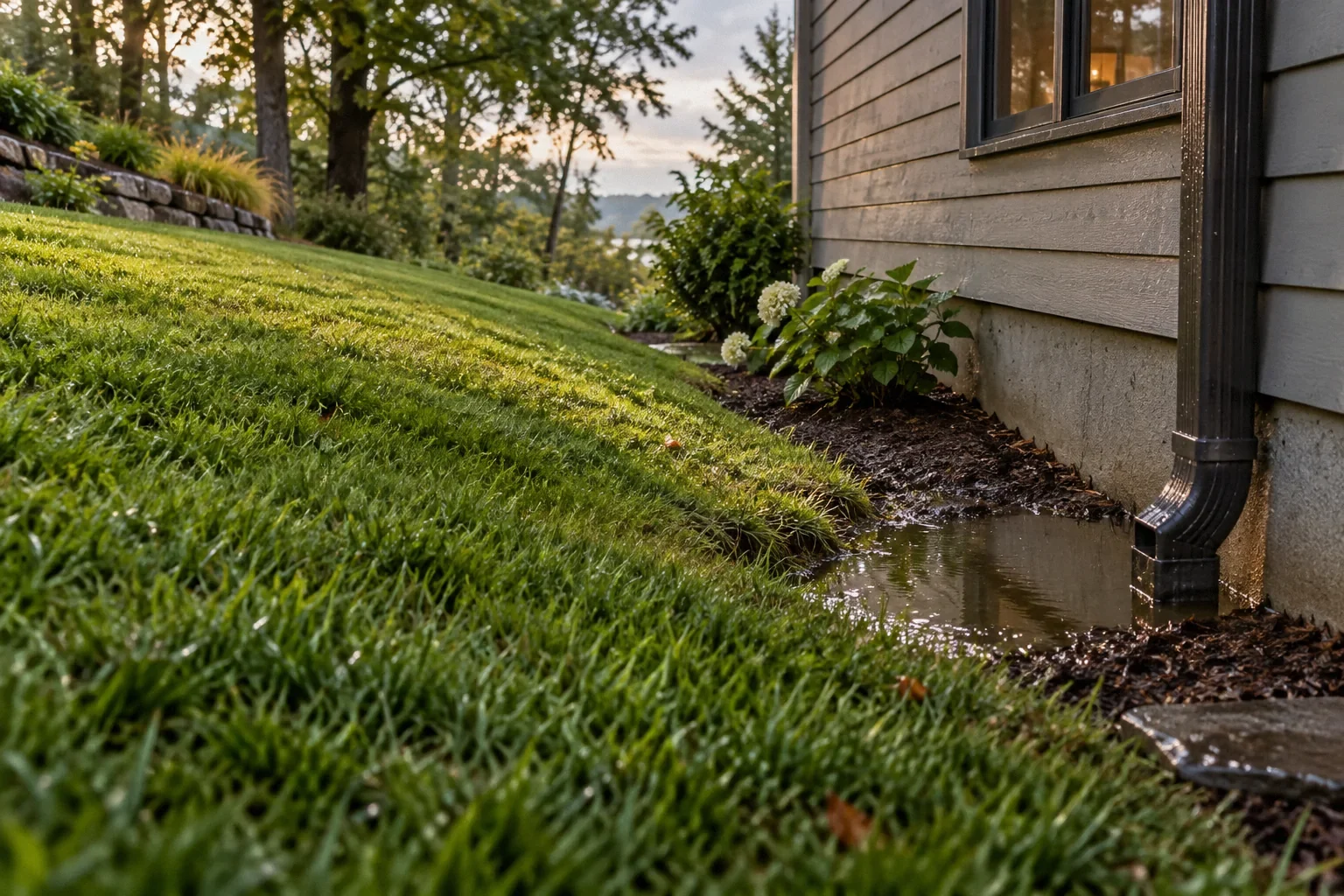
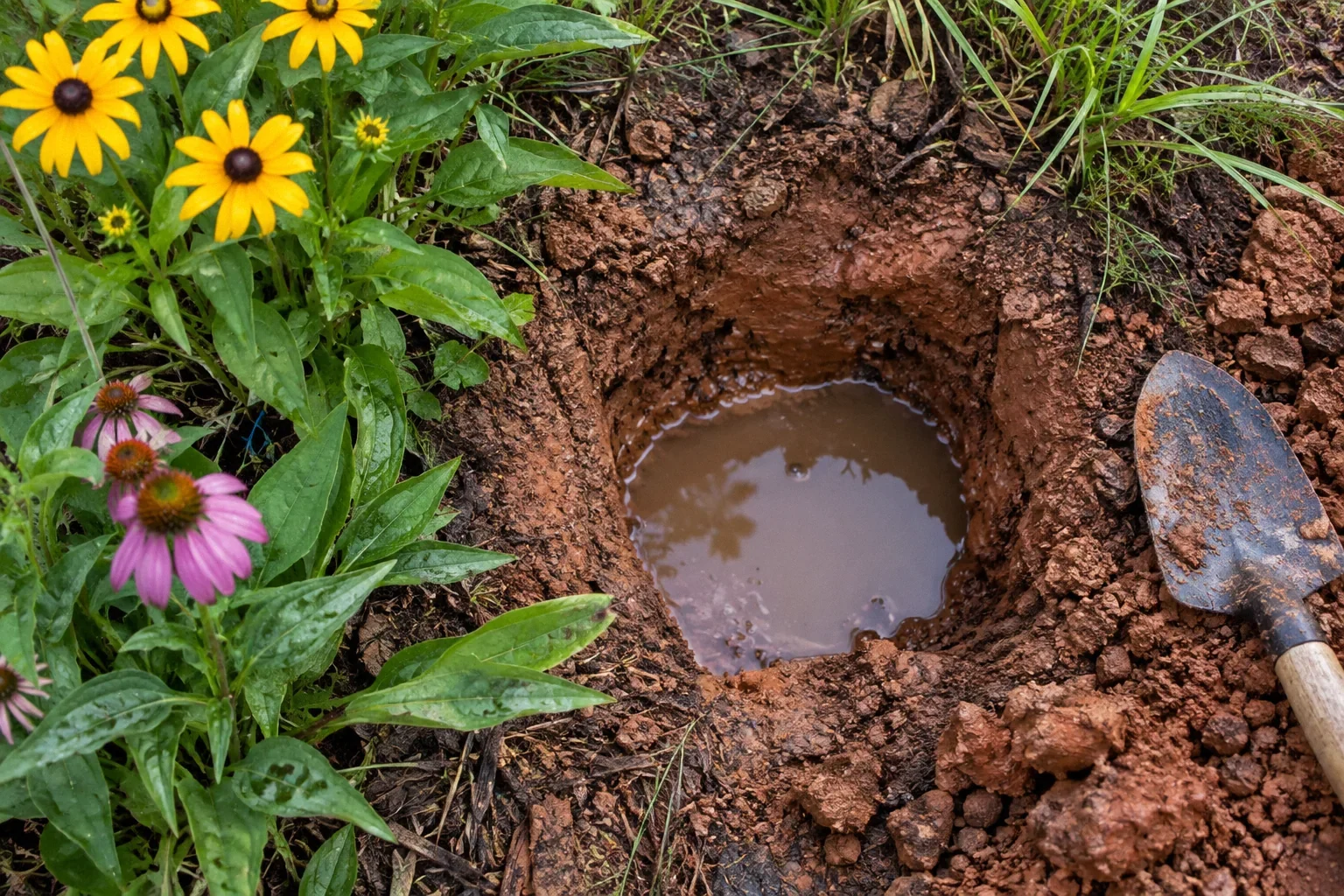
Record when water collects, approximately how long visible ponding remains and whether the area stays damp between storms. Note the source: roof runoff, an uphill yard, irrigation or another route. A single photograph after a major storm does not establish typical behavior. Compare ordinary events when possible. The term clay describes part of the soil story but does not provide a measured infiltration rate or identify deeper conditions. Ask a qualified designer what site evaluation is needed before treating the location as suitable for additional captured runoff.
The clay-garden discussion asks about adding a downspout before the existing slow drainage is understood. This Reddit account is anecdotal, not technical authority. [3]
Distinguish a wet planting from a designed rain garden
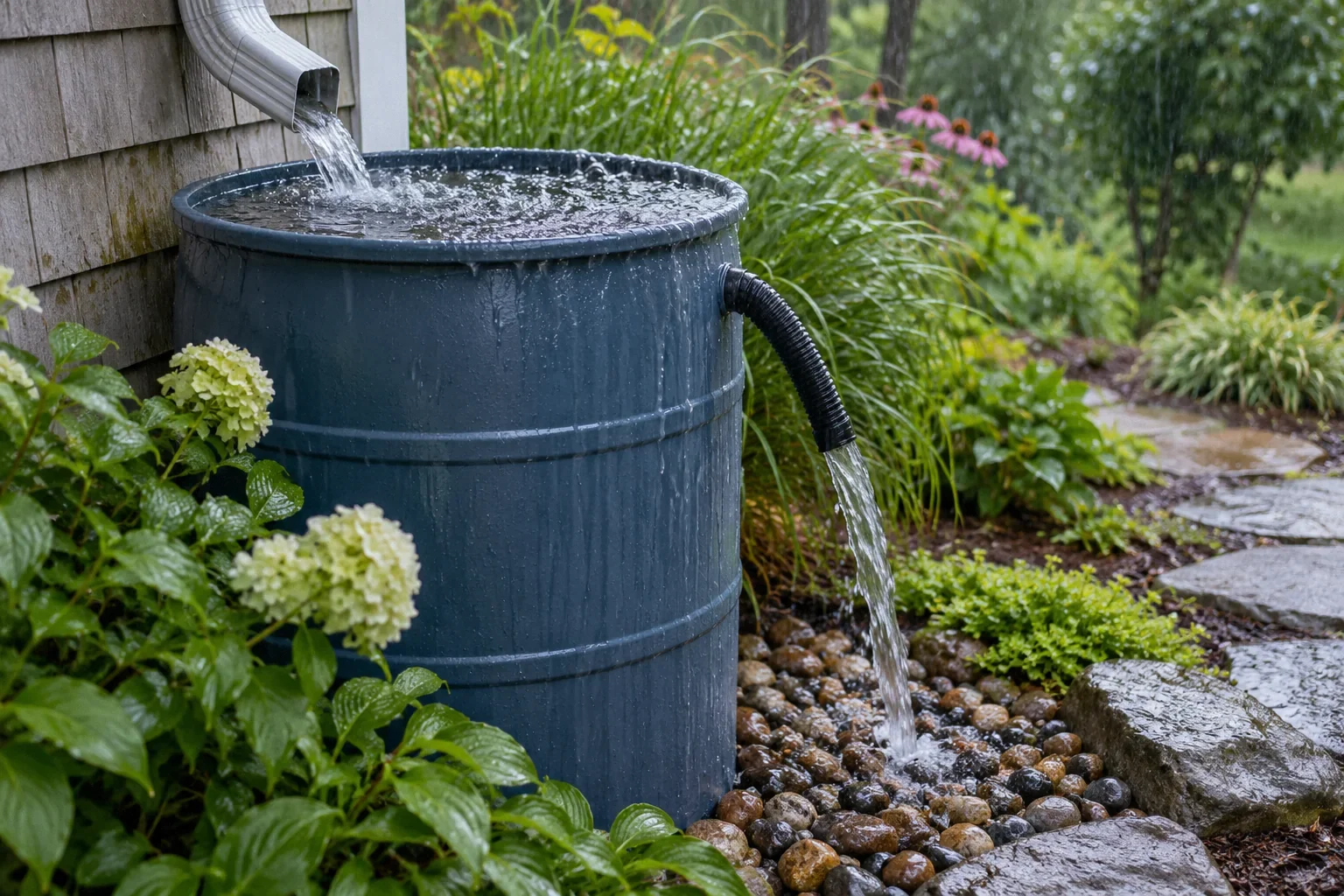
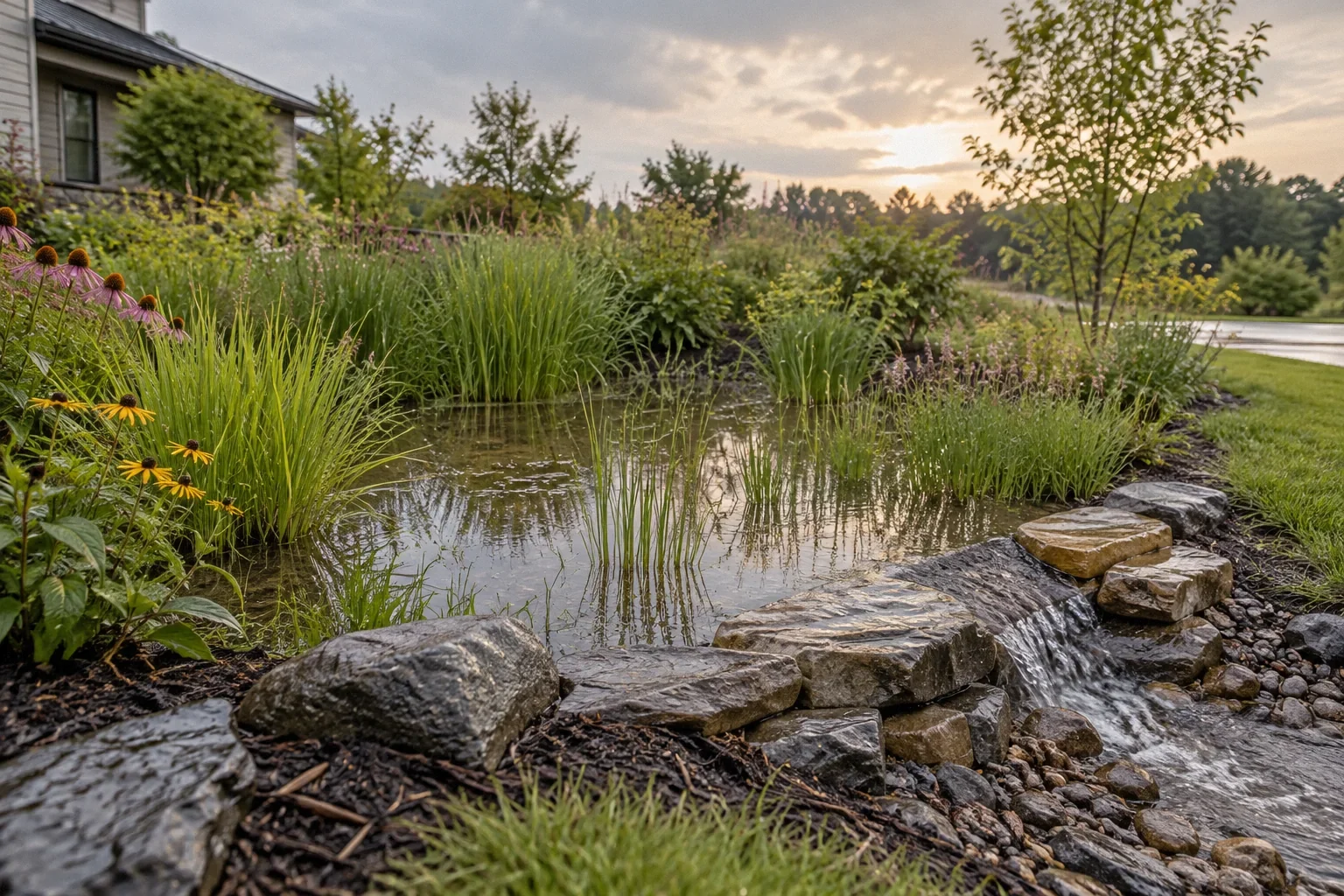
Plants selected for wet conditions may improve a landscape’s appearance and ecological value without creating a defined stormwater facility. A rain garden plan should address contributing area, soil conditions, ponding, overflow and maintenance. The local rain-garden factsheet covers site and overflow planning. [1] That guidance is a starting point, not proof that a particular depression meets its conditions. Be clear about whether you are creating a garden in an already wet spot or designing a feature intended to receive additional roof or paved-area runoff.
Assess infiltration rather than assuming amendment will fix it
Ask how the designer will evaluate the actual soil profile and relevant site constraints. Do not assume adding compost, sand or gravel according to an online recipe creates a suitable receiving area. A shallow surface change may not describe what happens below. The appropriate design can depend on conditions that are not visible from the lawn. If testing or professional review shows the site is unsuitable, consider another location or management approach rather than forcing the desired feature into a persistently problematic area.
A concrete decision path for slow infiltration
The BASMAA small-project factsheet says slower-infiltrating soil can require a larger garden area. For very clayey soil, it identifies an underdrain as an option and directs readers to municipal staff for installation guidance. Its maintenance checklist flags standing water lasting more than three days. These are recommendations in that regional factsheet, approved in 2012, not a claim about universally applicable current code. [1]
Use those distinctions in a planning sequence. First, evaluate the site and actual contributing area. If an infiltration-only concept is supported, document the required area and overflow. If slow drainage makes that concept unsuitable, compare a larger feasible footprint with an underdrained design reviewed through the appropriate local process. An underdrained option also needs an identified discharge route; a pipe with no destination does not resolve the problem. If neither arrangement fits, consider another location or drainage approach. For an existing garden still ponded beyond the factsheet’s three-day benchmark, seek assessment instead of connecting more roof water while waiting for plants to mature.
Include buildings, slopes and utilities in siting
The proposed location should be reviewed in relation to foundations, retaining features, underground utilities, trees and property boundaries. Follow the applicable local guidance and obtain professional advice where constraints are significant. This article does not provide excavation dimensions or a universal setback rule. Those details need a site-specific basis. A garden that accepts water but directs overflow toward a building has not achieved the intended purpose. Siting and the full water route deserve attention before plant selection or decorative edging.
Choose plants after the water behavior is understood
Plant selection should reflect local climate, exposure and the different wetness conditions within the design. Flows To Bay provides regional rain-garden learning resources. [2] Use local horticultural guidance rather than copying a plant list from a different climate on Reddit. Establishment and maintenance also matter: the landscape should remain accessible for observing inlets, sediment and overflow. A dense planting can conceal a drainage issue if the owner no longer sees how water enters or leaves the feature.
Plan for water beyond the intended storage
Ask where excess water travels when the garden is full or the soil is already wet. The answer should be a designed route, not a hope that more mature plants will absorb everything. Record the assumptions used for contributing area and storm conditions. After installation, observe actual events and compare them with those assumptions. Persistent unintended ponding, erosion or water moving toward structures requires review. A successful planting season does not by itself establish the feature’s drainage performance.
Use a suitability decision before a planting decision
A useful initial decision can have three outcomes: the location appears suitable under a defined design, more site evaluation is needed, or another approach is preferable. None is a judgment about the attractiveness of rain gardens. The purpose is to match the feature to the available space and water conditions. Ask the designer to state which outcome the evidence supports and what would change it.
If the plan relies on soil amendments, ask what problem they are intended to address and how the proposed method is supported for the site. Do not assume a recipe shared from another region or soil profile applies. If the existing wet spot receives water from several properties, the contributing area may be more complex than the nearby roof. That source needs to be considered before adding another connection.
Maintenance should include both horticulture and drainage observation. Dead plants may reflect several causes, while healthy plants do not prove the overflow is suitable. Keep plant establishment, inlet condition and water behavior as separate checks. That helps the owner request the right specialist when a problem appears.
Ask how the designer will distinguish a rain garden problem from an upstream source that exceeds the intended scope. For example, a feature planned for one roof area may later receive a neighbor’s runoff or a changed paved surface. That does not automatically mean the garden was poorly installed; it means its assumptions need comparison with current conditions. Preserve the original source map and note later changes. If the site evaluation suggests another approach, compare it on function, maintenance and available space rather than viewing it as abandoning the landscape goal. A different location can still support native planting, while a separate drainage measure handles the problematic water source. Keeping those goals distinguishable makes it easier to create a landscape that is both useful and appropriate for the site.
| Decision area | Question or evidence |
|---|---|
| Suitable with a design | Document source, soil basis and overflow |
| More evaluation needed | Identify the unresolved site condition |
| Alternative preferable | Compare another location or management approach |
| After installation | Review plants and water behavior separately |
Example: a clay swale that already holds water
Imagine a shallow planted swale that remains ponded for days, with a nearby downspout the owner wants to connect. More plants may be desirable, but that does not establish capacity for the added roof catchment. The next step is site evaluation and a review of overflow, not simply extending the pipe into the garden. The result may support a redesigned feature, a different location or another drainage approach. The useful decision is based on measured and observed conditions rather than an expectation that plant maturity will automatically correct the existing limitation.
Keep the design assumptions available
Save the contributing-area sketch, site-evaluation results, overflow route and maintenance instructions. If another roof or paved area is later connected, review the design again. The original garden should not silently become the receiving point for every new water source in the yard.
- What evidence supports infiltration at this location?
- Where does excess water go when the feature is full?
- Which locally suitable plants fit the actual wetness zones?
What to take away
- Evaluate the site before redirecting additional runoff.
- Separate a wet planting area from a designed rain garden.
- Plan overflow and maintenance before choosing plants.
Sources & further reading
Reddit links show the questions people ask; they do not establish a diagnosis or a legal requirement. Technical requirements depend on the product, building and jurisdiction. See our research approach.
- San Mateo Countywide Water Pollution Prevention Program: Rain Gardens: Stormwater Control for Small ProjectsTechnical / official reference
Suitability, sizing and overflow planning.
- San Mateo Countywide Water Pollution Prevention Program: Rain Gardens & Rebate ProgramTechnical / official reference
Local rain-garden learning resources.
- Reddit discussion: Rain garden suggestionsCommunity question · anecdotal
Anecdotal homeowner discussion used to identify the question; not technical authority or evidence of this property’s condition.
Planning a Bay Area project?
Explore YKCA’s website and discuss the scope and services you need directly with them.