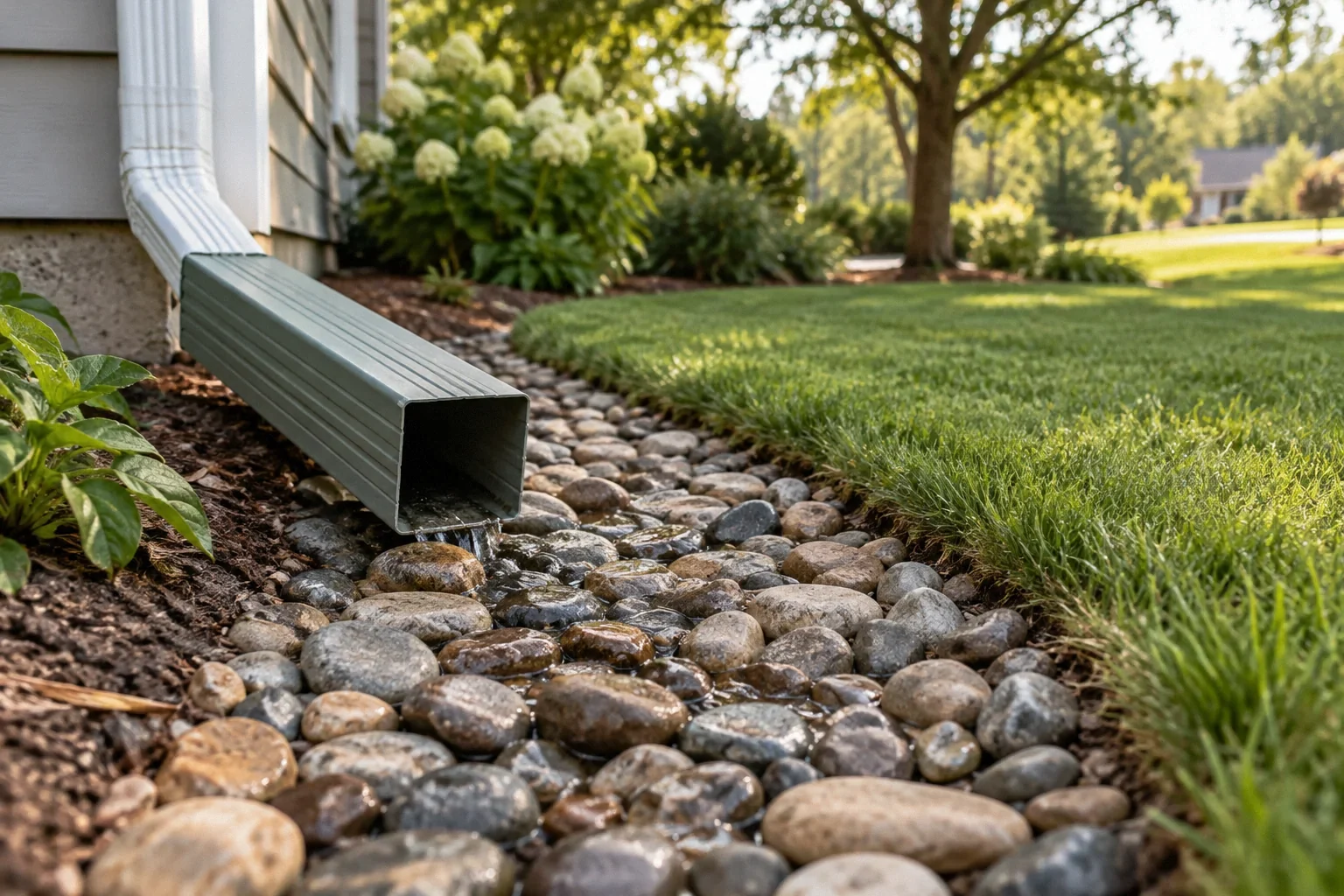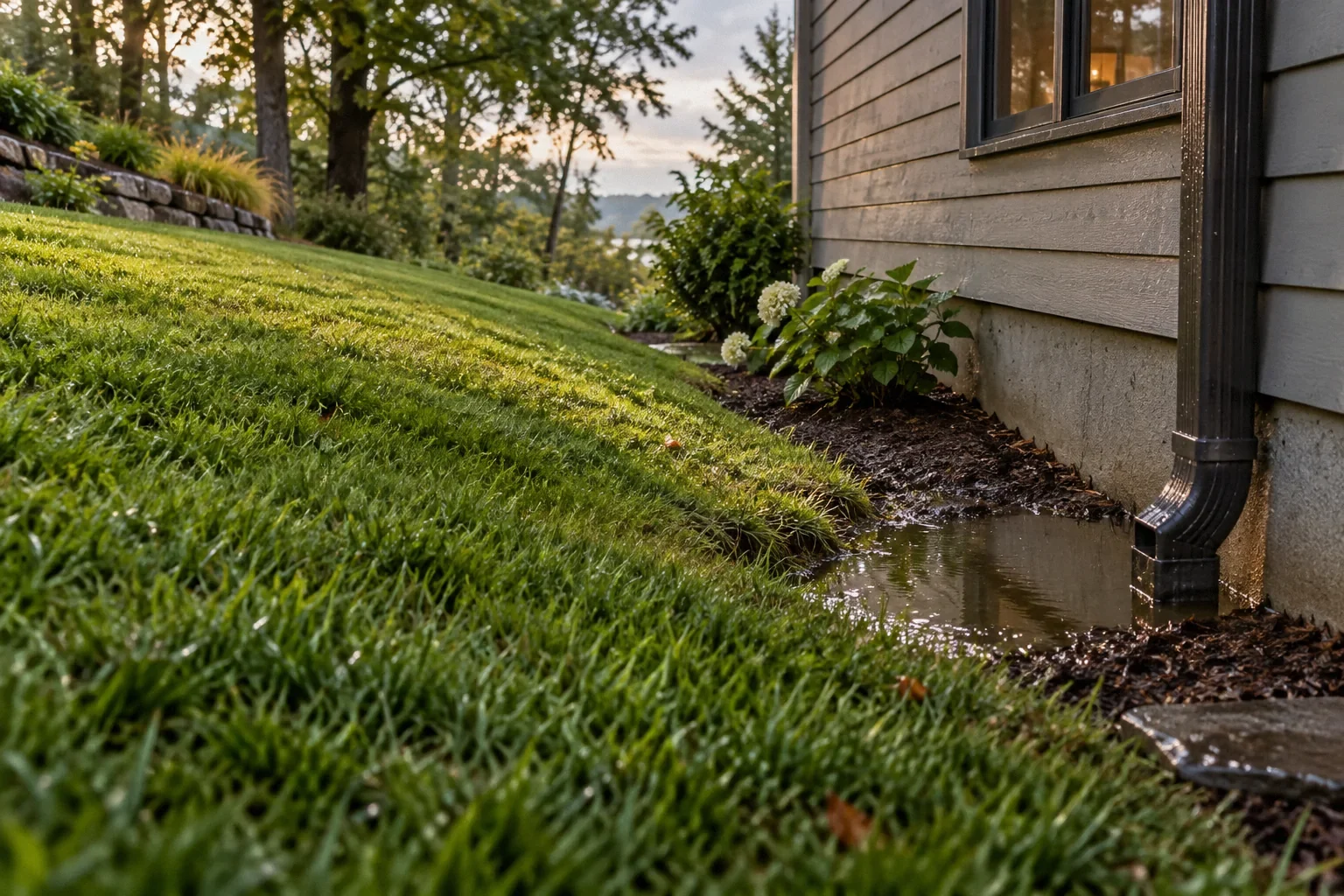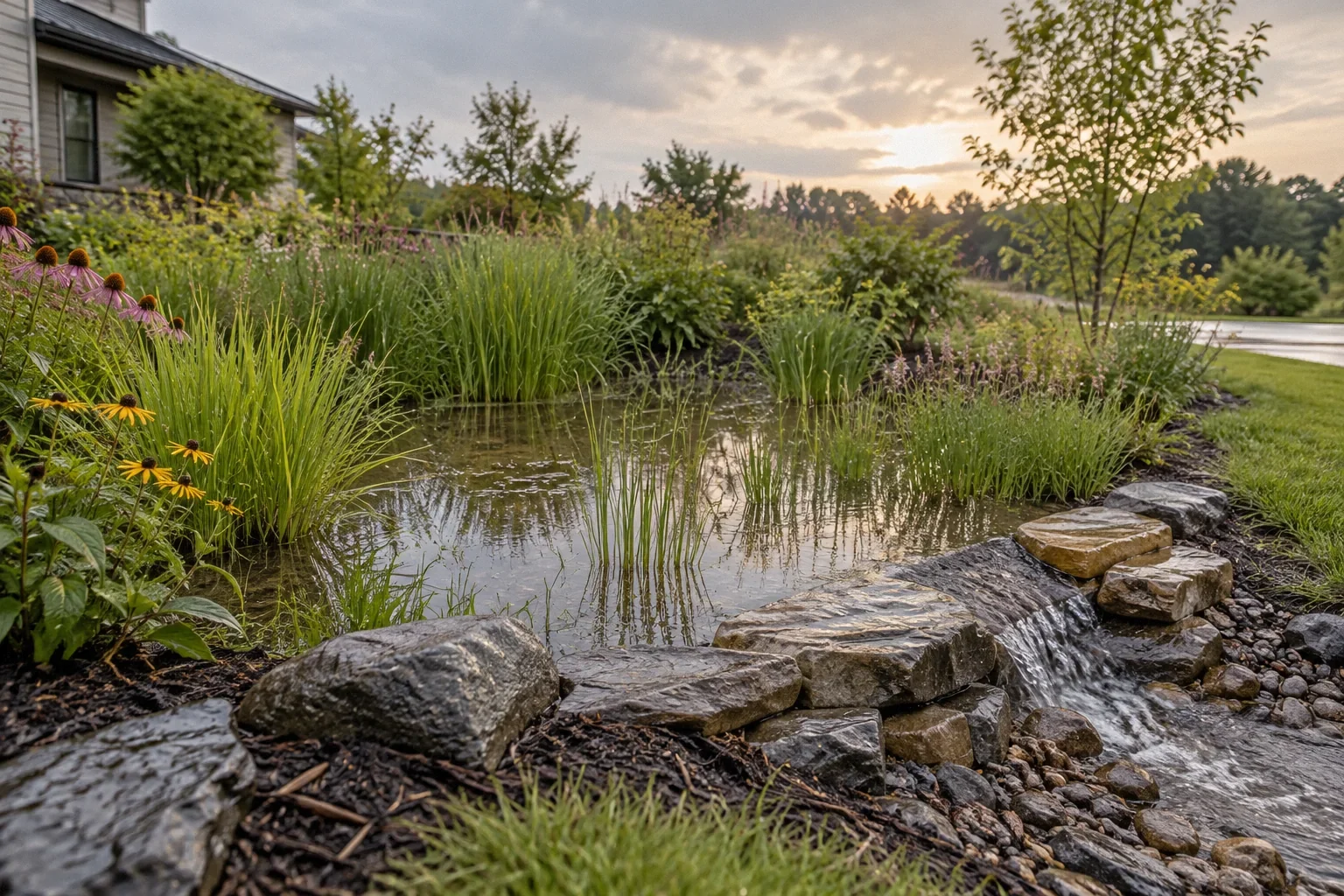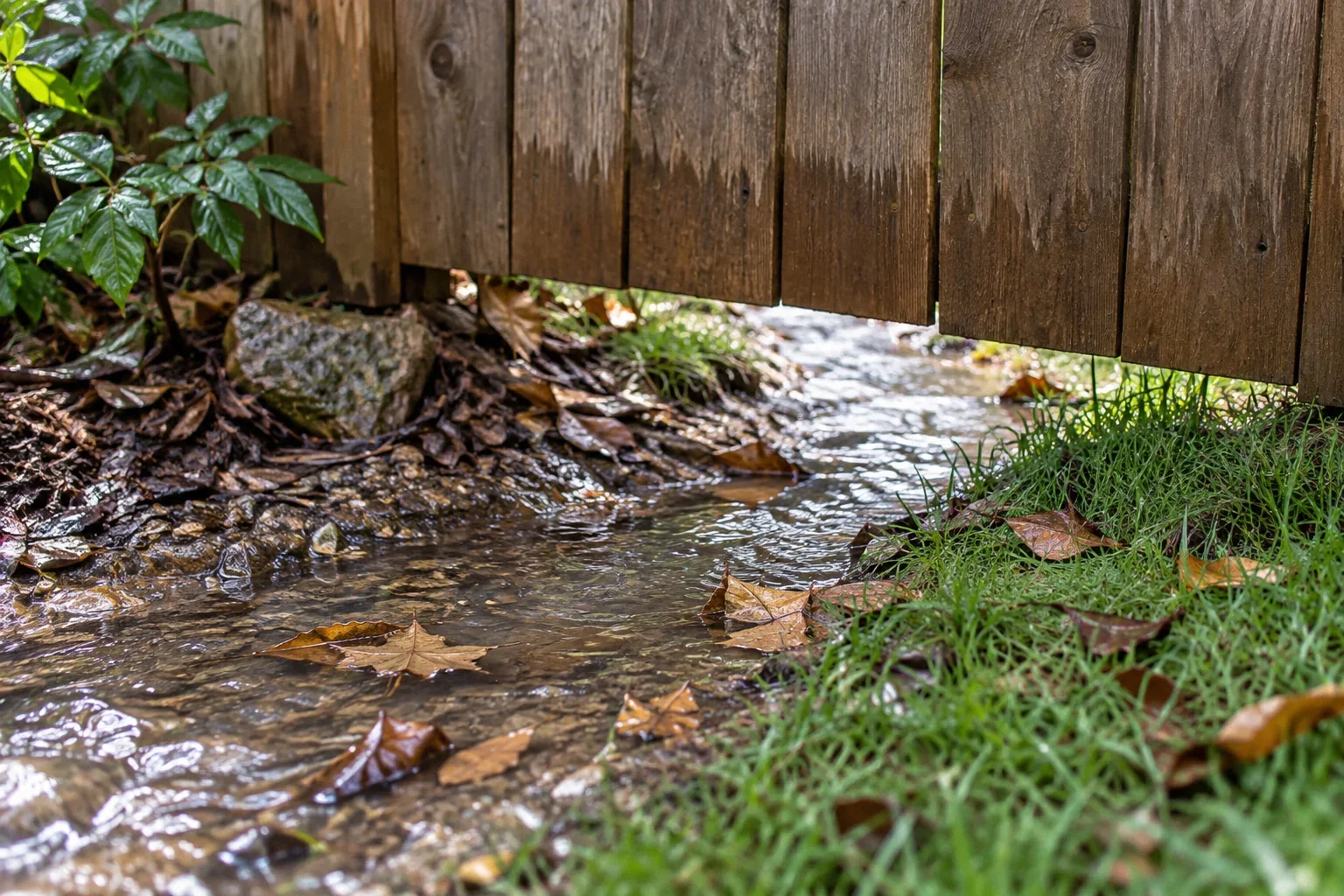
Document when and where runoff crosses the boundary, what changed and what damage occurs before altering the yard. Seek site-specific drainage and local-authority guidance. Do not assume a neighbor is legally responsible, or that a berm sending water back is an acceptable solution.
Separate observations from conclusions
Write down what you can verify: water crosses at a particular location, begins during rain or irrigation, and follows a visible route. Keep claims about negligence, ownership and legal responsibility separate. A video can show flow without establishing why the upstream property behaves that way. If a recent change appears relevant, record its approximate date and visible features without entering the neighboring property. This approach supports a practical conversation and a professional assessment while avoiding an early accusation that may be difficult to substantiate.
The neighbor-driveway account supplies an observed conflict; commenters’ legal conclusions are not authority for another property. This Reddit account is anecdotal, not technical authority. [3]
Record an event from safe locations
Capture an overall view showing the boundary and downstream area, then closer views of ponding or erosion where safely accessible. Include date, rainfall context and whether the ground was already wet. Photograph the same locations after water recedes. Do not stand in moving water or approach unstable walls to improve the record. Repeated observations are more informative than one dramatic image because they can distinguish occasional storm behavior from a recurring changed route. Preserve original files rather than editing away the context.
Look for the complete surface route
The visible boundary crossing may be one segment of a larger flow path. Ask a drainage professional to consider upstream and downstream conditions, existing swales, retaining features and public infrastructure where relevant. PNNL’s grading guidance emphasizes routes away from buildings. [1] That principle does not determine legal responsibility between properties. It does explain why a local barrier can have consequences elsewhere. A proposal should identify where redirected water will go rather than merely promising to keep it off one corner of your yard.
Use local information for legal and permit questions
Rules governing grading, discharge, easements and public connections vary by jurisdiction and site. Contact the appropriate local building, engineering or public-works office with a factual description and proposed scope. Ask what records or approvals apply. If a dispute involves damage or contested rights, obtain appropriate legal advice. Do not rely on Reddit comments asserting that all runoff across a boundary is illegal or always natural. EPA’s green-infrastructure overview describes management approaches, not a rule assigning responsibility for your property dispute. [2]
Compare cooperative and on-site remedies carefully
An upstream adjustment may be simpler than a large downstream installation, but that possibility requires cooperation and evidence. A measure on your own property still needs a suitable outlet and consideration of neighboring effects. Ask each proposal to explain the source it addresses and the water route after construction. Avoid retaliatory barriers or pumps aimed back toward the neighbor. They can create additional damage and obscure the original facts. A professional plan should be evaluated on function and applicable permissions, not on who appears to win the immediate argument.
Keep communication factual and actionable
A useful message can state the dates, location and observed effect, attach a small number of clear images and request a discussion about assessment. Avoid sending a long list of internet legal claims. Keep records of agreed inspections or changes. If immediate building damage is occurring, pursue qualified help for the affected property while the broader responsibility question is resolved. Temporary measures should be reviewed for their own discharge consequences rather than improvised simply to move water out of sight.
Keep the technical and responsibility questions separate
The technical question is how water moves and what change could manage it. The responsibility question concerns rights, duties, agreements and applicable rules. An engineer may help with the first while an authority or lawyer helps with the second. Neither should be assumed from the other. A feasible drain on your property does not determine who should pay, and a claim about responsibility does not establish a workable design.
When requesting local guidance, provide a concise factual description and ask which office handles the relevant issue. Keep the response date and any cited records. If the office cannot decide a private dispute, that does not mean the physical problem is unimportant; it means another process may be needed. Avoid overstating an informal phone comment as a final legal determination.
For cooperative work, document the agreed scope and access arrangements through the appropriate process. Shared understanding about the intended destination and maintenance can prevent the same conflict from returning later. Do not rely solely on a friendly verbal promise when the project depends on a continuing route across property lines.
If the apparent source is irrigation rather than rain, record that distinction. A recurring flow during a neighbor’s watering schedule may need a different technical investigation from a stormwater route. Do not extrapolate one observation into a claim about all events. A factual record can support a straightforward request to check the source before a major drainage project is considered. If the neighbor disagrees, preserve the evidence and use the appropriate local or professional process rather than escalating through improvised barriers. The record should also distinguish existing conditions from changes you make on your own property. That separation helps later reviewers understand the sequence and prevents a new alteration from obscuring the original route. The goal is a workable resolution based on evidence, not a collection of dramatic images without dates or context.
| Decision area | Question or evidence |
|---|---|
| Technical review | What source and route cause the observed effect? |
| Local authority | What requirements or records apply? |
| Legal advice | What rights or disputed responsibilities need interpretation? |
| Cooperative scope | Who maintains which agreed components? |
Example: a new driveway outlet near the boundary
Suppose a neighbor adds a visible outlet and water now concentrates along your planting strip during rain. The new feature is relevant evidence, but a photograph alone does not establish the original drainage pattern or responsibility. Record the flow over several events if safe, identify resulting damage and ask for a coordinated assessment. A professional may need surface elevations and property records to compare options. Your own proposed berm should not proceed merely because it blocks the visible stream; its effect on both properties and the final route needs review.
Build a compact evidence packet
Keep an annotated plan, dated original photographs, a short event log and any relevant official correspondence. Separate confirmed changes from suspected ones. A concise packet helps an engineer, authority or lawyer understand the problem without reconstructing it from a long exchange of messages.
- Where and when does water cross the boundary?
- What changed, and what evidence establishes the timing?
- Which authority should review the proposed route or connection?
What to take away
- Document the route and timing without assigning blame.
- Confirm local requirements for any proposed change.
- Evaluate where diverted water will go after the repair.
Sources & further reading
Reddit links show the questions people ask; they do not establish a diagnosis or a legal requirement. Technical requirements depend on the product, building and jurisdiction. See our research approach.
- DOE/PNNL: Final Grade Slopes Away from FoundationTechnical / official reference
Surface grading and constrained-site swales; cited historical codes must not be represented as current California requirements.
- US EPA: Types of Green InfrastructureTechnical / official reference
Distinguish storage, infiltration, conveyance and runoff-reduction practices.
- Reddit discussion: Neighbors driveway water runoff floods my front yardCommunity question · anecdotal
Anecdotal homeowner discussion used to identify the question; not technical authority or evidence of this property’s condition.
Planning a Bay Area project?
Explore YKCA’s website and discuss the scope and services you need directly with them.