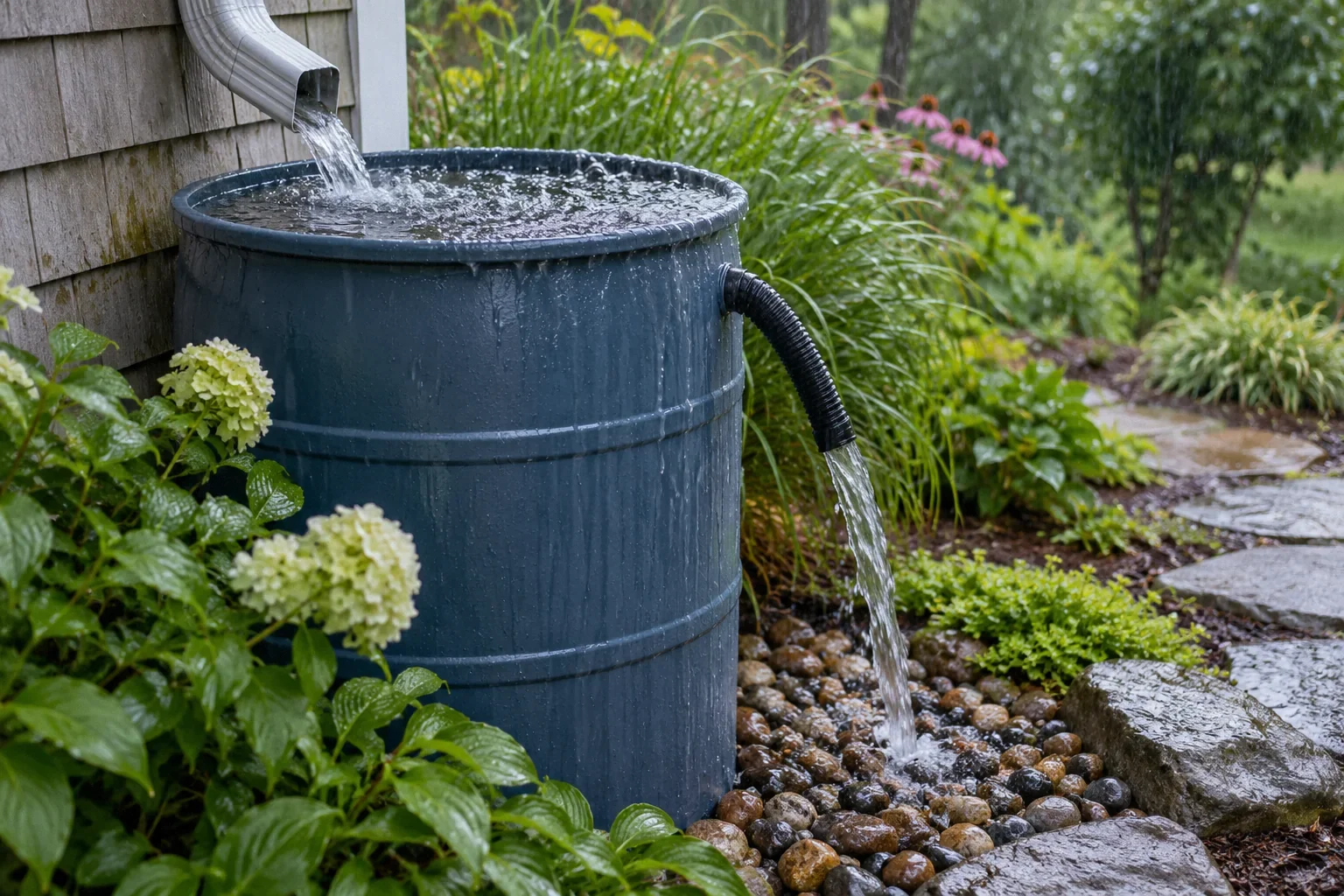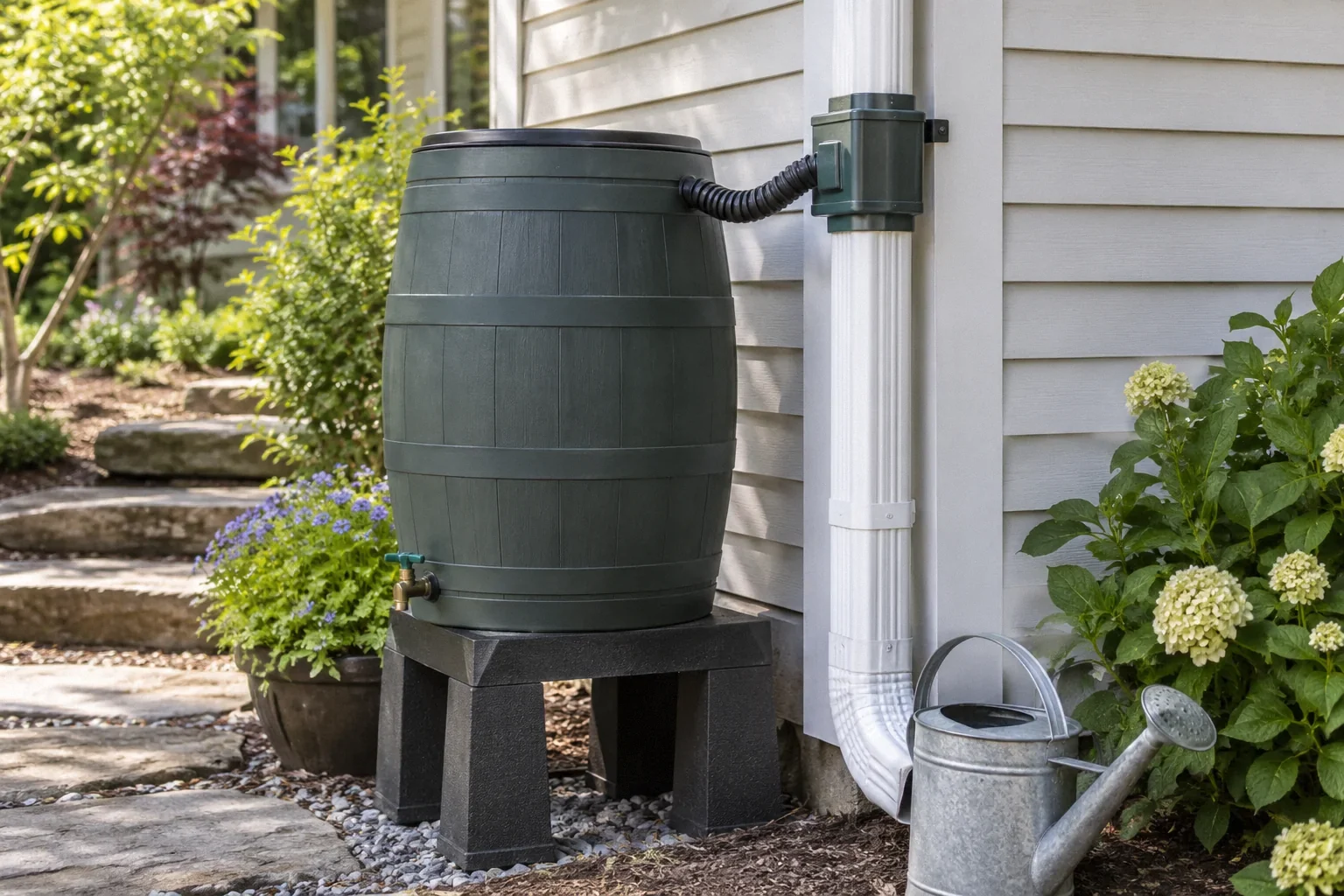
Follow the exact barrel and diverter instructions for connection elevations, supports and maintenance. A mismatched arrangement can continue filling or leak even when each component appears intact. The full container needs stable support and an appropriate overflow route.
Identify the installed components
Record the barrel and diverter model, including any adapter or linked-barrel kit. Similar-looking products can use different arrangements, so a neighbor’s installation photograph is not a substitute for the applicable instructions. Ask the installer to provide those documents before modifying connections. Flows To Bay offers regional rain-barrel guidance. [1] Use that guidance for general planning while relying on the actual manufacturer for assembly details. If the system combines unrelated parts, ask who has verified that the complete arrangement performs the intended diversion and overflow functions.
The diverter account highlights component elevations, which need the installed product’s instructions rather than a universal rule. This Reddit account is anecdotal, not technical authority. [2]
Treat connection elevation as a design detail
A diverter and barrel inlet may need a particular relationship specified by the product. Do not copy a generic height rule across all systems. If water continues entering after the barrel reaches its intended level, document the arrangement and consult the instructions or supplier. Changing the support height to compensate can introduce another problem if the support becomes unstable. The repair should consider the whole assembly rather than adjusting one dimension until the immediate overflow appears to stop.
Plan support for the full condition
The support must suit the full container, the surface below it and the product’s requirements. Avoid improvised stacks or an arrangement that can shift during use. Ask the installer how the base was selected and whether access to the spigot requires additional elevation. The desire to fit a watering can underneath should not drive an unstable support choice. If the ground is uneven, soft or near a slope, obtain an appropriate site assessment rather than assuming a few blocks will remain level through wet weather.
Keep overflow independent of routine water use
A functioning system needs an intended route when storage fills, even if the owner usually empties the barrel for irrigation. Review what happens if the spigot is closed or the barrel is unused for a week. Ask whether the diverter returns excess water to a continuing downspout route or whether a separate overflow connection is required for that product. Then trace that route to its destination. A small outlet used for drawing water should not be assumed to perform every overflow function without product-specific confirmation.
Make inspection practical
Access to screens, connections and the container matters throughout its use. Ask how debris is removed and how openings are maintained according to the instructions. Keep lids and other protective components correctly fitted. Follow local guidance on collected-water uses and mosquito prevention, avoiding improvised chemical treatments. If the barrel becomes difficult to service after landscaping grows around it, maintenance may be neglected. Plan enough access at installation so keeping the system functional does not require dismantling nearby structures or moving a full container.
Review changes as changes to the system
Adding a second barrel, replacing a diverter or raising the container alters the arrangement. Check the revised configuration against the product instructions rather than assuming the first installation’s performance carries over. Record the new full-condition route and observe accessible connections during rain. A reduction in one leak does not prove the overflow has a suitable destination. If water continues appearing beside the foundation, return to the route assessment rather than repeatedly changing hoses without a clear explanation.
Diagnose an overflow by the actual arrangement
If water leaks around a hose connection, ask whether the fitting is intended for that hose and function. If water rises above the intended level, compare the diverter and barrel setup with the instructions. If overflow leaves through the designed opening but wets the building, the destination is the unresolved issue. These observations should lead to different corrective questions.
Avoid making several changes simultaneously without recording them. Replacing a diverter, raising the barrel and changing the overflow hose at once can make it difficult to understand which condition caused the original symptom. A qualified installer can plan a coherent correction, but the record should still explain the reason for each change.
Where children, pets or routine access interact with the installation, keep the manufacturer’s protective components in place and choose a location that supports safe use. Do not treat screening or a lid as optional because water appears cleaner than expected. The maintenance plan should explain how those components are checked and restored after service without relying on improvised arrangements.
If a barrel is linked to another container, retain the instructions for the linking arrangement as well as each individual product. The system’s behavior depends on the connections and elevations, not just the sum of the labels on the containers. Ask which container fills first, where excess water leaves and how each part can be maintained. Do not assume that adding another barrel preserves the original diverter’s intended arrangement automatically. If the supplier cannot confirm the proposed combination, seek a supported configuration rather than improvise around an overflow symptom. Keep any later modification in the installation record with photographs. A future service provider should be able to distinguish the original approved arrangement from an owner-added hose or fitting before recommending another change.
Keep the original installation photographs when making changes. A comparison of the old and revised connection arrangement can help the supplier identify a mismatch without relying on an owner’s recollection of the previous elevations.
| Decision area | Question or evidence |
|---|---|
| Leak at a connection | Verify fitting, function and compatible assembly |
| Water above intended level | Review the exact diverter configuration |
| Overflow at an appropriate opening | Assess route and receiving destination |
| Unstable support | Correct the base before treating height as solved |
Example: raising the barrel to correct an overflow
Suppose an owner discovers that the installed diverter and barrel elevations do not match the product instructions. Raising the barrel appears to solve that mismatch, but the proposed stacked support is unstable. The proper correction must address both elevation and support, or use another manufacturer-approved arrangement. It must also retain a suitable overflow route. This is a useful example of why fixing one symptom in isolation can create a different problem. A supplier or qualified installer should review the complete configuration before the owner treats the new position as a finished repair.
Keep a small component record
Save model numbers, instructions, installation photographs and the date of any changes. Label the normal draw-off and overflow paths if they are not obvious. A future owner or maintenance provider should be able to understand the system without guessing which hose performs which function.
- Do the connection elevations match this product’s instructions?
- How is the full container supported?
- Can screens, lids and connections be serviced safely?
What to take away
- Use instructions for the exact barrel and diverter models.
- Select stable support for the full container.
- Preserve a defined overflow route regardless of routine water use.
Sources & further reading
Reddit links show the questions people ask; they do not establish a diagnosis or a legal requirement. Technical requirements depend on the product, building and jurisdiction. See our research approach.
- San Mateo Countywide Water Pollution Prevention Program: Rain Barrels & Rebate ProgramTechnical / official reference
Capture, maintenance and regional water-quality context; avoid quoting incentive amounts.
- Reddit discussion: Barrel OverflowsCommunity question · anecdotal
Anecdotal homeowner discussion used to identify the question; not technical authority or evidence of this property’s condition.
Planning a Bay Area project?
Explore YKCA’s website and discuss the scope and services you need directly with them.