A downspout extension should carry water to a location where it can continue away without returning to the building, eroding soil or creating a hazard. Distance is one consideration; surface grade, receiving conditions and local discharge requirements also matter.
Observe where the current discharge goes
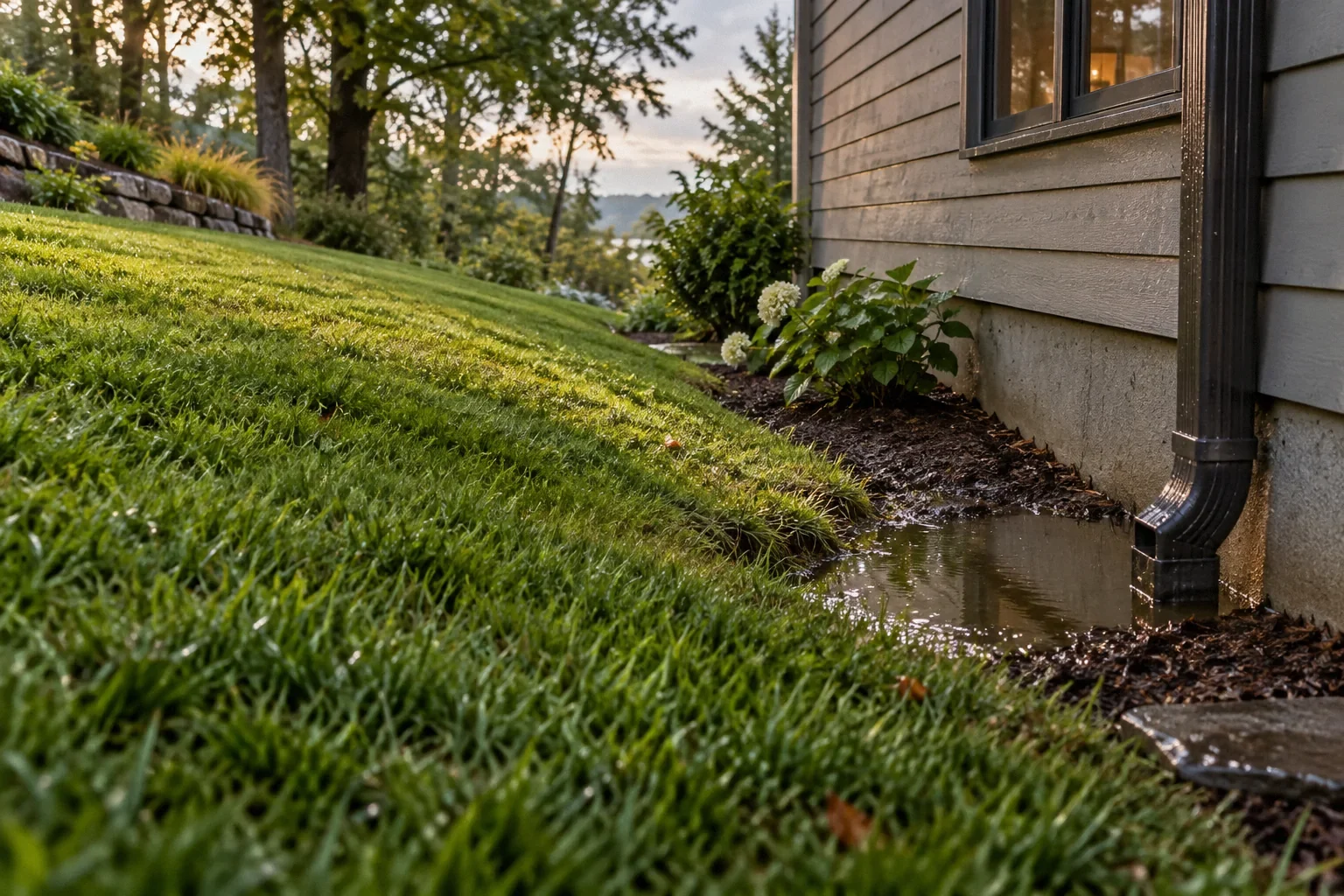
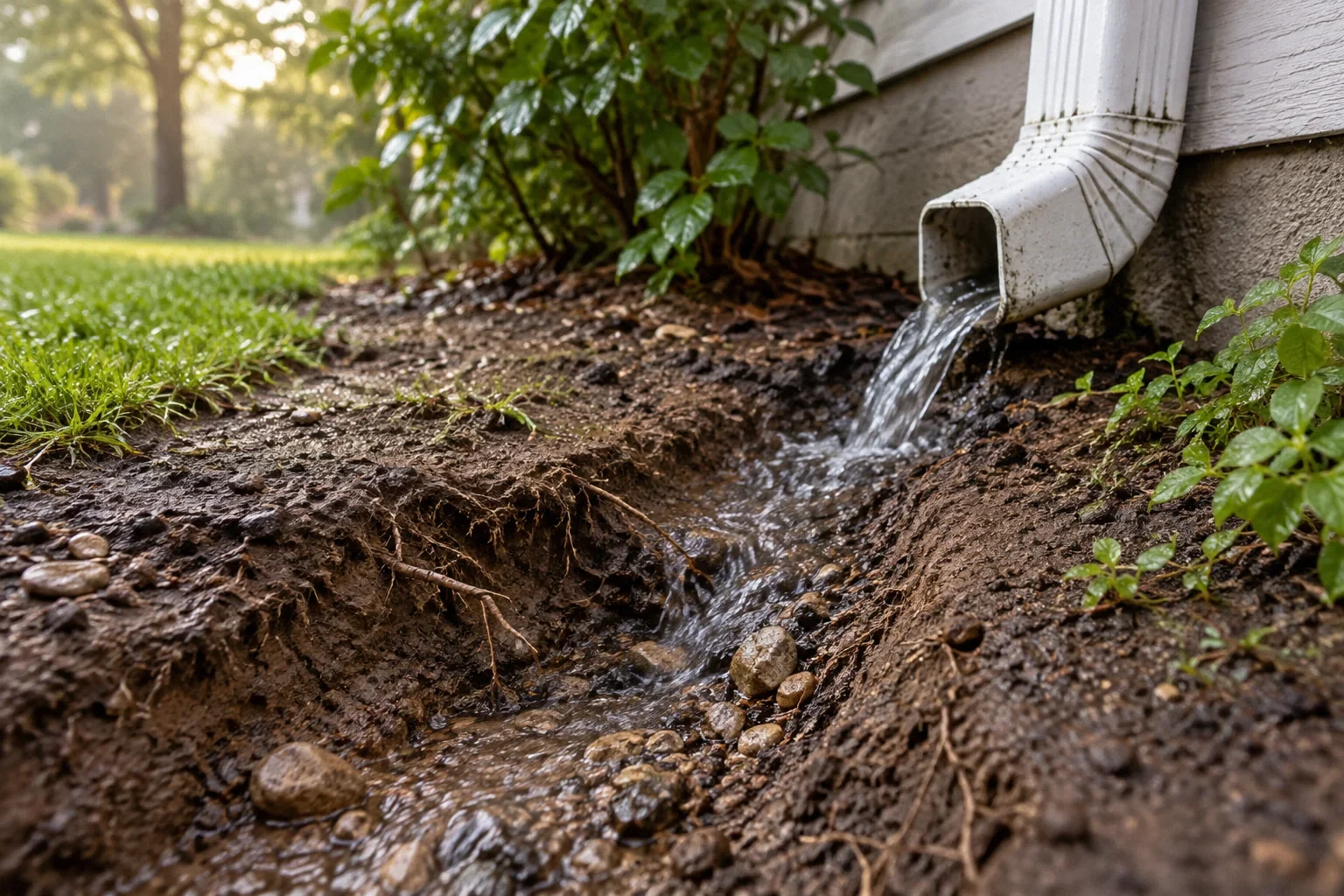
Start with a safe view of the downspout during rain. Does water disappear into landscaping, run back toward the wall, cross a path or collect at a low spot? A dry-weather photograph may hide those behaviors. Record the first receiving area and what happens beyond it. A splash block can redirect the initial stream while leaving the final route unchanged. The question is not simply whether water exits farther from the wall, but whether it reaches a suitable place and remains away under the conditions that matter.
The rain-barrel discussion exposes the unresolved discharge route beside a foundation. This Reddit account is anecdotal, not technical authority. [3]
Distance does not replace a grade check
An extension can carry water several feet and still empty onto ground that slopes back to the foundation. PNNL emphasizes discharge onto ground that carries water away. [1] Ask the inspector to evaluate the receiving surface and any low points between the outlet and building. General setback guidance is not a universal permission to discharge at a particular spot. The actual site, applicable local requirements and nearby structures must be considered. Avoid a design that meets a familiar distance while ignoring where water travels next.
Keep access routes usable
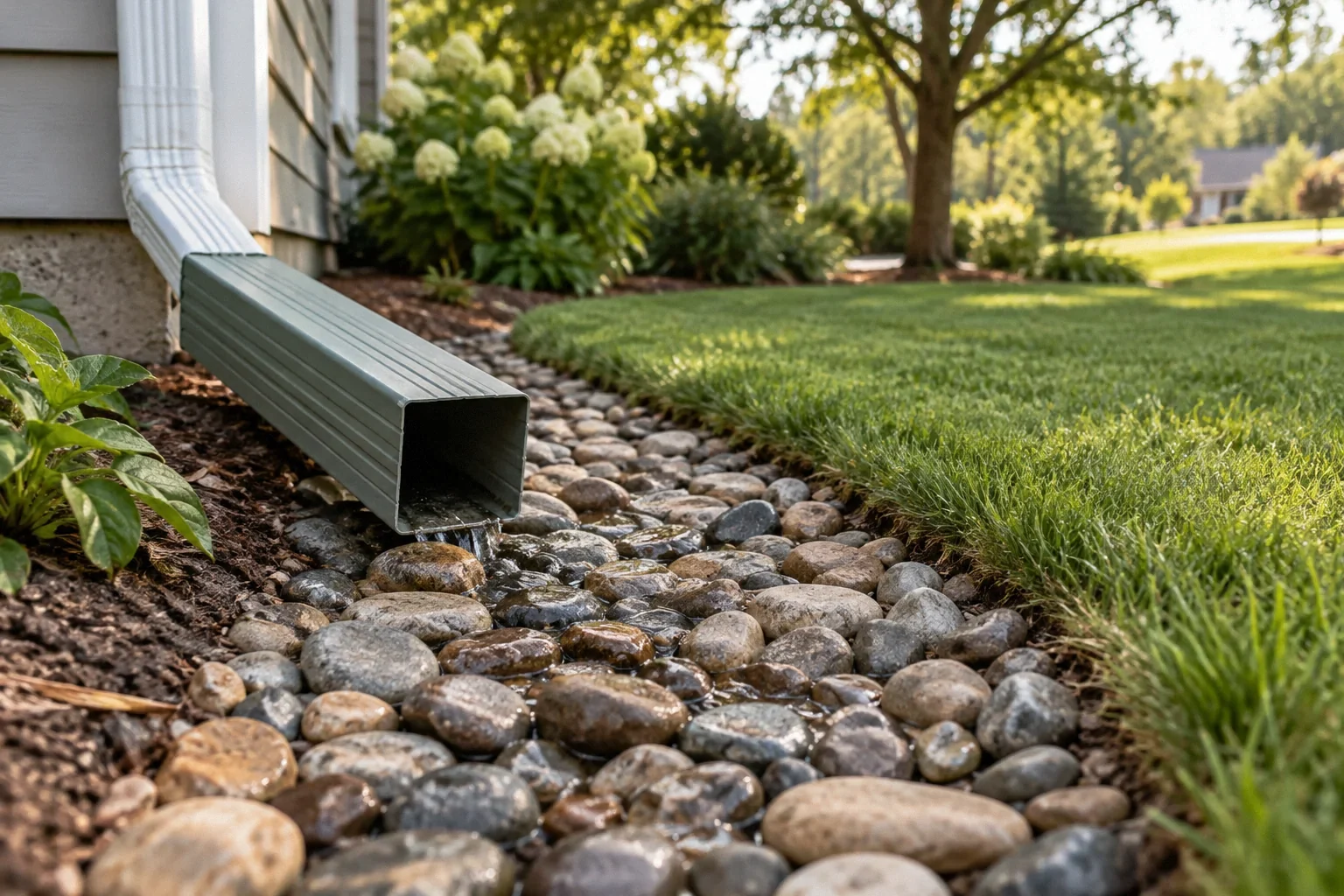
Flexible extensions are often moved for mowing or access and then left out of position. Hinged or removable arrangements also depend on someone restoring them before rain. Choose a configuration that fits the household’s real maintenance habits. Do not create a recurring trip obstruction at a doorway, side passage or service area. If a surface route cannot remain safely in place, compare a different location with an appropriately designed concealed route. Buried work should include utility checks, access for maintenance and a known destination rather than simply hiding the same unresolved problem.
Evaluate the receiving landscape
A planted bed is not automatically an adequate receiving area. Consider whether it is already saturated during storms, whether water concentrates against a wall, and whether runoff leaves the property in an unintended direction. A rain garden or other infiltration feature requires site assessment and overflow planning; it is not just a convenient depression. PNNL’s grading guidance treats surface routes as part of foundation protection. [2] For an existing yard, the useful question is whether the proposed discharge remains workable when the receiving area is wet, not only when it is dry.
Choose a durable connection and support arrangement
Ask how the extension stays connected and in position during routine use. Loose joints, crushed sections and sagging flexible runs can change the intended path. Product selection should follow the layout and maintenance needs. An inexpensive temporary extension may be appropriate while a permanent plan is developed, provided it does not create a new hazard or direct water to an unsuitable location. Label temporary arrangements honestly and give them a review date so they do not become a forgotten permanent installation.
Confirm discharge permissions before public connections
A pipe reaching a curb, sidewalk or municipal system can involve local requirements and permissions. Do not assume that an existing nearby outlet establishes approval for a new one. Ask the relevant local authority what applies to the proposed destination and keep the answer with the project records. Where property boundaries or shared drainage are involved, avoid unilateral changes that merely transfer the problem. A qualified drainage professional can help compare available routes when the lot is constrained or the consequences extend beyond your property.
Compare temporary and permanent arrangements honestly
A temporary extension may be useful while a larger project is assessed, but the owner should know what requires daily or seasonal attention. If the extension must be moved for access, identify who restores it and how the correct position is marked. An arrangement that is routinely left disconnected is not reliable merely because it works when carefully positioned for a photograph.
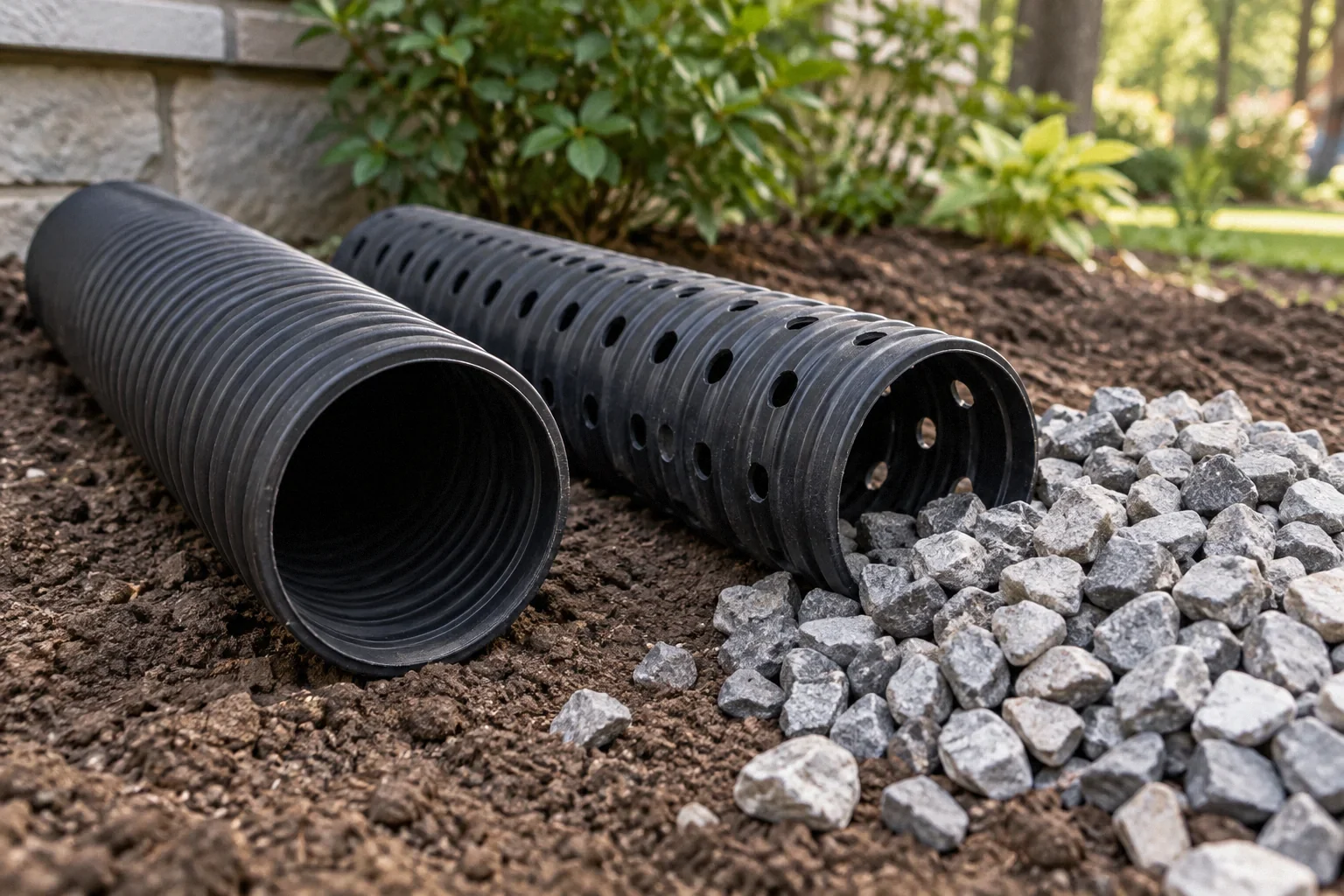
A permanent arrangement should reduce those operational dependencies while keeping maintenance possible. That does not automatically mean burying the pipe. A concealed route introduces questions about access, condition verification and restoration that a visible route does not. Compare the actual site options rather than treating hidden as inherently better.
Before either choice, review the final receiving area. An extension can move water away from one wall while concentrating it at another structure or boundary. A complete decision records that destination and any applicable approval. The useful acceptance observation includes both the connection and the place where water ends up.
Where several possible receiving areas exist, compare their behavior during the conditions that produced the complaint. A farther location is not automatically better if it concentrates water on a steep surface or sends it toward another structure. A closer landscaped area may also be unsuitable if it remains saturated. Ask the provider to explain the chosen destination and the alternatives rejected. The answer should be site-specific rather than a universal extension length. If the household regularly changes the landscape, make the outlet route part of that planning. A new bed border or storage area can interfere with an otherwise functional extension. Keeping a photograph of the intended arrangement helps anyone doing routine yard work restore it correctly instead of leaving the pipe disconnected or redirected for convenience.
| Decision area | Question or evidence |
|---|---|
| Movable surface extension | How will it remain in its intended position? |
| Fixed surface route | Does it preserve access and resist routine damage? |
| Buried carrier | Are route, outlet and maintenance access established? |
Example: a long extension that still wets the wall
Imagine an extension reaching a landscaped strip well beyond the corner of a house. During rain, the strip fills and water follows a shallow depression back toward the foundation. The extension’s length has not solved the route. Adding another section may help only if it reaches a genuinely different receiving area. The next inspection should map the surface elevations and identify an acceptable destination, not keep adding pipe blindly. This example also shows why a photograph of the extension alone cannot establish whether the system is protecting the building.
A practical completion check
Observe the outlet and the receiving area together after work. Keep a simple route sketch and identify any movable components. If the system includes a buried segment, retain its location and accessible maintenance points. Ask the installer to describe what a homeowner can inspect safely from the surface and which symptoms should trigger professional service.
- Does water return toward the building after discharge?
- Can the route remain in place without obstructing normal access?
- What happens when the receiving landscape is already wet?
What to take away
- Check where water travels after leaving the extension.
- Avoid routes that depend on constant repositioning.
- Resolve the receiving area and permissions before concealed work.
Sources & further reading
Reddit links show the questions people ask; they do not establish a diagnosis or a legal requirement. Technical requirements depend on the product, building and jurisdiction. See our research approach.
- DOE/PNNL: Gutters and DownspoutsTechnical / official reference
Roof-water system components, material tradeoffs, separation from footing drain; program-specific distances are not universal local code.
- DOE/PNNL: Final Grade Slopes Away from FoundationTechnical / official reference
Surface grading and constrained-site swales; cited historical codes must not be represented as current California requirements.
- Reddit discussion: Advice for first timers?Community question · anecdotal
Anecdotal homeowner discussion used to identify the question; not technical authority or evidence of this property’s condition.
Planning a Bay Area project?
Explore YKCA’s website and discuss the scope and services you need directly with them.