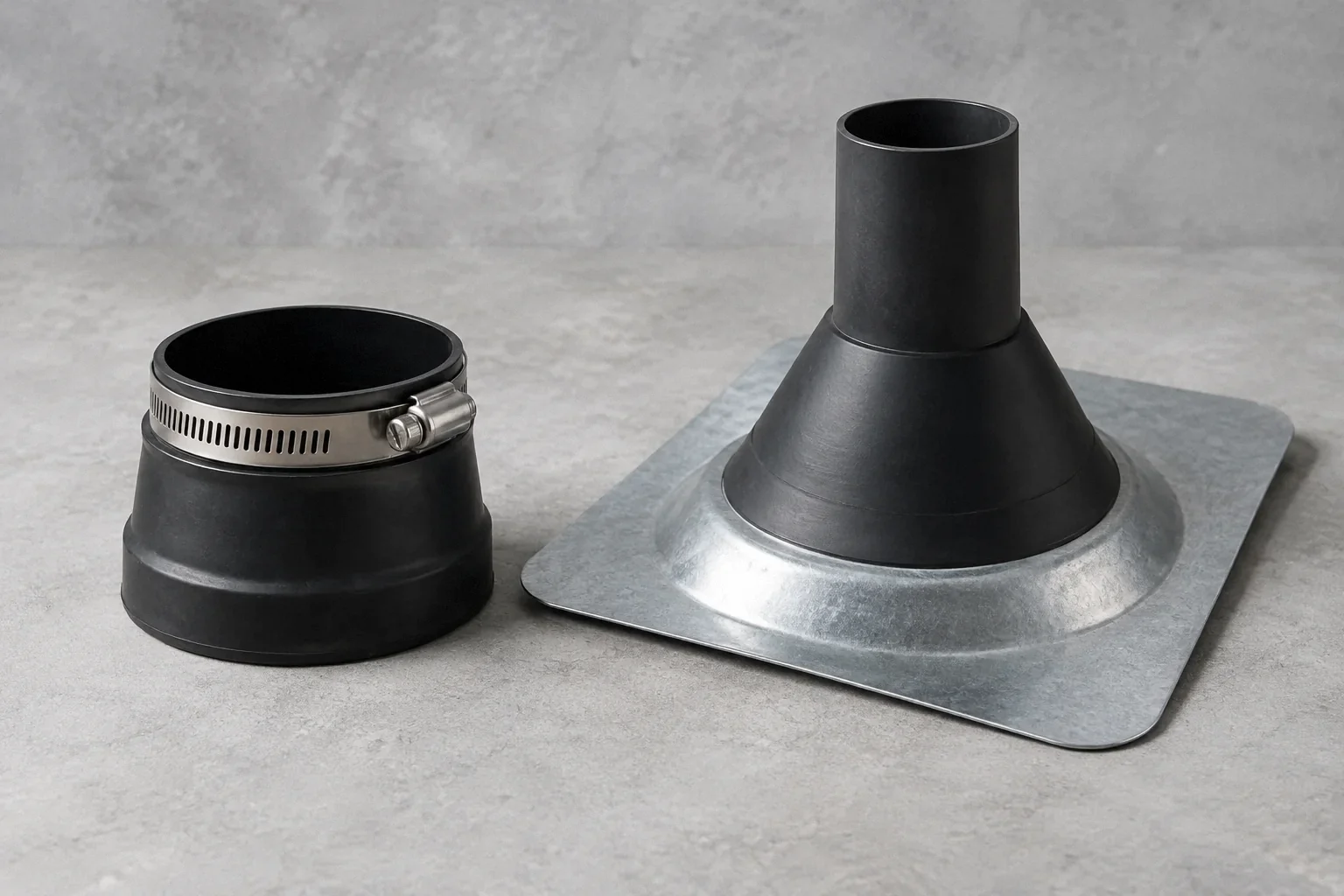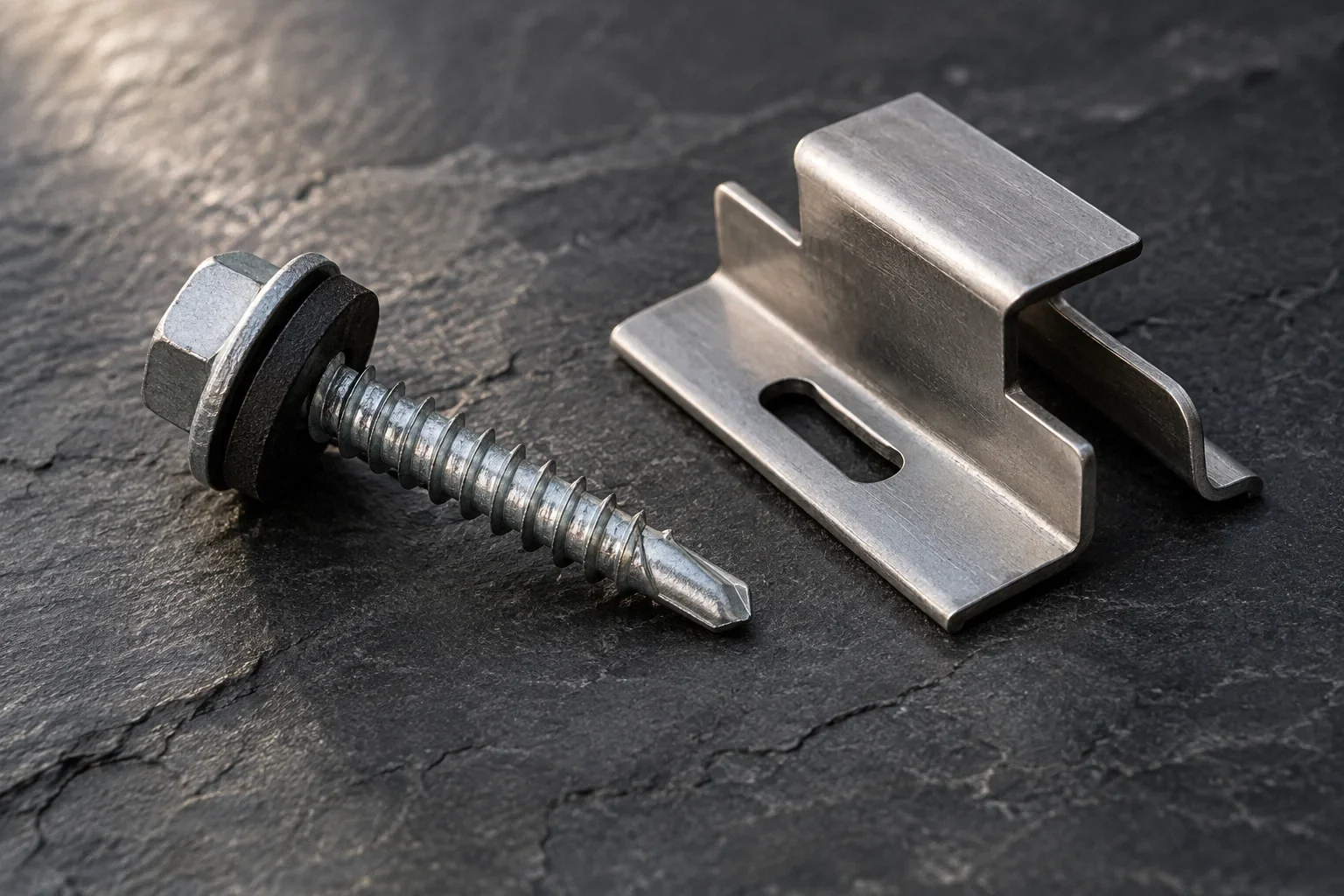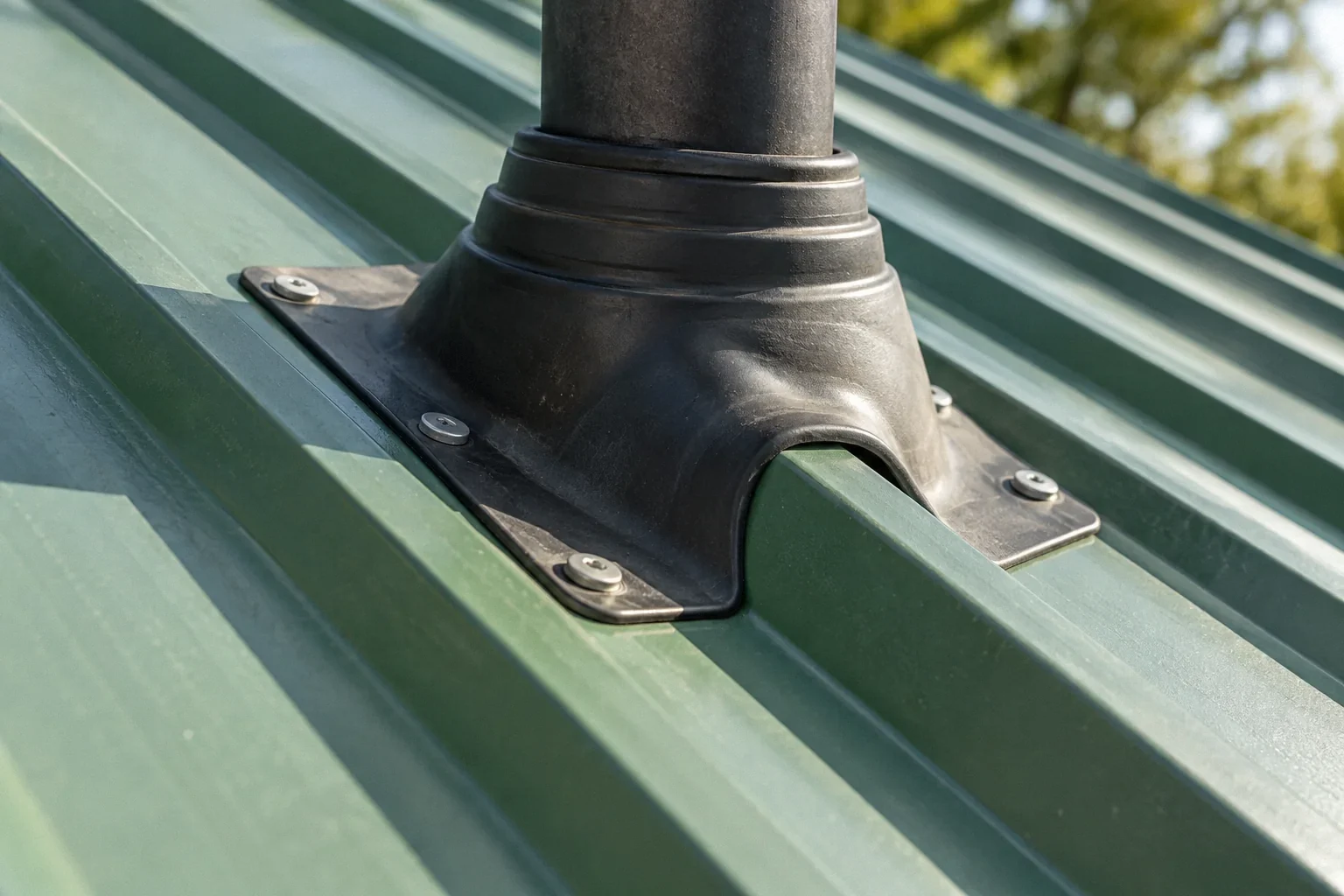
A pipe through a profiled metal roof needs a flashing detail suited to the panel shape and the penetration. A boot crossing a raised rib is not adequately evaluated by asking whether there is enough sealant. The inspection must establish how the detail connects to the panel and accommodates the intended roof-system behavior.
Evaluate the boot against the panel profile
Roof penetrations interrupt the water-control layer, which must remain continuous around them. [1] Profiled metal adds changes in surface geometry that affect the connection. A flat-looking repair flange may conceal gaps or altered drainage at a rib. The selected panel and flashing manufacturers' details should determine the repair configuration rather than an improvised universal boot assumption.
Other explanations to distinguish
Leakage could originate at the pipe collar, the flange perimeter, nearby fasteners or a separate upslope detail. Water arriving along a panel rib can make the nearest boot appear responsible even when the full path is more complex. Previous repairs may have changed the original configuration. Separate the condition of the rubber or flexible portion from the way the entire flashing connects to the metal roof.
Evidence to request before choosing the work
Ask for the panel identification and a photograph showing the penetration relative to ribs and seams. Request the flashing product and its supported application for that profile. The professional should document condition at the collar and perimeter, while explaining which hidden interfaces cannot be verified without removal. Where movement or stress is suspected, ask how the repair maintains the panel system's intended attachment behavior.
Ask whether replacing the boot requires disturbing a panel seam or another previously sound connection. A repair can be local in area while still involving several interfaces. The written scope should identify those interfaces and how they will be restored. This helps the owner understand why a seemingly small penetration may require more work than applying a new bead around its visible perimeter.
How the findings change the repair decision
A compatible local replacement may work when the panel and surrounding details are sound. Where the penetration lies in an unsuitable or damaged configuration, a more substantial manufactured transition or panel work may be needed. The scope should explain the water path and connection rather than list sealant alone. Do not assume that tightening visible screws addresses every possible cause.
A practical example and what it does not prove
In the sampled discussion, a homeowner found a vent boot crossing a raised metal profile after a second day of rain. [3] Responses focused on resealing, but the available image cannot establish product compatibility or concealed conditions. A strong inspection would first compare the actual penetration to a supported detail, then determine what must be replaced to achieve it.
Limits and when professional review matters
Metal surfaces can be slippery and fragile access points can be difficult to recognize. Keep investigation to safe records and professional access. Do not change fastener placement or apply arbitrary patch compounds based on comments about another roof. The exact profile, coating and flashing product govern what is suitable.
Review the interfaces disturbed by a small repair
A penetration occupies little roof area, but repairing it may disturb several connections. Ask whether the work affects a panel seam, coating, collar or adjacent fasteners. The scope should explain how those interfaces are restored. Otherwise a quote for a small boot replacement can leave important parts of the actual work unspecified.
The shape of the panel should be visible in the inspection record. A photograph tightly cropped around the pipe can hide the rib and seam relationships that matter to the chosen detail. Request both context and close views. The proposed flashing should be evaluated against that actual geometry, not against a generic picture of a flat flange on an unrelated roof.
- The boot crosses a raised profile: verify the supported detail for that geometry before selecting a replacement.
- A repair requires disturbing an adjacent seam: include its restoration and verification in the scope.
- The visible collar is sound but water remains: investigate perimeter and upslope paths rather than repeat collar replacement automatically.
Questions that resolve the remaining uncertainty
Ask whether the proposed flashing changes how water passes the rib or seam. The repair description should explain that relationship in ordinary language or a sketch. A product photograph by itself cannot show how the component fits this roof. If the detail is unusual, obtain the relevant technical response before work, then retain it with the completion photographs.
Keep the final profile-specific detail with the roof record for later service visits.
A rib-crossing penetration is a geometry-specific connection
The relevant inspection image includes the pipe, the flange, the panel profile and nearby seams. Cropping tightly around the collar can omit the geometry that determines whether the detail is suitable. Ask the professional to compare the whole configuration with a supported application. A flexible-looking flange does not independently prove that it makes the required connection across every change in profile.
Compare collar replacement with reconstruction of the flange-to-panel interface. The first addresses the upper pipe connection. The second addresses how the penetration connects to the roof surface. If the leak source lies elsewhere upslope, neither may be the complete answer. The investigation should distinguish those possibilities before the visible perimeter receives another layer of material.
A local repair can also disturb adjacent connections. If the proposed work affects a seam, fasteners or coating, include restoration of those interfaces in the scope. The small size of the pipe opening does not mean the repair has only one component. A final photograph should show the profile relationship and restored surroundings, while the roof record identifies the product-specific detail used. That makes future maintenance more reliable than a note stating that the vent was resealed.
Document the panel profile alongside the selected flashing, so later repairs can evaluate the same geometric relationship.
What to take away
- Review the boot in relation to panel ribs and seams.
- Separate collar leakage from perimeter and upslope water paths.
- Require a supported profile-specific repair detail.
Sources & further reading
Reddit links show the questions people ask; they do not establish a diagnosis or a legal requirement. Technical requirements depend on the product, building and jurisdiction. See our research approach.
- PNNL penetration flashingTechnical / official reference
Water-control continuity and penetration detailing; avoid treating illustrated assembly as universal code
- MCA oil canningTechnical / official reference
Stress wrinkling mechanisms and mitigation
- Homeowner discussion: Leak around vent pipeCommunity question · anecdotal
Anecdotal issue research, not technical authority or proof about another property.
Planning a Bay Area project?
Explore YKCA’s website and discuss the scope and services you need directly with them.