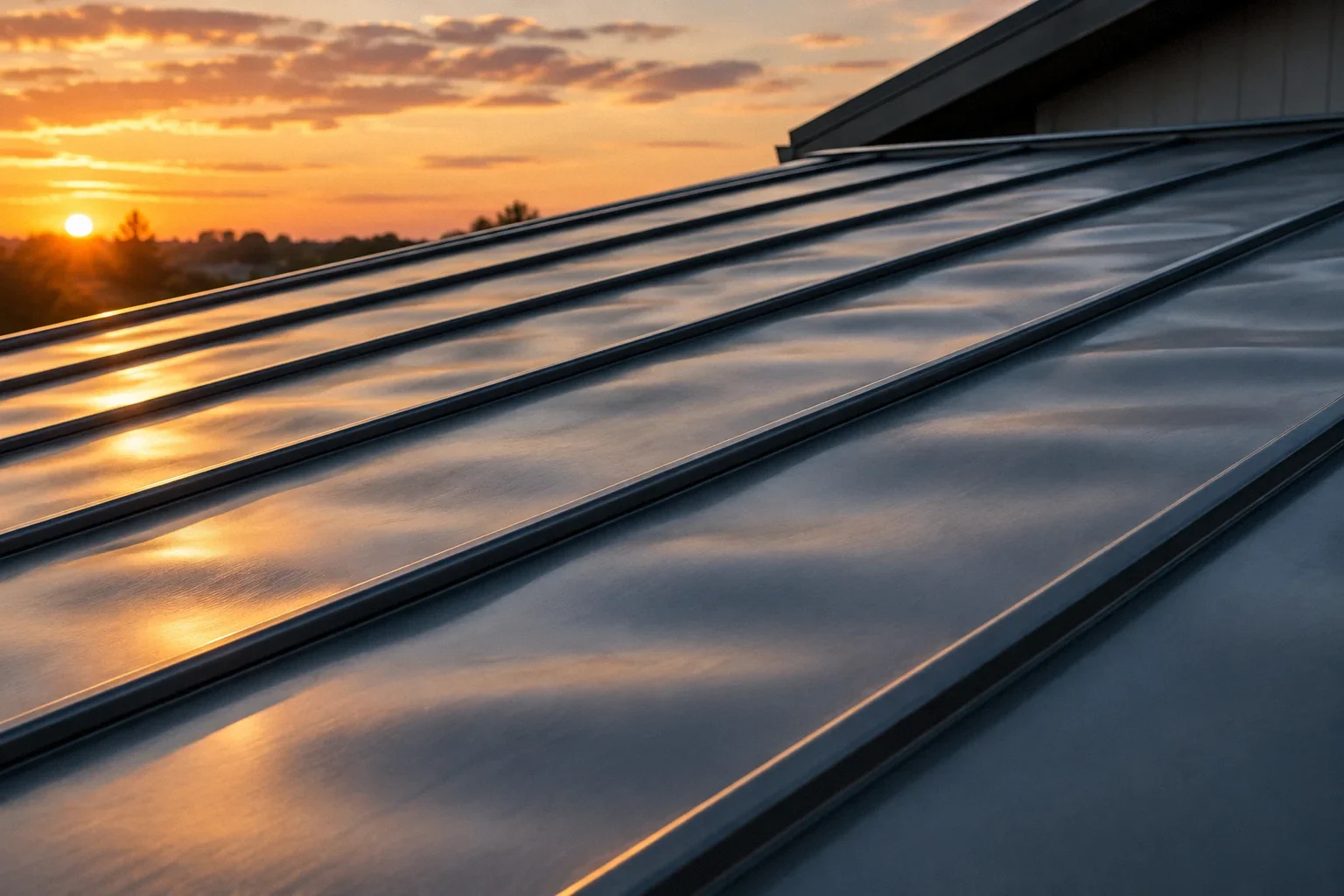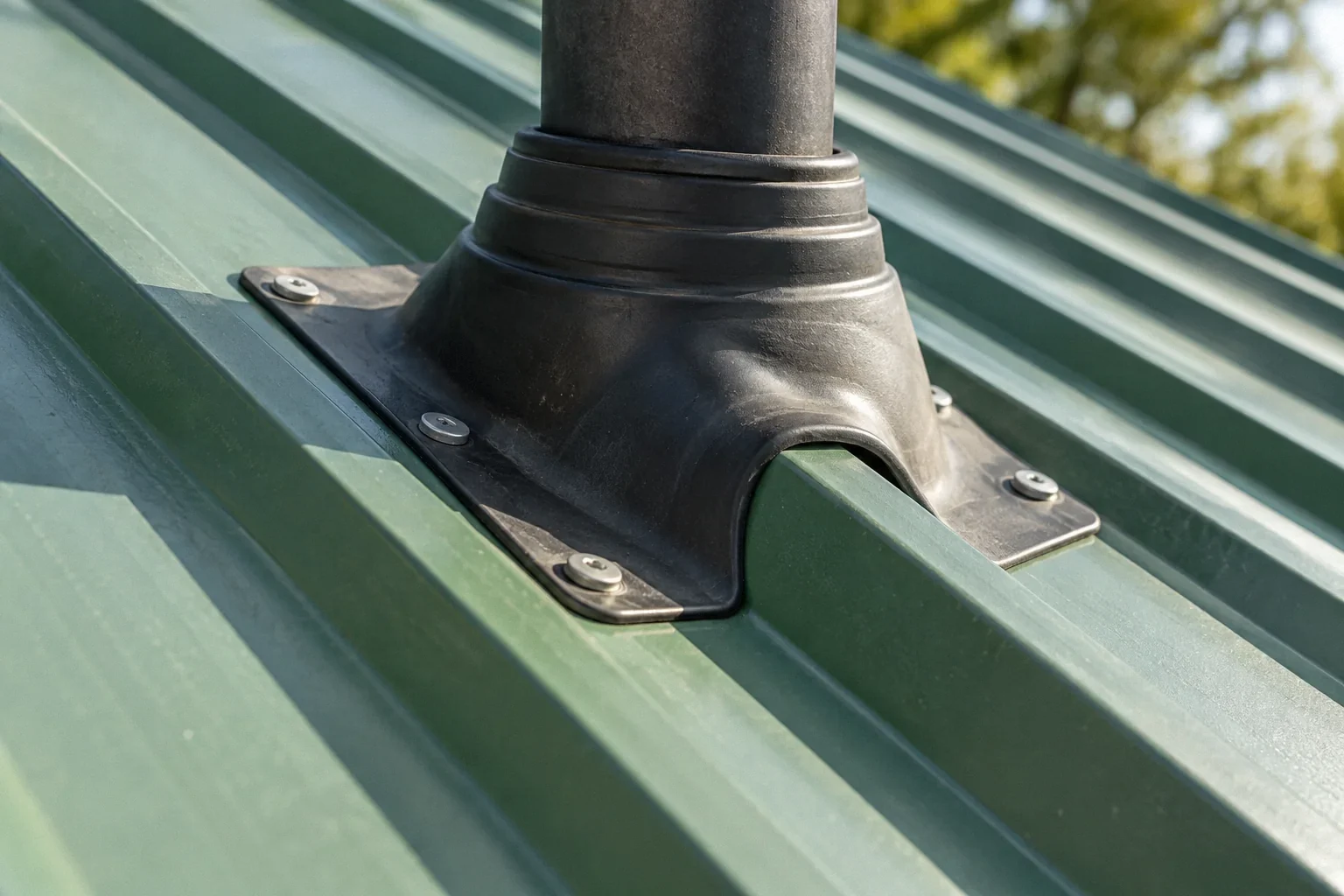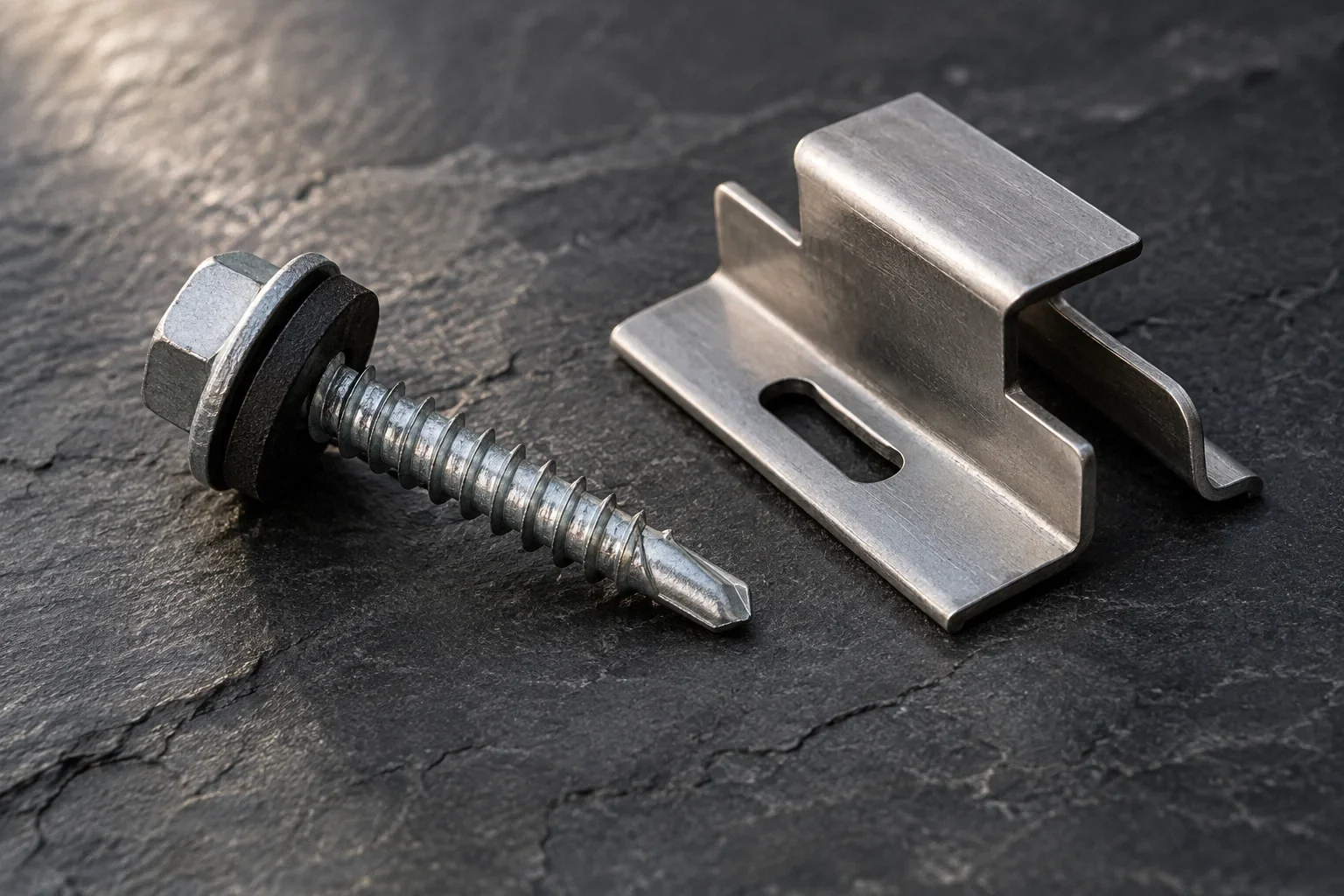
Exposed-fastener and concealed-clip metal roofs should not receive the same repair assumptions. Their attachments belong to different panel systems, and the intended movement behavior matters. A loose-looking fastener or a wavy panel is a reason for system-specific inspection, not an instruction to tighten everything.
Identify how the panels are attached
Metal panel behavior reflects the relationship between the sheet, substrate and attachments. MCA identifies installation and panel design among influences on stress wrinkling. [1] That does not diagnose an individual roof, but it explains why attachment changes should not be improvised. The selected system's detail determines which components restrain the panel and how the assembly handles changes in conditions.
Other explanations to distinguish
A visible fastener problem might involve the fastener, its sealing component, the material receiving it or a panel that has moved. Waviness alone does not prove over-tightening, and absence of waviness does not prove correct attachment. Corrosion, open connections or distorted details need separate documentation. Do not turn one symptom into a roof-wide verdict without assessing its distribution.
Evidence to request before choosing the work
Obtain the panel profile and installation information. Ask the inspector to map affected areas and identify whether the roof uses exposed fasteners, clips or another attachment arrangement. A proposal should explain why the chosen corrective component is suitable for the existing panel and substrate. Where the support condition is unknown, request an investigation plan rather than a blanket promise that a different screw will solve it.
For a proposed fastener replacement program, request a location-based description of what will change and what will remain. The contractor should explain how representative findings support the extent of the program. A roof-wide quantity should not be derived solely from a few visible concerns without explaining the assumption. Preserve the replacement component identification so future service does not introduce another undocumented variation.
How the findings change the repair decision
Localized replacement may be reasonable when the receiving material and surrounding panels are sound. Broader reconstruction can be necessary when deterioration or installation problems are repeated. Compare the proposed repair with the original system requirements. A maintenance program should identify components and conditions to inspect; it should not prescribe universal re-tightening without regard to the attachment system.
A practical example and what it does not prove
Consider a roof with a few recurrent leaks around exposed fasteners and a separate area of panel waviness. A contractor proposes treating every fastener identically. The owner asks for the roof-system identity and receives a more specific explanation: the leakage and the waviness require separate assessment. That distinction prevents a cosmetic symptom from driving an unsupported roof-wide adjustment.
Limits and when professional review matters
No torque setting, fastener spacing or replacement diameter is prescribed here. Those are product- and condition-specific decisions requiring verified technical information. Altering attachments can create leaks or interfere with the intended system. Have the professional document the completed work so later maintenance does not mix incompatible components or repeat unrecorded modifications.
Distinguish a component replacement from an attachment redesign
Replacing a deteriorated component within a supported system is different from altering how the panel is restrained. The contractor should say which action is proposed. If a different fastener or connection is selected, ask why it is suitable for the panel and receiving material. A familiar-looking screw is not enough information to establish equivalence.
A roof-wide maintenance program also needs representative evidence. Ask whether the observed condition is isolated, repeated in particular zones or widespread. The answer determines whether the program addresses a documented pattern or simply applies one treatment everywhere. Keep a record of replacement components so later crews can recognize the completed system rather than introduce another unrecorded variation.
- A few fasteners show concerns while other areas are unexamined: establish the basis before extending the work across the roof.
- The receiving material is uncertain: investigate support rather than assuming a replacement component alone resolves the problem.
- A proposed change alters panel restraint: request technical review of the attachment arrangement, not only a component catalog.
Questions that resolve the remaining uncertainty
A fastener count can make a proposal look precise while leaving its technical basis unclear. Ask how the installer selected the locations and components, and whether the receiving material has been assessed. The number is useful only after those questions are answered. A blanket replacement program and a targeted defect repair should be described as different scopes, with their different assumptions visible.
After work, retain the original and replacement component information where available. A future maintenance contractor should be able to identify which areas were treated and why. Without that record, later workers may interpret mixed components as original construction or apply another uniform treatment without understanding the previous correction.
Attachment type changes the repair question
In an exposed-fastener system, the visible fastener connection is part of the surface detail being inspected. In a concealed attachment system, important connections may be beneath the panel or seam. The absence of visible screws does not mean there are no attachments to assess. The report should identify the system before interpreting a loose-looking component or proposing a blanket fastener treatment.
A component replacement within the original arrangement and a change to panel restraint are different interventions. Ask which one is proposed. If the repair changes the connection, its support should come from the actual system requirements and condition of the receiving material. A larger or different fastener should not be assumed to solve every support concern merely because it can be installed in the existing location.
The distribution of findings also matters. A few documented concerns can support targeted work, while repeated conditions across representative areas may justify a wider program. State how the proposed extent follows from inspection. A precise fastener quantity does not replace that reasoning. At completion, record the components and locations changed so later workers can distinguish the corrected areas from original construction and avoid introducing another undocumented attachment variation.
What to take away
- Identify the attachment system before interpreting fastener symptoms.
- Do not diagnose installation stress from panel waviness alone.
- Require product-specific components and documented support conditions.
Sources & further reading
Reddit links show the questions people ask; they do not establish a diagnosis or a legal requirement. Technical requirements depend on the product, building and jurisdiction. See our research approach.
- MCA oil canningTechnical / official reference
Stress wrinkling mechanisms and mitigation
- IBHS Roof 101Technical / official reference
Roof system performance and test-rating limitations
- Homeowner discussion: Leak around vent pipeCommunity question · anecdotal
Anecdotal issue research, not technical authority or proof about another property.
- Homeowner discussion: Oil Canning Standing SeamCommunity question · anecdotal
Anecdotal issue research, not technical authority or proof about another property.
Planning a Bay Area project?
Explore YKCA’s website and discuss the scope and services you need directly with them.