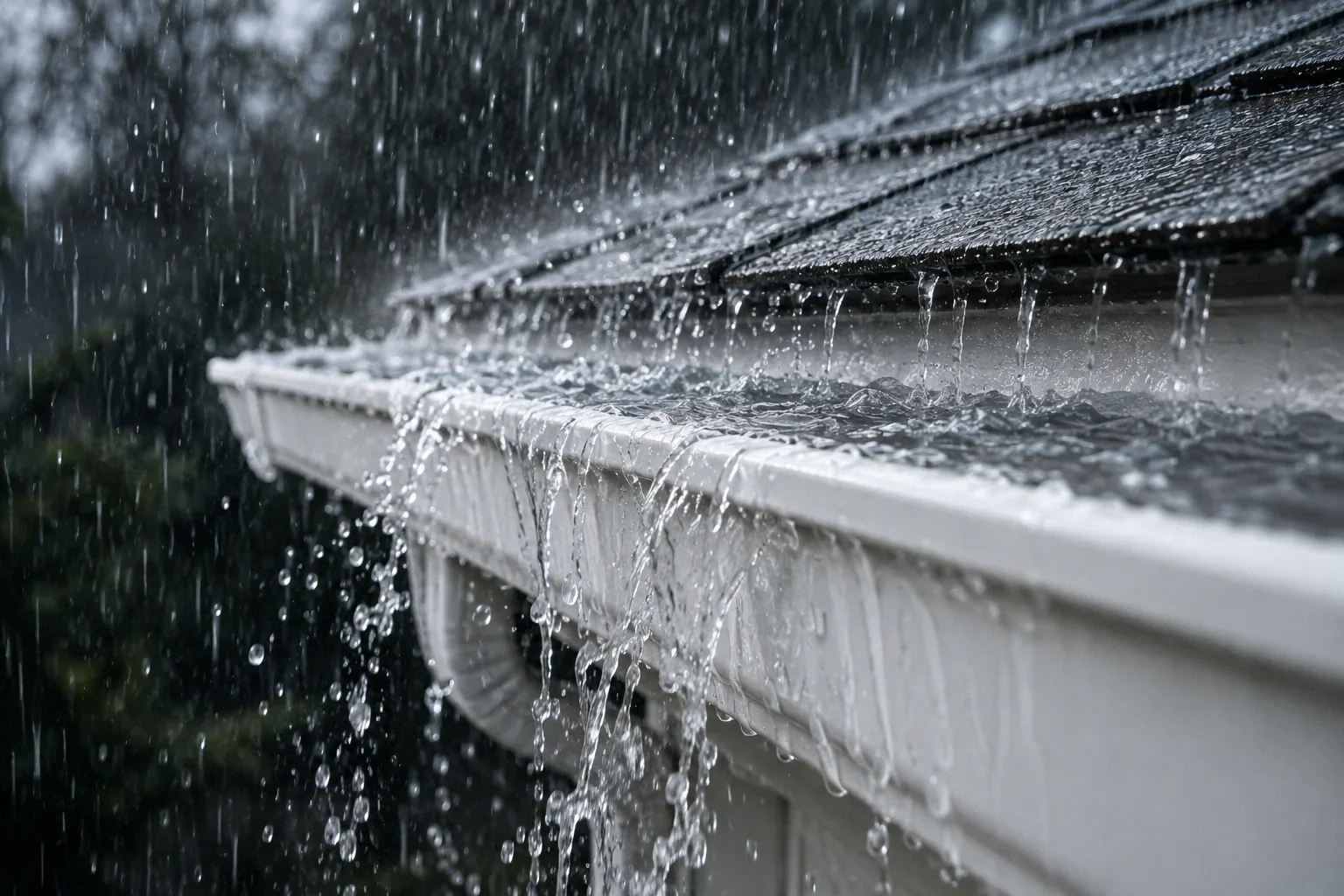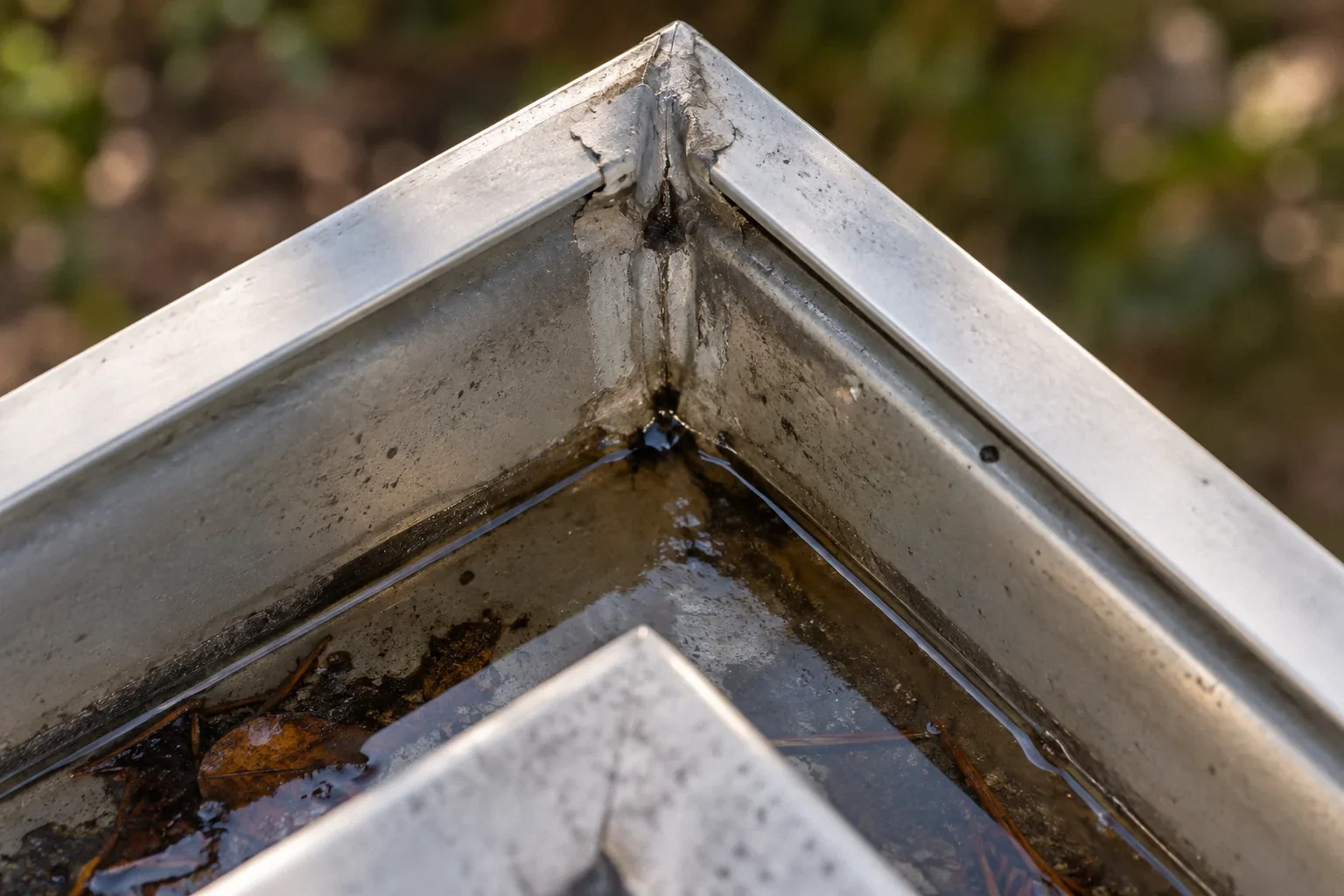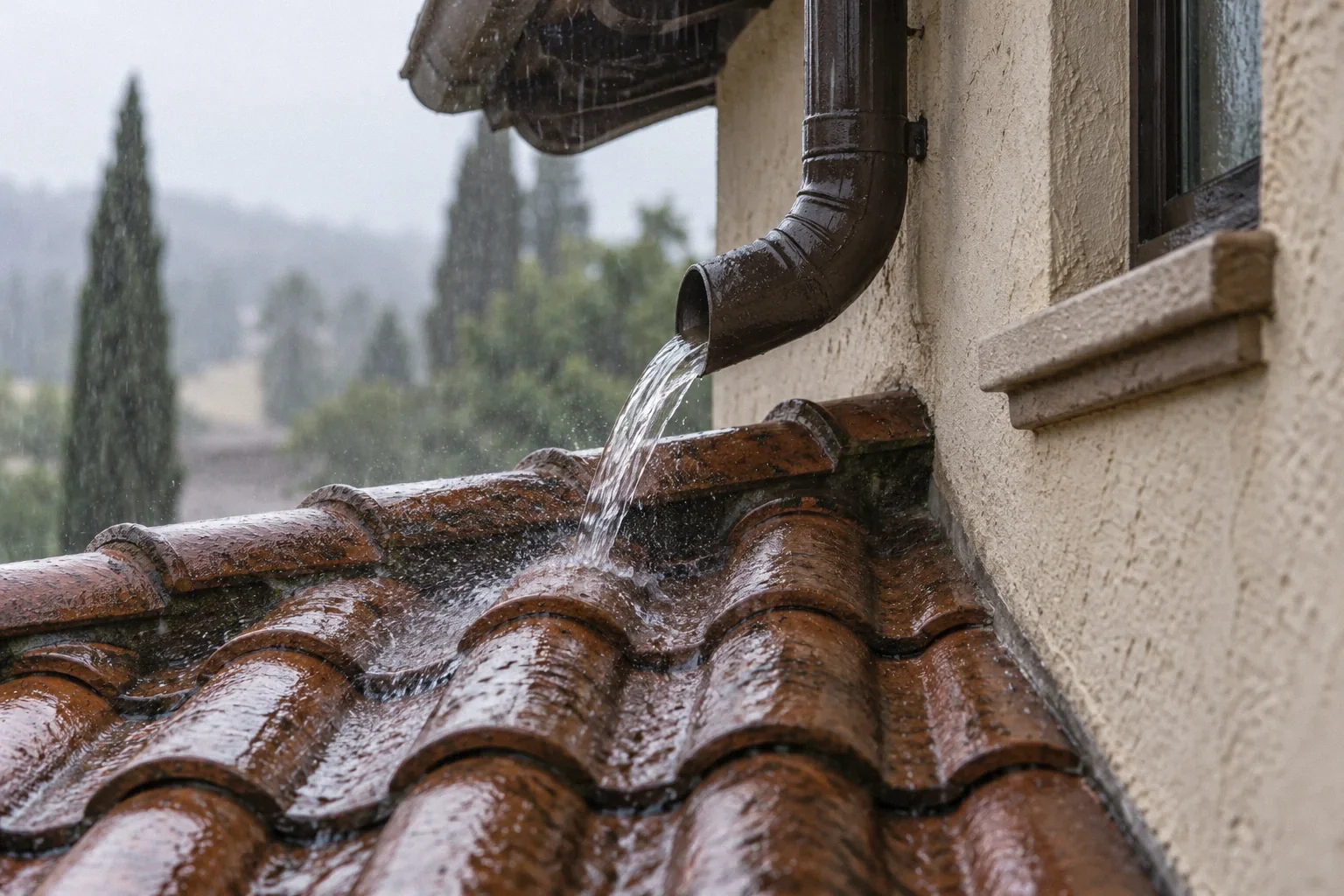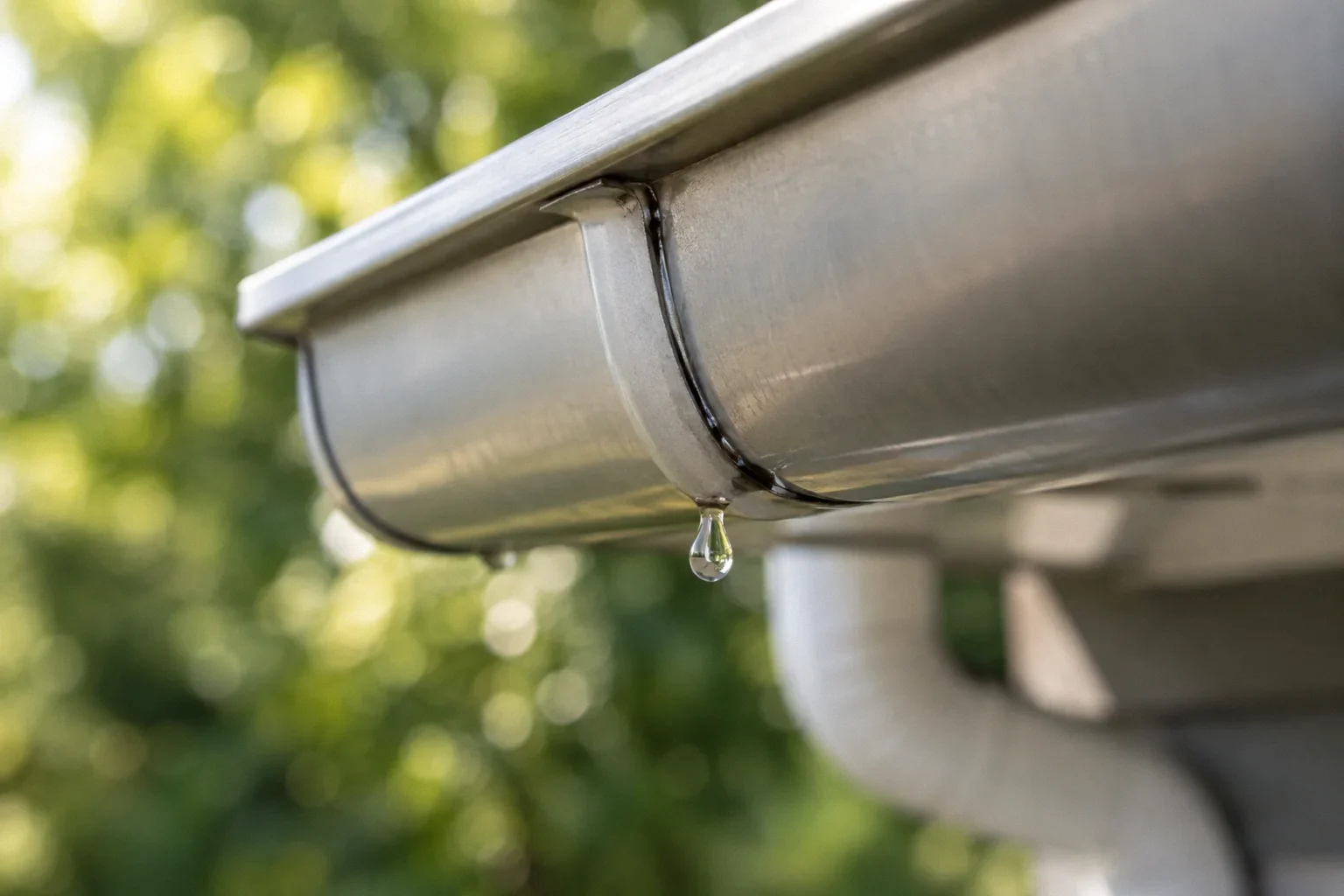
A leak passes through a joint, hole or failed connection; overflow crosses an edge because water is not being contained or removed. The same gutter can do both. Follow the first visible water path before selecting a sealant or capacity repair.
Describe where the water crosses the gutter
Use separate words for three observations: water passing through a seam, water spilling over the front edge, and water appearing behind the gutter. These are starting categories, not final diagnoses. A wet underside can carry water sideways before it drops. A photograph of the final drip therefore may misidentify the entry point. Include the adjacent roof edge, joint and fascia in the inspection request. Safe ground-level video during ordinary rainfall is useful, but conditions must remain safe; do not approach exposed wiring, unstable attachments or areas with rapidly rising water.
The seam discussion is a useful reminder that a drip description still needs a verified escape path. This Reddit account is anecdotal, not technical authority. [2]
Timing can narrow the question
A seam that drips while the gutter carries modest flow deserves a different inspection from a run that starts spilling only after prolonged rain. Note whether dripping continues after rainfall stops. Residual water may reveal retained water or a slowly emptying joint, but it does not prove the cause. Compare observations over more than one event when practical. Avoid conclusions based solely on the weather label heavy rain, which means different things to different observers. The record should say what happened and when, leaving the inspector to test the competing explanations.
Do not seal an unresolved drainage defect
If water is backing up, a bead of sealant may reduce one escape path while leaving the underlying obstruction or low spot intact. That does not make joint sealing inherently wrong; it means its purpose must be clear. Ask whether the proposed work is a localized joint repair, a temporary containment measure or part of a broader correction. PNNL describes the roof-water route through gutters and downspouts. [1] The practical lesson is to inspect the route beyond the wet seam rather than assume the seam explains every symptom.
Water behind the gutter needs a wider view
A wet fascia or wall may involve gutter position, roof-edge drainage details, attachment openings or another path that cannot be seen from below. Ask the inspector to identify where water leaves the roof and how it enters the gutter. Do not accept a diagnosis of bad caulk based only on staining. If roof-edge or wall flashing is involved, coordinate with a qualified roofer rather than asking a gutter cleaner to improvise a building-envelope repair. The gutter inspection should state what was visible and what requires another trade to examine.
Ask for contrasting evidence
For a suspected seam leak, request close photographs of the joint, its condition and the surrounding gutter, taken by the person with appropriate access. For suspected overflow, request observations of the outlet and alignment. A good report can support one explanation while keeping another open. For example, a visibly separated joint may be confirmed, while downstream capacity remains untested. That is a more useful conclusion than declaring the entire system good after a small repair. It also allows you to compare bids that otherwise use the same word repair for different work.
Choose the response by consequence and access
Minor dripping onto an open landscape area and water running into a wall cavity carry different consequences. Escalate persistent wetting of building materials, interior stains or loose gutter sections promptly. Avoid treating a temporary reduction in dripping as evidence that concealed materials are dry. Work at height belongs with someone equipped for the access conditions. Your role can remain observation and documentation. A qualified contractor should select compatible repair materials and explain preparation, curing and weather limitations for the actual product rather than offering a universal sealant recommendation.
Avoid three misleading shortcuts
First, do not use the amount of water as the only classifier. A small overflow can produce a drip, while a failed joint can release a substantial stream. The escape path matters more than the word small or large. Second, do not assume the lowest visible drop marks the defect. Water can travel along an edge before falling. Third, do not treat a previous sealant repair as proof that the original diagnosis was correct. It may simply show what another person tried.
When scheduling service, describe what you have actually seen and attach the widest useful image. Ask whether the visit includes access to inspect the suspected joint and the outlet. If the provider can only observe from the ground, that limitation should shape the conclusion. An initial assessment can still be valuable, but it should not claim that concealed joint surfaces or roof-edge details have been inspected. This keeps the repair decision proportional to the evidence.
A useful service request can describe two competing paths without choosing between them: water appears at the corner, and it is unclear whether it crosses the lip or passes through the joint. That phrasing invites diagnosis instead of prematurely specifying caulking. If the contractor identifies both paths, ask for separate repair items and observations. For example, the joint may need attention while a blocked outlet explains why it was exposed to unusually high water. The completion record should then state whether both were addressed. If only the joint repair is authorized, the remaining drainage question should stay visible. This prevents a later overflow from being misunderstood as proof that the joint repair itself failed, and prevents a temporarily dry seam from being mistaken for confirmation that the entire gutter works.
| Decision area | Question or evidence |
|---|---|
| Water through an identified joint | Assess fit, movement and compatible repair |
| Water crossing an edge | Assess collection and evacuation |
| Water behind the gutter | Review roof-edge and wall-related paths |
Example: a corner that looks like a hole
Consider a corner dripping directly above an entry step. The owner assumes there is a hole in the bottom. During a safe observation, water is seen crossing the front lip and curling around the underside before falling at the corner. The correct next question is why the gutter overtops there. On another property, water emerges through a clearly visible seam while the gutter remains below its edge. That observation supports a joint-focused inspection. Both owners described a leaking corner, but their evidence points in different directions. A contractor should not select the same sealant-only response merely because the initial phone description sounded similar.
A useful before-and-after record
Keep an overall view and a close view of the affected location, with dates and weather notes. Ask the contractor to label the identified path and any uncertainty. After work, repeat the observation under reasonably comparable conditions. If the symptom changes from a drip to water behind the gutter, report the changed path rather than simply saying the repair failed.
- Identify front-edge, back-edge or through-joint escape.
- Retain the repair product and preparation details.
- Record whether downstream flow was checked.
What to take away
- Trace the first escape path, not just the final drip.
- Keep joint repair separate from drainage correction in the scope.
- Escalate water behind the gutter to a roof-edge assessment.
Sources & further reading
Reddit links show the questions people ask; they do not establish a diagnosis or a legal requirement. Technical requirements depend on the product, building and jurisdiction. See our research approach.
- DOE/PNNL: Gutters and DownspoutsTechnical / official reference
Roof-water system components, material tradeoffs, separation from footing drain; program-specific distances are not universal local code.
- Reddit discussion: Leaky gutter seamCommunity question · anecdotal
Anecdotal homeowner discussion used to identify the question; not technical authority or evidence of this property’s condition.
Planning a Bay Area project?
Explore YKCA’s website and discuss the scope and services you need directly with them.