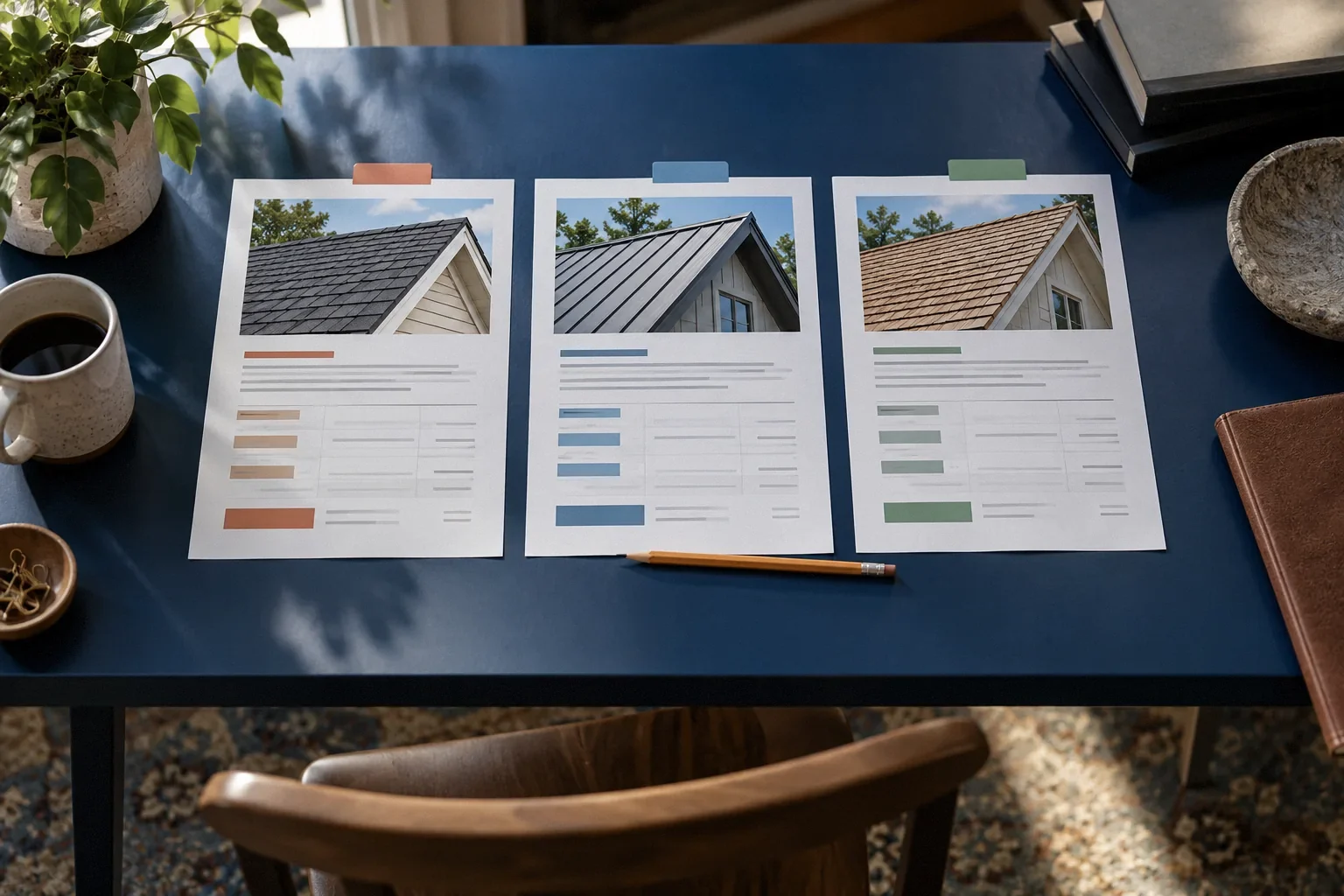
Compare drainage estimates by diagnosis, collection method, route, destination, access, restoration and verification. A low price for pipe length is not comparable with a proposal that includes investigation and complete site restoration. Resolve major assumptions before choosing.
Put the same problem statement in front of each bidder
Give each contractor the same photos, event log and description of affected areas. State what is known and unknown, especially buried routes and outlet identity. Otherwise bidders may price different assumptions without making that difference obvious. Ask each to describe the suspected cause and the evidence supporting it. A proposal can acknowledge uncertainty and still be useful if it provides a clear investigation step. A confident price based on an unverified route may be less reviewable than a staged scope with explicit decision points.
The sediment-clog discussion contains competing repair suggestions, illustrating why comparable estimates need a shared diagnosis. This Reddit account is anecdotal, not technical authority. [3]
Compare mechanisms rather than drain names
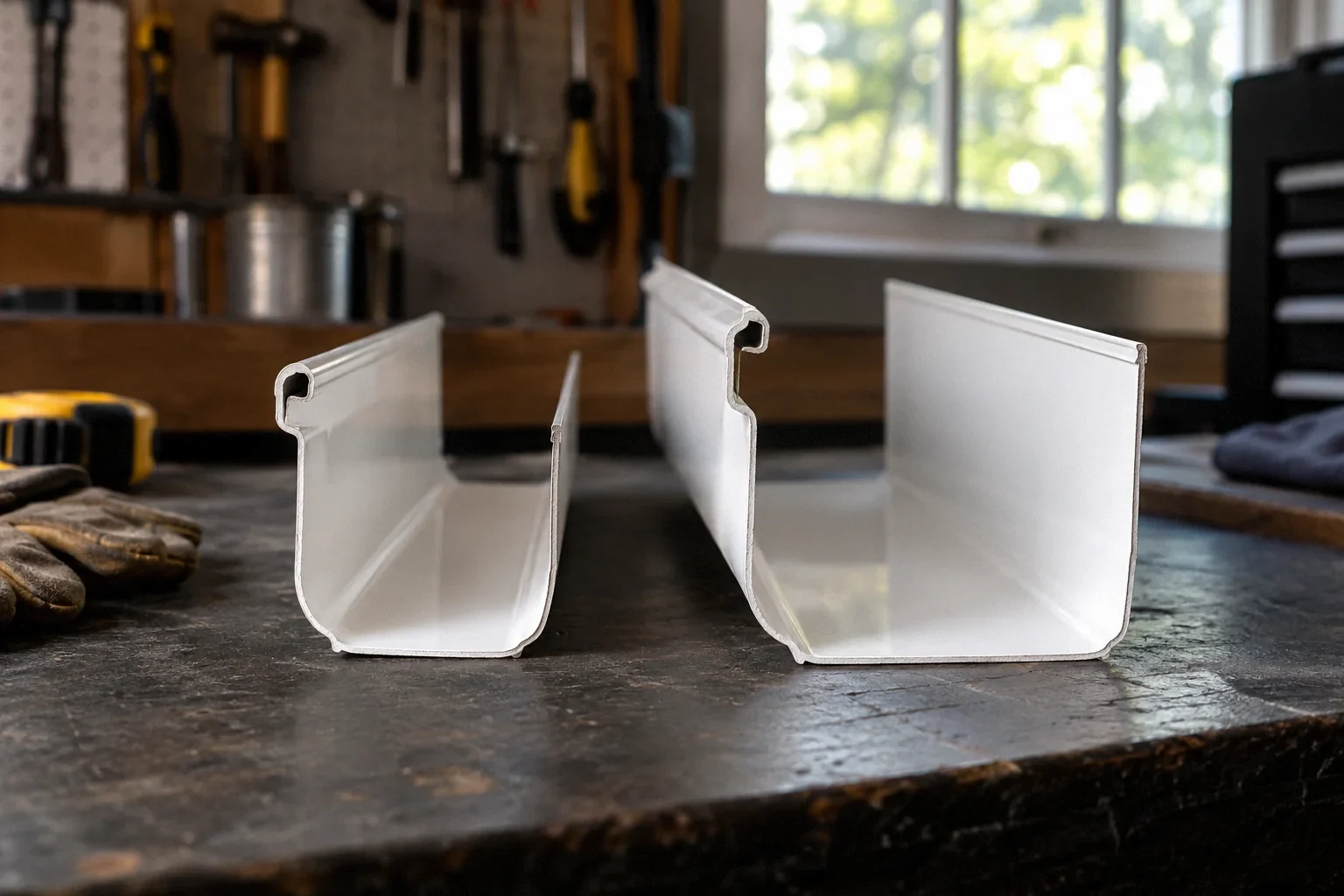
One bid may install a surface inlet while another proposes a subsurface collection assembly. Ask how the water causing your complaint enters each system. NDS distinguishes these exterior drainage components. [1] The comparison should follow the source and complete route, not the familiarity of a product name. If a bidder recommends a larger pipe, ask what limits the current arrangement and how the proposed size was selected. Do not accept an unexplained upgrade as a substitute for identifying the problem.
Require an identified destination
The estimate should show where collected water goes and how applicable permissions will be addressed. A line item ending at the fence or toward the street is incomplete if the final route remains unknown. Existing piping proposed for reuse should have its verified condition and limitations stated. Ask what happens if investigation shows it is unsuitable. This may justify a staged price or a defined change process. It should not become an undisclosed assumption that makes a low initial bid appear comparable with a complete route.
Separate investigation, construction and restoration
Camera work, locating, excavation planning, installation, backfill and landscape or paving restoration may be included differently. Ask for these boundaries in plain language. If important tree roots, foundations or retaining features are involved, identify the qualified review needed before work. PNNL recommends checking other water-management conditions before major footing-drain work. [2] A proposal should explain why that more disruptive scope is justified and what alternatives were considered, rather than presenting excavation as the default response to any wet area.
Review access and future maintenance
Ask where cleanouts or other service points will be located and how they remain accessible after restoration. A neat finished landscape is not helpful if routine service requires reopening it. Include the maintenance process and any product-specific requirements. Clarify who handles removed sediment or waste, and who documents concealed work before cover. These items influence the practical value of the project even when they do not dominate the installation price. The owner should know what will be left for future service providers.
Define completion and change handling
A contract should distinguish installed scope from observed performance. Ask what checks will be documented and what requires later natural-rain observation. Clarify how unexpected concealed conditions are reported and authorized before additional work proceeds. Do not treat a warranty as a replacement for a clear scope. Keep exclusions visible, especially unverified existing pipes, unrelated moisture sources and restoration limits. A good comparison may reveal that the apparent price gap reflects different work rather than different value for the same work.
Ask bidders to price the same uncertainty
If the existing outlet is unknown, compare how each bidder proposes to resolve it. One may include locating and inspection; another may assume reuse; a third may design a new route. Those are different risk allocations and scopes. Put the uncertainty into the comparison explicitly instead of assuming the cheapest bidder has somehow solved it more efficiently.
A staged proposal can be useful when investigation materially affects construction. The first stage should have a deliverable and a decision point, not an open-ended service with no explanation of what comes next. After the findings, the construction scope can be revised around actual evidence. This can make the result more reviewable than a broad allowance that hides the central design question.
Also compare who owns coordination. If one contractor installs pipe and another restores paving, identify the handoff, final elevations and responsibility for protecting the route during restoration. The lowest combined price may still leave an important interface uncovered. A complete estimate makes these boundaries visible before work, when they are easier to resolve.
Ask how the contractor will handle a finding that contradicts the initial diagnosis. A useful agreement allows the evidence to change the recommendation before unnecessary construction proceeds. For example, locating an intact route with a receiving-area problem may lead to a different scope from replacing a suspected collapsed line. The process should identify who reviews the finding and how the revised work is documented. This is different from an unrestricted allowance for whatever the crew decides on site. The owner should receive a concrete explanation and scope change through the agreed process. Also retain the investigation result even if you choose another contractor for construction. Paying for diagnosis should leave a usable record that supports the project, not only a verbal sales recommendation that disappears when the first bidder leaves.
Before choosing, ask every bidder to identify one material assumption that could change the scope. Compare those answers alongside price; an openly stated uncertainty is more useful than an apparently complete bid built on an invisible assumption.
| Decision area | Question or evidence |
|---|---|
| Unknown existing route | Investigation, assumed reuse or new design? |
| Staged work | What deliverable triggers the next decision? |
| Restoration handoff | Who preserves final grades and access? |
| Completion claim | Installed scope versus observed performance? |
Example: two prices for apparently the same drain
Suppose one estimate lists a new line from the rear basin to an existing pipe. Another includes locating the existing pipe, verifying its outlet and restoring a paved crossing. The first may be less expensive because it assumes the retained route works and excludes the crossing. Those bids are not yet comparable. Ask the first bidder to state the assumption and price the same scope, or compare staged approaches honestly. The right choice depends on the evidence and desired responsibility, not on treating every estimate labeled drainage repair as equivalent.
Build a one-page comparison
Use columns for diagnosis, source collected, route, destination, retained components, restoration, maintenance and verification. Mark unknowns rather than filling them with guesses. This makes follow-up questions focused and prevents a long sales proposal from hiding an unresolved fundamental issue.
- What evidence supports the proposed remedy?
- Which existing components are assumed serviceable?
- What exactly is included in restoration and completion documentation?
What to take away
- Give bidders the same evidence and problem statement.
- Compare complete routes and restoration, not pipe length alone.
- Keep concealed-condition assumptions and completion checks explicit.
Sources & further reading
Reddit links show the questions people ask; they do not establish a diagnosis or a legal requirement. Technical requirements depend on the product, building and jurisdiction. See our research approach.
- NDS manufacturer: Principles of Exterior DrainageTechnical / official reference
Surface/subsurface collection, discharge planning, sizing and maintenance.
- DOE/PNNL: Footing Drain PipeTechnical / official reference
Check roof runoff, grading and plumbing before considering footing excavation.
- Reddit discussion: My French drain is clogged with clay dirt. What do I do?Community question · anecdotal
Anecdotal homeowner discussion used to identify the question; not technical authority or evidence of this property’s condition.
Planning a Bay Area project?
Explore YKCA’s website and discuss the scope and services you need directly with them.