Fresh paint or a patched ceiling can justify further questions, but it does not prove an active roof leak or intentional concealment. Document the location, seek repair history, and have a qualified professional investigate moisture and possible water paths before drawing conclusions.
Begin with a neutral observation
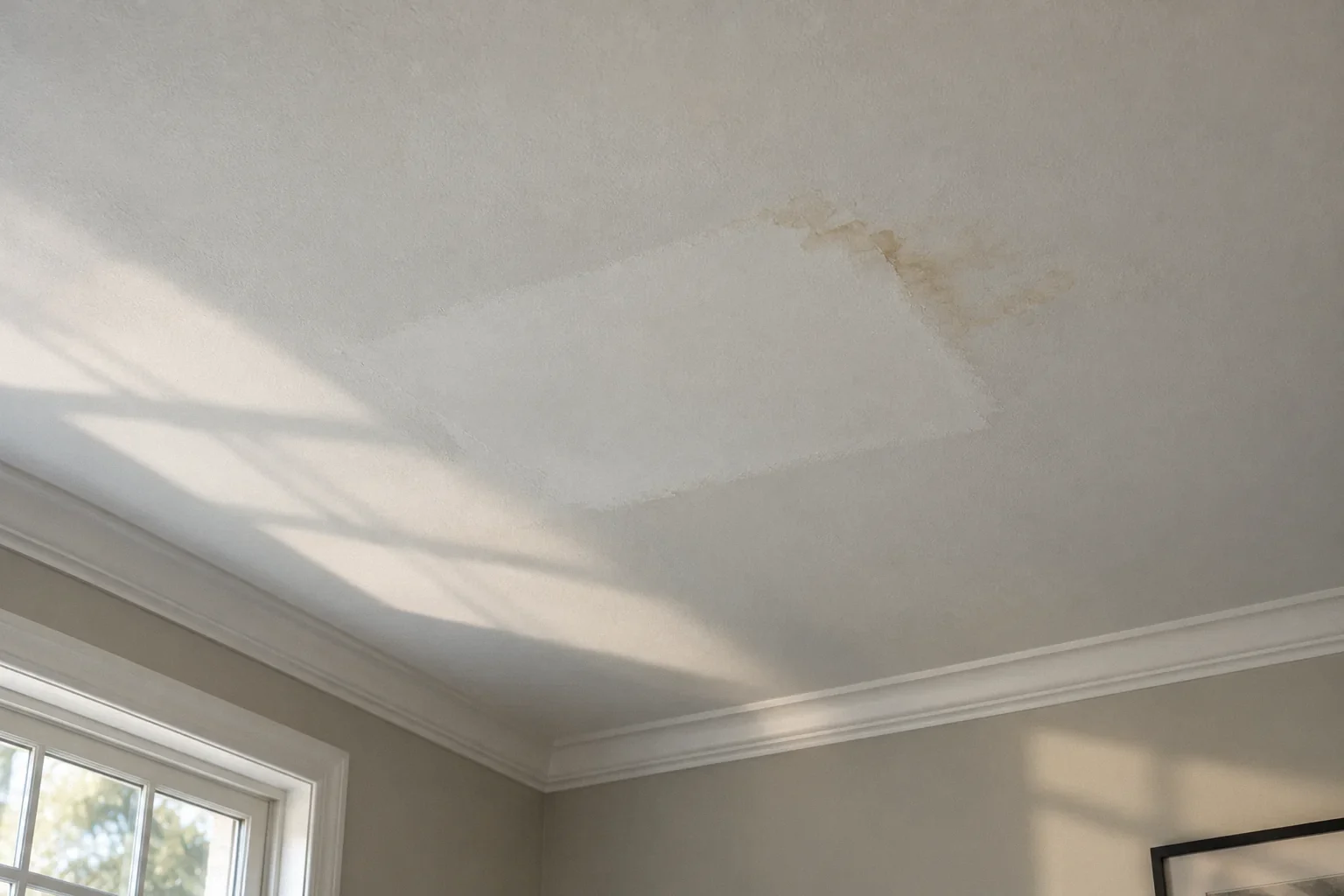
Record the color or texture change, location, date, and any odor, softness, or renewed staining. Photograph both the room and the detail. Avoid changing 'recent paint' into 'seller concealed a leak' without supporting evidence. A finish repair may follow an old resolved problem, cosmetic work, plumbing damage, or an unresolved exterior leak.
Ask for the history in specific terms
Request what happened, when it was discovered, who assessed it, what repair was performed, and whether water recurred afterward. Ask for invoices and photographs rather than accepting a vague 'fixed years ago.' An honest uncertainty should remain uncertainty in the record. Do not pressure someone to give an exact date they cannot support.
Connect interior clues to possible sources
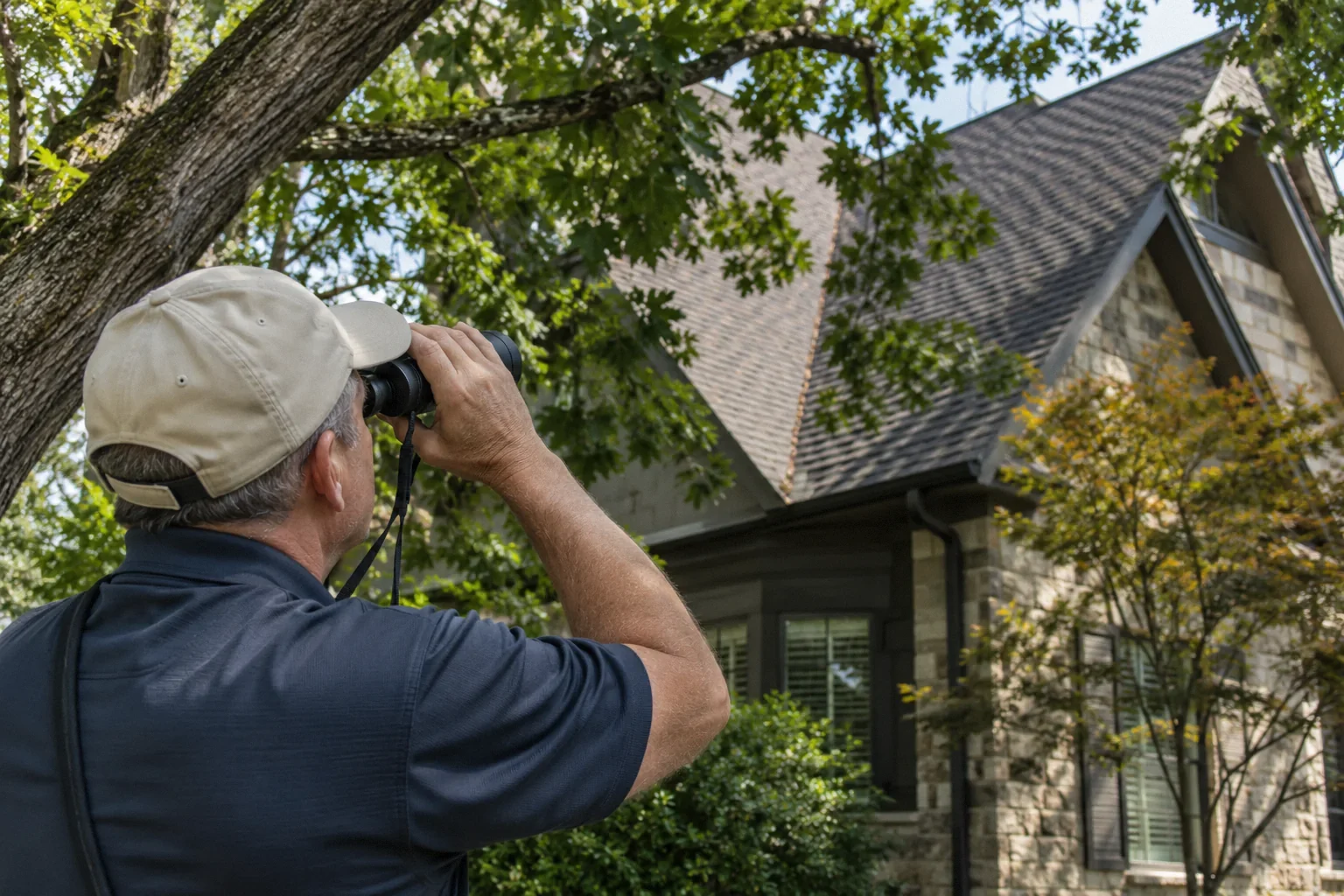
Water may travel before becoming visible. A stain below a roof area can involve flashing, a wall, plumbing, condensation, or another source. A qualified inspection should consider the relevant pathways rather than simply apply sealant above the stain. Do not climb onto the roof or open a cavity without a safe, authorized investigation plan.
Understand moisture measurements
A meter or thermal image can support an investigation but requires interpretation and appropriate comparison. A dry reading during dry weather does not prove the problem never recurs, while an anomaly does not identify the source by itself. Ask the professional what was measured, under what conditions, and what further observation would confirm the explanation.
Preserve evidence before restoration
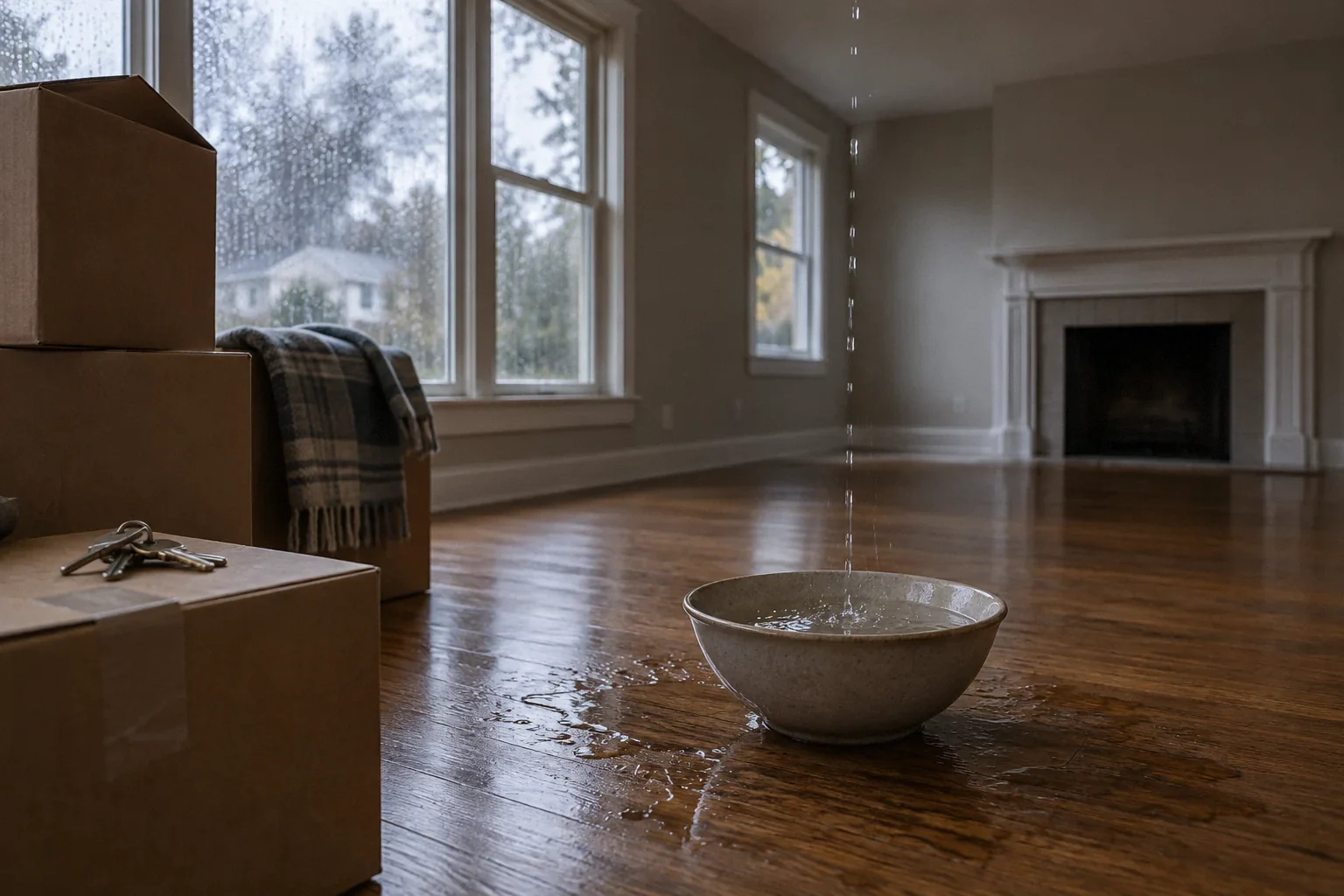
If staining returns, retain dated photographs and the prior repair records. Where access or opening is necessary, document what is revealed before materials are discarded when practical. Necessary protection and drying should not wait for an ideal evidence package. Record emergency work so later reviewers understand how the scene changed.
Separate technical findings from legal conclusions
Evidence of old damage may establish history without proving who knew the problem was active. California disclosure questions depend on the transaction and facts; DRE's older booklet is background, not a current case-specific opinion.[1] Seek professional legal advice if a dispute turns on knowledge, representations, or remedies.
Confirm repair success before cosmetic closure
After the cause is assessed and repaired, ask what verification and drying conditions should precede restoration. Repainting alone is not a test of leak resolution. The Reddit accounts behind this topic describe renewed stains and alleged concealment, but those allegations remain anecdotal and should not be generalized to every freshly painted home.[3]
Decide what evidence would change the conclusion
Before authorizing investigation, identify the question you want answered. Is the area currently wet? Does moisture correlate with rain? Was a previous repair documented? Is there an accessible route to inspect the suspected interface? A clear question helps a professional select a useful method. Opening a random part of a ceiling or spraying water indiscriminately can create cost and confusion without establishing the source. Any testing or opening should have permission, a safe plan, and a restoration scope.
Compare observations over time without manufacturing a test condition. Dated photographs after ordinary weather, notes about active dripping, and records of indoor plumbing use may help the professional distinguish possibilities. Do not enter unsafe attics or wet areas to gather evidence. If a controlled water test is proposed, ask who conducts it, how different areas are isolated, and how resulting water is contained. The method should reduce uncertainty rather than expose the building to additional uncontrolled damage.
Ask the professional to explain what a negative finding means. A dry reading or no visible damage in one accessible area may narrow the investigation but not establish that every nearby cavity is sound. Equally, old staining can persist after a successful repair. The report should state the conditions observed and any remaining limits. This is particularly important during a sale, when both parties may be tempted to turn a limited observation into a broad statement that favors their position.
When a repair is completed, preserve the causal explanation and the verification plan. The owner should know what was repaired, why it was considered the source, what drying or restoration remains, and what recurrence would trigger another visit. Painting belongs after appropriate assessment and preparation, not as the evidence that the leak is gone. A transparent record also helps a future buyer distinguish a documented resolved incident from an unexplained cosmetic patch.
- Define the question before choosing a moisture test, opening, or roof assessment, and authorize a safe targeted investigation.
- Interpret dry readings and old stains within their observation conditions rather than as universal proof of present condition.
- Retain the cause assessment, repair scope, drying decision, and follow-up plan so cosmetic restoration does not erase useful history.
A practical example
A bedroom ceiling has a small newly painted patch. The seller provides an invoice for a plumbing repair above that location and photographs from the repair. That evidence changes the investigation compared with an unexplained patch beneath a roof-to-wall junction that stains again during rain. In both cases, the sensible response is to follow the evidence and assess current condition, not assume the finish itself proves either safety or deception.
Avoid turning suspicion into the diagnosis
A patch that looks recent can attract attention, but the investigation should remain open to several explanations until evidence narrows them. A resolved plumbing incident, old roof leak, wall leak, or cosmetic repair may produce a similar finish. Ask the professional to identify which possibilities were considered and what supports the preferred explanation.
If the available evidence remains inconclusive, say so. A homeowner or buyer can still choose further investigation or negotiate around uncertainty without accusing someone of deliberate concealment. Where there is a genuine disclosure dispute, preserve the observations and seek qualified advice on the significance of prior records and statements. Do not use a moisture reading or a contractor's casual remark as proof of another person's knowledge. The strongest protection is a transparent chain from observation to assessment to repair and follow-up. That chain helps address the building problem and provides a reliable factual basis if a separate responsibility question must later be resolved.
Keep the investigative photographs available after interior restoration. A future recurrence may appear at a nearby location, and the earlier condition can help a professional compare water paths and repair boundaries. Label the photographs with the room, roof area if known, date, and stage of work. Avoid writing an unsupported cause into the filename as though it were established fact. Use the report's conclusion and any stated limitations so the archive remains useful evidence rather than a collection of assumptions.
What to take away
- Treat paint changes as a reason to investigate, not proof of fraud.
- Request the repair chronology and location-specific evidence.
- Verify cause and drying before cosmetic restoration.
Sources & further reading
Reddit links show the questions people ask; they do not establish a diagnosis or a legal requirement. Technical requirements depend on the product, building and jurisdiction. See our research approach.
- California DRE: Disclosures in Real Property TransactionsTechnical / official reference
General disclosure background. Older booklet explicitly requires current statute checks; no promise on legal outcomes.
- California DOI: Residential Property Claims GuideTechnical / official reference
2025 revision; mitigation, claim records, valuation and claim dispute channels.
- Seller withheld information on DisclosureCommunity question · anecdotal
Anecdotal discussion used to identify reader questions. Not verified incident evidence or legal, insurance, or technical authority.
- Closed a month ago, hidden damage uncoveredCommunity question · anecdotal
Anecdotal discussion used to identify reader questions. Not verified incident evidence or legal, insurance, or technical authority.
Planning a Bay Area project?
Explore YKCA’s website and discuss the scope and services you need directly with them.