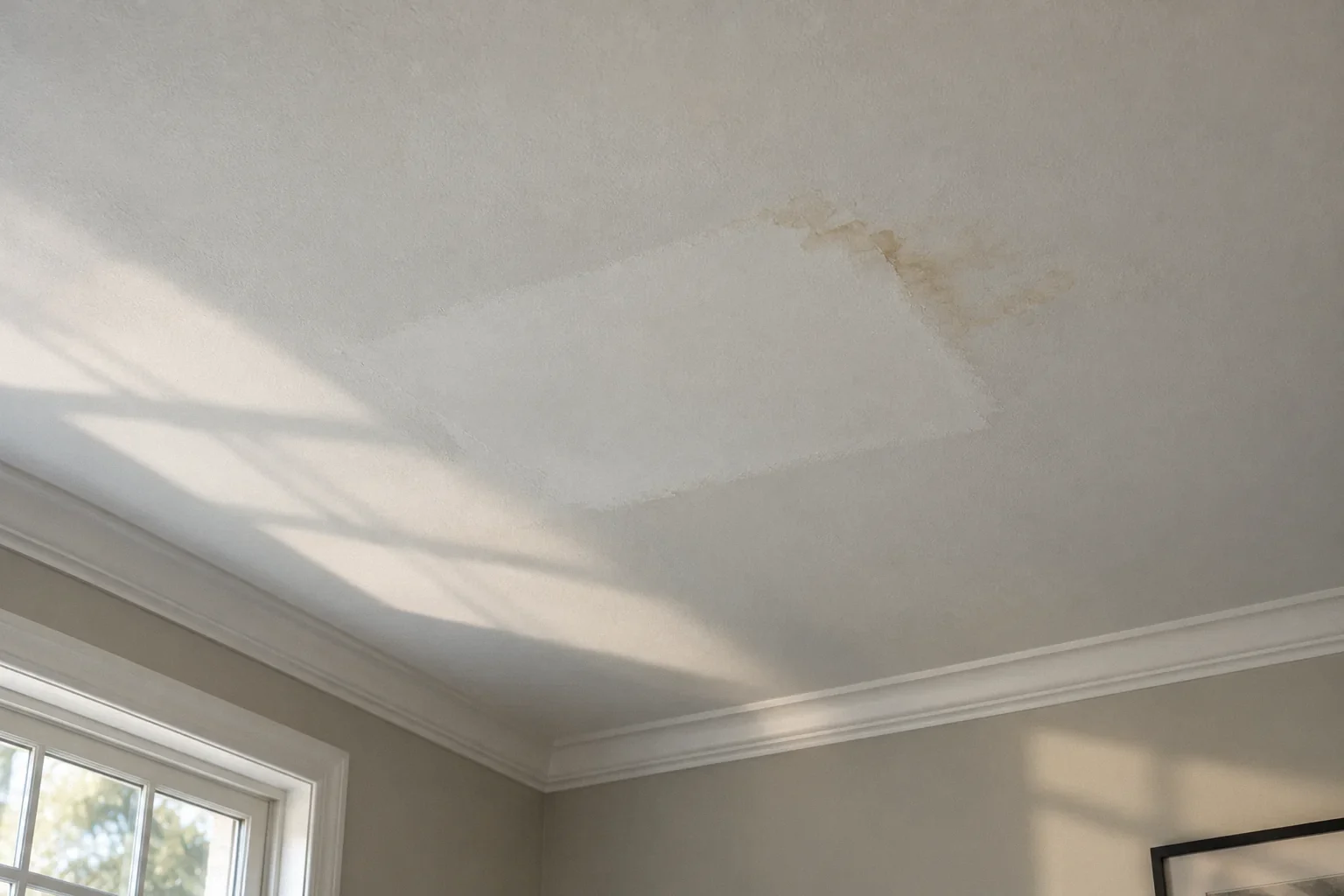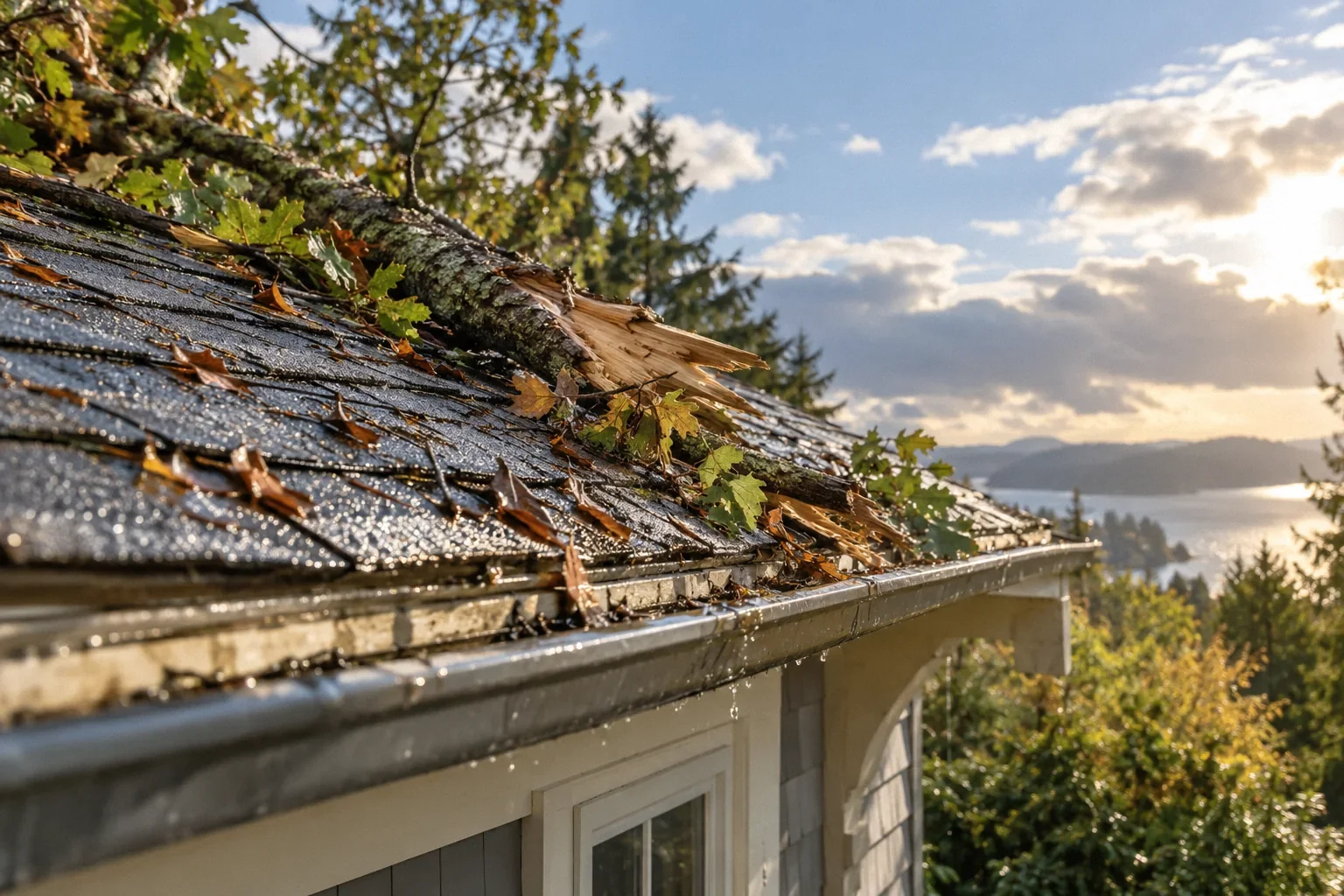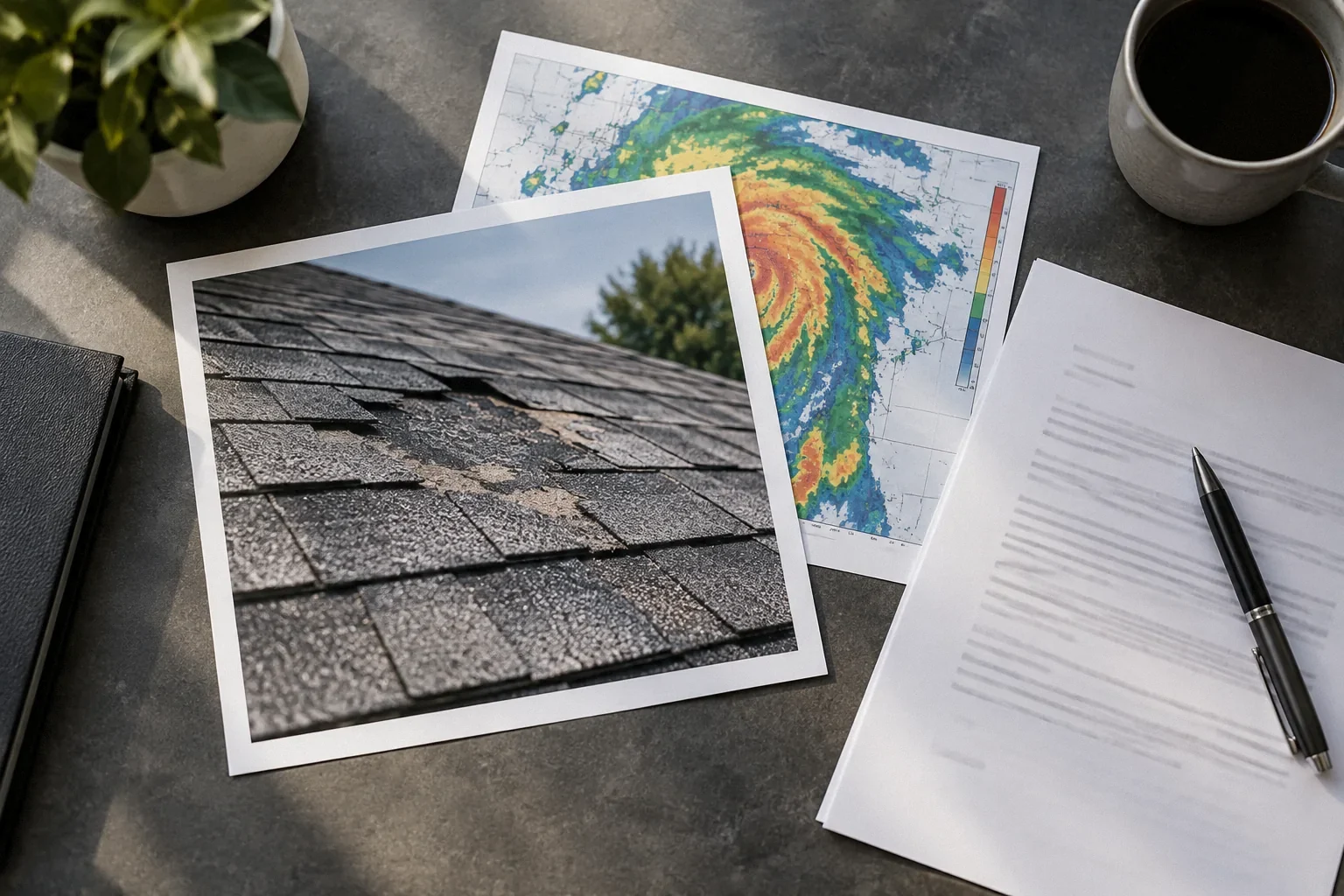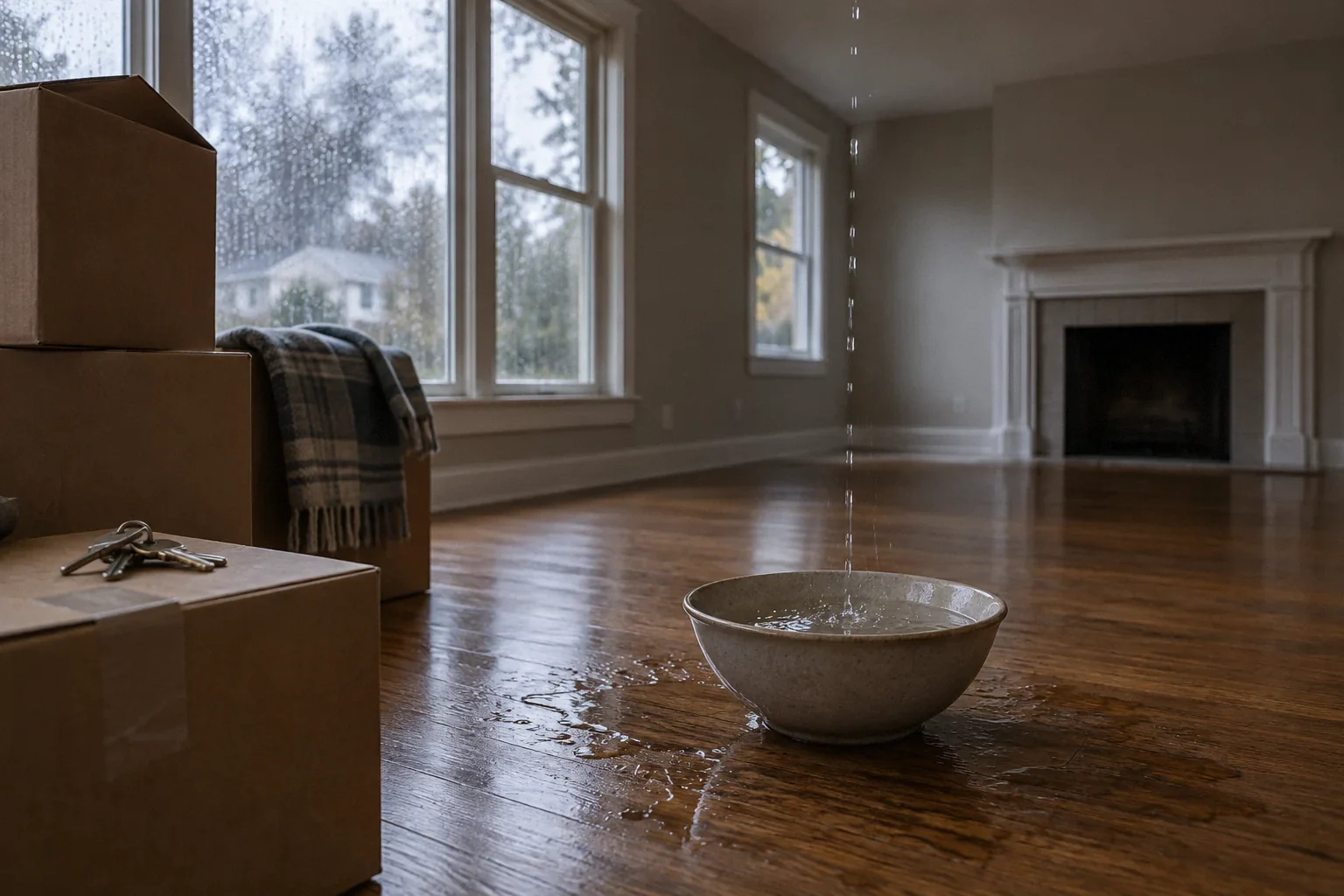
Protect the property, document the new leak, and preserve the purchase, disclosure, inspection, and repair records. Investigate cause and history before alleging concealment; evidence of old damage alone does not establish who knew about an active defect or what legal remedy applies.
Address immediate damage safely
Move belongings if safe, keep away from wet electrical equipment or unstable ceilings, and arrange appropriate temporary protection. California DOI emphasizes protecting property from additional damage after a loss.[1] Do not delay necessary measures while waiting to establish responsibility. Keep receipts and photographs explaining what was done and why.
Record the first observations precisely
Note the date, weather, room, affected surface, and whether water was actively entering. Photograph the wider area and details. Avoid rewriting recollections into certainty; if an earlier odor or stain was noticed, record it as a recollection with its approximate date. An accurate chronology is more useful than a dramatic narrative.
Preserve the transaction file
Collect disclosures, inspection reports and photographs, listing statements, repair requests, invoices supplied before closing, and relevant communications. Save original files. A statement that the roof was 'new' should be compared with documents describing its actual scope and date. Keep later findings separate from what was available at purchase.
Obtain a qualified cause assessment
Ask the contractor or specialist to describe observed conditions, likely water pathways, repair options, and limits of the assessment. If a cavity must be opened, document what is revealed when practical. A repair invoice saying 'leak fixed' may not explain whether the condition was longstanding or visible during the purchase inspection.
Do not infer knowledge solely from age
Old staining or repaired framing may show prior damage without proving that a seller knew an active leak remained. Conversely, dated repeated repair records can be relevant to history. The Reddit account behind this topic involves suspected concealed damage, but the allegations are not adjudicated facts.[3] Keep the distinction between evidence and inference explicit.
Use the correct professional channels
Contact the insurer if a claim may apply and discuss disclosure or contract questions with qualified transaction or legal professionals. DRE's disclosure booklet is general background and directs readers to check current requirements.[2] Deadlines, duties, and available remedies depend on the facts; an article cannot promise recovery from the seller, inspector, or insurer.
Keep repairs and responsibility discussions coordinated
Necessary work may proceed while responsibility remains disputed. Preserve the scope, photographs, removed-material information where appropriate, and payment records. Ask an adviser what evidence should be retained before major changes if time allows. Avoid both extremes: leaving the house exposed indefinitely or destroying every trace of the disputed condition without documentation.
A practical example
After the first heavy rain following closing, water appears near a skylight. The owner photographs the leak, arranges protection, saves the inspection report, and obtains a written assessment of the flashing. If the investigation finds an old interior patch, that becomes one piece of history, not automatic proof of deliberate concealment. Dated repair records and prior communications may clarify the story; legal advice is needed to assess their significance.
Build two timelines instead of one accusation
The first timeline concerns the building: when you first noticed water, the weather at that time, which room was affected, what protective work occurred and what a qualified inspection found. The second concerns the transaction: statements, disclosures, inspection reports, repair documents and communications received before closing. Keeping them separate prevents a later diagnosis from being accidentally presented as something you or the seller knew earlier.
Use exact dates where available and label estimates as estimates. “The seller knew for years” is a conclusion; an invoice dated before the sale describing work above the same room is a document. Preserve both favorable and unfavorable material, including information that might show a different water source or a repair believed to have worked. A credible file does not depend on selecting only the facts that support your suspicion. It should allow an adviser to understand what is established, disputed and still unknown.
Preserve the condition without delaying necessary protection
Ask the responding contractor to photograph the overall location and relevant detail before altering it when that can be done safely. Request that the invoice distinguish emergency protection, investigation and permanent repair. If material must be removed, discuss appropriate documentation and whether any item needs to be retained for an inspection. Do not keep wet or hazardous material in occupied space merely because it might become evidence; obtain suitable professional direction.
A repair diagnosis should explain its basis and limitations. A roofer may be able to describe deterioration or a failed detail without being able to date its first leak or determine another person's knowledge. Ask for the technical finding in those terms. Do not pressure the contractor to make a legal conclusion. Meanwhile, discuss insurance notification and property protection with the appropriate insurer or adviser. A potential dispute with the seller does not eliminate the practical need to limit ongoing damage.
Ask for clarification in neutral, specific terms
A useful initial message identifies the location, date discovered and documents requested. For example, explain that water appeared in the rear bedroom during the first rain after possession and ask whether additional invoices or warranty records exist for that roof area. Avoid adding unsupported claims about motive. Keep a copy of the message and response along with any attachments in their original form. If a representative handles the communication, keep that person informed of new findings.
Before demanding a particular remedy or agreeing to a settlement, have a qualified adviser assess the actual transaction documents and evidence. The cost of a replacement proposal does not automatically establish recoverable loss or another party's liability. Ask specifically what additional fact would matter to the analysis and which deadlines or procedures require attention. A focused request for advice is more productive than treating online accounts of other buyers' disputes as predictions of your result.
What to take away
- Protect the house while preserving a factual chronology.
- Keep purchase records and new technical findings separate.
- Seek case-specific advice before accusing a party or assuming recovery.
Sources & further reading
Reddit links show the questions people ask; they do not establish a diagnosis or a legal requirement. Technical requirements depend on the product, building and jurisdiction. See our research approach.
- California DOI: Residential Property Claims GuideTechnical / official reference
2025 revision; mitigation, claim records, valuation and claim dispute channels.
- California DRE: Disclosures in Real Property TransactionsTechnical / official reference
General disclosure background. Older booklet explicitly requires current statute checks; no promise on legal outcomes.
- Closed a month ago, hidden damage uncoveredCommunity question · anecdotal
Anecdotal issue discovery; not verified legal, technical, insurance, or incident authority.
Planning a Bay Area project?
Explore YKCA’s website and discuss the scope and services you need directly with them.