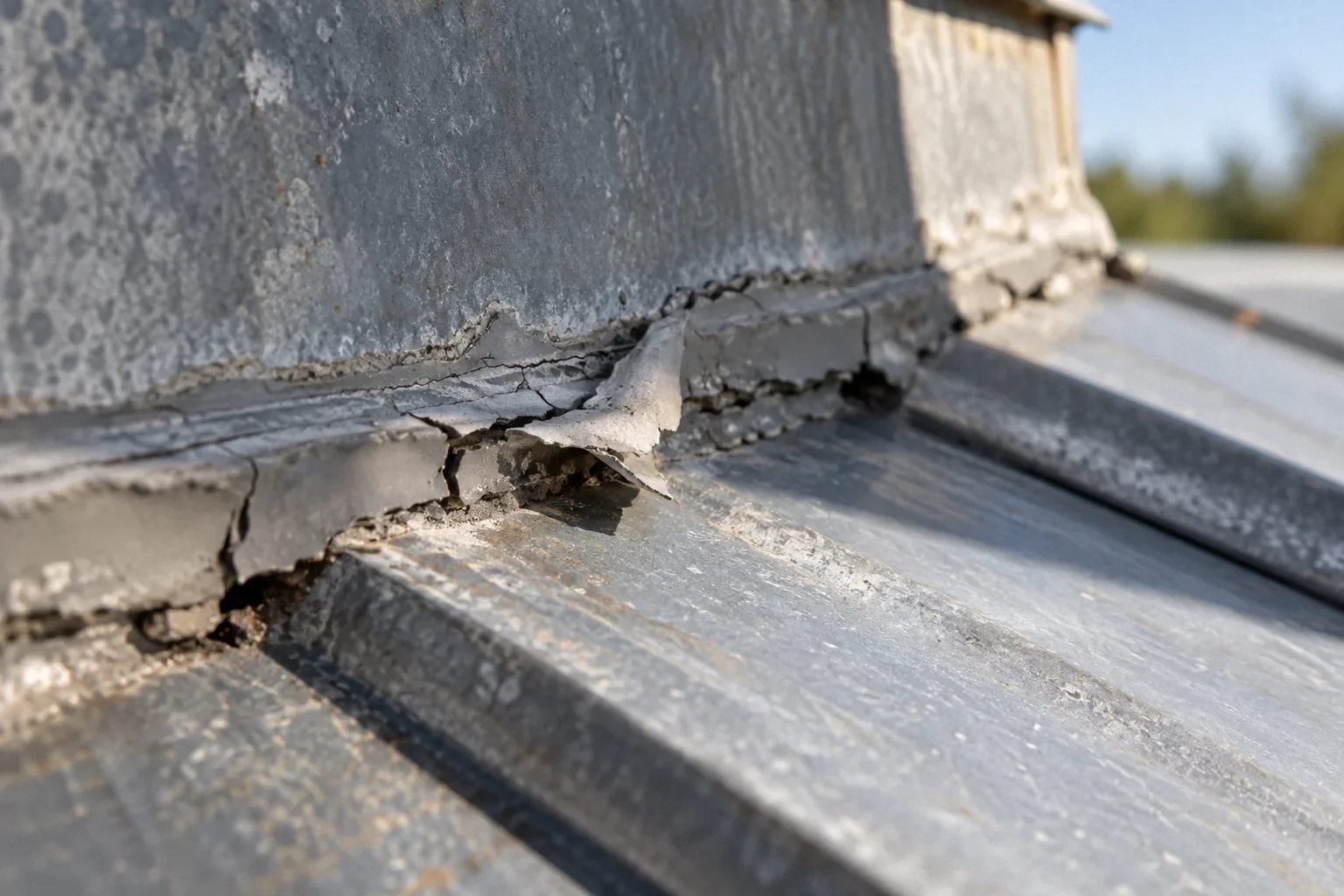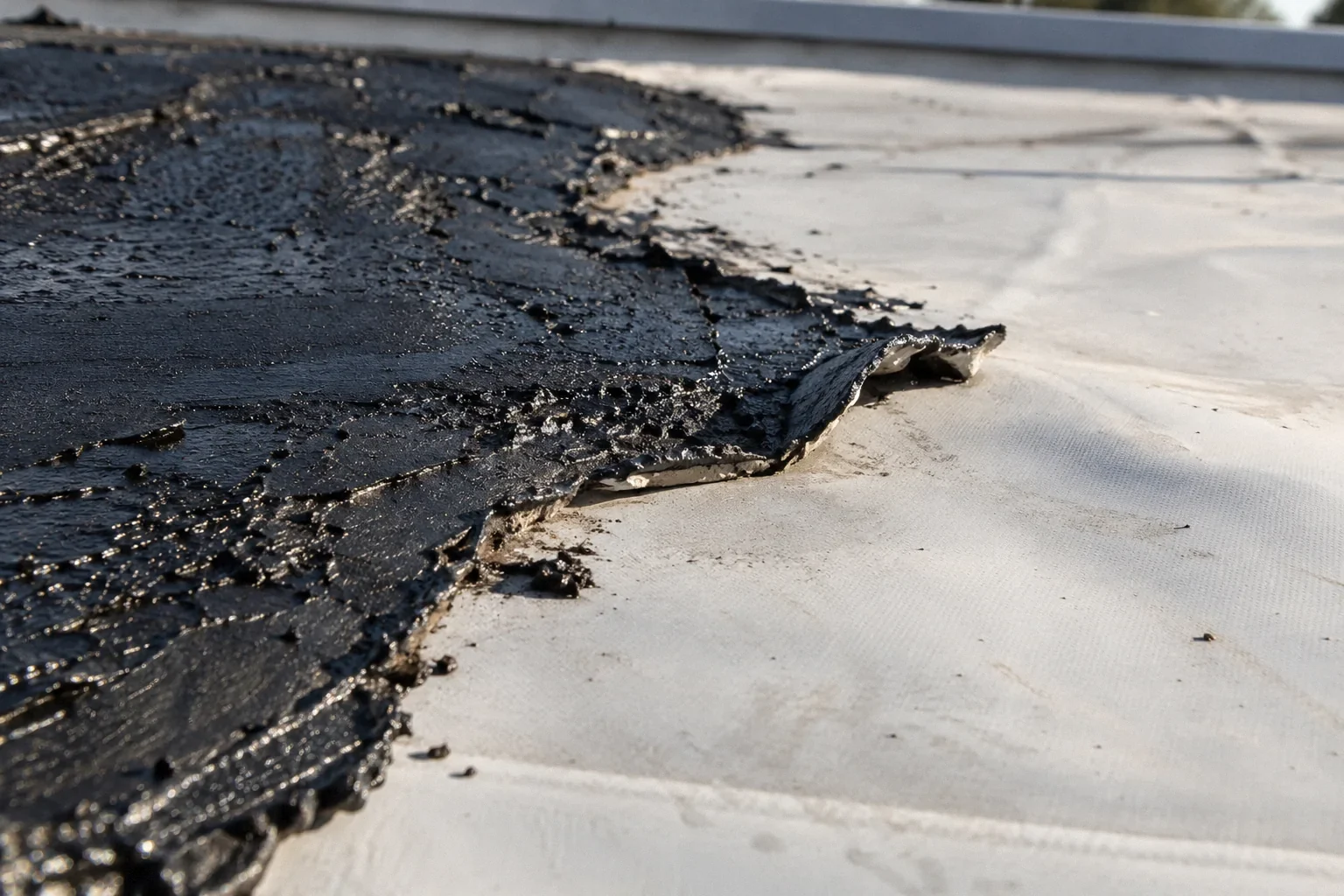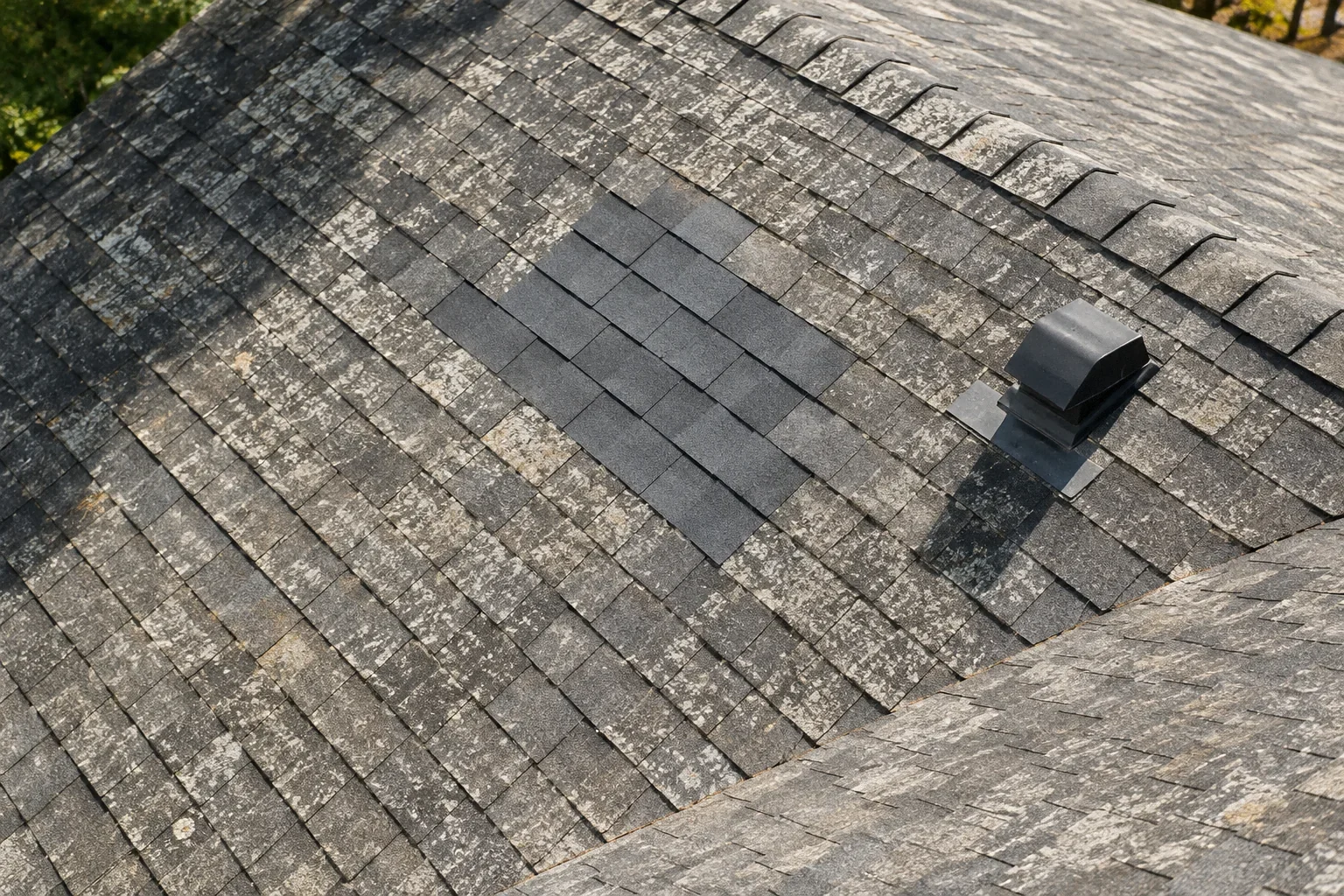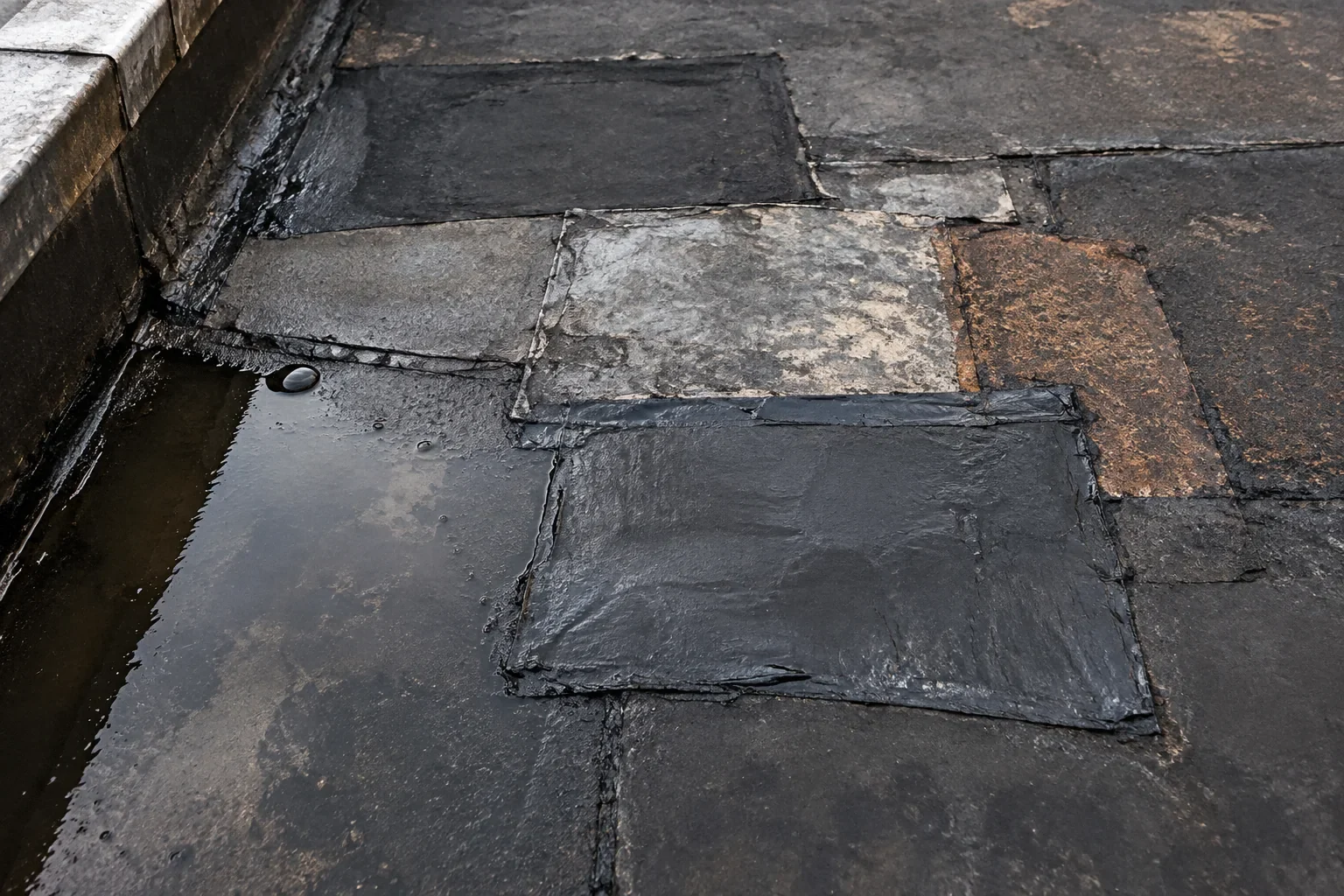
Repeated patching without a durable result is a reason to reopen the diagnosis. The leak may have another source, the patch may be incompatible, concealed moisture may extend farther than expected, or multiple details may be defective. A repair history should guide the next investigation instead of simply producing another patch at the same ceiling stain.
Reconstruct the repair history
The roof's water-control layer includes seams and transitions around equipment, not just the open membrane field. [1] Water may enter near a curb and emerge farther away. A patch can close one path while another remains active. The fact that leaking becomes less frequent after work is useful evidence, but it is not proof that all affected materials or entry points have been addressed.
Other explanations to distinguish
Possible competitors include HVAC condensate, wall leakage above the roof, multiple roof breaches and water stored within the assembly. Ponding may contribute exposure without being the actual breach. Contractors can disagree because they inspect different portions of the system. Resolve that difference by comparing observations and test conditions, rather than deciding that the most confident explanation must be correct.
Evidence to request before choosing the work
Build a chronological repair map showing each patch, product used, interior symptom and subsequent rain event. Request the original roof-system information and photographs from prior openings. The next investigator should identify both observed defects and alternative explanations that remain possible. If a moisture survey is proposed, ask how suspect areas will be corroborated and how the findings will change the repair boundary.
A repair-history table should include unsuccessful work, not only the most recent intervention. Note whether each repair changed the frequency, location or timing of the leak. Those changes may help the investigator separate several paths. A patch that reduced one symptom can contain useful diagnostic information even if it did not solve the whole problem; describing it simply as failed discards that detail.
How the findings change the repair decision
A local reconstruction makes sense when the source and affected area are bounded and the surrounding assembly is serviceable. Wider rehabilitation or replacement may be justified when defects or trapped moisture are extensive, but the report should show that evidence. Coordinate HVAC and roofing review when a curb or equipment connection is disputed. Neither trade should declare the other's system responsible without explaining the observations supporting that conclusion.
A practical example and what it does not prove
A sampled owner reports repeated leaks after a TPO installation, with the roofer pointing to HVAC and other technicians rejecting that explanation. [4] This is precisely when a shared location map and a coordinated inspection can help. The objective is to define which boundary admits water and which scope restores it, rather than accumulate incompatible verbal opinions.
Limits and when professional review matters
A thermal survey can identify temperature patterns that warrant investigation, but suitability and interpretation depend on the assembly and conditions. [3] It should not be sold as automatic proof of every leak. Where repeated repairs disturb the same area, retain removed-material photographs and product information. Those records can be more valuable than a broad assurance that the latest patch is stronger.
Use partial success as evidence
A patch that changes when or where dripping occurs can provide information even when the owner reasonably regards the job as unsuccessful. Record that change rather than reducing the history to a sequence of failures. It may help distinguish two entry paths or show that one part of the original hypothesis was correct. The next investigator should explain how the history affects the new plan.
When HVAC and roofing contractors disagree, request a shared description of the affected curb or connection. Each trade should identify what it actually inspected. A statement that the problem belongs to the other trade is incomplete if no common location or test condition is established. A coordinated visit can be more informative than another independent patch.
- One patch stops one interior mark while another persists: keep the observations separate and reassess the remaining route.
- Roofing and HVAC opinions refer to different locations: establish a shared map before choosing the next intervention.
- A survey identifies suspect concealed moisture: define confirmation and removal boundaries before covering the area again.
Questions that resolve the remaining uncertainty
Ask whether the next repair changes the diagnostic approach or merely repeats the previous treatment with another product. A new material may be justified, but the reason should be linked to an identified failure mechanism. If the source remains unknown, paying for a more elaborate patch can still leave the central question unanswered. A staged investigation may therefore be a more useful next expenditure than immediate wider application.
When a repair requires opening the assembly, agree on the photographs needed before closure. They should identify the location, the observed condition and the new connection. This is especially valuable after several earlier interventions, because the next reviewer may otherwise be unable to distinguish original construction from successive attempts to correct it.
Repeated patches create a diagnostic history
Record each intervention by location and what changed afterward. A reduction in leakage can indicate that one path was addressed even if another remains. A moved stain can suggest that the visible exit changed. Neither result should be treated as proof without further assessment, but both are more informative than a repair list that labels every visit simply unsuccessful.
The history can also reveal when the same untested explanation is being repeated. If every visit adds material around one curb while the source has never been established, the next step may be better investigation rather than a larger version of that treatment. Ask what new evidence the proposed intervention uses. A different brand or a wider patch is not, by itself, a different diagnosis.
Where a membrane survey is proposed, distinguish source location from moisture extent. A survey may help select areas for confirmation without establishing which seam or curb admitted the water. The final scope needs both questions considered when they affect the work. Reconstructing a verified entry detail while leaving the affected-area question unexamined can be as incomplete as removing suspect wet material without correcting the route that made it wet.
What to take away
- Use a repair map to prevent repeating an untested diagnosis.
- Coordinate roofing and HVAC findings at equipment-related leaks.
- Set repair boundaries from verified defects and affected materials.
Sources & further reading
Reddit links show the questions people ask; they do not establish a diagnosis or a legal requirement. Technical requirements depend on the product, building and jurisdiction. See our research approach.
- PNNL penetration flashingTechnical / official reference
Water-control continuity and penetration detailing; avoid treating illustrated assembly as universal code
- Carlisle drainage maintenanceTechnical / official reference
Drainage blockages, ponding loads and edge support
- FLIR airborne roof inspectionsTechnical / official reference
Thermal inspection application; manufacturer marketing, anomalies require corroboration
- Homeowner discussion: TPO Roof Leak due to Pooling Water?Community question · anecdotal
Anecdotal issue research, not technical authority or proof about another property.
Planning a Bay Area project?
Explore YKCA’s website and discuss the scope and services you need directly with them.