A flat-roof leak during a thaw may originate at a penetration, but water emerging there can also have arrived from elsewhere in the assembly. Winter conditions complicate both diagnosis and repair-product suitability. The first goal is controlled protection; a lasting repair needs the membrane identified, the water path investigated and compatible detailing completed under suitable conditions.
Separate thaw conditions from the underlying defect
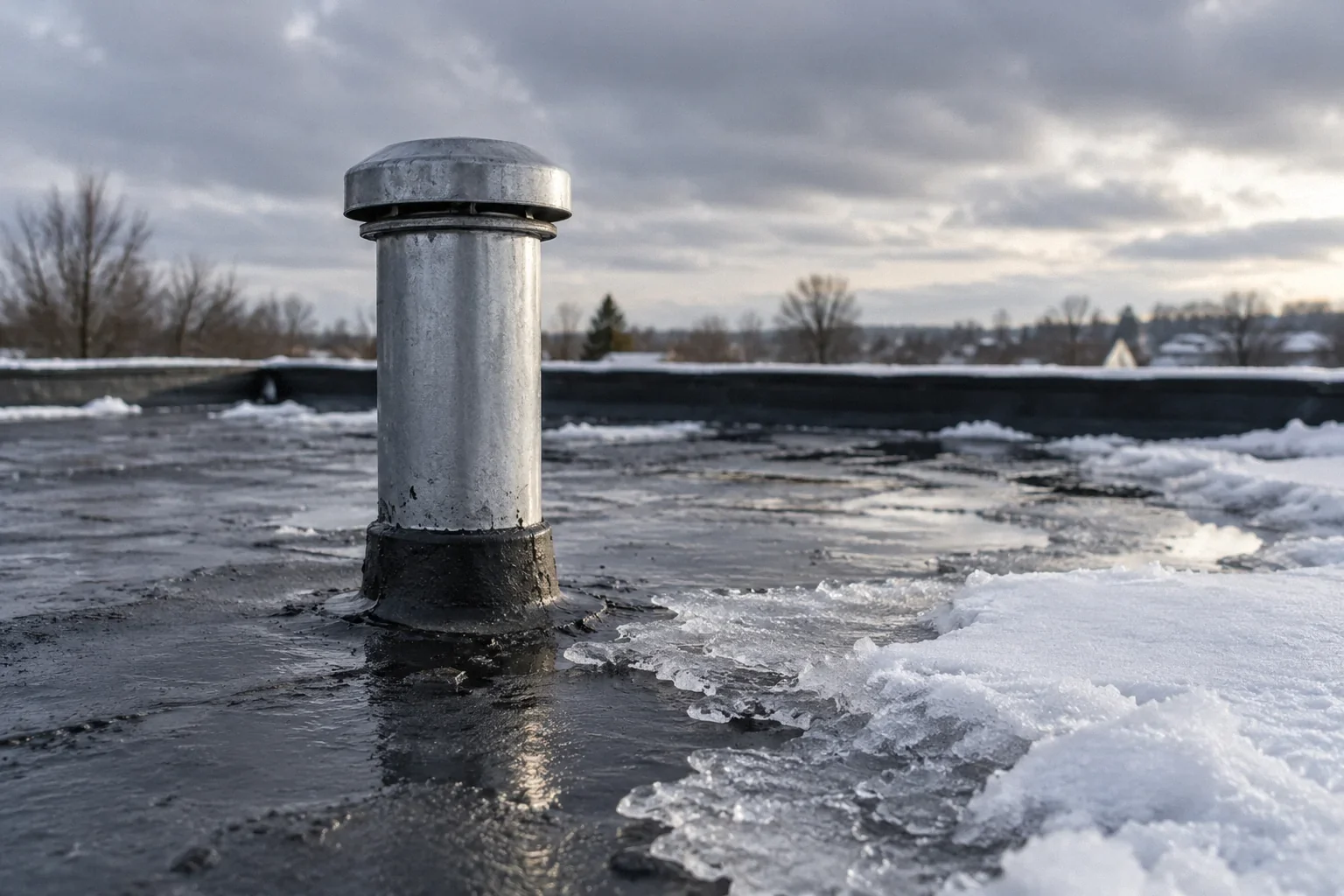
Snowmelt introduces liquid water while parts of the roof and drainage route may remain cold or obstructed. A pipe opening can become the visible exit for moisture that crossed the roof at another detail. PNNL explains that penetrations interrupt the roof's continuous water-control layer. [1] That principle applies regardless of the season, but an investigator must also consider whether temporary drainage conditions changed the way water reached the detail.
Other explanations to distinguish
The boot itself, its membrane connection, nearby seams, a higher curb or a drainage restriction may be involved. Indoor condensation at a cold pipe is another possibility. A large patch around the penetration does not establish the material below it or the location of the actual breach. Do not assume that dry drain openings rule out a drainage-related water path elsewhere on the roof.
Evidence to request before choosing the work
Record whether leaking begins during thaw, rain on snow or a period of freezing weather. Obtain the roof-system name and past repair records. Ask the roofer to distinguish the suspected source from the point where water emerges indoors. Photographs should show the patch and surrounding drainage context. Any proposed winter material should be identified with its applicable installation conditions rather than described as an all-weather solution.
Ask the temporary-work report to state which permanent connection could not be completed and why. This is more useful than a seasonal label such as winter patch. The follow-up can then be scheduled around the actual required conditions and access, with a clear list of remaining items. If the roof has unidentified coatings, resolving their identity can proceed while weather limits exterior work.
How the findings change the repair decision
A temporary measure should have a defined purpose and a planned follow-up. If the surface or weather prevents a reliable permanent connection, the contractor should state that limitation. A final scope may require removing failed patch material, addressing affected insulation and rebuilding the penetration connection. Drainage correction and penetration repair are separate items when both are necessary; completing only one should not be reported as resolving the entire assembly.
A practical example and what it does not prove
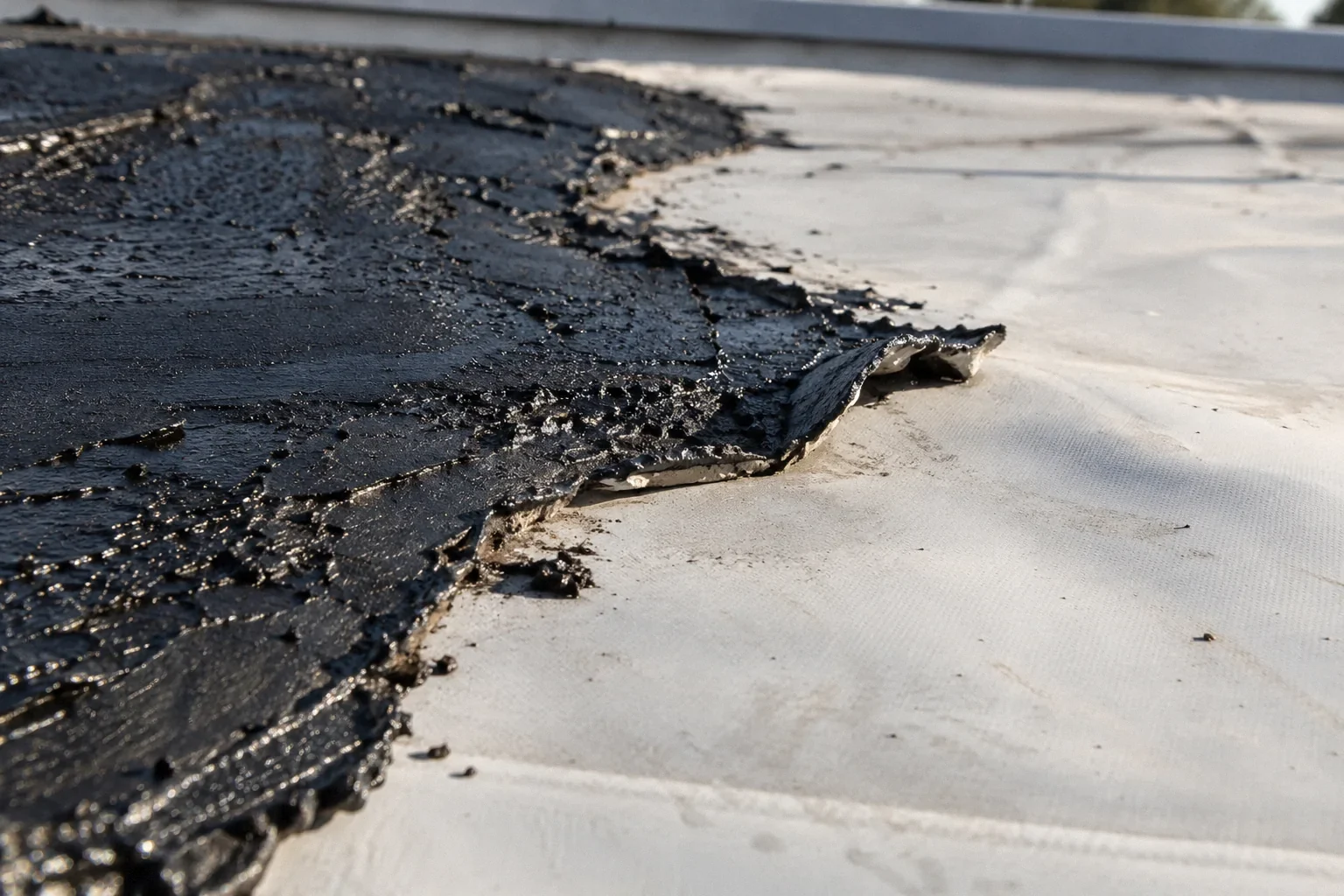
One owner in the sampled discussion reported a small leak around a recently replaced flat-roof boot during snowmelt. The surrounding roof had an unidentified liquid coating and other patch material. [3] That description makes product identification especially important. Adding another compound before identifying the existing membrane could make later diagnosis and compatible repair more difficult.
Limits and when professional review matters
Do not shovel, chip ice, use heat or apply chemicals to the roof as a diagnostic experiment. Those actions can damage concealed roofing and create serious access hazards. A professional should decide whether temporary drainage intervention is safe and suitable. An interior leak that reaches electrical equipment, causes ceiling distortion or suggests structural distress requires prompt escalation while the roof investigation continues.
Do not let the season become the entire diagnosis
The fact that leakage occurs during a thaw tells the investigator when water is available, not exactly where it enters. A patched penetration may be the source or merely the place where moisture becomes visible. Record the sequence carefully and ask how the proposed inspection will distinguish those possibilities. Weather-related access limitations should be stated without turning an uncertain cause into a definitive diagnosis.
A temporary repair should leave a clear permanent-work list. If the contractor cannot establish the membrane identity immediately, that research is part of the follow-up. If conditions prevent a supported connection, the eventual visit must address that connection rather than simply inspect whether the temporary patch still looks intact. The owner needs an endpoint beyond waiting for warmer weather.
- A thaw reveals water at an old patch: identify the underlying roof and trace the path before selecting another compound.
- The temporary measure controls dripping but conceals an unknown detail: schedule the remaining assessment explicitly.
- Drainage conditions change during winter: document them separately from the membrane defect so the final scope addresses both where necessary.
Questions that resolve the remaining uncertainty
The follow-up date should relate to the work still required, not simply the end of a calendar season. Ask which site or product conditions permit the permanent repair and who will confirm that they are met. Retain the temporary-work record until that final scope is complete. A temporary patch that survives several days should not quietly become the undocumented permanent solution.
The permanent repair must address the winter unknowns
A winter service visit may establish the drip location without establishing the membrane product or the condition beneath old patches. List those as unresolved tasks. They should not disappear merely because a temporary measure reduces the visible leak. The later permanent visit needs to resolve the material identity and connection questions that could not be answered initially.
Separate seasonal drainage observations from the physical breach. A thaw can change the amount and route of liquid water reaching a detail. That does not mean drainage is the only concern, nor that the penetration must be the source. The permanent plan should explain which observation supports the entry diagnosis and which winter condition contributed exposure. Correcting only one may be incomplete where both are established.
A useful completion record distinguishes the temporary layer from the final supported assembly. Ask whether temporary material remains, whether it is compatible with the final work and which components were renewed. If a product or substrate condition prevents completion, the contractor should identify the specific remaining item. A statement to check again in spring is not an adequate endpoint unless it also says what will be checked and how that result will change the work.
What to take away
- Separate winter protection from acceptance of a permanent repair.
- Identify the membrane and existing patches before selecting repair products.
- Trace the water path rather than assuming the dripping penetration is the entry point.
Sources & further reading
Reddit links show the questions people ask; they do not establish a diagnosis or a legal requirement. Technical requirements depend on the product, building and jurisdiction. See our research approach.
- PNNL penetration flashingTechnical / official reference
Water-control continuity and penetration detailing; avoid treating illustrated assembly as universal code
- Carlisle drainage maintenanceTechnical / official reference
Drainage blockages, ponding loads and edge support
- Homeowner discussion: Leaking vent. Flat roofCommunity question · anecdotal
Anecdotal issue research, not technical authority or proof about another property.
Planning a Bay Area project?
Explore YKCA’s website and discuss the scope and services you need directly with them.