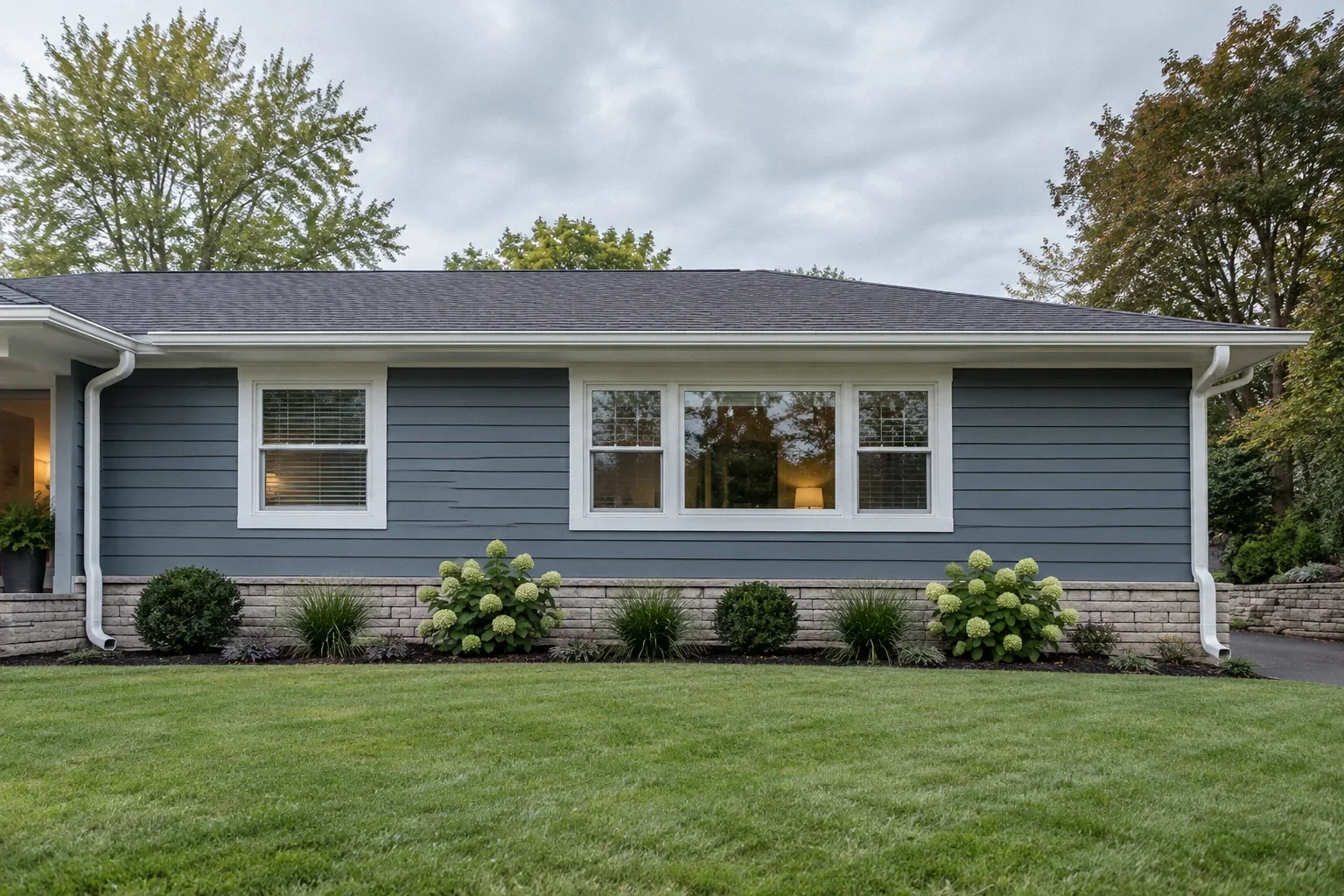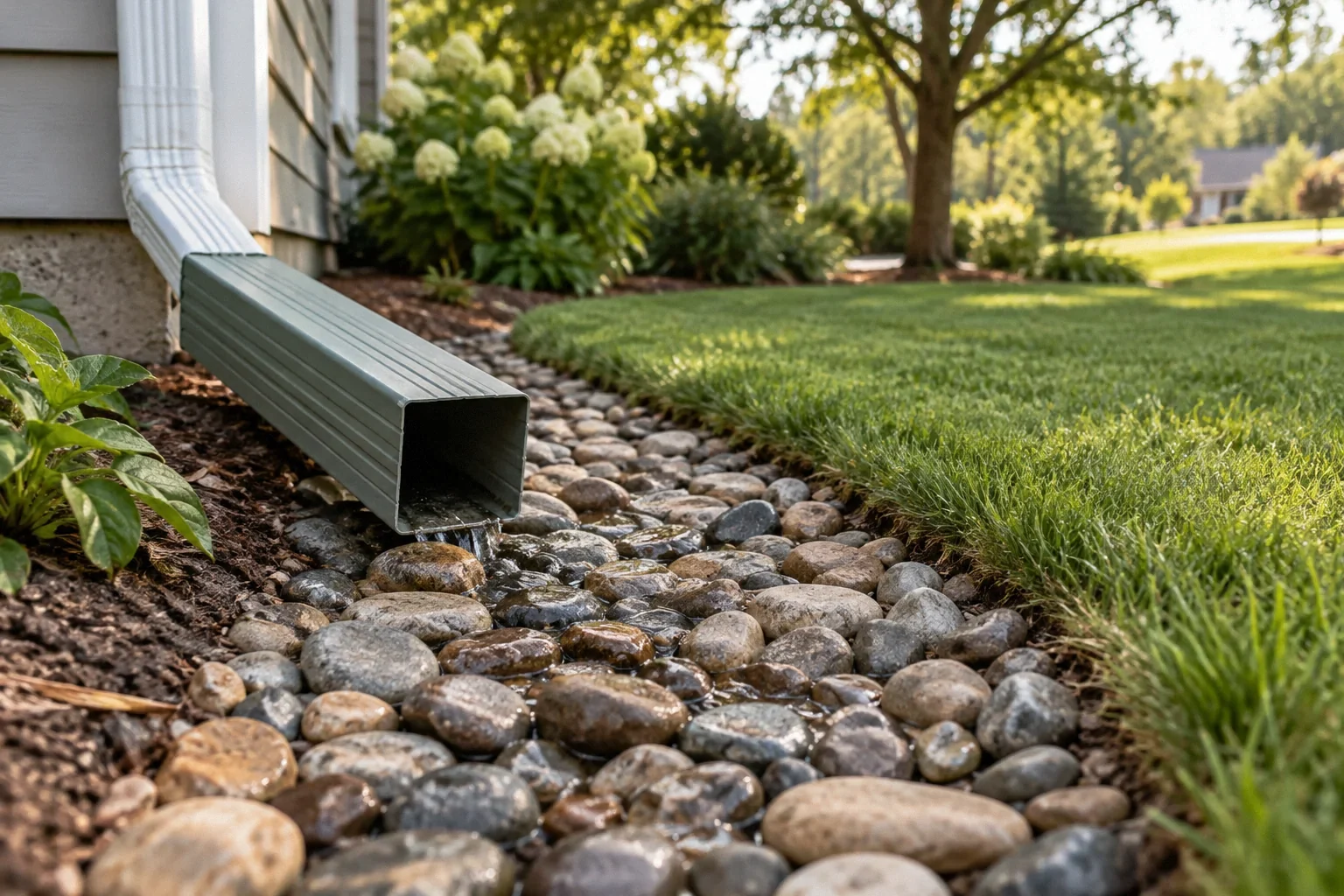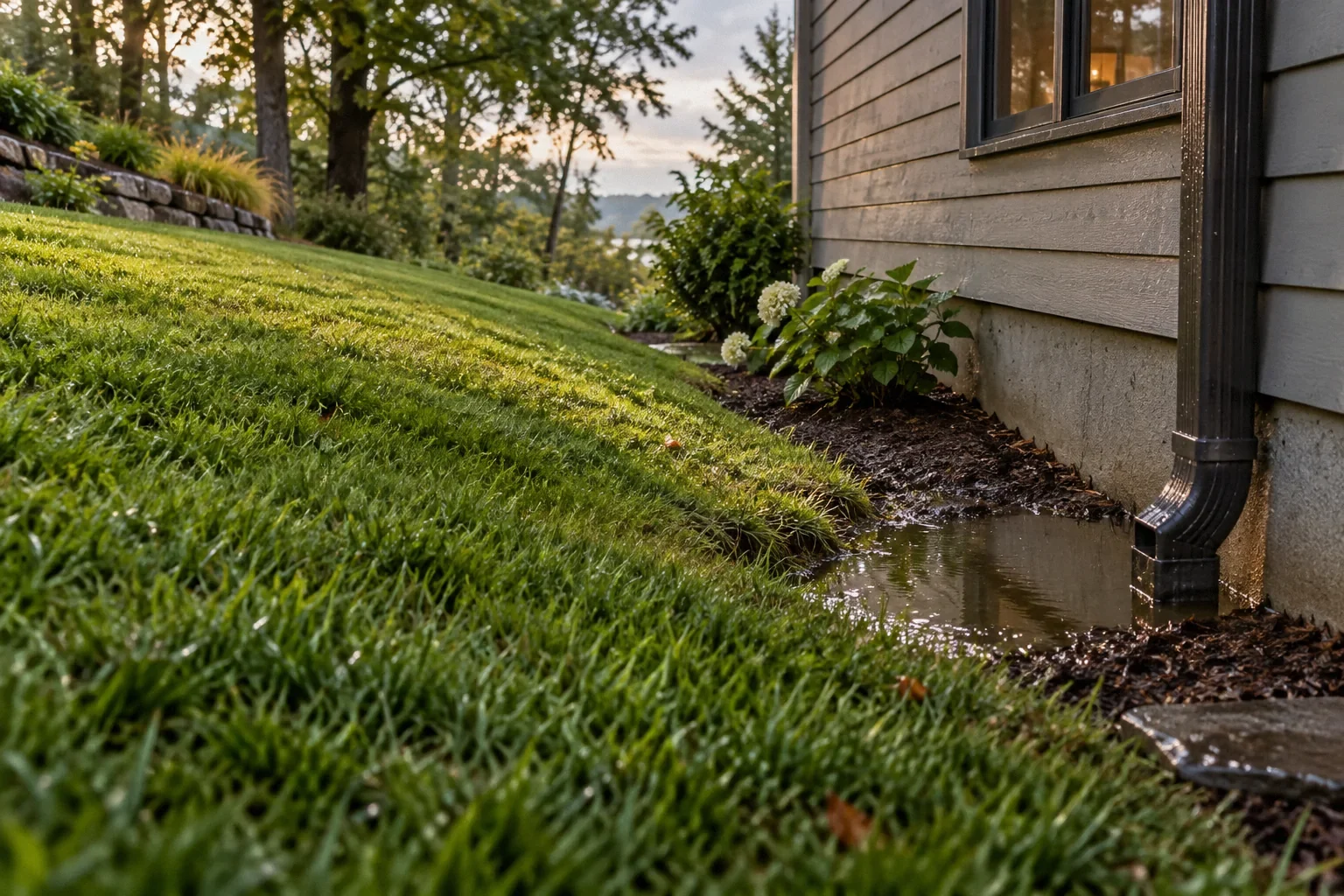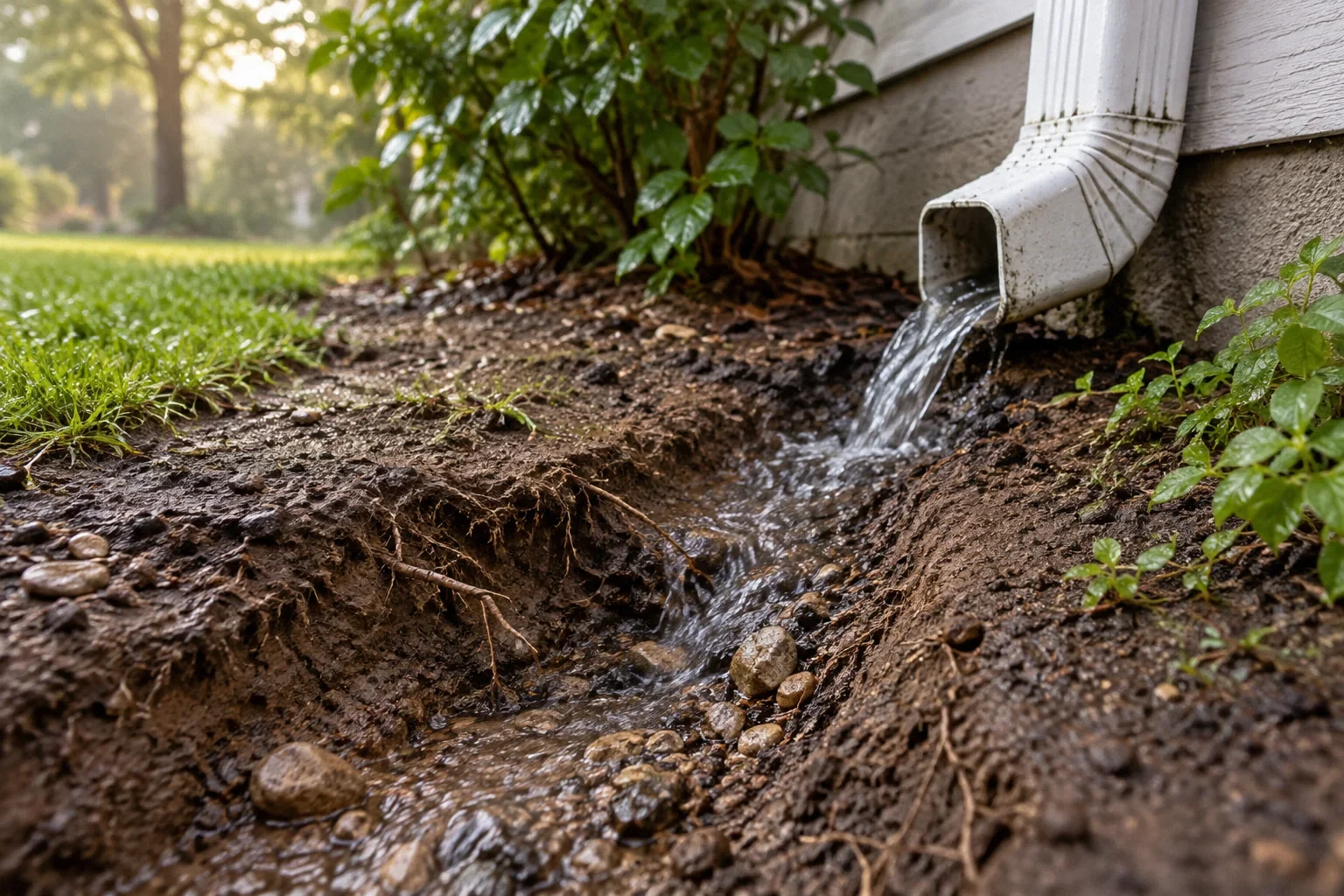
Erosion at a downspout outlet indicates concentrated water affecting the receiving surface. Review the roof-water route, outlet position and downstream path before adding stone. Surface protection may be part of a repair, but it cannot make an unsuitable destination appropriate.
Record the erosion pattern and timing
Photograph the affected area after rain from a safe location. Note whether the damage is a small splash zone, a channel extending across the yard or undermining near paving or a foundation. Keep the time sequence if the problem is growing. Do not assume the nearest downspout is the only source; overflow from above or runoff from another surface may contribute. A wider photograph that shows the building, outlet and downstream area gives the inspector context that a close-up of washed soil cannot provide.
The gutter-overflow account reports erosion below, linking landscape damage to a possible upstream source. This Reddit account is anecdotal, not technical authority. [3]
Check whether roof water is arriving as intended
A disconnected extension, damaged elbow or overflowing gutter can concentrate water where it was not supposed to land. Ask the inspection to include the upstream components, not only the eroded ground. PNNL connects roof collection with discharge away from the building. [1] The practical question is whether the observed landing point matches the intended route. If it does not, restoring that route may be part of the repair before the landscape is rebuilt. Replacing soil first can hide the evidence and invite repeated damage.
Follow water beyond the visible damage
A splash block or stone bed may protect the immediate landing area while allowing water to continue toward a wall or boundary. Ask where the flow goes next and whether the receiving area remains suitable during prolonged rain. The entire surface route matters. PNNL’s grading guidance emphasizes directing runoff away from foundations. [2] A repair should therefore be evaluated for both local erosion control and overall drainage, rather than judged only by whether the fresh stone stays in place after one brief test.
Distinguish surface repair from route correction
Replacing lost soil, stabilizing a surface and changing the water path are different tasks. Ask the proposal to identify each one. A contractor may recommend extending or rerouting the discharge, addressing an upstream overflow, or designing a different receiving feature. The appropriate choice depends on the observed route and site constraints. Avoid assuming that larger rocks are the universal answer. They may change appearance and local resistance without resolving why water repeatedly concentrates beside a vulnerable part of the property.
Escalate signs of undermining
If erosion affects paving support, a foundation area, a retaining feature or significant tree roots, obtain the appropriate professional assessment before concealing it. Do not fill an unknown void as a cosmetic repair and treat the area as stable. The drainage contractor may need coordination with another qualified professional to evaluate the affected structure or tree. Keep photographs and measurements taken by the inspector. The goal is to establish the extent of damage and the water cause, not merely restore the original surface level.
Evaluate the restored surface after rain
Keep before-and-after views from the same location and observe the next relevant rain event safely. Look for new channels, displaced material and water returning toward structures. A successful repair should preserve the intended route as well as the surface. If the problem moves a short distance downstream, the system may still need review. Record any maintenance requirements for the receiving feature and avoid later landscape changes that block or redirect the newly established path.
Do not hide a changing problem with repeated restoration
If the same area is refilled after each storm, keep a record of the pattern before another cosmetic repair. Ask whether the water source changed, whether an extension moved, or whether upstream overflow began. A repeated symptom can reveal a route problem that was never addressed. The next proposal should explain what will be different after the work, beyond the appearance of new soil or stone.
If the affected area is near paving, ask the appropriate professional whether the visible erosion suggests loss of support that needs evaluation. Do not infer stability from a surface that looks level after filling. The drainage scope and any structural or paving assessment should be coordinated so one contractor does not cover evidence the other needs to inspect.
Also review the downstream end of any new extension. A repair that stops erosion beside the downspout but creates a channel farther away may have transferred the concentration. Acceptance observations should include the entire revised receiving route, especially after a rain event similar to the one that caused the original damage. Keep the conclusion proportional to what was actually observed.
When documenting erosion, include nearby fixed features so changes can be compared over time. A close photograph of loose soil may be difficult to interpret later without a wall, path edge or other reference. Do not attempt to measure unstable ground or probe an unknown void. A qualified inspector can decide what further assessment is appropriate. If the repair includes surface stabilization, retain the maintenance instructions and the intended water route together. The landscape should not be restored in a way that blocks the new discharge path. Ask who checks that final interface if different crews perform drainage and restoration. This small coordination step can prevent a technically complete pipe installation from being undermined by the last layer of soil, edging or paving placed over its receiving area.
If surface restoration must wait for assessment, preserve the original photographs and identify the affected area for the visiting professional. Do not let a temporary cosmetic improvement erase the evidence needed to understand the damage.
| Decision area | Question or evidence |
|---|---|
| Repeated refill | Investigate why the same water path remains |
| Damage near paving | Assess support before covering evidence |
| Extended discharge | Inspect the new receiving location |
| Completion review | Compare the entire route after relevant rain |
Example: stone stays put but water reaches the house
Imagine a downspout outlet where added stone stops visible soil splash. During longer rain, water still crosses the stone and collects against the foundation because the surrounding ground slopes inward. The cosmetic improvement is real, but the route remains unresolved. The next assessment should consider the receiving elevations and a suitable destination rather than simply expanding the stone bed. This example distinguishes two outcomes that are often confused: a surface resisting erosion and a drainage arrangement carrying water where it should go.
Keep the repair scope in separate parts
Ask the estimate to identify water-route changes, assessment of affected structures and landscape restoration. Include the maintenance plan for the outlet area. That separation helps you understand what has been completed and what a later recurrence would mean.
- What upstream condition concentrates water here?
- Where will water travel after the surface is restored?
- Has any undermining been evaluated before filling?
What to take away
- Inspect the upstream source before replacing washed soil.
- Trace water beyond the immediate splash zone.
- Assess undermining before covering the damage.
Sources & further reading
Reddit links show the questions people ask; they do not establish a diagnosis or a legal requirement. Technical requirements depend on the product, building and jurisdiction. See our research approach.
- DOE/PNNL: Gutters and DownspoutsTechnical / official reference
Roof-water system components, material tradeoffs, separation from footing drain; program-specific distances are not universal local code.
- DOE/PNNL: Final Grade Slopes Away from FoundationTechnical / official reference
Surface grading and constrained-site swales; cited historical codes must not be represented as current California requirements.
- Reddit discussion: Gutter overflowCommunity question · anecdotal
Anecdotal homeowner discussion used to identify the question; not technical authority or evidence of this property’s condition.
Planning a Bay Area project?
Explore YKCA’s website and discuss the scope and services you need directly with them.