Compare tile underlayment proposals by the exact product, approved application, layer arrangement, roof geometry and detail scope. Terms such as synthetic, felt or premium are too broad to settle the decision. A longer advertised warranty is not a substitute for a coherent assembly or a clear description of what the contractor will renew.
Compare the named product and assembly
Underlayment is installed within a roof assembly whose details depend on slope, tile system and application conditions. The TRI manual provides assembly-specific guidance rather than a universal instruction to choose one category of material. [1] The proposal should identify the actual product and the installation detail being followed. Comparing nominal weights or brand recognition without that context leaves important differences unresolved.
What underlayment does, and how attachment changes the system
Tiles shed water at the exposed roof surface. Underlayment and its associated flashings provide another water-control level beneath that covering. TRIA describes this deck-level protection at penetrations as secondary protection if the tile or tile flashing is breached. That is why intact-looking tile does not establish the condition of the whole roof, and why renewing the hidden layer can be meaningful even when suitable tiles are reused. [4]
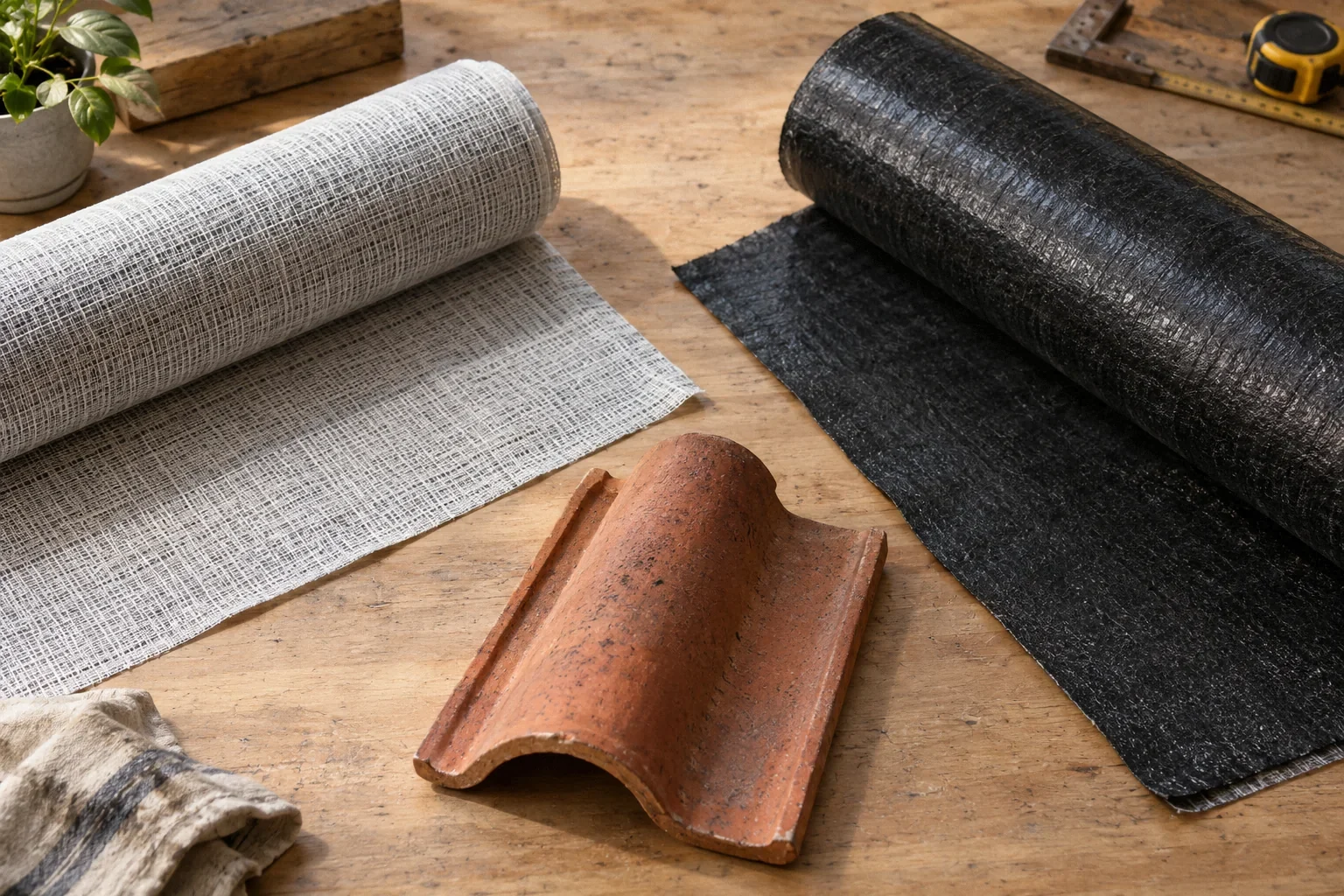
A mechanically attached sheet is secured with specified fasteners; a self-adhered sheet uses its adhesive connection to the receiving surface. These descriptions do not tell the whole layer sequence. A system may include a mechanically attached base sheet with a self-adhered layer above it. Nor does self-adhered mean that the roof has no mechanical fasteners: tile attachment and other specified connections remain separate questions. [5]
For a concrete product example, the TileSeal HT guide describes both direct-to-deck installation and multi-ply installation over a base sheet. It requires an appropriate clean, dry, sound receiving surface and notes that local requirements can call for a base sheet. Thus two bids naming TileSeal HT can still describe different assemblies. The guide is an example of why substrate preparation, layer sequence and flashing placement must accompany the product name; it is not a recommendation to copy its details onto every tile roof. [5]
Other explanations to distinguish
Contractors may recommend different materials because they assume different substrate conditions, layer arrangements or exposure requirements. They may also be comparing products that perform different roles. A self-adhered product is not automatically equivalent to every mechanically attached option, and a category name does not establish suitability beneath the selected tile. Ask for the technical basis of a recommendation before accepting criticism of all competing products.
Evidence to request before choosing the work
Request the product data, application instructions and relevant details for eaves, valleys, penetrations and wall junctions. The scope should state whether existing underlayment is removed and how the deck will be inspected. Clarify how tile attachment and underlayment work interact in the proposed assembly. The contractor should identify any condition that would require a different product or revised detail after opening.
Have each proposal identify the document supporting its layer arrangement. A bidder may be using a manufacturer detail, an applicable installation manual or a project-specific design. Knowing which one makes comparison possible. If the proposal changes after a product substitution, ask for the corresponding detail to be updated rather than assuming that products with similar marketing descriptions can use identical installation arrangements.
How the findings change the repair decision
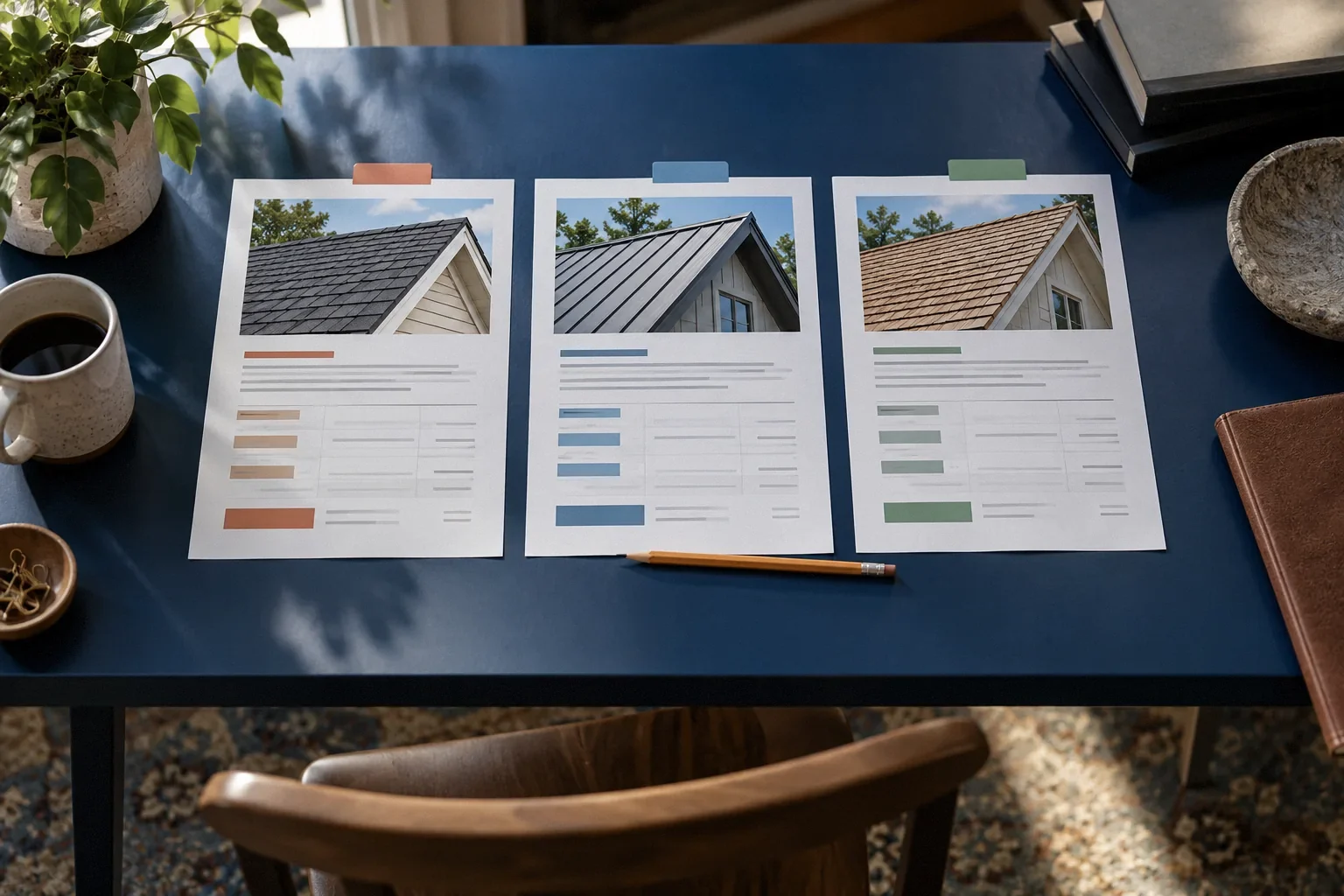
Normalize the proposals before choosing. Compare removal, deck repair assumptions, flashing renewal, layer arrangement, access and tile replacement allowances. Then compare the exact product's documented suitability and warranty terms. A lower estimate that leaves more concealed work unaddressed is not necessarily the same project at a better price. Equally, extra layers should have a supported purpose rather than being sold as an automatic multiplier of lifespan.
A practical example and what it does not prove
The sampled Phoenix discussion contains sharply conflicting advice about layers, materials and expected longevity. [2] Its value is evidence of homeowner confusion, not a verified product ranking. An owner can make that conversation more concrete by asking each bidder to fill in the same assembly schedule and attach the supporting product instructions for the actual slope and tile system.
Limits and when professional review matters
This article does not rank named underlayments or promise a service life. Regional practice, adopted requirements and manufacturer instructions must be checked for the project. If a proposal relies on an unusual combination of retained and new layers, request written technical support. Do not let an appealing warranty headline obscure the work required to install the product correctly.
Make the layer arrangement explicit
A proposal should say what is removed, what remains and what new material is installed in each relevant area. If the bidder offers an extra layer, ask what supported purpose it serves in this assembly. The answer may concern the chosen detail rather than a universal longevity benefit. A promise that twice the material yields twice the life is not a substitute for technical support.
Where bidders use different terminology, ask for the actual product data and the referenced installation detail. The comparison can then move from broad labels to observable differences. Also ask what changes if concealed conditions require a substitution. The updated arrangement should remain documented rather than becoming an informal field decision that the owner cannot later reconstruct.
- A bid names only premium synthetic: request the exact product and its supported tile-roof application.
- A bidder proposes retaining old material below the new layer: ask how suitability and the deck condition will be established.
- Extra layers are offered as an upgrade: request the relevant assembly detail and a clear statement of the intended benefit.
Questions that resolve the remaining uncertainty
Product names can change between the estimate and delivery. Ask the contractor to record the installed product and obtain approval for any material substitution that affects the agreed scope. The point is not to reject reasonable substitutions automatically. It is to ensure that the supporting details, warranty information and future maintenance record describe the roof actually installed rather than the product originally discussed.
Material labels do not describe the installed layer system
Felt, synthetic and self-adhered are not complete roof specifications. A bid still needs the exact product, application and layer arrangement. Self-adhered describes a method of connection; it does not by itself establish suitability for every tile roof. Similarly, a nominal material description does not show how valleys, penetrations and roof-wall transitions are addressed. Use the applicable installation documents to connect the product to those locations. [1]
Compare removal assumptions first. A proposal that removes existing material for deck assessment answers a different concealed-condition question from one that retains it. The latter needs a basis for suitability and connection. The owner should not compare those scopes as though the only difference were the brand printed on the new roll.
Then compare the actual arrangement at the relevant roof geometry. Extra layers may have a supported role, but their presence is not a universal service-life formula. Ask which detail calls for them and whether the proposed upgrade changes anything else. Finally, record the installed product if it differs from the estimate. The completed documentation should explain the roof that exists, including approved substitutions, rather than preserve a technically polished description of a product that was never installed.
What to take away
- Compare named products and assembly details rather than broad material labels.
- Normalize removal, deck assessment and flashing scope across bids.
- Reject unsupported claims that extra layers guarantee a particular lifespan.
Sources & further reading
Reddit links show the questions people ask; they do not establish a diagnosis or a legal requirement. Technical requirements depend on the product, building and jurisdiction. See our research approach.
- TRI concrete and clay manualTechnical / official reference
Tile assembly, slope and underlayment specifics; regional adoption applies
- Homeowner discussion: Underlayment question on tile roof in PhoenixCommunity question · anecdotal
Anecdotal issue research, not technical authority or proof about another property.
- Homeowner discussion: Tile roof underlaymentCommunity question · anecdotal
Anecdotal issue research, not technical authority or proof about another property.
- TRIA: Technical Briefs, Recommendations of Flashings at Tile PenetrationsTechnical / official reference
Explains tile surface water shedding and secondary deck/underlayment protection.
- Westlake Royal TileSeal HT Installation GuideTechnical / official reference
Named product example showing direct-to-deck and multi-ply systems; not a universal local specification.
Planning a Bay Area project?
Explore YKCA’s website and discuss the scope and services you need directly with them.