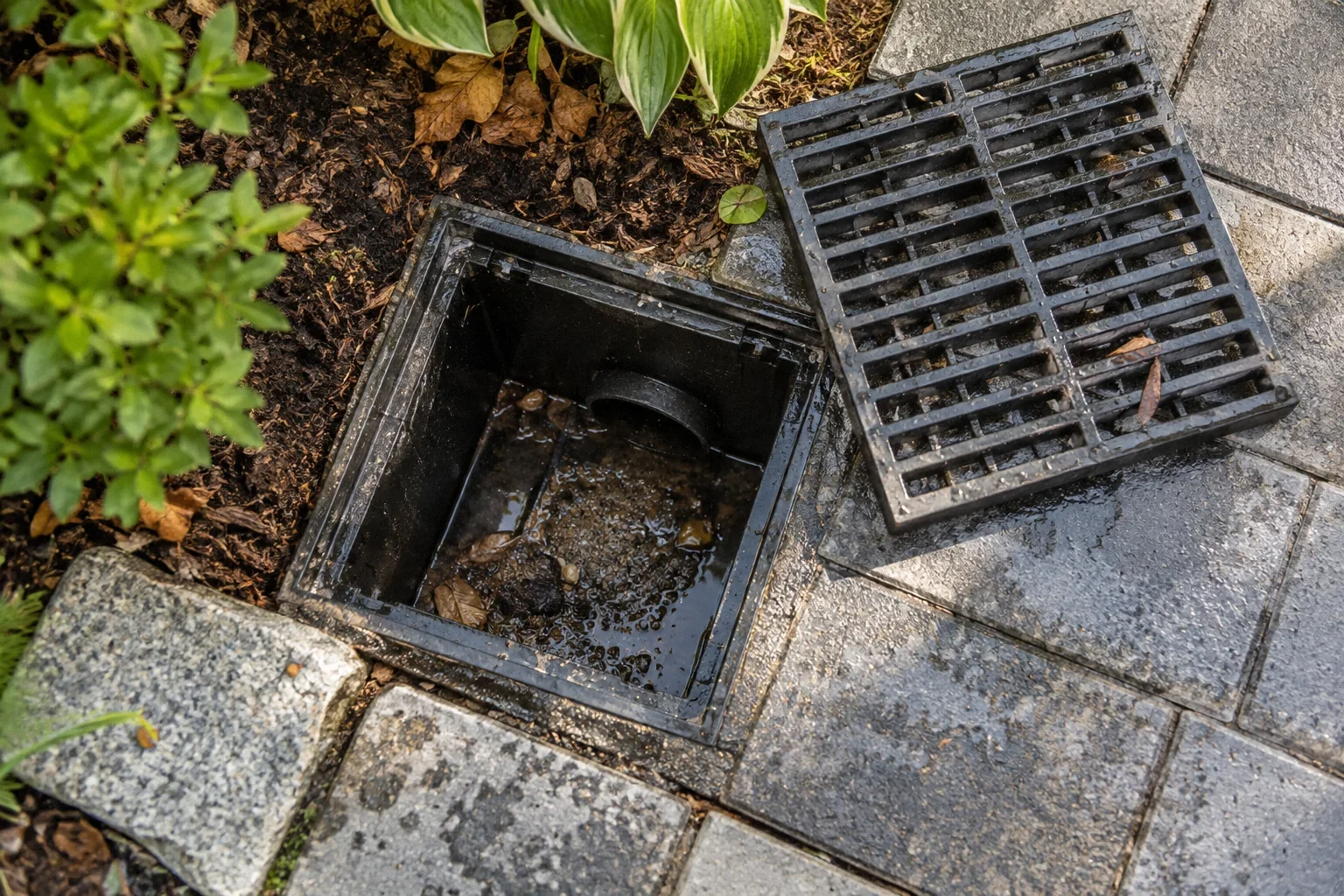
A clear grate only shows that the surface opening is unobstructed. A catch basin can drain slowly because of accumulated sediment, a restricted outlet pipe, unsuitable elevations or a flooded receiving end. Inspect the basin and the route beyond it as a system.
Distinguish the grate from the basin
The grate admits surface water; the basin and connected piping handle what arrives below it. Leaves removed from the top may reveal a still-restricted route. Ask the inspector to describe the accessible basin condition and outlet connection, with photographs where practical. Do not enter any drainage structure or remove secured covers without appropriate authorization and equipment. A homeowner can document ponding around the grate and visible debris from the surface while a qualified provider handles access and service that the installation requires.
The sediment account illustrates why a visible opening cannot establish the condition of the route below it. This Reddit account is anecdotal, not technical authority. [3]
Record how water approaches the inlet
Water may pond beside a clear grate because the surrounding surface no longer directs it into the opening. Settled paving, added mulch or altered landscaping can change the approach. Ask whether the symptom is failure to enter the basin or failure to leave it. Those questions lead to different repairs. NDS’s exterior drainage guidance distinguishes collection and discharge components. [1] A replacement basin will not automatically correct an approach-grade problem, and surface regrading will not automatically clear a restricted outlet pipe.
Ask where sediment is accumulating
Sediment at the basin may reflect normal maintenance demand or continuing erosion upstream. Request a description of the material removed and its likely entry route, stated with appropriate uncertainty. Repeated accumulation deserves attention to the source as well as cleaning frequency. Do not assume a filter accessory eliminates service; review the installed product’s maintenance instructions. A useful plan identifies who checks the inlet, how accessible material is removed appropriately and when the buried line needs professional evaluation.
Trace the outlet and shared connections
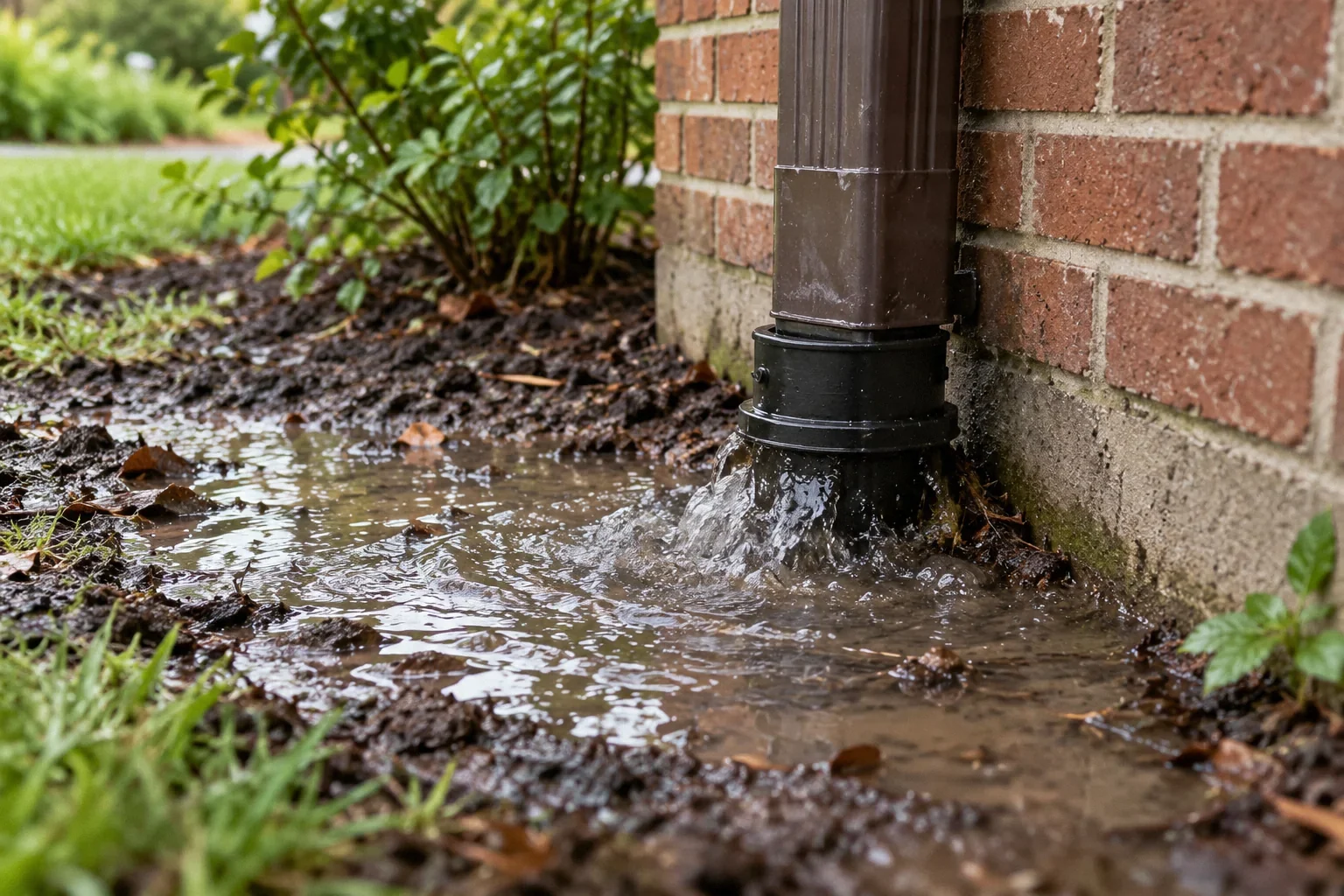
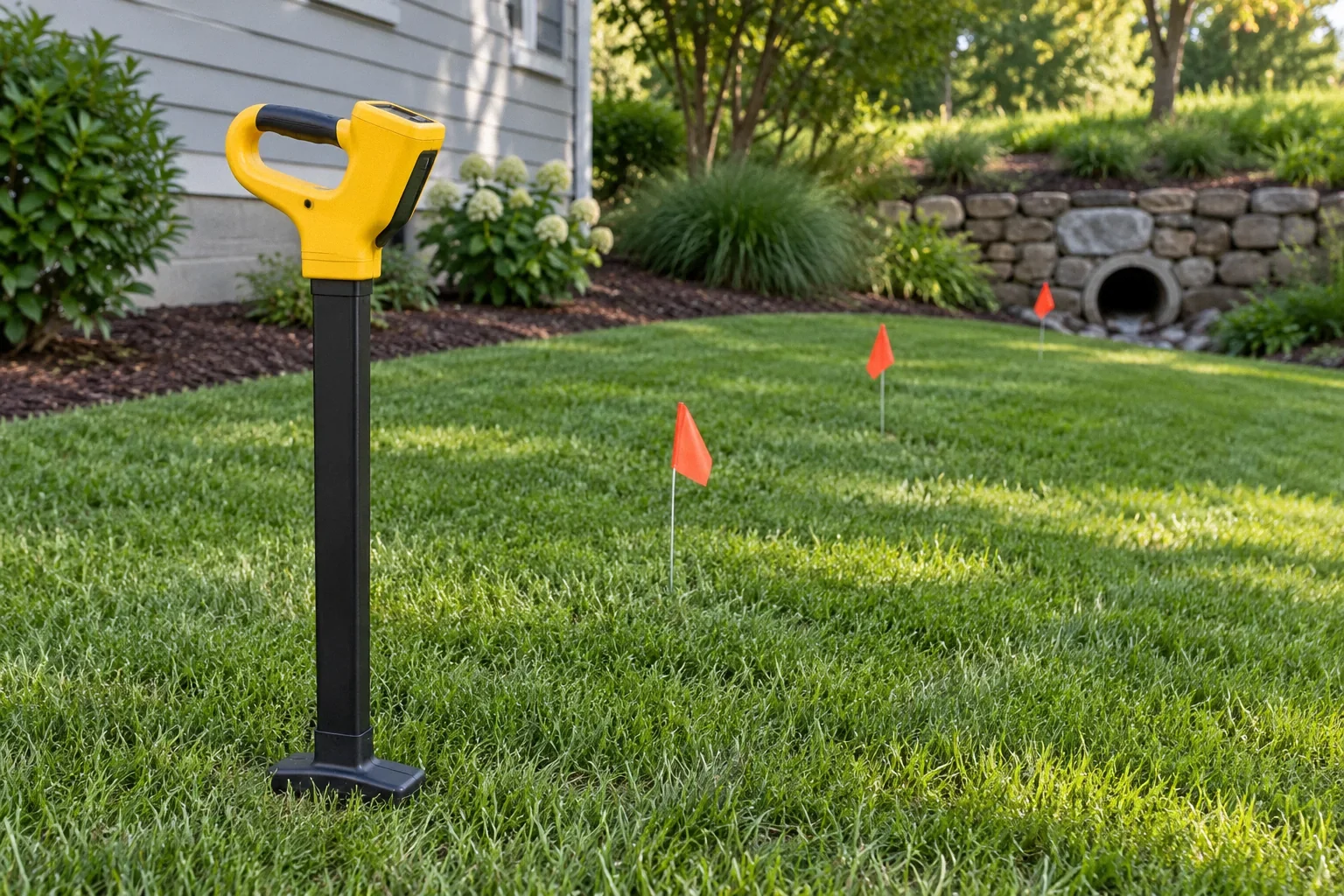
Several basins may share a carrier, so slow drainage at one location can involve a restriction elsewhere. Ask for the known route and any unverified branches. If multiple inlets back up together, that timing is valuable evidence for the inspector. A pop-up emitter or another termination also needs a workable receiving area. [2] The basin report should identify whether that destination was found and observed. Saying the pipe goes downhill is not equivalent to verifying the route and outlet condition.
Compare service with reconstruction
Cleaning is a reasonable response to a demonstrated accessible accumulation, but it does not change damaged piping or an unsuitable layout. A repair proposal should explain what condition makes reconstruction necessary and what portion can remain. If the basin’s position relative to surrounding paving is wrong, ask how the new work will integrate with the surface and how restoration is included. Avoid approving a generic bigger drain without an explanation of whether inlet area, pipe route or receiving conditions currently limit performance.
Check performance at the surface and destination
A completion check should observe both entry into the basin and discharge from the identified route. Record the test’s limitations. Later rain can reveal whether water still bypasses the grate or whether the network backs up after longer inflow. Keep before-and-after photographs from the same viewpoint. If ponding threatens a doorway, undermines paving or accompanies building moisture, broaden the assessment promptly rather than relying on routine grate cleaning as the entire response.
Compare three distinct slow-drain symptoms
Water bypassing a basin, water entering but not leaving, and water rising from several connected basins are not interchangeable observations. The first directs attention to approach grades and inlet position. The second calls for basin and outlet investigation. The third raises questions about shared piping and the receiving end. A contractor may find several contributing conditions, but describing the symptom accurately reduces unnecessary work.
Ask whether proposed maintenance changes are practical for the actual site. A filter or sediment-control accessory can introduce a service obligation, so the owner needs access and instructions. Do not assume adding an accessory ends the need for inspection. If the inlet receives ongoing soil erosion, address that source with suitable professional guidance rather than letting the basin become the permanent collection point for an avoidable problem.
When reconstruction is proposed, request a comparison with service and targeted correction. The contractor should explain why cleaning is insufficient, why the selected extent is needed and what retained components were verified. This turns a vague recommendation for a new drain into a reviewable response to observed conditions.
Ask whether the basin’s current use matches its original intended collection area. A new patio, altered driveway or uphill landscape change can send additional water and sediment toward an old inlet. A service visit may restore its previous condition without establishing that it suits the changed layout. Keep those changes in the discussion and ask whether a design review is needed. Similarly, if a grate is replaced for appearance or accessibility, confirm that the selected component is appropriate for the installed basin and location. Do not choose only by dimensions or color. The contractor should identify the product and its intended application. Retaining that information helps future maintenance and prevents an incompatible replacement from becoming another unresolved variable when the drainage complaint returns.
When reviewing a service invoice, check whether the basin interior, outlet connection and downstream carrier are separate items. This prevents an ordinary grate-cleaning visit from being mistaken for a complete network assessment.
| Decision area | Question or evidence |
|---|---|
| Water bypasses the grate | Review approach surface and inlet elevation |
| Water enters then ponds | Inspect basin outlet and downstream route |
| Several basins rise together | Investigate common carrier and destination |
| Sediment rapidly returns | Review upstream source and maintenance design |
Example: a clean grate beside a puddle
Imagine a patio where water stands next to a recently cleaned basin. The grate remains above the lowest part of the settled paving, so much of the water never reaches it. A pipe-clearing visit may not change that surface condition. On another patio, water enters freely but rises back through the same grate; the downstream route then becomes a stronger lead. Both owners report a slow catch basin. A good inspection describes which behavior occurred and links the proposed work to it rather than offering the same service automatically.
Make maintenance and repairs distinguishable
Keep records of material removed, inspected connections and surface changes. If the service provider recommends a larger basin or pipe, ask for the reason and the assumptions. Include restoration and ongoing access in any reconstruction scope so a new finished surface does not make the basin harder to maintain.
- Does water reach the grate before ponding?
- What material was removed and where might it originate?
- Was discharge observed beyond the basin network?
What to take away
- Separate water entering the grate from water leaving the basin.
- Investigate recurring sediment sources.
- Verify shared piping and the final discharge point.
Sources & further reading
Reddit links show the questions people ask; they do not establish a diagnosis or a legal requirement. Technical requirements depend on the product, building and jurisdiction. See our research approach.
- NDS manufacturer: Principles of Exterior DrainageTechnical / official reference
Surface/subsurface collection, discharge planning, sizing and maintenance.
- NDS manufacturer: What Is a Pop-Up Emitter?Technical / official reference
Outlet operation and sediment/leaf maintenance.
- Reddit discussion: My French drain is clogged with clay dirt. What do I do?Community question · anecdotal
Anecdotal homeowner discussion used to identify the question; not technical authority or evidence of this property’s condition.
Planning a Bay Area project?
Explore YKCA’s website and discuss the scope and services you need directly with them.