A dry-weather home inspection may identify visible drainage concerns but cannot prove buried routes perform during storms. Ask for installation records, known outlets, maintenance history and any available condition evidence. Treat unverified concealed systems as uncertainty to investigate, not as confirmed good condition.
List the visible system and the missing information
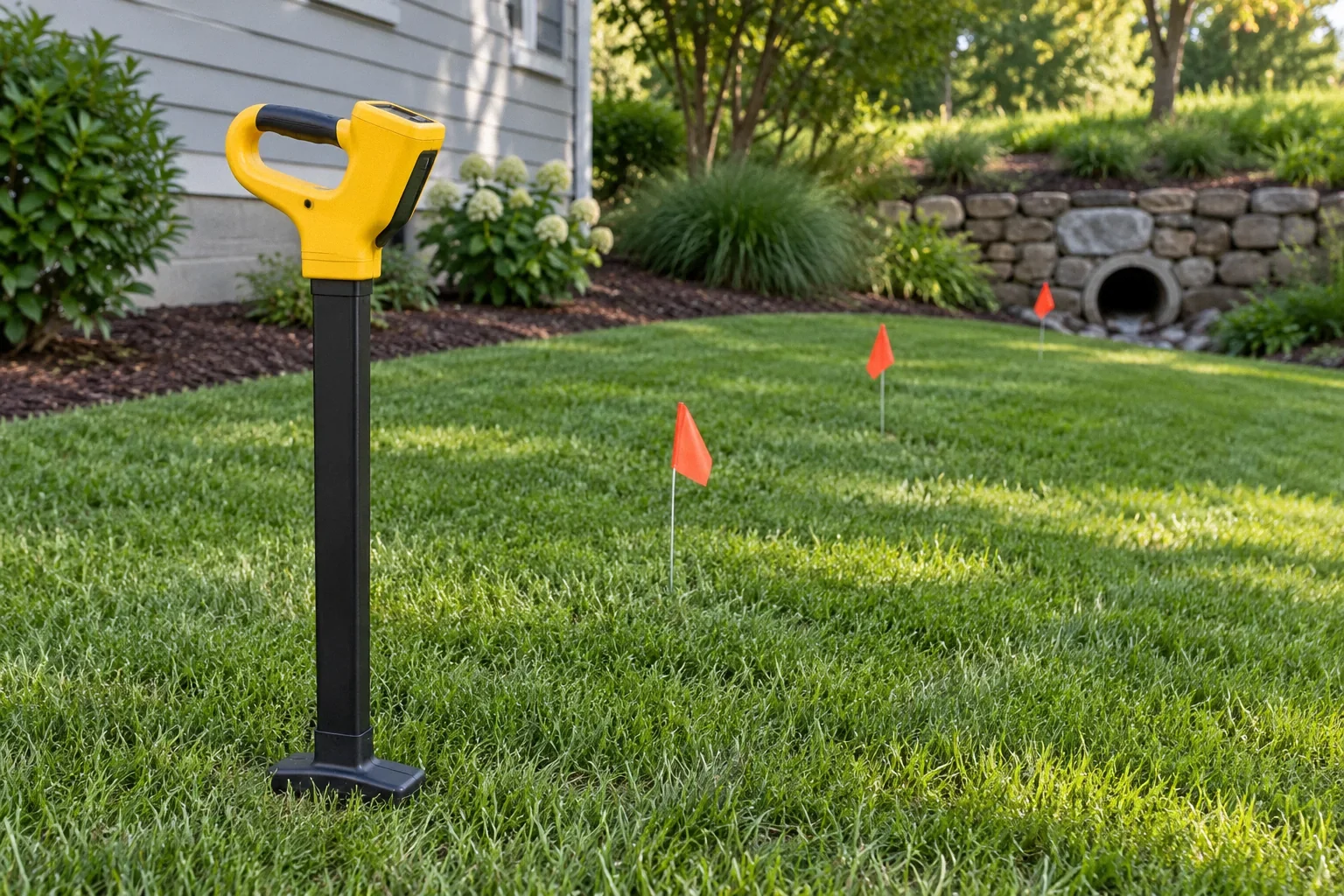
During an accessible walk, note downspouts entering the ground, surface grates, cleanouts and visible outlets. Do not open secured structures or excavate. Ask the seller or agent for plans, invoices and prior service records through the appropriate transaction process. The presence of a drain does not establish its destination or condition. A useful list separates observed components from unverified routes. That makes it easier to request a targeted follow-up rather than a vague assurance that the yard has drainage.
The prior-owner drain account demonstrates the practical uncertainty inherited with undocumented buried systems. This Reddit account is anecdotal, not technical authority. [3]
Ask about events, not just defects
Questions about past ponding, overflow and service visits can reveal relevant history. Ask where water collected, under what conditions and what work followed. A statement that the drains were cleaned should be supported by the service scope if available. It may describe only accessible inlets rather than the buried network. Keep reported history separate from independently verified findings. Neither a seller’s recollection nor the absence of a visible stain during a dry visit establishes performance in all weather conditions.
Review roof runoff and surface grade together
Buried piping is only one part of site water management. PNNL’s footing-drain guidance recommends reviewing gutters, grading and other sources. [1] Ask the inspector to identify visible downspout destinations, ground slopes toward the building and paving that concentrates runoff. PNNL also describes coordinated gutter and downspout routing. [2] A property can have extensive buried drains while still directing roof water to an unsuitable location. The review should connect visible sources to receiving areas instead of counting the number of grates as evidence of adequacy.
Choose targeted additional investigation
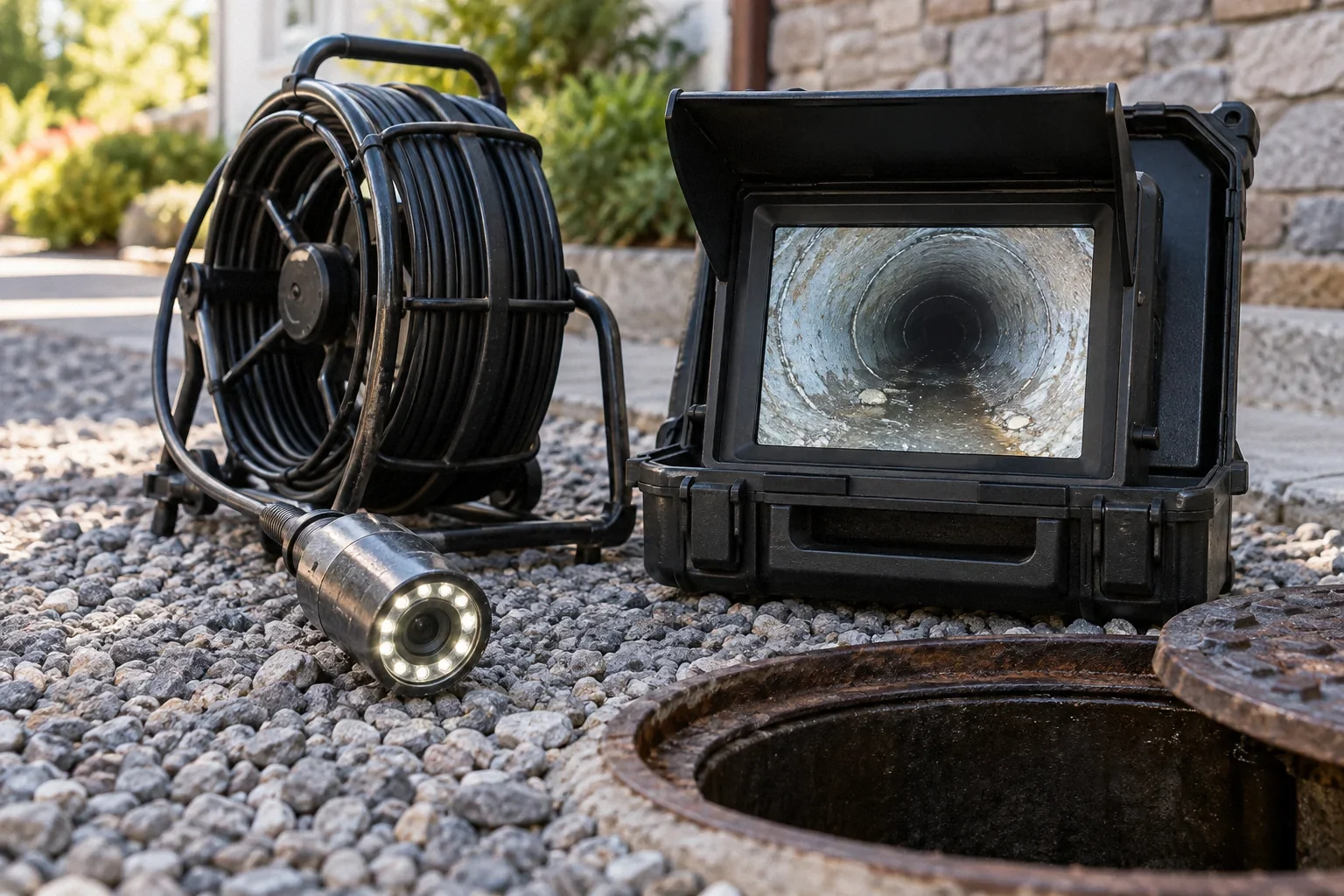
If a buried route is important to a documented complaint or proposed use, a qualified camera or locating service may be appropriate. Define the question and deliverables before booking. A camera has limits and may not establish grade, destination permissions or hydraulic capacity. Ask for inspected lengths and inaccessible portions. The result should reduce a specific uncertainty, such as whether an accessible carrier contains visible damage, rather than promise a comprehensive guarantee that no drainage issue will ever occur.
Consider maintenance and ownership constraints
Find out which components are on the property, shared or connected to public infrastructure, using appropriate records and professional advice. Do not infer responsibility from proximity alone. Ask how the system is maintained and whether access crosses areas that are difficult to reach. Landscaping, decks and paving may conceal service points. Those conditions affect future work even if the system appears functional now. Any legal questions about easements or rights should be addressed through the appropriate transaction professionals and records, not generalized internet advice.
Turn uncertainty into a documented decision
A buyer may not be able to resolve every concealed condition before closing. The important step is to identify what remains unknown and obtain qualified advice on its practical implications. Keep inspection limitations and any recommended follow-up in the record. Do not convert not observed into no problem. If later work is planned, such as a patio or addition, review drainage before changing the contributing surfaces. The existing arrangement should not be assumed suitable for additional runoff merely because it served the previous layout.
Do not overread a clean inspection report
A report may omit a buried drain because it was outside the service scope or inaccessible, not because it was verified. Read the limitations and ask targeted questions. If a concern is material to the purchase decision, discuss appropriate additional assessment with the transaction professionals rather than treating silence as assurance. The same caution applies to a brief seller statement that the system works.
Recent repair records can be valuable if they identify the work and its verification. Ask whether the project replaced a route, cleared an obstruction or merely added a surface inlet. A warranty attached to that work should be reviewed for scope and transfer conditions through the appropriate process. It does not automatically cover unrelated existing piping or all future water problems.
If the home will be altered after purchase, keep those plans in mind. A new patio, roof addition or landscape change may alter runoff sources and access. The inspection of the current arrangement cannot establish suitability for that future layout. Review drainage as part of the planned project rather than assuming the existing buried network can accept any added connection.
If the property includes shared or association-maintained drainage, ask the appropriate transaction professionals how records and responsibilities are obtained. Do not assume a visible inlet inside the fence is entirely private, or that a pipe near a common area is maintained by the association. The relevant documents and authorized representatives should establish that information. A technical inspection can identify condition questions without deciding ownership. Keep those two inquiries separate in the due-diligence record. If maintenance access is restricted or requires coordination, note that practical limitation as well. Future service may depend on more than finding a cleanout. The buyer should understand the available evidence, the unresolved conditions and the process for obtaining access before treating the buried system as straightforward to maintain.
Ask the inspector which additional specialist, if any, would answer the remaining drainage question. The recommendation should identify the missing information so a follow-up visit does not simply repeat the same limited visual inspection.
| Decision area | Question or evidence |
|---|---|
| Report silence | Check scope and accessibility limitations |
| Recent work | Identify exactly what changed and was checked |
| Warranty | Review the covered work and applicable conditions |
| Future project | Reassess new runoff and maintenance access |
Example: a dry viewing after a repaired yard
Imagine a house showing new landscaping and several grates, with no visible ponding during a summer visit. The seller reports that drainage was improved but has no route plan. A buyer can request the installation invoice, outlet information and any completion records, then discuss targeted follow-up with the inspector. The new appearance neither proves success nor implies failure. The decision should reflect the available evidence and the unknown buried route rather than an assumption that recent work must have solved every water issue.
Keep a handover file for future ownership
If the purchase proceeds, retain the route information, inspection footage and unresolved questions. Label accessible inlets and outlets on photographs. A new owner can then observe the first safe rain events and compare them with the inspection record rather than beginning again without context.
- Where do the buried lines terminate?
- What storm-related symptoms and service visits are documented?
- Which concealed conditions were not evaluated?
What to take away
- Treat visible drains as components, not proof of performance.
- Request event and service history with scope details.
- Use targeted investigation to reduce consequential uncertainties.
Sources & further reading
Reddit links show the questions people ask; they do not establish a diagnosis or a legal requirement. Technical requirements depend on the product, building and jurisdiction. See our research approach.
- DOE/PNNL: Footing Drain PipeTechnical / official reference
Check roof runoff, grading and plumbing before considering footing excavation.
- DOE/PNNL: Gutters and DownspoutsTechnical / official reference
Roof-water system components, material tradeoffs, separation from footing drain; program-specific distances are not universal local code.
- Reddit discussion: French drain issue/questionCommunity question · anecdotal
Anecdotal homeowner discussion used to identify the question; not technical authority or evidence of this property’s condition.
Planning a Bay Area project?
Explore YKCA’s website and discuss the scope and services you need directly with them.