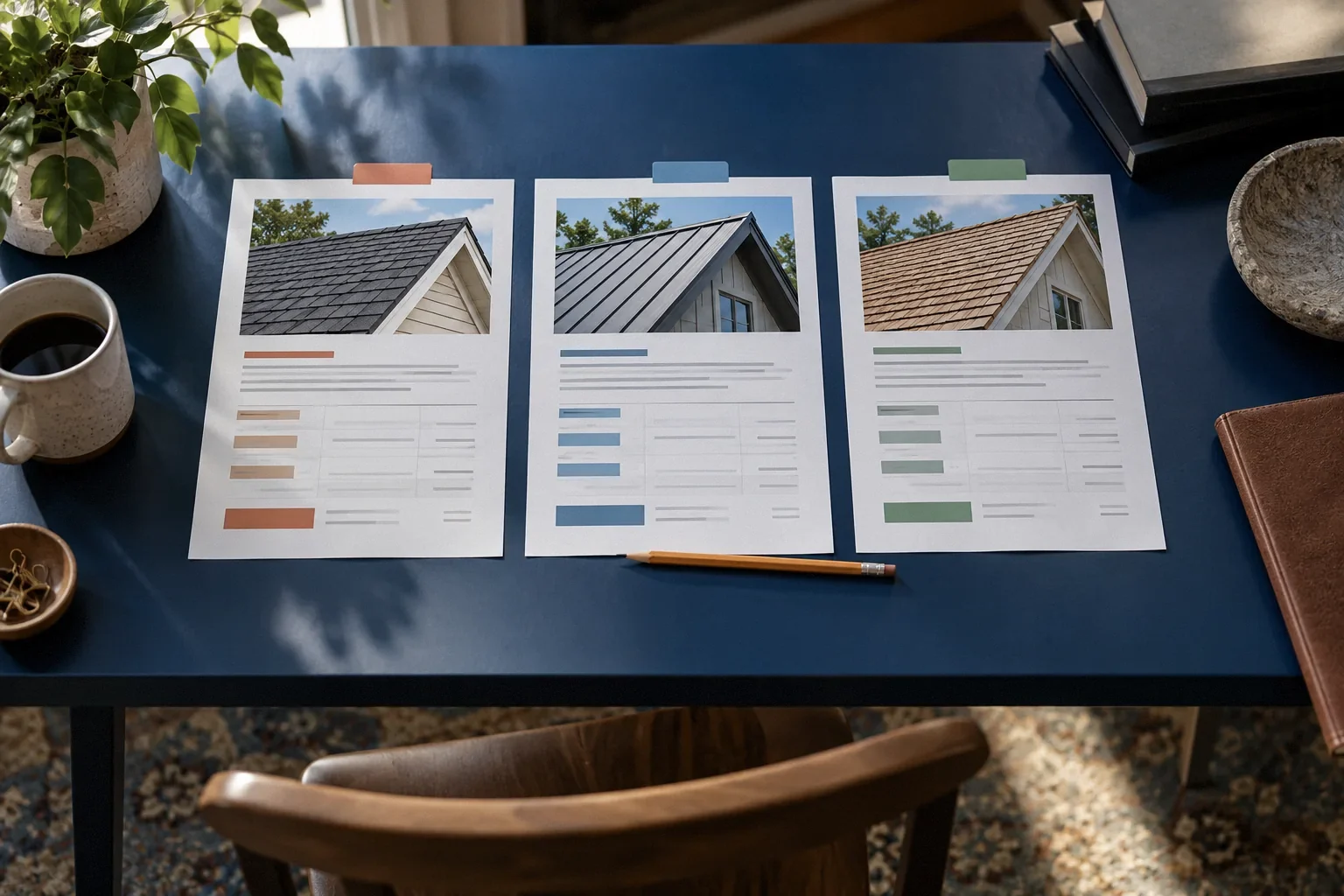
Read exclusions against the actual water-management system and work sequence. If the roof depends on an excluded chimney, gutter, wall, solar, or structural task, identify who will perform that task and when before signing.
Locate every boundary of the proposal
Highlight phrases such as 'by others,' 'existing to remain,' 'as needed,' and 'not included.' These phrases are not inherently improper, but they establish boundaries that may matter. Ask where each boundary lies physically. A roof-to-wall transition is not divided neatly into trade labels when water must pass across several components.
Distinguish an exclusion from an allowance
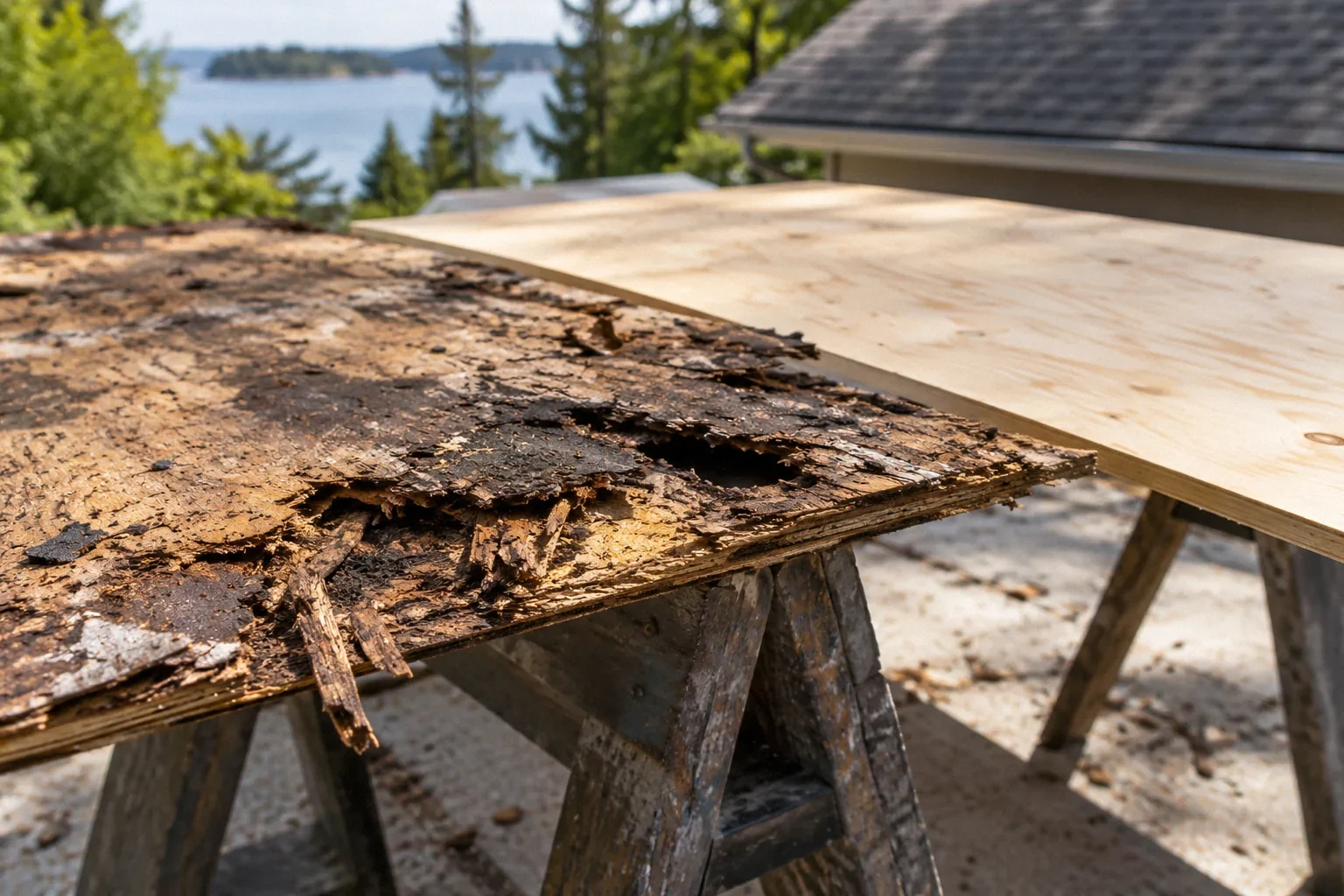
An excluded item is outside the base scope; an allowance reserves an agreed amount or quantity subject to stated conditions. Do not treat them as equivalent. For concealed wood, ask what is included, how additional quantities are measured, and who approves them. A general warning about hidden damage does not explain the pricing or authorization process.
Resolve flashing and wall interfaces
If the roofer excludes siding or masonry, ask whether accessing or replacing flashing requires those trades. Reusing existing flashing may be appropriate in some conditions, but the proposal should explain the assessment and limitations. Do not assume a new roof covering will cure water entry that originates above the roof line or behind wall cladding.
Coordinate rooftop equipment
Solar panels, satellite equipment, mechanical units, and skylights can affect access, penetrations, warranties, and permits. Ask who disconnects, removes, reinstalls, and checks equipment. State whether temporary removal or unrelated repairs are included. A roofing price that leaves this work unassigned can understate the actual project cost and delay the installation sequence.
Separate exterior work from interior restoration
Stopping a roof leak does not automatically include drying insulation, repairing damaged ceilings, or restoring finishes. Determine who evaluates those areas and how the house is protected during work. Avoid closing wet cavities or repainting merely because the exterior repair is complete. Necessary investigation and drying decisions should be assigned explicitly.
Check access, disposal, and site repair
Ask about driveway loads, delivery staging, protective coverings, debris removal, landscape impacts, and repair of damage caused by the work. Clarify unusual access costs before mobilization. A contractor cannot predict every condition, but the agreement can identify foreseeable constraints and explain how genuine changes are handled.
Make the total project visible
Create a list of included work, excluded but necessary work, optional upgrades, and unresolved conditions. Get written answers before choosing the lowest total. CSLB's contract guidance supports detailed scope and written terms.[1] Reddit bid and change-order discussions show how omissions become disputes, without establishing that every exclusion is an attempt to mislead.[3]
Price the work that falls between contractors
Create an interface list before accepting the proposal. For each excluded component, identify whether it touches the roofing assembly, whether access is needed to complete the roof, and whether another trade must act first. A chimney cap may be a separate maintenance item, while wall cladding may need removal to install the specified flashing. Those are different dependencies. The list should identify necessary coordination without implying that every adjacent feature must be replaced during every reroof.
Ask for a price or a defined pricing process for foreseeable interface work. If a subcontractor must remove solar panels or repair siding, obtain enough scope to understand the complete project budget. Do not add a guessed allowance based on a neighbor's bill. A contractor can reasonably exclude another trade while still helping identify the need. What is weak is leaving a known dependency unassigned and expecting the homeowner to solve it after demolition.
Review protection responsibilities during the handoff. If one contractor removes equipment and another installs roofing several days later, who protects openings and checks the temporary condition? If siding is opened for flashing, who restores the wall and when? These questions are practical scheduling issues as much as contract issues. Written coordination reduces the risk of each company considering its own task complete while the building remains exposed at the boundary between them.
Finally, distinguish exclusions from disclaimers about the result. A contractor may exclude repair of an unrelated wall defect, but the owner still needs to understand whether that defect could continue producing the reported leak. Ask the proposal to describe what problem the roofing scope is expected to address and what remains outside that conclusion. This prevents a technically completed reroof from being mistaken for a promise to eliminate every water problem in the building. If the original diagnosis is uncertain, resolve it before purchasing a large scope based on an assumption.
- List each trade interface, the required sequence, and who protects the house between tasks.
- Obtain real scope and pricing for necessary excluded work rather than treating an unknown as zero cost.
- Ask what water-entry problem the proposal is expected to resolve and which plausible sources remain outside the assessment.
A practical example
A reroof quote excludes gutters and all siding work while promising new wall flashing. The homeowner should ask whether the flashing can actually be replaced without disturbing siding, whether gutters must temporarily come off, and which party reconnects them. If another trade is needed, obtain its scope and sequence before tear-off. The goal is a complete, buildable project, not forcing every possible task into one contractor's price.
Turn vague exclusions into answerable questions
When a proposal says 'wood repair extra,' ask what type of wood, how its condition will be assessed, how quantities will be measured, and how pricing and approval work. When it says 'flashing as needed,' ask which locations are included and who decides whether reuse is suitable. When it says 'solar by others,' ask who coordinates removal and restoration so the roofing sequence can actually occur. These questions expose different kinds of uncertainty that should not be hidden under one allowance.
Do not insist that a contractor guarantee every concealed condition before opening the roof. That can encourage an inflated price or an unrealistic promise. Instead, require a defined investigation and change process, including temporary protection if a major decision needs time. The strongest scope is both complete about foreseeable work and candid about what cannot yet be known. Before signing, you should be able to identify the essential project, the optional work, the genuinely uncertain conditions, and the responsible party at each interface. If those boundaries remain unclear, the total price is not the only unresolved part of the offer.
What to take away
- Map exclusions to actual roof and wall locations.
- Assign necessary work excluded from the roofing contract.
- Distinguish an allowance from an item entirely outside the price.
Sources & further reading
Reddit links show the questions people ask; they do not establish a diagnosis or a legal requirement. Technical requirements depend on the product, building and jurisdiction. See our research approach.
- CSLB: What Is a Contract?Technical / official reference
Written labor and manufacturer warranties and agreement terms.
- CSLB: Homeowner ChecklistsTechnical / official reference
Permits, written change orders, deposit cap and work-based payments.
- Which contractor would you choose?Community question · anecdotal
Anecdotal discussion used to identify reader questions. Not verified incident evidence or legal, insurance, or technical authority.
- Reasonable Roof Change Order?Community question · anecdotal
Anecdotal discussion used to identify reader questions. Not verified incident evidence or legal, insurance, or technical authority.
Planning a Bay Area project?
Explore YKCA’s website and discuss the scope and services you need directly with them.