A new roof that leaks needs a location-specific investigation and a documented corrective scope. New shingles do not prove that every flashing, wall connection or penetration was renewed. Preserve the symptom history and project records, then ask the installer to connect the observed leak to the relevant assembly detail.
A new field covering does not renew every interface
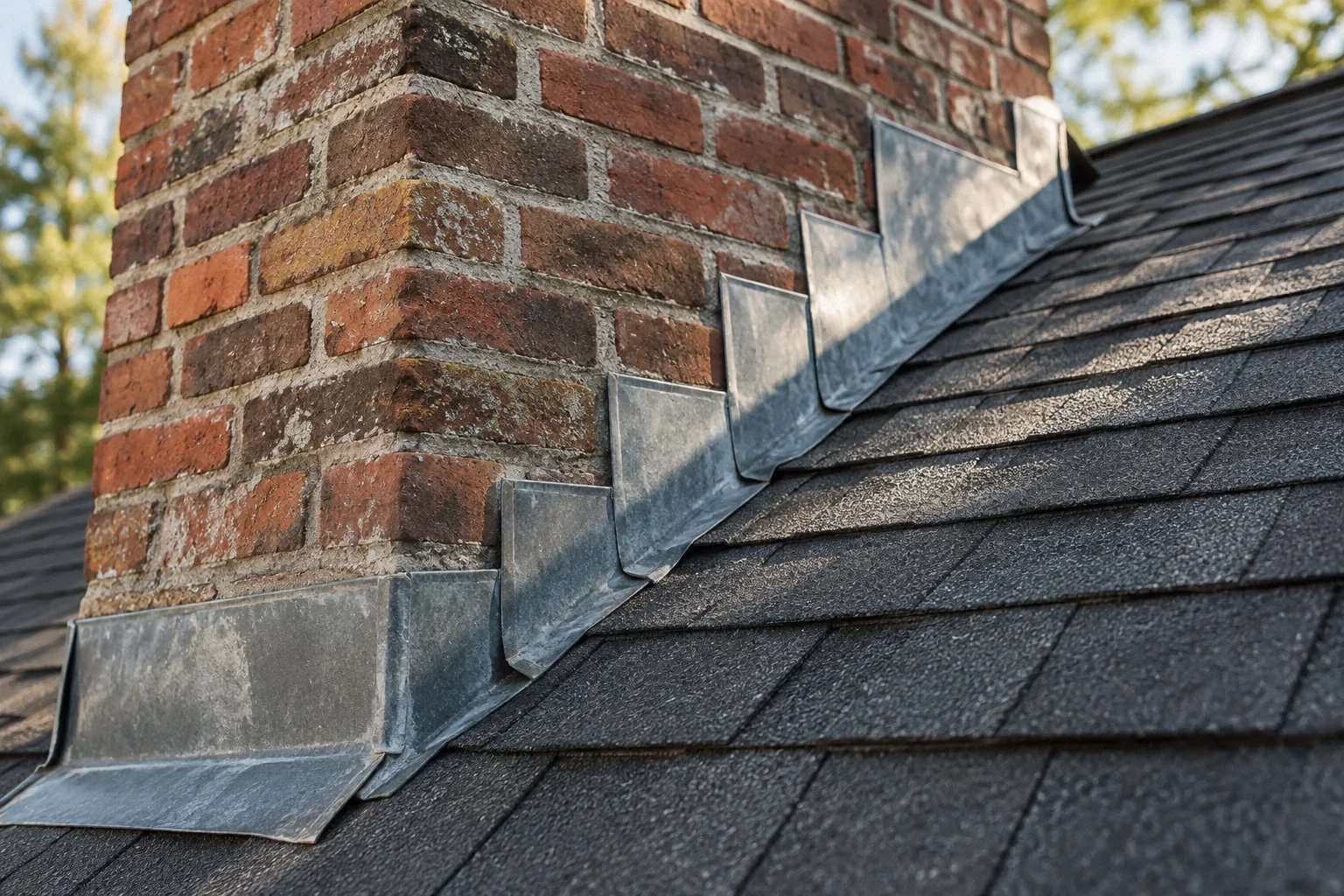
A roof replacement can change the covering while retaining parts of the surrounding building. PNNL emphasizes inspection and integration of penetrations and other water-control details during roof work. [1] The new appearance of the open roof field therefore does not establish the condition of every interface. The investigation should compare the installed assembly with the agreed scope and selected product requirements.
Other explanations to distinguish
Potential causes include an installation defect, a retained deteriorated component, a roof-wall problem outside the stated scope or moisture from another building system. A leak that appears after work deserves attention but is not enough to allocate responsibility without evidence. Multiple stains can also represent separate mechanisms. Avoid allowing the whole discussion to collapse into a choice between the roofer is wrong and the roof cannot be the problem.
Evidence to request before choosing the work
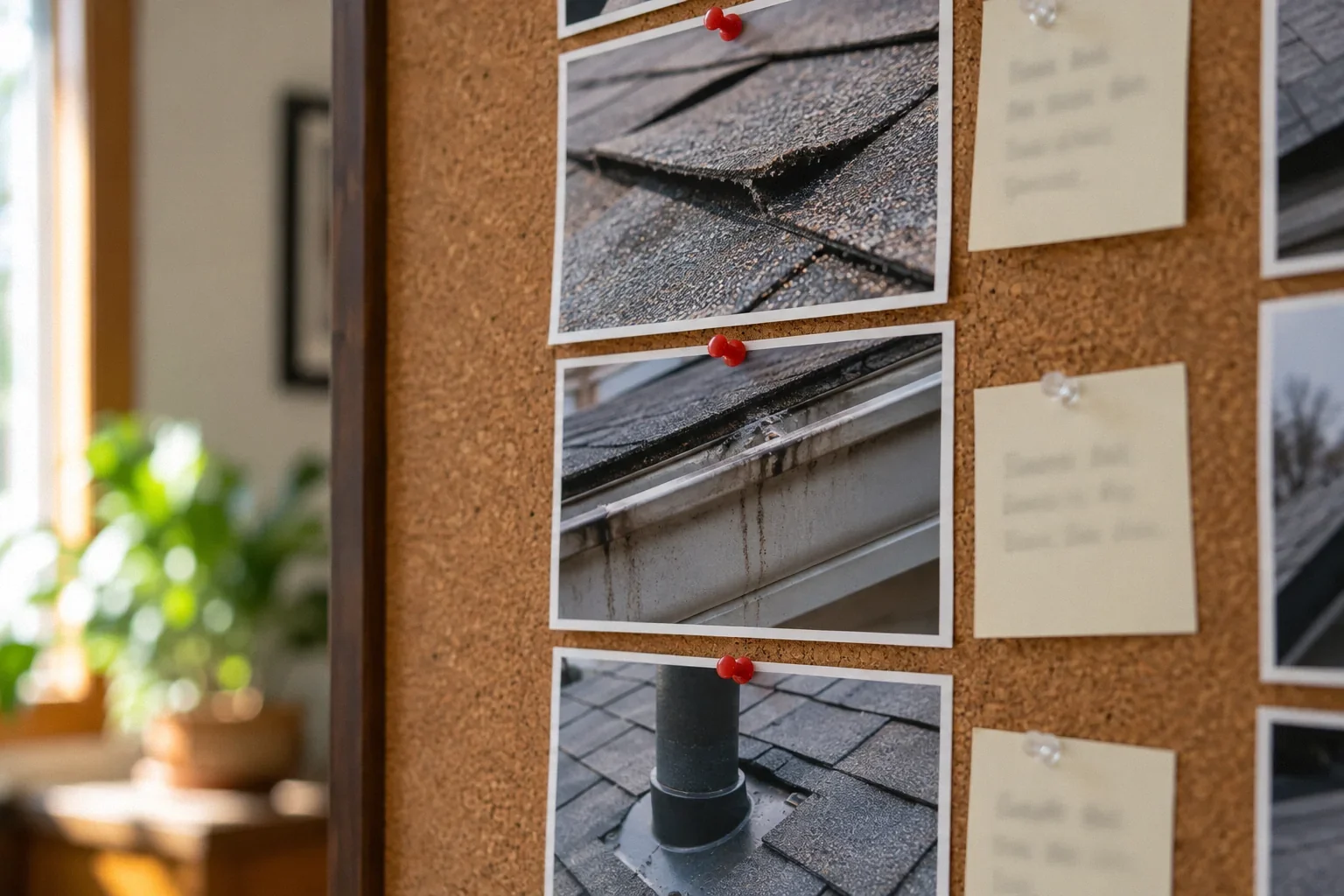
Collect the signed scope, change orders, product identification, installation photographs and dates of first leakage. Mark each interior location and record the weather conditions. Request photographs of the corresponding roof details and a distinction between directly observed defects and suspected paths. Ask the contractor to describe what the proposed correction will expose, replace and connect to existing work.
Request a separate list of retained components when the original agreement is ambiguous. That list can help explain whether the leak involves newly installed work or an older interface that was left in place. It does not by itself decide responsibility, but it establishes the physical scope. Record the same distinction after corrective work so the next service visit does not repeat the uncertainty.
How the findings change the repair decision
Resolve the physical cause before relying on a broad promise to take care of it. The repair record should identify the completed detail, materials and any remaining exclusions. If inspection reveals a separate wall or equipment problem, coordinate the handoff and maintain a shared location record. A disagreement about responsibility should not prevent reasonable protection against continuing interior damage.
A practical example and what it does not prove
A sampled discussion describes a relatively new roof with an unsuccessful repair around a vent. [4] The useful question is whether that component was retained, whether its connection is sound and what the original scope promised. A photograph of new shingles cannot answer those questions. Comparing before-and-after records can turn a vague complaint into a concrete corrective item.
Limits and when professional review matters
This article does not interpret contract remedies or guarantee warranty coverage. Those depend on actual documents and circumstances. It explains the evidence needed to understand the roof condition. Avoid destructive investigation that removes evidence before the responsible parties can document it, unless prompt protective work is necessary; retain photographs and the reason for that work.
Reconstruct what the original roof work actually changed
The agreement may list new roofing without clearly naming every retained interface. Ask for a factual list of installed, reused and untouched components. This does not decide contractual responsibility, but it makes the physical investigation clearer. An older wall or boot can remain relevant even when the field covering is new. A newly installed component can also require correction.
After the repair, update that list. Otherwise the next person investigating the roof may rely on the same ambiguous assumption that everything was replaced. Keep the corrective photographs with the original project record and distinguish changes made during emergency protection from final work. A clear record can shorten later investigation even where the first leak led to a difficult disagreement.
- The source involves a retained component: establish its condition and connection without assuming the new roof field is defective.
- The source involves new work: compare the installed detail with the agreed assembly and product requirements.
- A temporary correction is applied before full review: document its limits and preserve the original observation history.
Questions that resolve the remaining uncertainty
A corrective visit should leave a record even if no charge is issued. The owner still needs to know what changed, which materials were used and whether the work is temporary or final. Verbal assurances are difficult to use when a different technician returns later. A brief location-based service note can preserve the diagnostic progress and prevent the next visit from starting with the same assumptions.
New work, retained work and corrective work need separate labels
Start with a factual component list: what the reroof installed, what it reused and what was untouched. This list does not decide contractual liability, but it makes the physical diagnosis clearer. An older interface may remain relevant beside new shingles, and a newly installed component may still need correction. Neither possibility can be excluded by the roof's overall appearance.
Then identify what the service visit actually changed. A no-charge correction still needs a location and material record. If an emergency intervention precedes full diagnosis, describe it as such and retain the remaining investigation items. Otherwise a later technician may mistake a temporary measure for the intended completed assembly or repeat the same uncertain treatment without knowing its history.
Finally, connect the corrected detail to the original symptom. The installer should explain why that work addresses the observed path and which alternatives remain unresolved. A dry interval alone may not reproduce the original exposure, while old discoloration alone does not show renewed leakage. The owner's follow-up should therefore focus on the specific symptom and relevant conditions, supported by the documented physical correction. This is more useful than relying only on a broad assurance that the new roof is now fine.
What to take away
- New covering does not establish that every detail was renewed.
- Preserve scope, product and weather records alongside location photographs.
- Require a written physical correction rather than an undefined promise.
Sources & further reading
Reddit links show the questions people ask; they do not establish a diagnosis or a legal requirement. Technical requirements depend on the product, building and jurisdiction. See our research approach.
- PNNL penetration flashingTechnical / official reference
Water-control continuity and penetration detailing; avoid treating illustrated assembly as universal code
- GAF shingle installation instructionsTechnical / official reference
Product-specific fastening, deck and slope; verify chosen SKU revision
- Homeowner discussion: Two leaks on 1y/o roofCommunity question · anecdotal
Anecdotal issue research, not technical authority or proof about another property.
- Homeowner discussion: Moms roof is leaking at this vent looking thingCommunity question · anecdotal
Anecdotal issue research, not technical authority or proof about another property.
Planning a Bay Area project?
Explore YKCA’s website and discuss the scope and services you need directly with them.