Build a factual complaint packet with the contract, approved changes, payment ledger, dated photographs, a location-based issue list, and the contractor's responses. Obtain a qualified independent assessment where needed, and distinguish a CSLB regulatory complaint from a claim for financial recovery.
Describe observations before conclusions
Write 'water entered at the bedroom ceiling during Tuesday's rain' rather than 'the whole roof is fraudulent.' Record where, when, and under what conditions the problem appeared. A visible stain may have more than one cause. Keeping observations separate from diagnosis lets a qualified reviewer test the explanation instead of inheriting an accusation.
Connect each concern to an obligation
For every issue, identify the relevant contract item, change order, manufacturer requirement, or inspection correction if known. Do not invent a code violation because the work looks unfamiliar. If the obligation is unclear, mark it as a question for the reviewer. The strongest packet shows what was promised, what was observed, and what remains unresolved.
Preserve original evidence
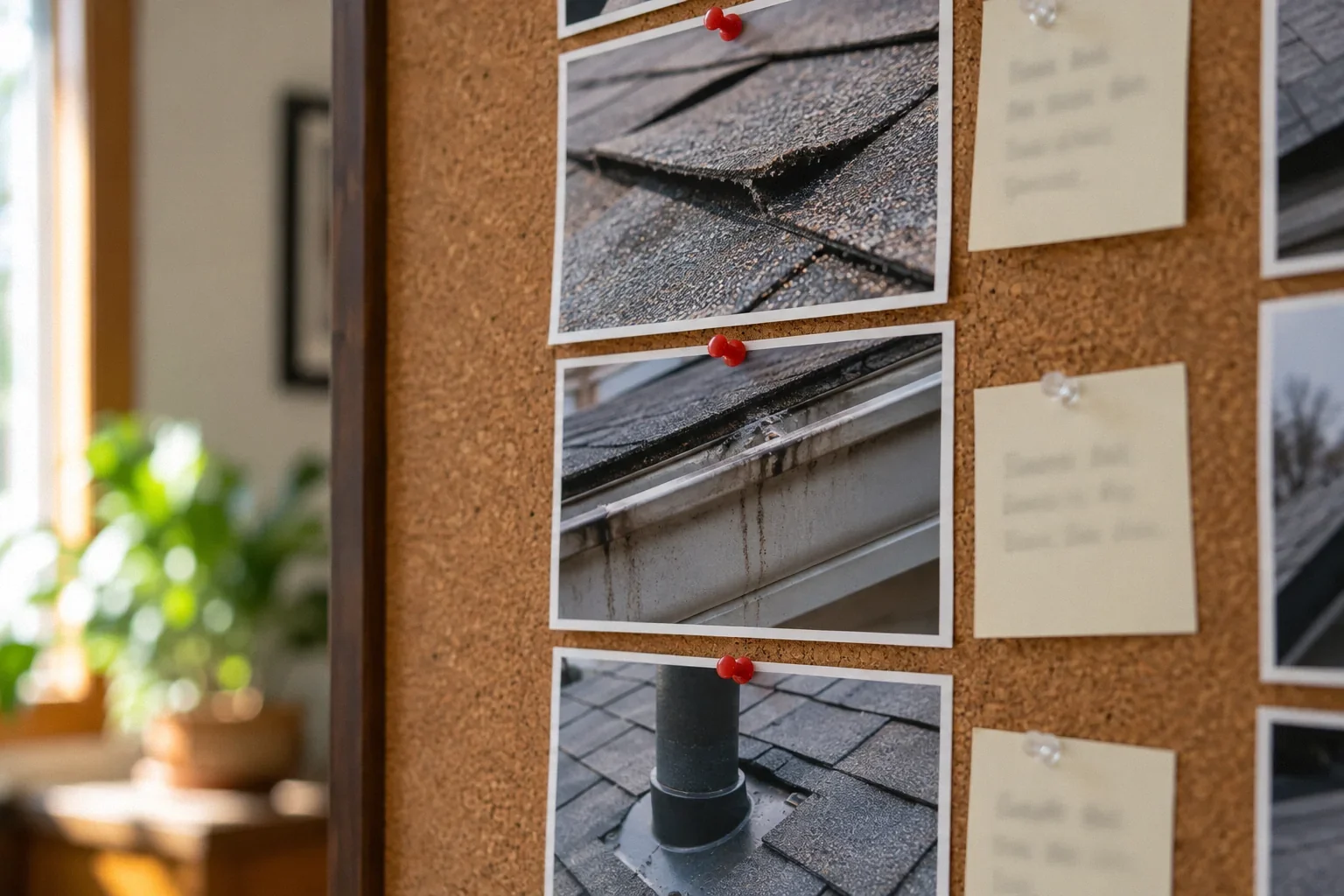
Keep original photographs and messages, not just annotated screenshots. Add a separate marked copy to show locations. Include overall views, details, dates, weather observations, and any temporary work. Do not remove materials solely to prove a point or allow evidence collection to delay urgent protection. Explain when later repairs changed the scene.
Notify the contractor clearly
Send a numbered issue list and ask for a written response, inspection, and proposed correction. Retain proof of delivery. CSLB's complaint guidance specifically addresses formal notice and supporting records.[1] An opportunity to understand the concern can resolve a misunderstanding; it also produces a clearer record if the contractor refuses or does not respond.
Use an independent assessment for technical disagreements
Ask a qualified reviewer to distinguish observed defects, likely causes, necessary testing, and recommended scope. A replacement estimate alone is not always an adequate defect report. Request photographs and the basis for conclusions. Where structural, electrical, or other specialized issues arise, the reviewer may need additional expertise rather than making unsupported conclusions.
Choose the correct channel
CSLB investigates matters within its regulatory role and states that its purpose is not to guarantee restitution.[1] Insurance claims, small-claims cases, civil disputes, permit enforcement, and warranty requests are different channels. Their suitability depends on the facts. Avoid assuming that success in one automatically resolves all others or that a public review replaces a formal notice.
Keep the requested resolution concrete
Specify what you want investigated or corrected and what supporting evidence you have. A clear request might seek repair of a documented flashing defect and proof that required corrections were completed. Do not inflate a limited defect into a demand for complete replacement without support. Reddit damage stories can inspire questions, but they are not evidence of your project's workmanship.[2]
Build an issue schedule an independent reviewer can use
Use one row for each issue with six fields: location, observed condition, date first noticed, relevant promise or requirement, evidence filename, and requested response. This format prevents repeated photographs of one defect from looking like many separate defects. It also reveals gaps: an accusation may lack a location, or a photograph may lack a connection to the contract. Fill those gaps honestly. If the requirement is unknown, list it as a question rather than inventing a violation to make the complaint sound stronger.
Ask the independent reviewer to distinguish three levels of confidence. An observed condition is something they directly saw. A likely cause is an interpretation supported by the available evidence. A concealed condition requiring further investigation remains unresolved. A report that mixes all three can create false certainty and make a dispute harder to settle. Request the practical consequences of each finding: urgent protection, corrective work, monitoring, or further assessment. The report should explain why a proposed remedy matches the condition.
Document the opportunity to correct without allowing evidence to disappear unnecessarily. If the contractor proposes a repair, ask what will be changed and how completion will be shown. Photograph the condition before and after when practical, and keep the proposal and response. If the owner declines access because of a specific concern, obtain advice and document the reason rather than simply refusing all contact. The appropriate process depends on the agreement and facts; this article cannot decide those rights for every dispute.
Separate technical disagreement from dissatisfaction with service. A late update, damaged planter, incorrect material, and active leak may all deserve attention, but they involve different evidence and remedies. Presenting them distinctly helps a reviewer prioritize the serious issue without losing the smaller contractual concerns. The requested outcome should be proportionate and supported. A localized defect may need a defined correction; a broader replacement claim needs evidence explaining why a limited repair is inadequate. Precision improves both settlement discussions and formal review.
- Give each concern a location, date, evidence reference, and requested response so the packet can be followed without your verbal explanation.
- Require technical reports to distinguish direct observation, supported inference, and conditions that remain concealed or untested.
- Keep service complaints, property damage, scope omissions, and functional roof defects distinct while preserving them in one organized chronology.
A practical example
A homeowner's packet includes the signed scope, a drawing showing the affected wall junction, photographs before and after rain, the contractor's response, and an independent report identifying an unresolved flashing detail. That is more useful than dozens of unrelated images and a total replacement quote with no explanation. If emergency work had to occur first, the packet should state who did it, what changed, and which evidence was preserved.
Keep the remedy tied to the evidence
Ask the reviewer to explain whether the proposed correction addresses the cause or only its visible symptom. Repainting a stain, adding sealant, replacing a local detail, and replacing an entire roof are materially different remedies. The complaint should not demand the largest scope merely because the owner has lost confidence. It should explain why a narrower correction would or would not be adequate, based on qualified findings.
Also state what evidence would allow an item to be considered resolved. That may include photographs of a corrected concealed detail, a required reinspection, a completed contractual task, or a documented follow-up observation. Avoid promising that one dry day proves permanent leak resolution. A bounded verification plan makes settlement more practical and gives the owner a clear record if the issue recurs. If the dispute involves significant legal or financial consequences, obtain professional advice on the agreement and remedy rather than assuming the technical report alone determines liability or recoverable cost.
What to take away
- Organize evidence by issue and roof location.
- Link observations to promises or a qualified technical assessment.
- Treat regulatory action and financial recovery as different processes.
Sources & further reading
Reddit links show the questions people ask; they do not establish a diagnosis or a legal requirement. Technical requirements depend on the product, building and jurisdiction. See our research approach.
- CSLB: Filing a Construction ComplaintTechnical / official reference
Regulatory enforcement is not guaranteed financial restitution; notification and records.
- New roof damaged 24 hours after install by mistaken crew from a different companyCommunity question · anecdotal
Anecdotal discussion used to identify reader questions. Not verified incident evidence or legal, insurance, or technical authority.
- Closed a month ago, hidden damage uncoveredCommunity question · anecdotal
Anecdotal discussion used to identify reader questions. Not verified incident evidence or legal, insurance, or technical authority.
Planning a Bay Area project?
Explore YKCA’s website and discuss the scope and services you need directly with them.