Agree on one accountable contact, a daily update format, a change-order approval route, and an urgent-weather contact before roofing begins. Good communication records decisions clearly enough that the homeowner, supervisor, and crew act on the same scope.
Name the person who can make decisions
The estimator may not manage installation. Ask who can interpret scope, approve corrections, schedule inspections, and coordinate subcontractors. Record that person's contact information and backup. A friendly crew member may be knowledgeable without having authority to change the agreement. Identifying roles prevents the owner from receiving several incompatible answers.
Use updates that describe actual progress
A useful update states the roof areas completed, what remains exposed, discoveries needing a decision, the next planned activity, and any access or weather concern. Photographs should have enough context to locate the work. 'Everything is going great' gives reassurance but little evidence; a concise factual update helps both parties catch misunderstandings early.
Separate questions from approvals
An owner asking whether damaged wood should be replaced has not necessarily approved an unspecified additional price. Use a clear written proposal and an equally clear approval route for changes. CSLB's checklist emphasizes written changes and a detailed scope.[1] Keep informational messages, proposed changes, and accepted changes distinguishable in the project record.
Agree on response timing
Open-roof discoveries may require timely decisions. Identify when the owner must be reachable and what happens if that person is unavailable. A sensible plan includes temporary protection and an authorized alternate contact where appropriate. Do not create an automatic approval rule accidentally by ignoring how the contractor intends to handle silence.
Define the urgent contact route
Ask whom to call if rain enters, materials block an exit, or a safety concern develops after the crew leaves. Record what information is useful: address, affected area, time, photographs from a safe location, and immediate conditions. An emergency contact plan is more useful than a vague promise that somebody will always answer.
Keep a short issue log
Number concerns, describe the observation, record who owns the response, and mark resolution with evidence. Separate a cosmetic question from active leakage or unsafe conditions so attention matches consequence. Avoid mixing ten unrelated issues into a long text thread where one answer can appear to close all of them.
Close the loop before final paperwork
Review unresolved items with the supervisor and obtain the agreed closeout records. The Reddit comparison that prompted this article weighs responsiveness against technical confidence.[2] Communication should support technical accountability: the strongest update explains what was checked, what changed, and what still needs attention rather than simply arriving quickly.
Make messages usable as a project record
A good daily message can fit on one screen while still being specific. It might identify the north roof as dried in, the garage as untouched, a deck repair awaiting approval, and the next inspection as scheduled rather than passed. Those distinctions help the homeowner understand the actual state of the house. Ask the supervisor to avoid ambiguous completion words when a major obligation remains. The update should allow another responsible person to understand the project without having attended every conversation.
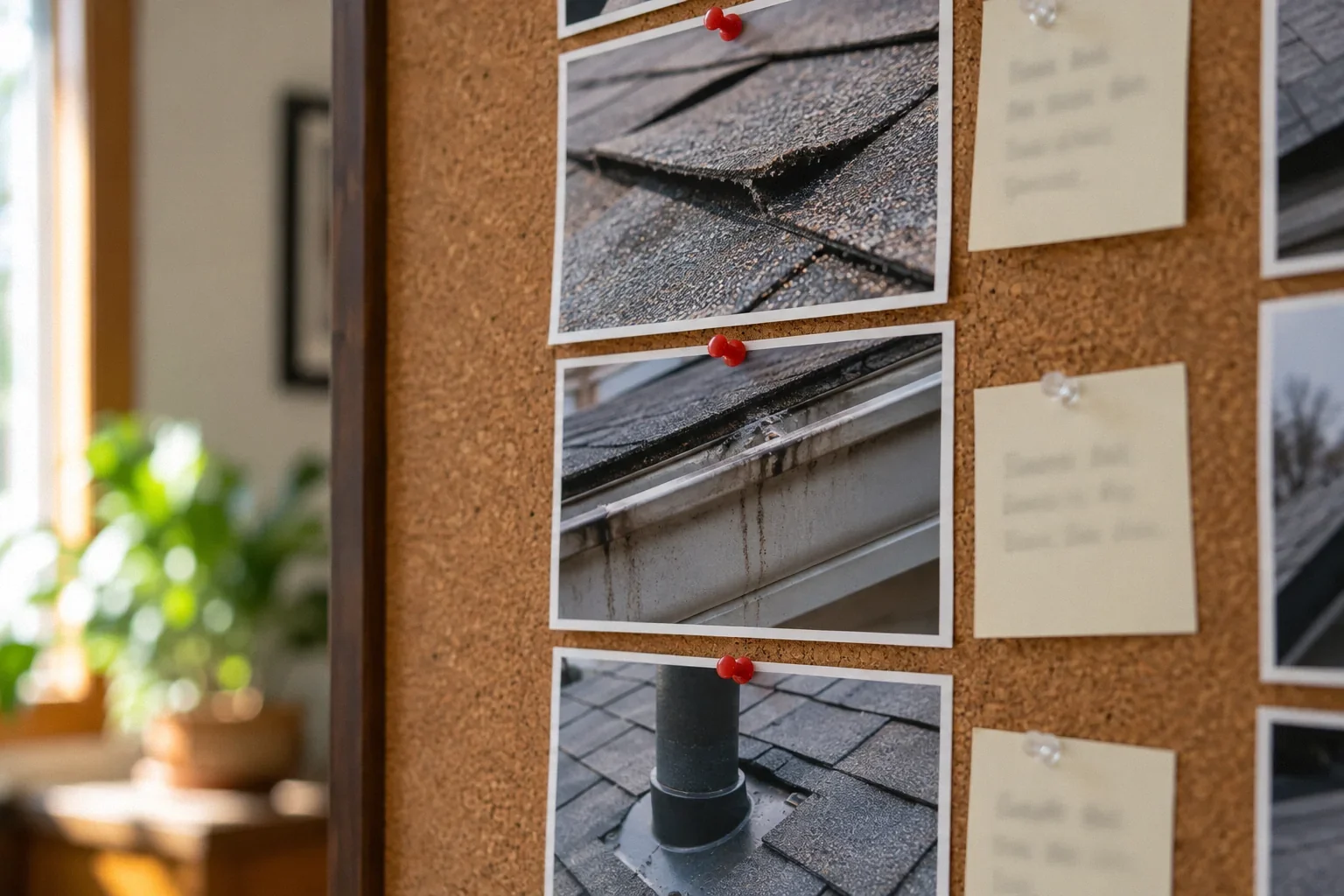
Set a simple rule for photographs: one overview establishes location, and close-ups explain the detail. A folder titled only with a date may be insufficient when several roof areas look similar. Captions can identify the area, stage, and question. Keep annotated images separate from originals. This gives the contractor an efficient way to show progress and gives the homeowner useful records for future maintenance, while avoiding the impression that every photograph is a formal certification of compliance.
Choose a communication channel for approvals and use it consistently. If a scope decision is discussed by phone, follow up with a written summary and the relevant change document. A messaging platform can be convenient, but important records should be exportable. Avoid allowing an emoji, a general acknowledgment, or a question about price to become ambiguous evidence of authorization. The agreement should make clear who may approve changes and what form that approval takes.
When disagreement develops, narrow the subject. State one observation, identify the contract item or question, and ask for a specific response. For example, ask whether a photographed wall transition is complete and which agreed detail applies. This is more productive than combining workmanship, schedule frustration, and a price dispute in one accusation. If the answer remains unclear, record the unresolved point and request a supervisor review. Clear communication is not about avoiding every difficult discussion; it is about making each discussion actionable.
- Use completion words precisely: delivered, installed, inspected, corrected, and accepted describe different events and should not be substituted for one another.
- Confirm important phone decisions in the agreed written channel, including scope, price, timing, and who authorized the change.
- Export final messages and photographs into the roof file so the record remains available after a phone or contractor portal changes.
A practical example
At the end of tear-off, the supervisor sends an overall photograph and notes that two deck areas need review. The owner replies 'please explain the options,' while the crew needs to make the roof weather-resistant before evening. A planned process separates these events: temporary protection proceeds within the agreed scope, the permanent repair and price are documented, and approval is obtained from the designated person. Nobody has to infer authorization from an ambiguous text.
End each important exchange with a next action
A productive message closes with who will do what and how the result will be confirmed. For example, the supervisor will review the photographed junction, provide a proposed correction by the next agreed update, and document the repaired detail before concealment. This is different from a promise to 'look into it,' which gives neither party a clear follow-up point. Use realistic dates and revise them explicitly if conditions change.
Keep the tone factual even when the project becomes frustrating. Describe an observed condition and its impact, then ask for the missing information or action. The contractor should be able to respond without defending against an unsupported accusation. If communication still fails, the record becomes useful for escalation because it shows the precise unresolved issue. Good records do not guarantee a cooperative contractor, but they prevent avoidable confusion from becoming an additional dispute. At the final meeting, archive the issue log with the contract so future maintenance questions can be understood in context.
What to take away
- Name a decision-maker and a backup before work starts.
- Use location-based progress photos and a separate change approval record.
- Track each issue through a documented resolution.
Sources & further reading
Reddit links show the questions people ask; they do not establish a diagnosis or a legal requirement. Technical requirements depend on the product, building and jurisdiction. See our research approach.
- CSLB: Homeowner ChecklistsTechnical / official reference
Permits, written change orders, deposit cap and work-based payments.
- Which contractor would you choose?Community question · anecdotal
Anecdotal discussion used to identify reader questions. Not verified incident evidence or legal, insurance, or technical authority.
- New roof damaged 24 hours after install by mistaken crew from a different companyCommunity question · anecdotal
Anecdotal discussion used to identify reader questions. Not verified incident evidence or legal, insurance, or technical authority.
Planning a Bay Area project?
Explore YKCA’s website and discuss the scope and services you need directly with them.